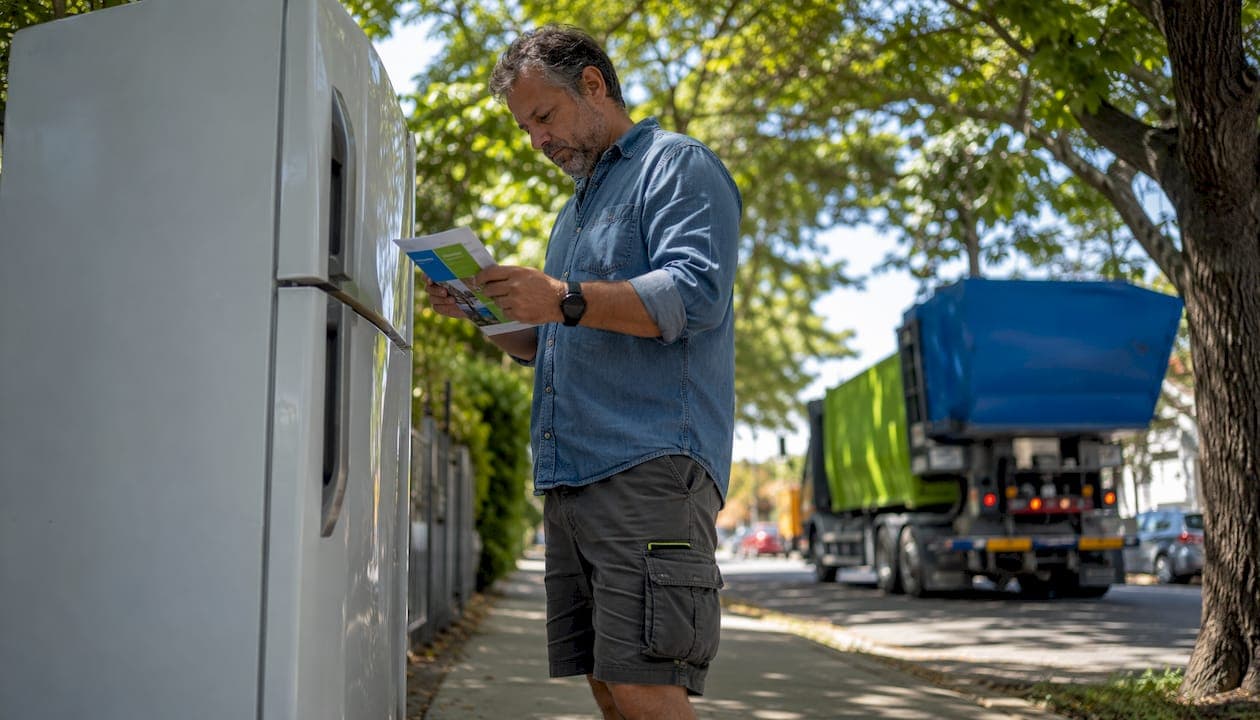
The fastest, safest, and legally compliant way to handle fridge disposal in the U.S. is to use an EPA-compliant pickup route: a utility rebate program, a municipal CFC appointment, or a certified junk-removal hauler that arranges refrigerant recovery. Venting refrigerant yourself is illegal under EPA Section 608, and setting a fridge at the curb without the proper recovery tag will get it refused in most cities.
Your fastest options at a glance:
-
Fastest: Call Easyscrapofficial for same-day refrigerator removal with an insured crew and a free quote.
-
Cheapest (net cost): Utility rebate programs like Mass Save or Alliant Energy pay $35–$125
-
Safest/legal: Licensed refrigerant recovery is required by EPA Section 608 before any appliance is buried, shredded, or dismantled.
Table of Contents
-
What does the law actually require for refrigerant recovery?
-
How much does refrigerator removal cost, and can you get paid?
-
Why a qualified hauler matters more than most people realize
What are all the legal fridge disposal options?
Not every route works for every situation. Here is a breakdown of what is available and when each one makes sense.
Utility rebate pickup is the best deal when your fridge still runs. Programs like Alliant Energy’s appliance recycling offer free pickup and a $50 payment per qualifying unit. Mass Save pays $35–$100 depending on the appliance. The catch: the unit must typically be plugged in and working at pickup, meet a minimum size, and you must be a utility customer.
Municipal bulk pickup costs little or nothing but requires planning. Most cities require a CFC removal appointment before they will collect a refrigerator. NYC’s DSNY, for example, requires a certified technician to recover refrigerant and attach a tag before the unit is set out. Units with newer refrigerants like R600a or R32 may be refused entirely.
Private junk-removal services like Easyscrapofficial handle the whole job: moving the unit, arranging compliant disposal, and recycling or donating when possible. No appointments with the city, no waiting weeks for a bulk pickup window.
Retailer haul-away is worth asking about when you buy a new fridge. Many retailers offer haul-away with delivery, sometimes at no extra charge.
Donation works if the unit is clean, functional, and not too old. Nonprofits and Habitat for Humanity ReStores sometimes offer pickup. You can also list it on a local marketplace to find a buyer who hauls it themselves.
Scrapyards and transfer stations accept refrigerators at some facilities, but call ahead. Not all take appliances, and fees vary.
| Option | Out-of-pocket cost | Refrigerant recovery | Speed | Disposal path |
|---|---|---|---|---|
| Utility rebate pickup | $0 (you get paid) | Included | Days to weeks | Recycled |
| Municipal bulk pickup | $0–$45 | Required via appointment | Scheduled | Recycled |
| Private hauler (Easyscrapofficial) | $75–$150 | Arranged by hauler | Same day | Recycle/donate |
| Retailer haul-away | Often free with purchase | Arranged by retailer | Delivery day | Recycled |
| Donation/resale | $0 | Not applicable | Varies | Reused |
| Scrap yard/transfer station | Varies | Must be pre-recovered | Self-haul | Recycled |
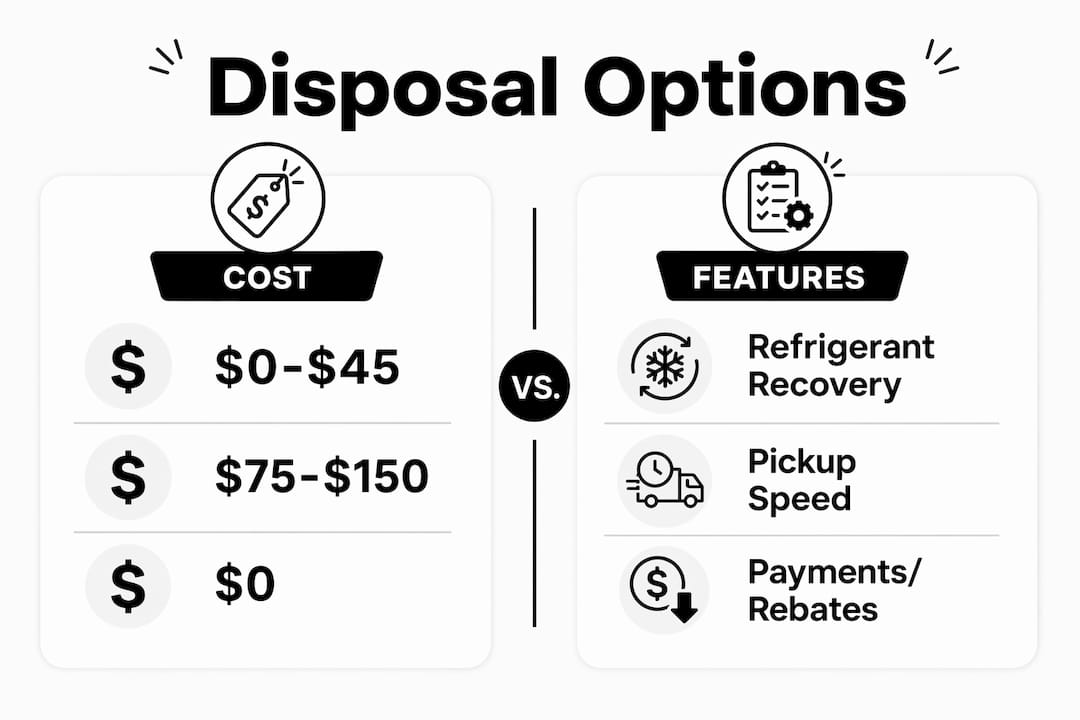
Pro Tip: Utility “bounty” programs often combine free pickup with a cash payment and handle refrigerant recovery for you. Eligibility rules vary by program, so check your utility’s website before assuming you qualify.
What does the law actually require for refrigerant recovery?
The short answer: you cannot legally vent refrigerant into the air, and most disposal facilities will not accept a fridge unless someone has already recovered it.
Under EPA Section 608, it is illegal for untrained individuals to intentionally release refrigerant. Landfills and metal recyclers must verify that refrigerant has been properly removed before they bury, shred, or dismantle any appliance. That means a written, signed statement from whoever removed it. Facilities that skip this step face federal penalties.
The practical impact for homeowners: if you drag a fridge to the curb without a CFC recovery tag, your city will likely leave it there. City waste officials consistently warn that untagged appliances get refused, and in some jurisdictions the owner can be fined.
Newer refrigerants add another layer. R600a (isobutane) and R32 are flammable, and several municipalities have changed their acceptance rules as a result. Check the refrigerant sticker on the back or inside the door before scheduling any municipal pickup. If it lists R600a or R32, contact your city’s waste department directly, because curbside collection may not be an option.
Pro Tip: Always call your municipality’s bulk-pickup line before setting a fridge outside. Ask specifically whether a CFC appointment is required and whether your unit’s refrigerant type is accepted.
How much does refrigerator removal cost, and can you get paid?
Costs depend heavily on which route you choose.
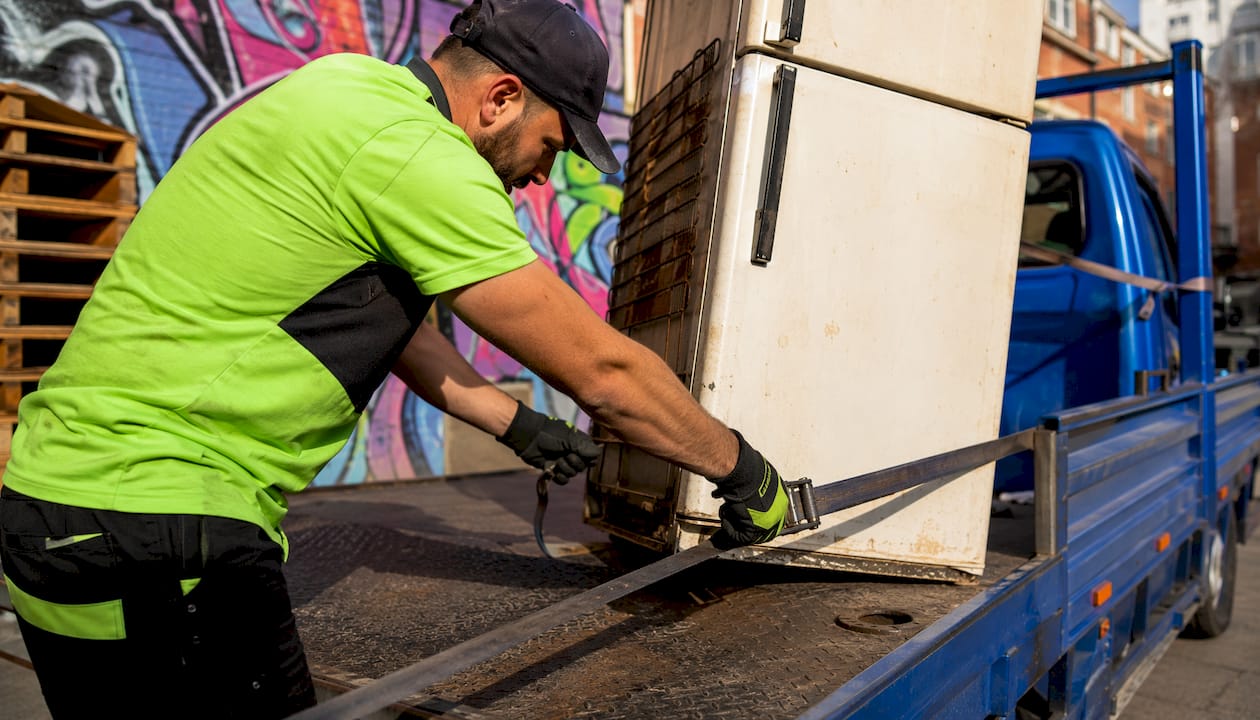
Private junk-removal services typically charge $75–$150 for a single refrigerator pickup. That price covers labor, transportation, refrigerant handling arrangements, and proper disposal. Accessibility factors like stairs or a tight basement can push the number higher.
Municipal programs often cost nothing, though some localities charge a small fee (typically $0–$45) for bulk appliance pickup. The tradeoff is scheduling: you may wait days or weeks for an appointment.
Utility rebate programs flip the equation entirely. Alliant Energy pays $50 per qualifying unit with free pickup. Mass Save pays cash rebates that vary depending on the appliance type. The RAD program and ENERGY STAR partners have processed over 9 million refrigerated appliances since 2006, recycling 1.5 billion pounds of materials, which shows how mainstream these programs have become.
| Route | Typical cost to you | Rebate/payment available | Notes |
|---|---|---|---|
| Utility rebate program | $0 | $35–$100+ | Unit must be working, plugged in |
| Municipal bulk pickup | $0–$45 | None | CFC appointment usually required |
| Private hauler | $75–$150 | None | Fastest, no eligibility requirements |
| Retailer haul-away | Often free | None | Must coincide with new purchase |
| Donation | $0 | None (tax deduction possible) | Unit must be functional |
How to prepare your refrigerator for pickup
Follow these steps before any scheduled pickup to avoid delays or outright refusal.
-
Unplug the unit at least 24 hours before pickup and let the freezer defrost completely.
-
Empty everything out, including shelves, drawers, and any items stored on top.
-
Disconnect the water line if your fridge has an ice maker or water dispenser. Shut off the supply valve first.
-
Secure or remove loose shelves so they do not shift during transport.
-
Check the refrigerant sticker on the back or inside the door and note the refrigerant type (R134a, R600a, R32, etc.) before scheduling municipal pickup.
-
Place the unit accessibly with the back toward the street, within the time window your hauler or municipality specifies. Do not block sidewalks.
-
Use a dolly if you are moving it yourself. Refrigerators should stay upright or tilted no more than 45 degrees to protect the compressor oil.
Pro Tip: Photograph the model and serial number sticker before the unit is hauled away. That information helps confirm the refrigerant type and can be useful for utility rebate paperwork.
How do you pick a trustworthy junk-removal company?
Start with one non-negotiable: the company must either perform EPA-compliant refrigerant recovery or transport the unit to an EPA-approved recycler. Any hauler who cannot answer that question clearly is a red flag.
What to ask before booking:
-
Are you insured, and can you provide proof?
-
How do you handle refrigerant recovery?
-
Where does the appliance go after pickup?
-
Do you provide a written quote before starting?
-
Can you do same-day or next-day pickup?
Red flags to watch for:
-
Vague or evasive answers about refrigerant handling
-
Cash-only offers with no written receipt or policy
-
No proof of insurance when asked
-
Prices dramatically below market with no explanation
Reputable haulers will also tell you whether they recycle, donate, or landfill the unit, and they should be willing to put that in writing. The RAD program’s scale (over 9 million appliances processed) shows that compliant, large-scale recycling is entirely achievable. A local hauler who cannot articulate their disposal path probably does not have one.
What Easyscrapofficial does for refrigerator removal
Easyscrapofficial provides same-day appliance removal with insured crews, free quotes, and a commitment to recycle or donate whenever possible. Here is what that looks like in practice:
-
Moving the unit: The crew handles all the heavy lifting, from basement or kitchen to the truck, including stairs.
-
Compliant disposal: Easyscrapofficial arranges proper refrigerant handling and transports units to appropriate recycling facilities.
-
Free quote upfront: No surprise charges. Pricing factors include accessibility, stairs, and unit size.
-
Same-day availability: Book online or by phone; crews can often arrive the same day.
-
Recycling and donation: Usable units are donated when possible. Everything else goes to a recycler, not a landfill.
For property managers clearing multiple units or handling an estate cleanout, Easyscrapofficial also handles full garage cleanouts and basement jobs where a fridge is just one item among many.
Key Takeaways
Proper fridge disposal requires EPA-compliant refrigerant recovery, and the fastest legal route is hiring an insured hauler like Easyscrapofficial or enrolling in a utility rebate program that handles recovery for you.
| Point | Details |
|---|---|
| Refrigerant recovery is required | EPA Section 608 prohibits venting; recovery must happen before disposal or curbside collection. |
| Utility rebates pay you | Programs like Mass Save and Alliant Energy offer $35–$100 plus free pickup for working units. |
| Private haulers cost $75–$150 | No eligibility requirements; fastest option when a rebate program does not apply. |
| Municipal pickup needs prep | Most cities require a CFC appointment and tag; R600a/R32 units may be refused entirely. |
| Easyscrapofficial handles it all | Same-day removal, insured crew, free quote, and recycling or donation whenever possible. |
Why a qualified hauler matters more than most people realize
The conventional wisdom is that fridge disposal is a logistics problem: get it out of the house, done. The part most homeowners underestimate is how quickly it becomes a legal and financial problem when something goes wrong.
Setting a fridge at the curb without a recovery tag does not just risk a refused pickup. In some municipalities it can trigger a fine, and the unit sits there until you resolve it. Hiring a hauler who quietly vents the refrigerant and disappears leaves you with no documentation, which matters if a facility later questions the chain of custody.
Easyscrapofficial’s approach, insured crews, recycling commitments, and transparent pricing, is not just a selling point. It is the difference between a job that is actually done and one that creates a paper trail problem later. For units containing flammable refrigerants like R600a, Easyscrapofficial will advise on the appropriate handling path rather than guess.
Ready to get your fridge out today?
Easyscrapofficial makes refrigerator removal straightforward: call or book online, tell us your address, whether there are stairs, and when you need it gone. An insured crew shows up, handles all the heavy lifting, and takes the unit to a proper recycling facility or donation center. No waiting weeks for a municipal window.
Get a free quote for same-day or next-day pickup. Easyscrapofficial serves Lawrence, Andover, Boston, Lowell, and Haverhill, and the surrounding area. If you have other appliances or bulky items to clear, check out the full appliance removal service page for bundled options.
Useful sources and programs to check
Before scheduling any pickup, verify your local rules directly. These are the most authoritative places to start.
| Source | What it covers | Why check it |
|---|---|---|
| EPA Appliance Disposal guidance | Section 608 rules, RAD program, utility rebate finder | Confirms legal requirements and links to rebate programs by state |
| EPA Safe Disposal Procedures (PDF) | Detailed federal rules for facilities and haulers | Explains what written documentation is required at disposal facilities |
| NYC DSNY CFC Removal | Municipal CFC appointment process, refrigerant tagging | Model example of what most city programs require before curbside collection |
| Mass Save Appliance Recycling | Utility rebate amounts, eligibility, scheduling | Check if your utility offers a similar program in your state |
| Alliant Energy Appliance Recycling | $50 per-unit payment, free pickup details | Concrete example of a utility bounty program with stated payment amounts |