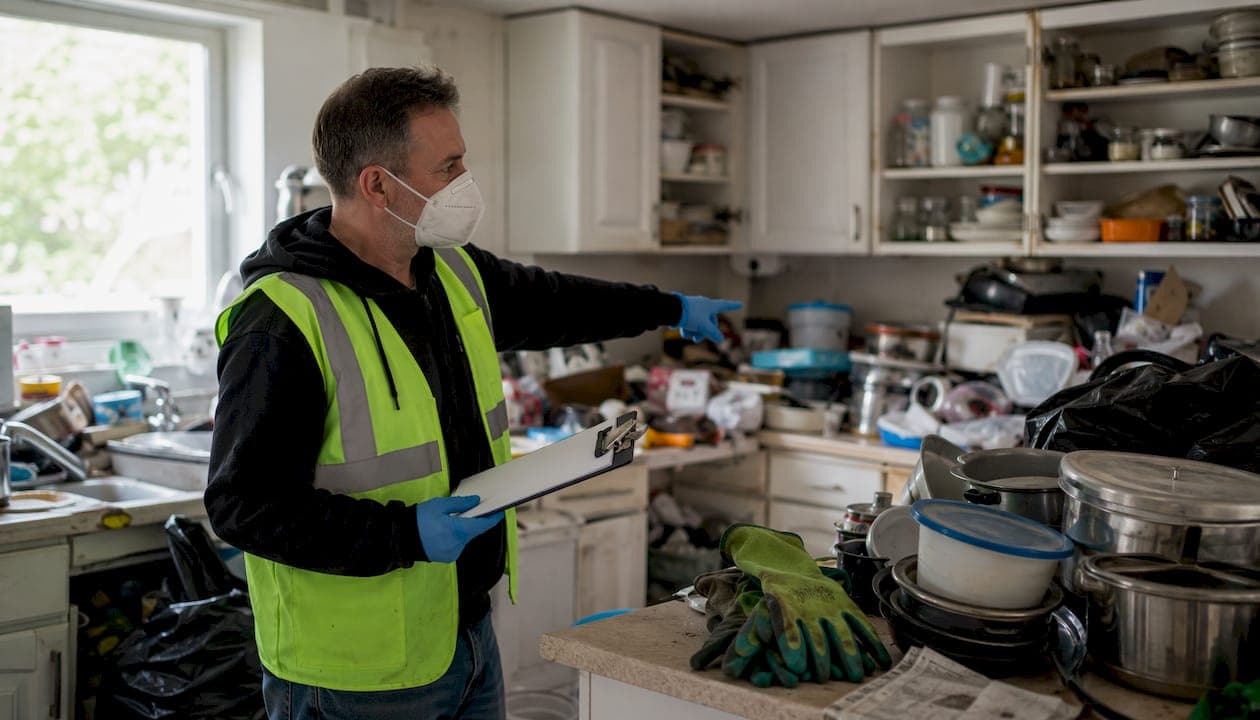
If safety hazards, blocked exits, biohazards, or active pest infestations are present, hire professionals now. A reputable hoarder house cleanup crew starts with a safety triage walkthrough, not a dumpster. The minimum viable first outcome is three things: a clear exit path, a working bathroom, and one safe sleeping area. Everything else comes after.
Cost ranges widely based on severity. Small stabilization jobs can be relatively affordable; severe whole-house or biohazard scenarios can become very expensive. Most moderate apartment or single-room cleanouts fall somewhere in between.
Before anyone touches anything:
- Stop. Do not disturb piles, open containers, or move items near structural walls until a professional has assessed the space.
- Call for a safety triage. A trained crew or licensed remediator can complete a 10–15 minute walkthrough that changes the entire plan.
- Take photos from doorways and hallways for insurance documentation and to share with cleanup crews for accurate estimates.
Easyscrapofficial offers free on-site estimates for local hoarding cleanouts. If you're not sure whether you need full professional service or a staged plan, that estimate call is the right first step.
Table of Contents
- When should you hire a professional for a hoarder house cleanup?
- What do professional hoarding cleanup crews actually do?
- How much does a hoarding cleanout cost, and how long does it take?
- How do you pick a compassionate, insured hoarding cleanup company?
- When is DIY not safe, and what PPE do you actually need?
- Why safety triage first, then psychological engagement, produces better results
- Key Takeaways
- What most people get wrong about hoarding cleanup
- Easyscrapofficial handles the heavy work so you don't have to
- Useful sources and where to check local rules
When should you hire a professional for a hoarder house cleanup?
Some situations allow a staged DIY approach with a solid plan and proper PPE. Others require a phone call today. The difference usually comes down to what's in the home, not how much of it there is.
Call professionals immediately if you see any of these:
- Blocked exits or hallways where a person cannot safely exit in an emergency
- Stacked piles that reach the ceiling or lean against load-bearing walls
- Persistent strong odors (ammonia, sulfur, decay) that suggest animal waste, sewage, or decomposition
- Visible rodent droppings, live insects, or evidence of nesting
- Visible mold on walls, floors, or furniture
- Human or animal waste, blood, or bodily fluids anywhere in the home
- Needles, sharps, or unknown medications
- Evidence of structural damage: sagging floors, cracked walls, water intrusion
Hazards like blocked exits and structural instability require same-day action. Mold and pest infestations can typically be addressed within days, but they should not wait weeks. When authorities get involved, the timeline shrinks fast. Municipal abatement orders can revoke salvage rights and allow the city to place a lien on the property to recover cleanup costs, which means the homeowner loses control of what stays and what goes.
Pro Tip: A 10–15 minute safety triage by a trained cleanup crew, fire inspector, or licensed remediator is the single highest-return action you can take before any physical work begins. It identifies immediate hazards, clarifies scope, and often shortens the overall timeline by flagging which specialists are needed.
What do professional hoarding cleanup crews actually do?
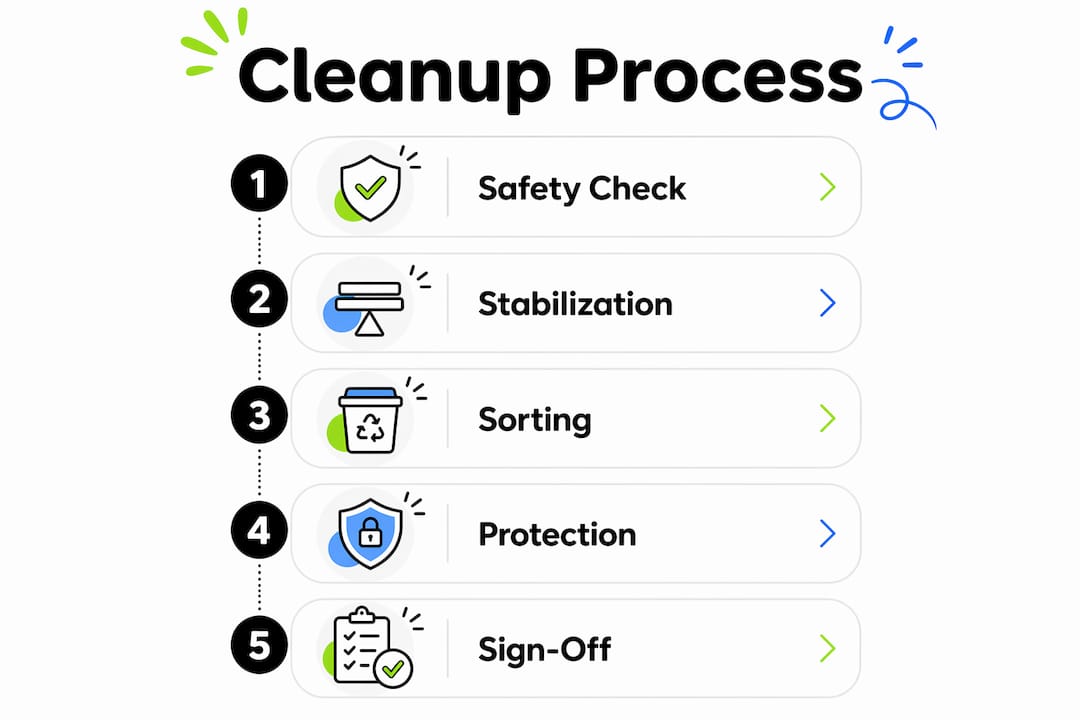
The process is more structured than most people expect. A good crew doesn't just show up with a dumpster. Here's the full sequence.
Phase 1: Safety triage and assessment
The crew walks the property, identifies blocked exits, checks utility access, and flags any biohazards before a single item moves. This walkthrough determines whether the job requires a biohazard remediator, a structural inspection, or pest control before cleanup can begin. Skipping this step is how projects go sideways.
Phase 2: Stabilization first
The first physical goal is always the minimum viable safety outcome: clear the primary exit path, restore access to one functioning bathroom, and establish one safe sleeping area. Practitioners consistently find that stabilization before full clearance reduces resident resistance and prevents the "reset button" relapse where a person re-accumulates quickly after a traumatic full clear-out.
Phase 3: Sorting with the resident
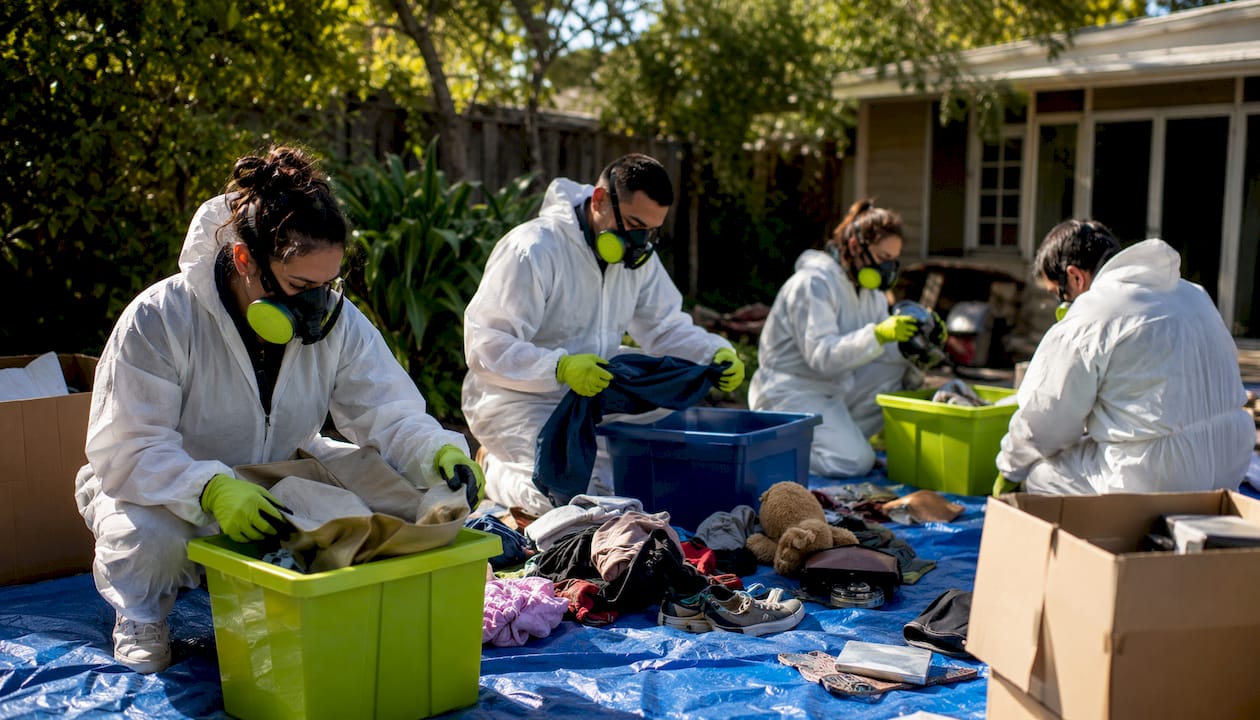
Sorting happens in four categories: keep, donate, recycle, and discard. Crews work with the resident, not around them. Keepsakes, documents, and valuables get flagged and set aside before anything goes in a truck. A good crew never makes unilateral decisions about what leaves the property.
Standard sorting steps:
- Identify and secure documents, medications, and valuables first.
- Work room by room, starting with the highest-hazard areas.
- Apply the four-box method: keep, donate, recycle, discard.
- Photograph any item the resident is uncertain about before it moves.
- Stage donation boxes near the exit with a firm pickup window of 24–48 hours.
Practitioners recommend 1–3 donation boxes per session with scheduled pickups within 24–48 hours. Open-ended donation piles create decision paralysis and stall projects.
Phase 4: Containment, PPE, and removal
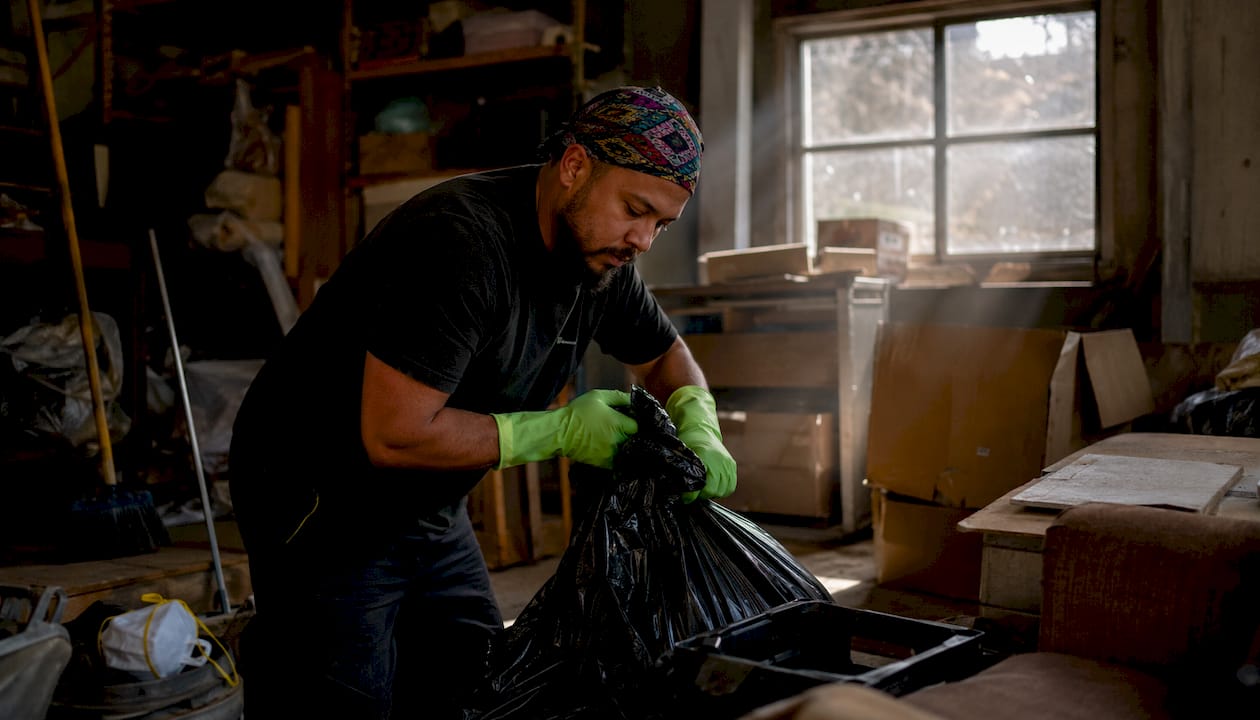
Crews use N95 or higher respirators, heavy-duty gloves, eye protection, and disposable coveralls throughout. Dust is controlled with barriers and ventilation. Mold and rodent contamination require localized remediation protocols, not just bagging and hauling. Regulated materials (sharps, chemicals, certain electronics) go through separate disposal channels.
Phase 5: Client sign-off
Before the truck leaves, the resident or property owner reviews what's been removed and confirms the disposition of donated and discarded items. Written documentation of what was taken protects everyone.
How much does a hoarding cleanout cost, and how long does it take?
Pricing varies by job size, hazard level, and how many truckloads the project requires. Three common pricing models are used in the industry: per-hour per-person, flat-rate by truckload, and project or estate pricing for large or complex jobs.
| Job Type | Typical Range | Notes |
|---|---|---|
| Small stabilization | Costs vary by job size and conditions | |
| Apartment or condo cleanout | Costs vary depending on floor access and volume | |
| Whole-house moderate | Costs vary with multiple truckloads and sorting needs | |
| Severe or biohazard whole-house | Costs increase substantially due to remediation and permits |
Ranges reflect published industry data; your actual cost depends on local labor rates, disposal fees, and site-specific conditions.
What drives cost up:
- Biohazard contamination requiring licensed remediation
- Multiple truckloads of mixed materials (electronics, appliances, hazardous waste)
- Limited access (narrow hallways, upper floors, no elevator)
- Required permits for dumpster placement or regulated material disposal
- Rushed timelines that require larger crews or overtime
On timeline: a stabilization job in one or two rooms can be completed in a few hours. A moderate apartment cleanout typically runs one to two days. Severe multi-room or whole-house projects often require multiple visits over days or weeks, with phased truck removal to avoid overwhelming the resident. Full single-day clearance of a severely hoarded home is uncommon and often counterproductive.
How do you pick a compassionate, insured hoarding cleanup company?
The wrong crew can cause real harm, both to the property and to the person living in it. Here's what to verify before anyone shows up.
Vetting checklist:
- Proof of general liability insurance and workers' compensation
- Documented training in hoarding sensitivity or trauma-informed cleanup
- References or before-and-after case studies from similar jobs
- Capability to handle biohazards or clear partnerships with licensed remediators
- Transparent, written estimate before work begins
- A stated donation policy with named charity partners
- Confidentiality policy covering photos and personal information
Questions to ask during the estimate call:
- "Do you perform a safety triage before any removal begins?"
- "Who decides what gets removed? Is the resident involved at every step?"
- "How do you protect keepsakes and documents during sorting?"
- "What is your donation policy, and how quickly do donations leave the property?"
- "What happens if you find biohazards or structural issues mid-job?"
Red flags that should end the conversation:
- A crew that insists on removing everything in a single visit regardless of the resident's state
- No written estimate or a refusal to put scope in writing
- No proof of insurance when asked directly
- Pressure tactics, urgency framing, or discounts contingent on signing today
Easyscrapofficial brings an insured crew, a donation-first disposal policy, free written estimates, and the option for staged cleanouts that work at the resident's pace.
Pro Tip: Ask specifically whether the crew has handled hoarding situations before, not just general junk removal. The sorting process, the emotional dynamics, and the safety protocols are meaningfully different from a standard garage cleanout.
When is DIY not safe, and what PPE do you actually need?
DIY cleanup is reasonable only when no biohazards, pest infestations, mold, or structural issues are present. If any of those conditions exist, stop and call a professional.
Minimum PPE for any DIY hoarding cleanup:
- N95 respirator or higher (P100 for mold or rodent areas)
- Heavy-duty nitrile or rubber gloves, not latex
- Safety glasses or goggles
- Disposable coveralls or clothes you can bag and wash immediately
- Closed-toe, puncture-resistant footwear
Even with full PPE, rodent droppings, widespread mold, and blood or bodily fluids require professional remediation. Household cleaners and standard gloves are not sufficient for these contaminants.
| Scenario | Recommended Action |
|---|---|
| Mild clutter, no odors, no pests | DIY with plan and PPE |
| Moderate clutter, some dust, no biohazards | DIY or pro-assisted sort |
| Rodent droppings or active infestation | Call hoarding cleanup crew |
| Visible mold covering more than 10 sq ft | Call licensed remediator |
| Human/animal waste, blood, sharps | Call biohazard remediation |
| Structural concerns, sagging floors | Call inspector before anyone enters |
Always confirm immediate hazards before starting any physical work. A five-minute visual check from the doorway before entering a room is not optional.
Why safety triage first, then psychological engagement, produces better results
The order of operations in a professional cleanout is not arbitrary. Safety triage before physical removal, and psychological engagement before full clearance, are the two decisions that most consistently determine whether a project succeeds long-term.
Specialists who work with hoarding disorder consistently note that physical cleanup is the final step, not the first. Rushing to clear a home without involving the resident produces rapid re-accumulation, sometimes within weeks. The resident's dignity and sense of control over their own space are not soft considerations. They are the variables that determine whether the cleanout holds.
Pairing a cleanout with a therapist or hoarding specialist who uses cognitive behavioral therapy approaches improves long-term outcomes. The physical crew handles the logistics; the specialist addresses the underlying behavior. Neither replaces the other.
Pro Tip: Stage truck removal across multiple sessions and hold the donation window open for 24–48 hours before items leave the property. This small accommodation dramatically reduces second-guessing and the urge to retrieve items from the truck.
Trust signals that credible providers demonstrate:
- Insured crews with documented training
- Free written estimates before any commitment
- Before-and-after documentation shared only with client consent
- Named donation partners with scheduled pickups
- A stated confidentiality policy covering all photos and personal items
The Massachusetts government's hoarding resources and the IOCDF Hoarding Center both provide guidance for families navigating this process alongside a loved one.
Key Takeaways
A professional hoarder house cleanup requires safety triage first, stabilization second, and full clearance only after the resident is engaged and hazards are controlled.
| Point | Details |
|---|---|
| Triage before removal | A 10–15 minute safety walkthrough prevents dangerous work and clarifies scope before any item moves. |
| Stabilization is the first goal | Clear exits, one working bathroom, and one safe sleeping area come before full clearance. |
| Cost scales with hazard level | Small jobs can run under $2,000; severe biohazard whole-house cleanouts can exceed $20,000. |
| Staged cleanouts outperform single-day clears | Phased removal with 24–48 hour donation windows reduces relapse and resident resistance. |
| Easyscrapofficial | Offers free estimates, insured crews, donation-first disposal, and staged cleanout options for local homeowners. |
What most people get wrong about hoarding cleanup
The assumption that a faster, more complete cleanout is always better is the single most common mistake families make when arranging a hoarding cleanup. It feels logical: get it all out at once, start fresh. In practice, it tends to produce the opposite result.
Residents who experience a rapid, total clear-out without involvement in the decisions often describe it as a violation, regardless of intent. The items removed were not just clutter to them. When the emotional experience of the cleanup is traumatic, re-accumulation follows quickly. The home looks the same within months.
What actually works is slower and less satisfying to watch: a safety triage, a stabilization pass, a few sessions of resident-led sorting, and a crew that treats every decision as the resident's to make. Privacy matters too. Photos taken during a cleanout should never appear on social media or in marketing materials without explicit written consent. A crew that posts dramatic before-and-after content without consent is telling you something about how they view the people they serve.
The practical takeaway: choose a crew that asks more questions than it answers on the first call. The right provider wants to understand the situation before proposing a scope.
Easyscrapofficial handles the heavy work so you don't have to
When you're ready to move from reading to doing, Easyscrapofficial is the local crew that shows up prepared. Free on-site estimates, an insured team, and a donation-first approach mean nothing gets hauled away without your say-so.

Here's what the first visit looks like: a safety walkthrough of the space, a written estimate with timeline options, and a conversation about what stays, what donates, and what goes. No pressure to commit to a full clear-out on day one. Staged removal is available for situations where the resident needs time between sessions.
Services include full hoarding cleanouts, basement cleanouts for water-damaged or mold-prone spaces, garage cleanouts, appliance and furniture removal, and same-day pickup where scheduling allows. Easyscrapofficial donates and recycles whenever possible, keeping usable items out of the landfill.
To get started, request your free estimate at easyscrapofficial.com/services. A real person will follow up to schedule a walkthrough at a time that works for you.
This article is general information, not legal or medical advice. For your specific situation, confirm local waste disposal rules and hoarding-related regulations with your city or county, and consult a qualified professional as needed.
Useful sources and where to check local rules
- Massachusetts Hoarding Risk Information — State-level overview of health and safety risks associated with hoarding; useful for understanding regulatory triggers.
- IOCDF Hoarding Center: How to Help a Loved One — Practitioner-reviewed guidance for families on how to support a resident through the cleanup process without causing harm.
- [Mayo Clinic: Hoarding Disorder](https://www.mayoclinic.org/diseases-conditions/hoarding-disorder/symptoms-causes/syc-20361 056) — Clinical overview of hoarding disorder, useful for understanding the psychological dimension before arranging a cleanout.
- HelpGuide: Hoarding Disorder Help — Accessible mental-health guidance on hoarding, including how to approach a loved one and when to involve specialists.
- SERVPRO: When to Hire a Cleaning Service for Hoarders — Practitioner guidance on safety triage protocols and professional assessment steps.
For local regulations: Check your city or county's public works or code enforcement department for waste disposal rules, nuisance-abatement timelines, and any permit requirements for dumpster placement. If a municipal abatement order has already been issued, contact a local attorney before any removal begins, as salvage rights and lien exposure may already be in play.