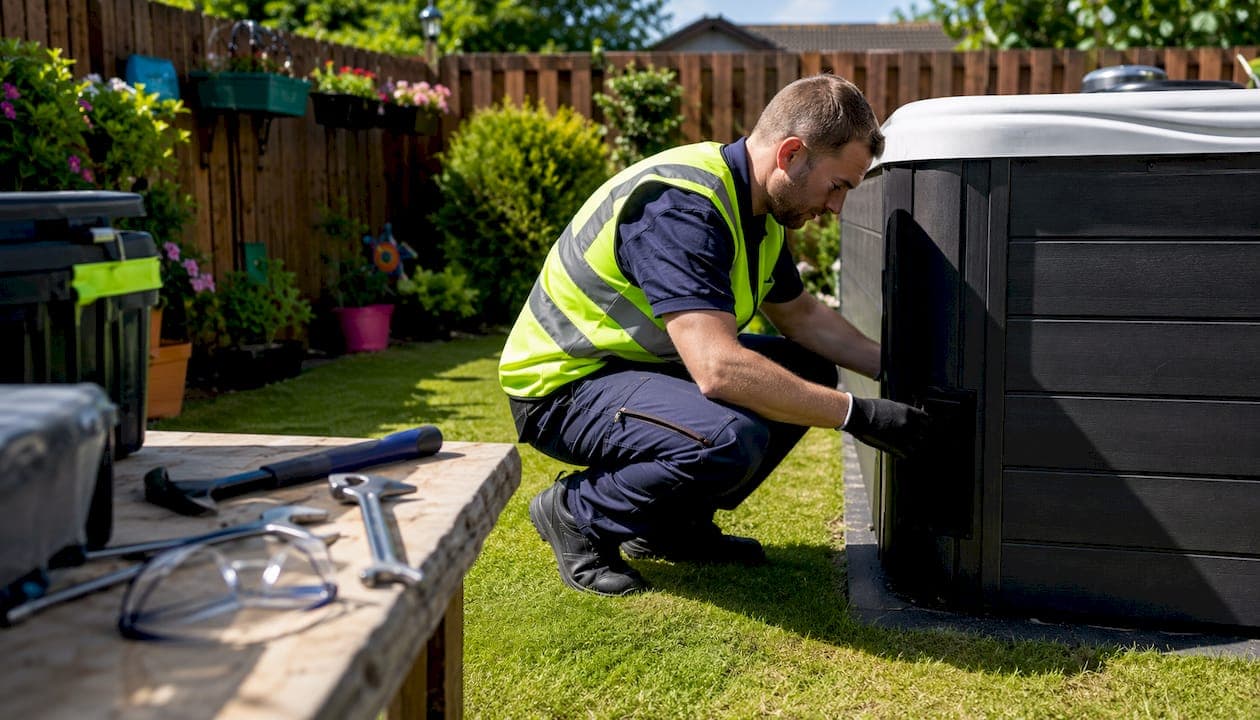
Hot tub removal typically costs between $450 and $800depending on whether the unit is above-ground or in-ground, how accessible your yard is, and what disposal fees look like in your area. For most homeowners, the bill lands in the mid hundreds of dollars for a standard above-ground removal. In-ground spas cost considerably more because they involve demolition, permits, and backfill work.
The short recommendation: hire an insured professional for anything beyond draining the water yourself. The liability exposure from electrical disconnects alone makes DIY a bad gamble for most people.
-
Above-ground portable or hard-shell tub: typically under a thousand dollars
-
In-ground or built-in spa: costs more due to demolition and permits.
-
Recommended next step: Get 2–3 written quotes from insured removal crews; ask specifically whether the quote covers electrical disconnect, disposal fees, and permit handling
Table of Contents
What does hot tub removal cost nationally?
The table below gives you a quick budget anchor. These are national averages for professional removal, not DIY estimates.
| Hot Tub Type | Low End | Average | High End |
|---|---|---|---|
| Portable / inflatable | $150 | $225 | $300 |
| Above-ground hard-shell | $450 | $525 | $600 |
| Large 6–8 person above-ground | $600 | $700 | $800 |
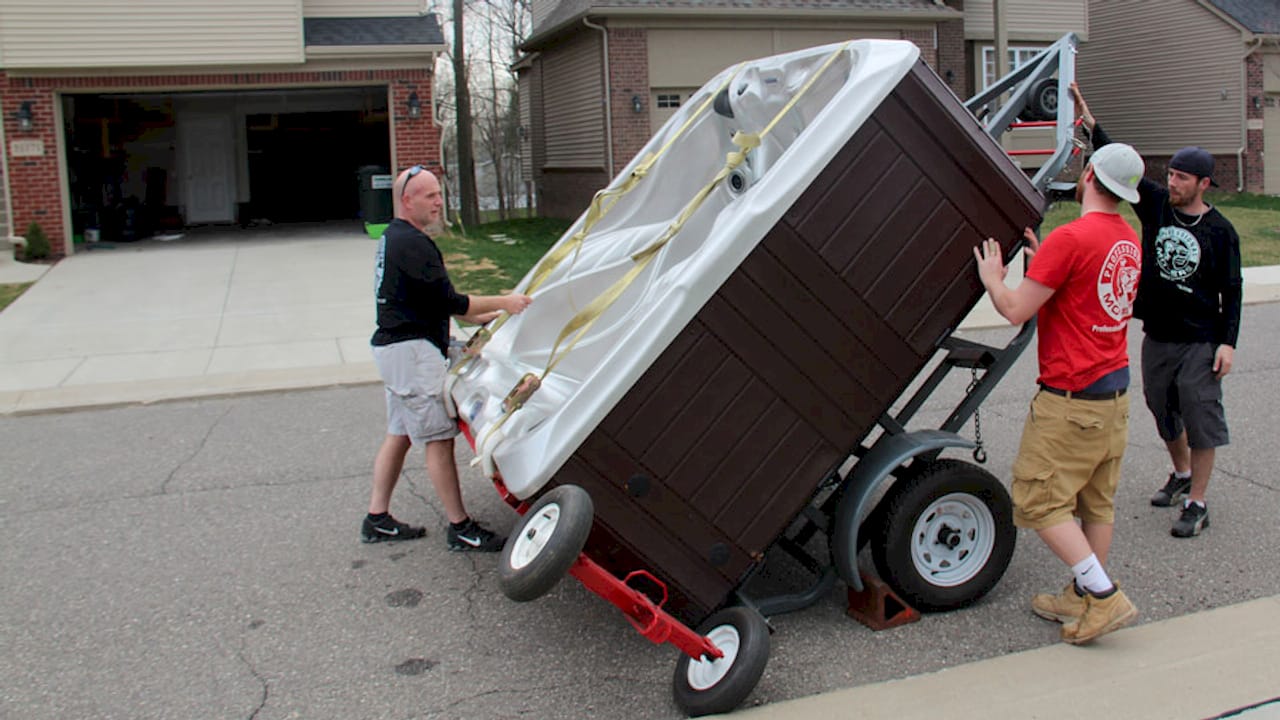
These dollar figures reflect the national cost ranges: professional above-ground removal typically costs $150–$800.
A few things push you toward the high end of any row: stairs, narrow gates, long carry distances, and metro-area landfill tipping fees. Metropolitan areas often run $100–$400 above national averages because labor costs and dump fees are higher. If you’re in Boston, Haverhill, or another dense metro, budget toward the upper third of your tub’s range.
-
Small portable tub with easy yard access: likely $150–$300
-
Standard 4-person hard-shell on a deck with stairs: $450–$600
-
Large 8-person tub behind a narrow gate: $600–$800
How tub type and size change the price
The single biggest price variable isn’t the brand or the age of your hot tub. It’s the physical category it falls into, because that determines crew size, equipment, and how long the job takes.
Inflatable and portable plug-and-play tubs are the easiest. They weigh under 100 lbs empty, fold or deflate, and two people can carry them out in under an hour. Removal cost is low because labor time is minimal and the material is lightweight enough for a standard truck load.
Above-ground hard-shell tubs are the most common removal job. These acrylic or fiberglass shells typically weigh 500–900 lbs empty, and most crews cut them into sections on-site with a reciprocating saw before hauling the pieces out. That process takes 2–4 hours and usually requires two to three people.
Large 6–8 person tubs can weigh over 1,000 lbs empty and often sit on reinforced decking. The extra weight means more crew members, more trips, and sometimes a skid or dolly system to move the shell sections. Expect to pay toward the upper end of the above-ground range.
Pro Tip: If you can’t find the model plate, search the brand name and visible model number online — manufacturers list shipping weights, which are close to empty operational weight. That number tells a removal crew immediately what equipment they’ll need.
What actually drives the final price up or down?
Accessibility is the factor contractors mention most often, and it’s the one homeowners most frequently underestimate. A tub sitting in an open backyard with a wide gate is a straightforward job. The same tub behind a 30-inch fence gate, up a flight of stairs, or on a second-floor deck is a different story entirely.
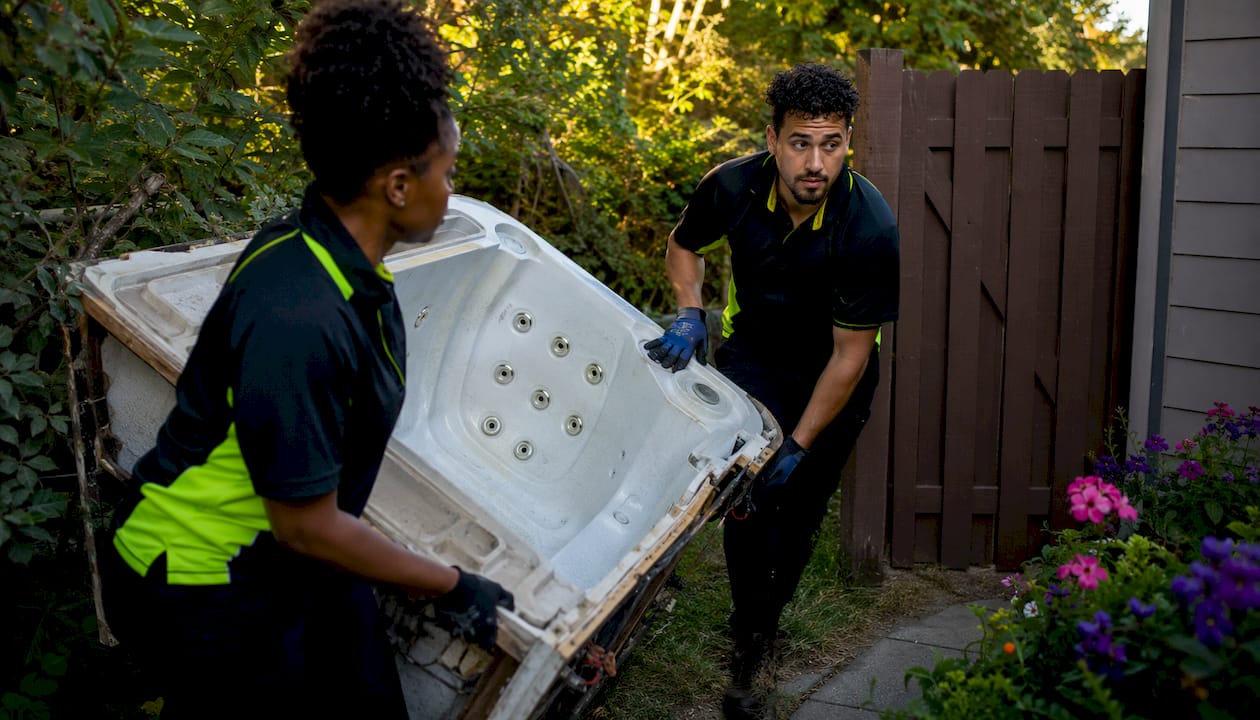
Contractors commonly add $100–$130 for stair carries or difficult access routes, and that premium can stack if multiple obstacles are involved. Some companies charge per flight of stairs; others quote a flat access surcharge. Ask before you book.
Labor structure varies by company. Smaller local crews often charge a flat removal fee that covers everything up to the truck. Larger operations may charge hourly rates of $100–$200 per hour for complex jobs where time is hard to predict. For a standard above-ground removal, flat-rate pricing is usually better for you as the homeowner.
Electrical and plumbing disconnects are where costs surprise people. Most hot tubs run on a dedicated 240V circuit. Capping that circuit and the plumbing lines properly requires a licensed electrician or plumber, and that work typically adds $100–$300 to the job. Some full-service removal companies include this in their quote; many don’t. Confirm in writing.
Disposal and tipping fees depend entirely on your local landfill’s rate structure. Rural areas with lower tipping fees push costs down; dense metro areas push them up. Some materials in a hot tub, particularly foam insulation and electronics, may require separate handling under local hazardous-waste rules.
Pro Tip: Before any crew arrives, locate your electrical panel and identify the hot tub breaker. Knowing where it is saves time and avoids a service call from an electrician just to find the disconnect.
-
Accessibility surcharges: $100–$300 depending on stairs, gates, or carry distance
-
Electrical/plumbing capping: $100–$300 (licensed trade required)
-
Disposal/tipping fees: varies by municipality; ask for a line-item breakdown
-
Permits for in-ground removal: $95–$630 plus potential soils-engineer fees
What surprise charges show up on the final invoice?
Most sticker shock on hot tub removal comes from add-ons that weren’t spelled out in the initial quote. Here’s what to watch for:
-
Stair carry fee: $100–$130 per job, sometimes per flight
-
Crane or rigging: $300–$1,500 for rooftop, second-floor, or extremely tight-access situations
-
Drain/empty surcharge: $50–$100 if the tub still has water when the crew arrives
-
Same-day or weekend premium: 10–25% above standard rate at many companies
-
Deck removal or concrete cutting: $200–$600 depending on scope, often quoted separately
-
Additional hauling runs: if the tub fills the truck and other debris requires a second trip
Crane rental alone can run $300–$1,500 depending on reach and the weight of the load, so if your tub is on a rooftop deck or behind a structure with no clear carry path, get that line item confirmed before signing anything.
What to ask before you book: “Does your quote include electrical disconnect, disposal fees, and any access surcharges? Is there a separate charge if the tub still has water?”
Where does the tub actually go after removal?
Disposal options matter both for your wallet and for the environment. The path a removed tub takes depends on its condition, your local infrastructure, and what the removal company offers.
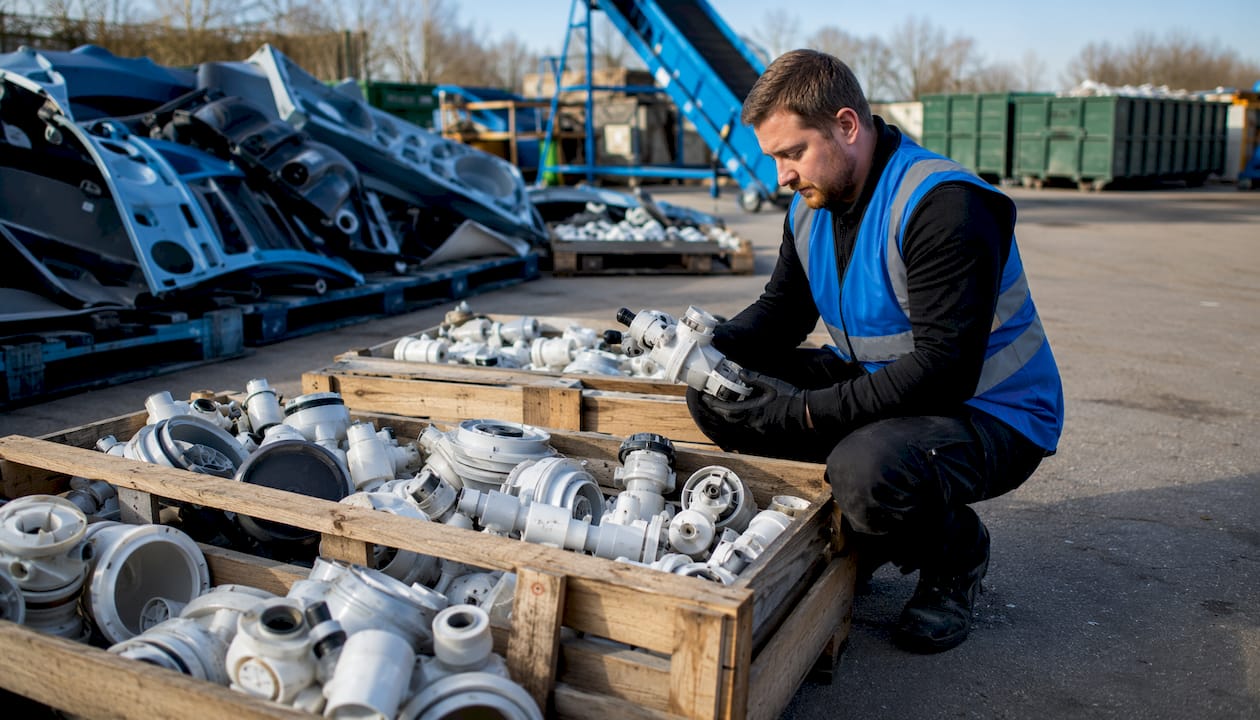
Landfill is the default for tubs that are cracked, waterlogged, or too degraded to salvage. Most of the shell is acrylic or fiberglass, which is not widely recycled, so landfill is often unavoidable for the bulk of the material. Tipping fees vary widely by county.
Recycling and materials reclamation is possible for the metal components: the frame, jets, pumps, heaters, and wiring. A responsible removal company separates these before the truck hits the landfill. Some municipalities require it. Check your local rules at your county’s solid waste authority website or your state’s environmental agency, such as Connecticut’s recycling guidance as a model for what state-level requirements can look like.
Donation and salvage works when the tub is functional or has usable parts. Working jets, pumps, covers, and control panels have resale value. Habitat for Humanity ReStores accept some working spa equipment. Facebook Marketplace and Craigslist are realistic options for a working unit someone else wants to haul away for free.
Resale of a working unit is worth exploring before you call a removal crew at all. A functional hot tub listed locally can attract buyers who will remove it themselves, turning your removal cost into zero.
-
Donate or sell if the tub powers on and holds water
-
Recycle metal components regardless of tub condition
-
Landfill the shell when no recycling option exists locally
-
Check for hazardous-material rules covering foam insulation and circuit boards
Pro Tip: Call your county’s solid waste authority before booking removal. Some counties have specific rules about foam insulation disposal, and a removal company that doesn’t know those rules could leave you with a compliance problem.
DIY vs. hiring a pro: which one actually saves money?
DIY hot tub removal looks cheaper on paper. In practice, the gap closes fast once you add up every cost component.
DIY removal typically runs $200–$700 when you account for tool rental (reciprocating saw, dollies, straps), dumpster rental, and hauling. That estimate doesn’t include a licensed electrician to cap the 240V circuit, which is legally required in most states and adds $100–$300 more. Push past a straightforward job and DIY can cost as much as a professional removal, with more physical risk and no liability coverage if something goes wrong.
The real DIY risk isn’t the cost. It’s the electrical disconnect. A 240V hot tub circuit carries enough current to cause serious injury or death if handled without proper training. Most jurisdictions require a licensed electrician to disconnect and cap the circuit before any demolition begins. Skipping that step to save money is the wrong trade-off.
Professional removal services handle electrical disconnects, demolition, heavy lifting, and disposal as a bundled service. When something goes wrong on a pro job, their insurance covers it. When it goes wrong on a DIY job, you do.
When DIY makes sense:
-
Draining the tub yourself before the crew arrives (saves $50–$100 on the quote)
-
Removing the cover and cabinet panels if the crew allows it
-
Selling or donating working components before the removal date
When to call a pro:
-
Any electrical disconnect work
-
In-ground or built-in spa removal
-
Tubs behind stairs, narrow gates, or on elevated decks
-
Any job where you’d need to rent a dumpster and specialized tools
Pro Tip: If you want to do any prep work yourself, call the removal company first and ask what they want done before arrival. Some crews prefer to handle everything; others appreciate a drained tub and removed cover.
-
DIY total cost: $200–$700+ (not including electrician)
-
Pro total cost: $150–$800 (all-in, depending on type and access)
-
DIY safety checklist: confirm power is off at the breaker, drain fully, remove cover, clear the path
How to lower your hot tub removal bill
A few specific moves can meaningfully reduce what you pay, and none of them require taking on unsafe work yourself.
Sell or donate working components first. A functional pump, set of jets, or control panel can sell for $50–$300 on Facebook Marketplace. A working cover in good shape has value too. Stripping saleable parts before the crew arrives doesn’t reduce their labor much, but it puts money back in your pocket.
Drain the tub yourself. Most removal companies charge $50–$100 extra if the tub still has water when they arrive. Draining it the day before costs you nothing but time. Use a submersible pump or the tub’s drain valve, and direct the water to a safe drainage point per your local rules.
Schedule on a weekday. Weekend and same-day rates are real. Booking a standard weekday appointment can save 10–25% at companies that charge premium rates for off-hours work.
Get at least three written quotes. Prices for the same job vary more than most homeowners expect. A quote that seems high from one company may be the standard rate; a quote that seems low may be missing disposal fees or electrical disconnect. Written quotes let you compare line by line.
Bundle with other junk removal. If you have other bulky items to remove, a garage cleanout or full property clear-out scheduled at the same time often costs less per item than separate trips.
Here’s a practical sequence to follow:
-
Check whether the tub works and list it for free pickup or sale online
-
Remove and sell any working components (pumps, jets, cover, control panel)
-
Drain the tub completely at least 24 hours before the crew arrives
-
Clear a path from the tub to the street (move furniture, unlock gates)
-
Get three written quotes that include disposal, electrical, and access fees
-
Book on a weekday to avoid premium scheduling surcharges
-
Confirm in writing what the crew will and won’t handle before they arrive
What to expect on removal day: timeline and steps
For an above-ground hard-shell tub, the full job from crew arrival to clean site typically takes 2–4 hours. In-ground demolition is a multi-day process once you factor in permit inspections and backfill work.
-
Permit pull (in-ground only): File with your local building department before scheduling the crew. Permit fees run $95–$630 and processing can take days to weeks depending on your municipality.
-
Electrical disconnect: A licensed electrician caps the 240V circuit before any demolition begins. This may happen the day before or as the first step on removal day.
-
Draining (if not done by homeowner): The crew drains remaining water and removes the cover.
-
Demolition and cutting: For above-ground units, the crew cuts the shell into manageable sections with a reciprocating saw. For in-ground spas, this step involves concrete cutting and excavation equipment.
-
Hauling: Shell sections, insulation, frame, and hardware are loaded into the truck.
-
Site cleanup: Crew removes debris, and for in-ground jobs, backfill and rough grading follow.
-
Permit inspection (in-ground only): A building inspector may need to sign off on the backfill before the permit closes.
Before the crew arrives, homeowners should:
-
Confirm the tub is fully drained
-
Clear a 4-foot-wide path from the tub to the street
-
Locate the electrical panel and identify the hot tub breaker
-
Move any patio furniture, planters, or obstacles along the carry path
-
Secure pets and keep children away from the work area
Sample job estimates: what real scenarios cost
These examples map common situations to realistic price ranges based on national averages.
| Sample Job | Price Range | Primary Cost Drivers |
|---|---|---|
| Sample A: Portable inflatable tub | $150–$300 | Minimal labor, lightweight, standard disposal |
| Sample B: Above-ground hard-shell with stairs | $450–$700 | Stair carry fee, electrical disconnect, disposal |
| Sample C: In-ground built-in spa | $700–$1,100+ | Demolition, permits, backfill, multi-day labor |
Sample A: Portable inflatable tub. This is the lowest-cost scenario. The tub deflates or folds, weighs under 100 lbs, and two people can carry it out in under an hour. Disposal is straightforward. Total cost is low because labor time is minimal and no specialized equipment is needed.
Sample B: Above-ground hard-shell with stairs. A standard 4-person acrylic tub on a deck with one flight of stairs. The crew cuts the shell on-site, carries sections down the stairs, and hauls everything in one truck load. Add a stair carry fee ($100–$130), electrical disconnect ($100–$200), and standard disposal, and you’re in the $450–$700 range. This is the most common removal scenario.
Sample C: In-ground built-in spa. A concrete or gunite spa set into a patio. This requires a demolition permit, concrete cutting, excavation, backfill, and multiple crew days. Permit fees, soils-engineer review in some counties, and extended labor push the total to $700–$800 at minimum, with complex jobs running higher in metro areas.
How Easyscrapofficial handles hot tub removal
Easyscrapofficial’s process is built around removing the guesswork that makes hot tub removal stressful. The job starts with a free quote, either from photos you send or an on-site visit, so you know the number before any crew shows up.
From there, the process is straightforward:
-
Free quote: Send photos or schedule an on-site assessment; no obligation
-
Scheduling: Same-day or next-day availability in Lawrence, Andover, Boston, Lowell, and Haverhill
-
Insured crew: Every job is covered; if something gets damaged, it’s handled
-
Disconnect coordination: Easyscrapofficial coordinates electrical disconnect logistics so you don’t have to manage a separate electrician call
-
Disposal and recycling: Usable components are donated or recycled when possible; landfill is the last resort, not the default
-
Permit guidance: For in-ground work, the team walks you through what permits are required locally
The hot tub removal service covers the full job: draining, cutting, hauling, and disposal. No hidden fees for standard access, and no surprise charges for disposal that weren’t in the quote.
Pro Tip: When you send photos for a quote, include a shot of the access path from the tub to the street, not just the tub itself. That single photo eliminates the most common source of quote revisions.
Key Takeaways
Most homeowners pay in the mid hundreds of dollars for a standard above-ground hot tub removal, with in-ground demolition jobs costing significantly more depending on permits, access requirements, and local disposal fees.
| Point | Details |
|---|---|
| National cost range | Above-ground removal runs $150–$800; in-ground spa removal typically costs $400–$800 |
| Biggest price driver | Accessibility (stairs, narrow gates, long carries) adds $100–$300 and is the most common hidden charge. |
| Electrical disconnect | Capping a 240V circuit requires a licensed electrician and adds $100–$300; confirm it’s in the quote. |
| In-ground permits | Demolition permits cost $95–$630 and may require soils-engineer sign-off; factor in processing time. |
| Easyscrapofficial | Offers free photo or on-site quotes, insured crews, and eco-friendly disposal across the Lawrence, Andover, Boston, Lowell, and Haverhill area. |
Why homeowners almost always call a pro
The conventional wisdom says DIY saves money. For hot tub removal, that’s only true in the narrowest sense, and it ignores where the real risk lives.
Most homeowners who attempt DIY removal get partway through and stop. The shell is heavier than expected, the electrical disconnect requires a licensed trade, and the dumpster rental adds a cost they didn’t budget for. By the time they call a professional to finish the job, they’ve paid for both.
What actually matters isn’t the gross cost comparison. It’s the liability exposure. A 240V circuit, a 900-lb shell on a deck, and a narrow staircase are not a combination that rewards improvisation. Professionals carry insurance for exactly the scenario where something goes sideways, and that coverage protects your property, not just theirs.
Property managers understand this instinctively. When a tenant leaves a hot tub behind, the calculation isn’t “can I save $200 by doing this myself?” It’s “what happens if someone gets hurt on my property during an uninsured removal?” The answer to that question is what drives most people to pick up the phone.
Get a free hot tub removal quote from Easyscrapofficial
Skip the guesswork on pricing. Easyscrapofficial gives you a real number before any crew shows up, either from photos you send or a quick on-site visit. No vague estimates, no surprise disposal fees added at the end.

The crew is insured, the quotes are free, and the service covers Lawrence, Andover, Boston, Lowell, and Haverhill. Easyscrapofficial handles the full job: draining, cutting, hauling, and disposal, with recycling and donation options built in. For in-ground work, permit guidance is part of the conversation from the start.
Ready to get it done? Request your free quote online or send photos of your tub and access path to get a same-day estimate. The full list of removal services is available if you have other items to clear at the same time.
Useful sources and further reading
Use these resources to verify local permit requirements, landfill tipping fees, and electrician licensing rules in your area.
-
Angi: How Much Does Hot Tub Disposal Cost? — national cost ranges and professional removal guidance
-
HomeGuide: Hot Tub Removal Cost — labor rates, hourly pricing, and timeline data
-
HomeIndepth: Hot Tub Removal Cost — permit cost ranges and DIY vs. pro cost breakdown
-
JunkRemovalCosts.com: Hot Tub Removal Cost — accessibility surcharges and site prep cost data
-
Your county building department website: search “[your county] demolition permit” to find local permit fees and application steps for in-ground removal
-
Your county solid waste authority or municipal landfill: search “[your city] landfill tipping fees” to get current disposal rates before requesting quotes
-
Your state contractor licensing board: verify that any electrician or plumber handling your disconnect holds a current license in your state before work begins