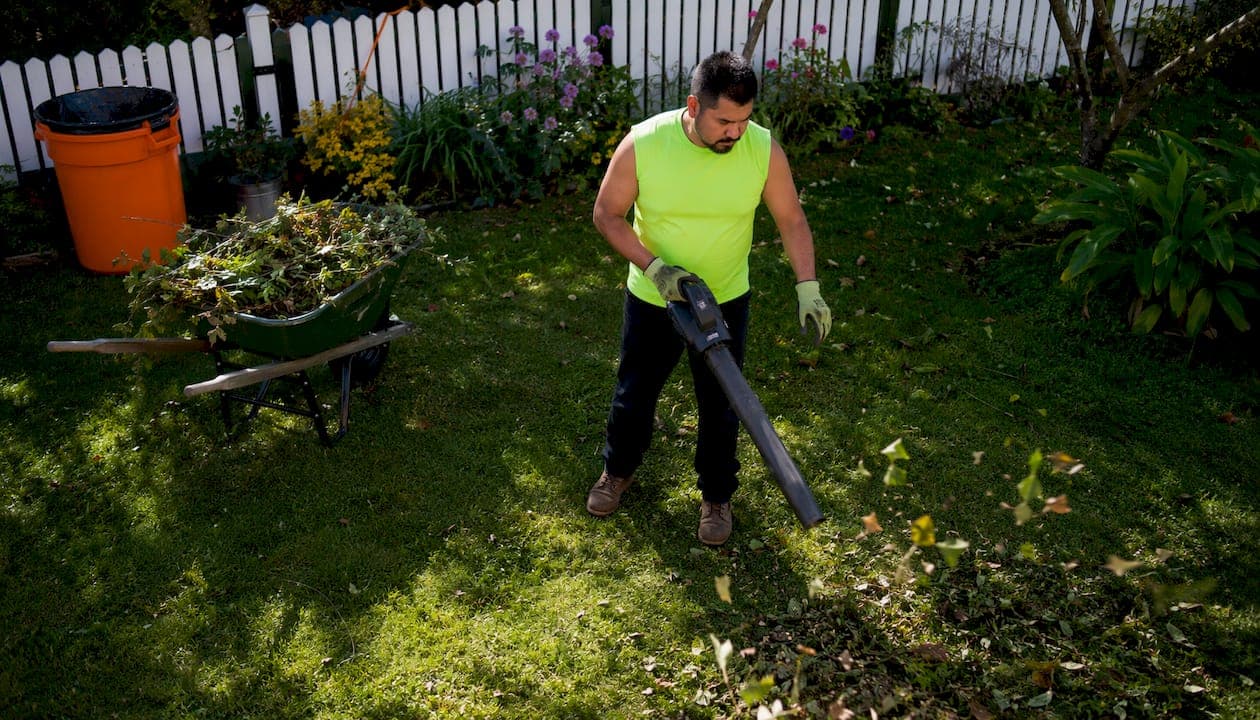
If debris from a storm is sitting on your private property, you are responsible for removing it. Municipal curbside programs only collect at the public right-of-way, they run on zone-by-zone schedules that can take weeks, and they exclude commercial properties entirely. If you own a rental, manage a commercial parcel, or simply cannot wait, hire a licensed paid crew.
Your immediate TL;DR:
- Municipal pickup applies only to residential properties during declared disaster events, and only for debris placed at the curb.
- Safety comes first: stay out of areas with downed lines, leaning trees, or flood-contaminated materials.
- Document everything before you touch a single branch: time-stamped photos protect your insurance claim.
- Separate debris into rough categories at the curb if it is safe to do so.
- Call Easyscrapofficial for a free on-site quote before committing to anything.
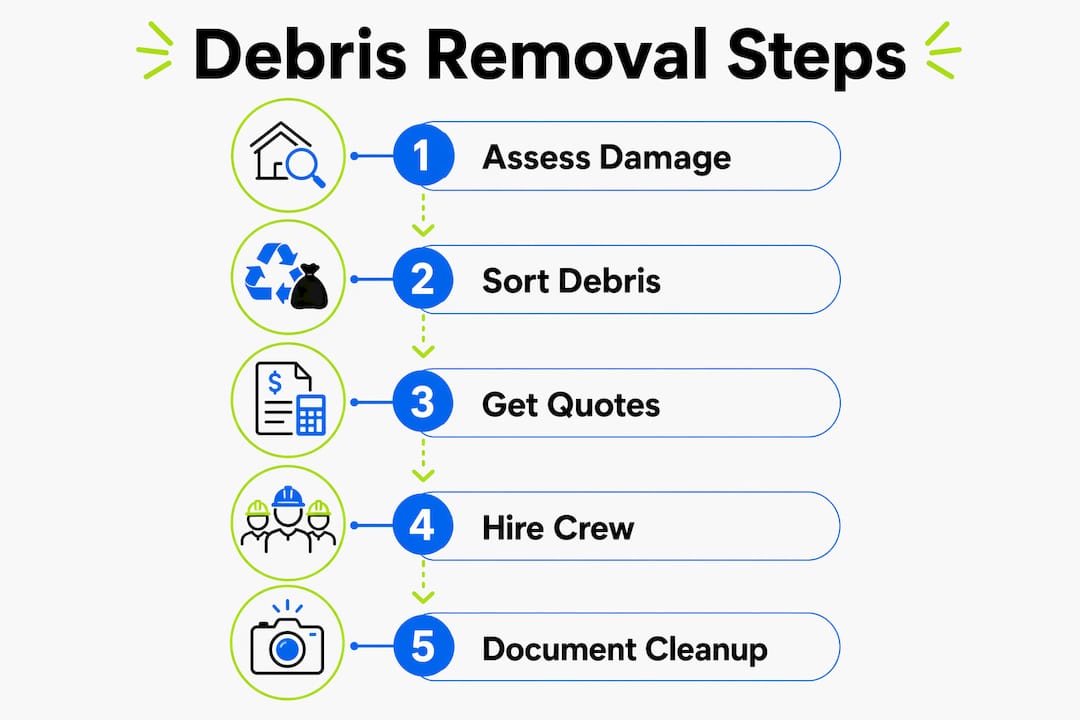
Immediate steps:
- Secure the area: mark hazards with cones or tape and keep children and pets away.
- Photograph all debris from multiple angles before moving anything.
- Separate obvious piles (branches vs. construction materials vs. appliances) at the curb if access is safe.
- Contact Easyscrapofficial for a free on-site quote and same-day scheduling when available.
Table of Contents
- Who pays for storm debris cleanup on your property?
- How to sort storm debris so it actually gets picked up
- What a professional debris removal crew actually does
- When DIY cleanup is unsafe
- How to prepare your property before the crew arrives
- How debris removal is priced and what drives the cost
- Documentation and insurance: how to protect your claim
- Questions to ask a removal company before you hire
- Why Easyscrapofficial is a strong choice for post-storm cleanup
- Key Takeaways
- The part most guides skip
- Get a free quote from Easyscrapofficial
- Useful sources and where to find local rules
Who pays for storm debris cleanup on your property?
Private-property owners bear the financial and legal responsibility for debris on their land. That is the baseline rule under Florida DEP guidance and echoed by every county program reviewed here: the public right-of-way is the municipality's domain; your yard is yours.
Municipal programs do exist and can save money, but they come with real limits:
- Residential only. Commercial properties, churches, schools, and nonprofits are ineligible for curbside pickup in most cities.
- Right-of-way placement required. Municipal crews are legally barred from entering private property; debris must be at the curb.
- One-pass operations. Many programs run a single pass per zone. Miss the window and you may need to hire private removal anyway.
- Right of Entry forms. Gated communities, private roads, and some HOAs must submit ROE forms before any contractor can access the area.
- FEMA-eligible events only. Free county pickup tied to FEMA Public Assistance funding requires a federal or state disaster declaration. Not every storm qualifies.
Regular garbage collection typically resumes quickly because public health is the top priority; storm debris collection follows after emergency routes are cleared, which can stretch across multiple weeks.
| Factor | Municipal collection | Private paid service |
|---|---|---|
| Eligible properties | Residential only | Residential and commercial |
| Placement | Curb/right-of-way only | On-site, anywhere accessible |
| Timeline | Weeks; zone-by-zone schedule | Same day to a few days |
| Cost | Free (disaster-declared events) | Fee-based; varies by volume |
| Gated/private roads | ROE form required | Arrange with contractor |
Pro Tip: If your property is commercial, vacant, or needs clearance for a tenant deadline or sale, do not wait for a municipal pass that may never come. Book a private crew.
How to sort storm debris so it actually gets picked up
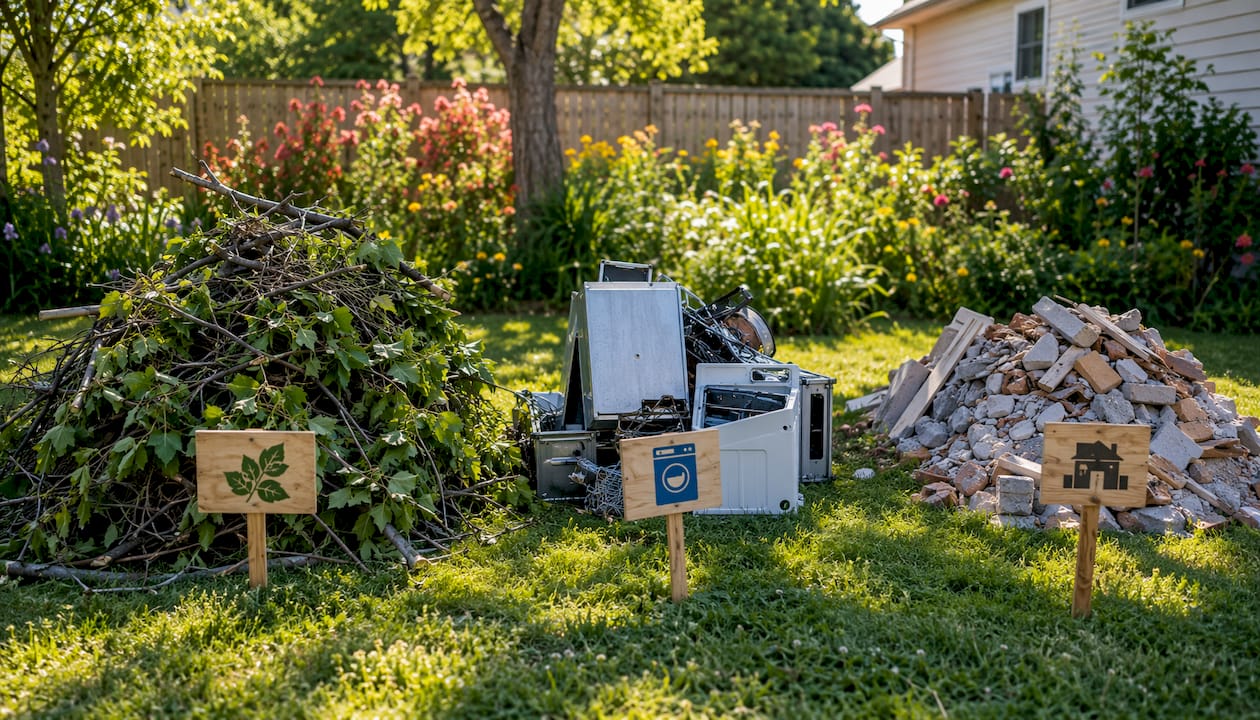
The EPA requires separation of storm debris into distinct categories. Mixing piles is the single fastest way to get a pickup rejected.
The six standard categories:
- Vegetative debris: branches, stumps, leaves, and tree trunks. Cut limbs to manageable lengths and keep diameters within local limits so mechanical loaders can process them.
- Construction and demolition materials: fencing, drywall, roofing, lumber, and carpet.
- Appliances (white goods): refrigerators, washers, dryers, and water heaters. Remove all food from refrigerators and secure the doors before placing them at the curb.
- Electronics (e-waste): TVs, computers, and monitors. These require separate handling at certified e-waste facilities.
- Household hazardous waste (HHW): propane tanks, gas cans, paint, and pesticides. These cannot go curbside; drop them at a designated HHW facility.
- Household garbage: regular trash in city-issued carts, never mixed with debris piles.
Placing a propane tank next to a brush pile, or tossing a mattress on top of branches, will get the entire pile flagged. Counties explicitly warn that illegal dumping of non-eligible items on rights-of-way carries penalties.
Pro Tip: Stake a temporary sign at each pile ("VEGETATIVE ONLY" or "APPLIANCES") so crews and neighbors do not mix categories after you have sorted them.
What a professional debris removal crew actually does
A trained crew does more than haul things away. Here is the typical sequence:
- On-site assessment: the crew walks the property, identifies hazards, and confirms the scope before any equipment moves.
- Hazard mitigation: trees on structures, hanging limbs, and items near electrical lines are addressed first with cranes, bucket trucks, or certified arborists.
- Staged removal: debris is separated, pre-cut or chipped on-site to meet transfer-station requirements, then loaded.
- Hauling and disposal: loads go to transfer stations, compost facilities, certified e-waste processors, or hazardous waste drop-offs depending on material type. After major storms, municipal facilities may impose temporary acceptance limits, so experienced contractors have alternate disposal routes ready.
- Final sweep: the crew clears residual material and documents the completed job with photos.
Common equipment you should expect a capable crew to have access to: cranes, bucket trucks, skid steers, chipper trucks, and dump trucks. If a contractor shows up with only a pickup and a trailer for a job involving trees on a structure, that is a problem.
Disposal routing also matters for roof debris risks that are not always visible from the ground. Professionals inspect above the roofline before calling a job complete.
When DIY cleanup is unsafe
Most homeowners can rake leaves and stack small branches. The line gets crossed fast after a serious storm.
Stop and call a professional when you see any of these:
- A tree or large limb resting on a structure, vehicle, or fence
- Any debris in contact with or near downed electrical lines
- Leaning trees with exposed root balls (they can shift without warning)
- Flood-soaked debris that is too heavy to lift safely or may be chemically contaminated
- Appliances, tanks, or containers that may hold hazardous materials
One rule of thumb: if the debris requires a chainsaw near a structure, a crane, or any kind of hazmat handling, it is a professional job. Period.
Pro Tip: Do not power-wash or gut flood-damaged interiors until you have documented everything for your insurer. Cleaning before documentation can void a claim.
How to prepare your property before the crew arrives
A little prep on your end saves time and money.
Before the crew shows up:
- Clear vehicle access: move cars, trailers, and equipment away from the work area.
- Mark hazards with cones or bright tape: buried debris, soft ground, low wires.
- Prepare proof of ownership or written authorization if you are a landlord or property manager.
- Have your insurance policy number and adjuster contact ready.
- Confirm pile placement with the contractor in advance so debris is accessible to their equipment.
On arrival, crews typically run a safety briefing, verify the estimate scope, work in a staged removal order (hazards first, then bulk debris, then final sweep), and photograph the job throughout.
Timing varies. A single-family residential cleanup with no structural damage might wrap in a few hours. A larger property with trees on a roof or flood-contaminated materials can take a full day or more. Weather and municipal facility restrictions on transfer-station access can push timelines further.
Pro Tip: Take time-stamped photos before, during, and after the job. Pair them with dated invoices and you have a solid insurance documentation package.
How debris removal is priced and what drives the cost
Pricing for post-storm cleanup services typically follows one of three models: by volume or truckload, by the hour, or flat-rate per job type (a garage cleanout, for example). Most reputable crews quote on-site after assessing the actual scope.
Key cost drivers:
- Volume and weight: more debris means more loads and higher disposal fees.
- Hazardous materials: HHW, asbestos-containing materials, and flood-contaminated items require certified handling and disposal, which costs more.
- Equipment requirements: jobs needing cranes or bucket trucks carry higher rates than standard hauling.
- Access difficulty: narrow driveways, soft ground, or gated entries add time and equipment needs.
- Emergency or after-hours service: same-day or overnight response typically carries a premium.
- Disposal and transfer fees: these are real costs that vary by material type and facility.
Questions to ask before signing anything:
- Is your crew insured, and can you provide a certificate of insurance?
- Will I receive a written, itemized estimate before work begins?
- Where exactly will my debris be disposed of, and can you provide receipts?
- What triggers additional charges beyond the quoted scope?
- Do you use subcontractors, and are they covered under your insurance?
- What is the realistic timeline from start to final sweep?
A transparent estimate names the disposal destination, lists equipment line items separately, and specifies what counts as an "extra." Vague estimates with a single lump-sum number are a red flag.
Documentation and insurance: how to protect your claim
Insurers need a paper trail. Build it from the moment the storm passes.
- Time-stamped photos: shoot every pile, every damaged structure, and every item before anything moves.
- Inventory of damaged items: list each item with estimated value and condition.
- Contractor estimates and invoices: get itemized, written documents, not verbal quotes.
- Proof of emergency necessity: a written damage assessment from the contractor strengthens the claim.
- Disposal receipts: keep every receipt showing where materials were taken.
- Communication records: save every email, text, and call log with your insurer and contractor.
Notify your insurer promptly after the storm, before cleanup begins when possible. Ask your contractor explicitly for a photo log and damage assessment report formatted for insurance submission.
Pro Tip: Keep a dedicated folder, physical or digital, for every document related to the cleanup. Insurers can request documentation months after the event.
Questions to ask a removal company before you hire
Vetting a contractor takes ten minutes and can save you thousands.
Ask these questions:
- Are you licensed and insured in this state? Can you show me the certificate?
- Do you provide a written estimate with itemized line items?
- Where will my debris be disposed of, and will you provide receipts?
- What equipment will you bring for this specific job?
- Do you use subcontractors, and are they covered under your policy?
- Can you provide references or photo documentation from recent jobs?
Walk away if you see these red flags:
- Cash-only payment with no written contract
- Refusal to provide a disposal receipt or destination
- Pressure to sign immediately or pay a large deposit upfront
- Vague or verbal-only scope of work
- No proof of insurance when asked directly
To verify credentials quickly: check your state's contractor licensing database, ask for the insurance carrier name and policy number (then call to confirm it is active), and search for recent reviews with photos on Google or the Better Business Bureau.
Why Easyscrapofficial is a strong choice for post-storm cleanup
Easyscrapofficial handles the full range of post-storm removal needs: emergency debris hauling, appliance removal including refrigerators and white goods, furniture removal for storm-damaged pieces, and full garage cleanouts when an entire space needs clearing. The crew is insured, quotes are free and on-site, and same-day service is available when scheduling allows.
Key trust signals:
- Insured crew on every job
- Free on-site quotes with no obligation
- Photo documentation provided for insurance claims
- Donation and recycling routing for items that can be recovered
- Heavy-equipment capability for complex or large-scale jobs
To get an accurate quote, have your property address, a brief description of the debris types and approximate volume, and a few photos ready. That information lets the team size the job correctly before anyone drives out.
Easyscrapofficial serves Lawrence, Andover, Boston, Lowell, and Haverhill with fast, insured junk and debris removal. Free on-site quotes, same-day availability when possible, and a commitment to donating and recycling whatever can be saved.
Key Takeaways
Private-property owners are responsible for their own storm debris removal, and municipal pickup applies only to residential curbside debris during declared disaster events.
| Point | Details |
|---|---|
| Private responsibility | Debris on your property is your cost; municipal programs cover only the public right-of-way. |
| Sort before you set out | Mixing vegetative, construction, appliance, and hazardous piles leads to rejected pickups. |
| Document before you move anything | Time-stamped photos and itemized invoices are the foundation of any insurance claim. |
| Know when to stop DIY | Trees on structures, downed lines, and flood-contaminated materials require a professional crew. |
| Easyscrapofficial | Offers insured, free-quoted storm debris hauling with same-day options and insurance photo documentation. |
The part most guides skip
The conventional advice is to "check with your municipality first." That is fine as far as it goes. What it leaves out is the cost of waiting.
Municipal debris programs are designed for public health and emergency access, not for your sale deadline or your tenant's lease renewal. A zone-by-zone schedule that takes three to five weeks is not a failure of the system; it is the system working exactly as designed. The problem is that most property owners do not find that out until they have already missed the collection window.
The smarter move is to treat municipal pickup as a bonus if it happens, not a plan. Get a private quote the same day you document the damage. If the municipality collects first, cancel or reduce the private job. If they do not, you are already scheduled and not scrambling.
One more thing: the debris category rules exist for a reason beyond bureaucracy. Mixing a propane tank into a brush pile creates a genuine hazard for collection crews. Sorting correctly is not just about avoiding a rejected pickup; it is about not creating a secondary emergency.
Get a free quote from Easyscrapofficial
After a storm, the last thing you need is uncertainty about who will show up, when, and what it will cost. Easyscrapofficial gives you a free on-site quote, an insured crew, and same-day scheduling when it is available. No vague estimates, no surprise fees, and no debris left behind.
Have your property address, a rough description of the debris types (branches, appliances, construction materials), and a few photos ready. That is all the team needs to give you an accurate number on the spot.
Book your free debris removal quote today, or browse the full range of removal and cleanout services to find exactly what your property needs.
Useful sources and where to find local rules
The following government and municipal sources were used throughout this article and are worth bookmarking for your area's specific rules:
- EPA: Managing Debris after a Natural Disaster — federal guidance on debris categories, separation requirements, and appliance prep.
- FEMA Public Assistance and debris eligibility — Florida DEP overview of what qualifies for federal funding and private-property responsibility rules.
- Lee County, FL: Hurricane and Disaster Debris Management — right-of-way rules, garbage vs. debris schedules, and life-safety priorities.
- Monroe County, FL: Hurricane Debris Removal — FEMA-eligibility details, exclusions (vehicles, boats), and illegal-dumping warnings.
- Martin County, FL: Storm Debris Removal — size and weight limits for vegetative debris, ROE form requirements.
- City of Oklahoma City: Storm Debris Collection — commercial property exclusions, bulky waste rules, and how OKC scales response by storm size.
- City of Norman, OK: After Storm Information — zone-by-zone collection windows and transfer station capacity limits.
To find your local rules: search your county name plus "storm debris collection" or "public works storm cleanup." Most counties post updates on their official public works or solid waste pages and push announcements through their social media channels during active events. FEMA eligibility is determined event-by-event; your county emergency management office is the fastest source for whether a current storm qualifies.