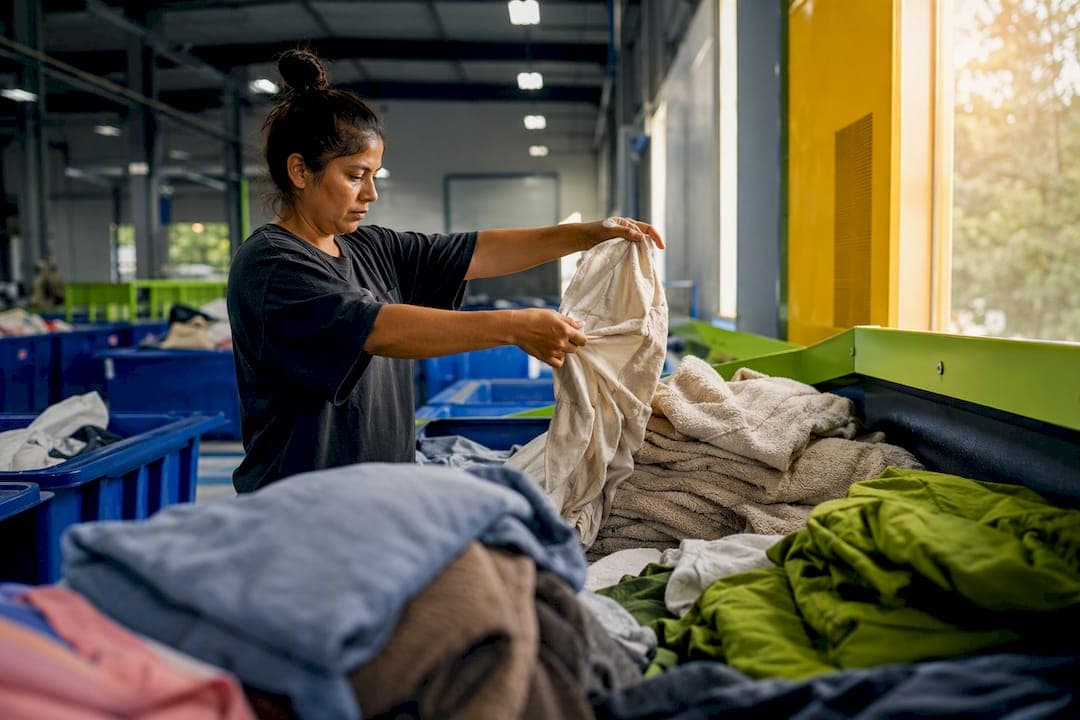
Massachusetts banned textiles from disposal on November 1, 2022, so clothing, bedding, and linens can no longer go in the trash or curbside recycling in most cases. Ripped, stained, or worn-out items still count as recyclable if they're clean and dry. Residents and businesses have to route them to a drop-off bin, donation center, municipal pickup, or private hauler instead.
TL;DR:
- The textile ban in Massachusetts applies mainly to clean, dry clothing, bedding, and linens, excluding contaminated items like mold or oil-stained fabrics.
- Residents should use donation centers or municipal drop-offs for wearable items, while bulk loads or damaged textiles are better suited for commercial recyclers or private haulers.
- Proper preparation involves sorting by condition, bagging separately from trash, and confirming bedding or mattresses fall under specific disposal rules.
- Municipal programs and private collectors vary in availability and schedules; bulk pickups are recommended for large quantities or heavy items.
- If no recycler can be found, MassDEP permits temporary disposal with documented outreach efforts, but contamination still disqualifies items from recycling.
Table of Contents
- Where To Recycle Clothes In Massachusetts
- The Massachusetts Textile Ban: Scope And Exemptions
- Prepping Textiles So They Actually Get Recycled
- Residents Vs. Businesses: Different Volumes, Different Playbooks
- No Recycler Nearby? Here's The Waiver Process
- What Happens To Textiles After Collection
- Easy's Local Perspective: DIY Vs. Calling A Hauler
- Book A Textile And Bulk Item Pickup With EasyScrap
- Sources
Where To Recycle Clothes In Massachusetts
The Beyond the Bin Recycling Directory is the fastest way to find a legitimate drop-off point close to home. Type in a zip code and it surfaces donation bins, thrift stores, and textile-specific recyclers that accept torn or stained items most people assume are trash.
Plenty of towns have gone further and built textile pickup into municipal service. Arlington, for instance, worked with a private collector to offer scheduled curbside textile pickups, and other towns have set up similar deals with private textile collectors like Helpsy. Availability and schedules vary block by block, so always confirm with your local public works page before setting bags at the curb.
Your realistic options break down like this:
- Donation centers (Goodwill, Salvation Army, local thrift shops): best for wearable clothing, shoes, and linens still in decent shape.
- Municipal drop-off bins or curbside partners: convenient for households without a car or a nearby thrift store.
- Commercial textile recyclers: accept bulk loads, including damaged fabric not fit for resale.
- Private haulers: the right call for large volumes, mattresses, furniture with fabric upholstery, or estate cleanouts where sorting isn't practical.
Businesses generating regular textile waste have a dedicated tool: RecyclingWorks' Find-a-Recycler tool matches commercial generators with outlets built to handle volume, not just a bag or two.
The Massachusetts Textile Ban: Scope And Exemptions
The rule falls under 310 CMR 19.000, which defines textiles broadly: clothing, footwear, bedding, towels, curtains, and similar fabric goods. Before the ban took effect, Massachusetts residents and businesses threw out roughly 230,000 tons of textiles a year, most of it recoverable.
Exemptions exist for genuinely unsalvageable material. Textiles contaminated with mold, bodily fluids, oil, insects, or hazardous substances fall outside the ban and can go in the trash. That's a narrow carve-out, not a loophole. A ripped shirt or a stained comforter still belongs in the recycling stream if it's clean and dry.
Municipalities carry real responsibility here too. Many have leaned on state support, including the Recycling Dividends Program and SMRP grants, to fund new collection infrastructure rather than pass the cost straight to residents.
Prepping Textiles So They Actually Get Recycled
Processors reject loads for one reason more than any other: contamination. Keep items clean, dry, and odorless, and skip anything soaked in mold, oil, or bodily fluids.
Here's the basic prep sequence:
- Sort by condition. Wearable items go toward donation; stained or torn ones go toward textile recycling bins.
- Bag separately from trash and curbside recycling. Never mix the two.
- Check special cases: shoes and paired items usually get taped or tied together; pillows and stuffed items are generally accepted if dry.
- Confirm bedding and curtains are covered by the ban (they are) before assuming they belong in the trash.
Pro Tip: Mattresses fall under a separate but related Massachusetts mattress ban — don't lump a mattress in with a bag of clothes. It needs its own pickup or drop-off arrangement.
Residents Vs. Businesses: Different Volumes, Different Playbooks
A household with a few bags of old clothes has different needs than a hotel replacing 200 sets of linens. Residents typically want the path of least friction:
- Use Beyond the Bin to locate the closest bin or thrift store.
- Check your town's public works page for scheduled pickups.
- For large loads (a full closet cleanout, an estate situation), schedule a bulk pickup rather than hauling it yourself.
Businesses and institutions face a bigger operational lift. RecyclingWorks in Massachusetts offers free technical assistance and its Find-a-Recycler tool to match commercial generators with the right outlet. The group has flagged a common failure point in institutional programs: weak staff training and sloppy sorting lead to contaminated loads that haulers reject outright. Building a simple sorting protocol and briefing staff on what counts as contaminated (versus just worn out) solves most of that problem before it starts.
No Recycler Nearby? Here's The Waiver Process
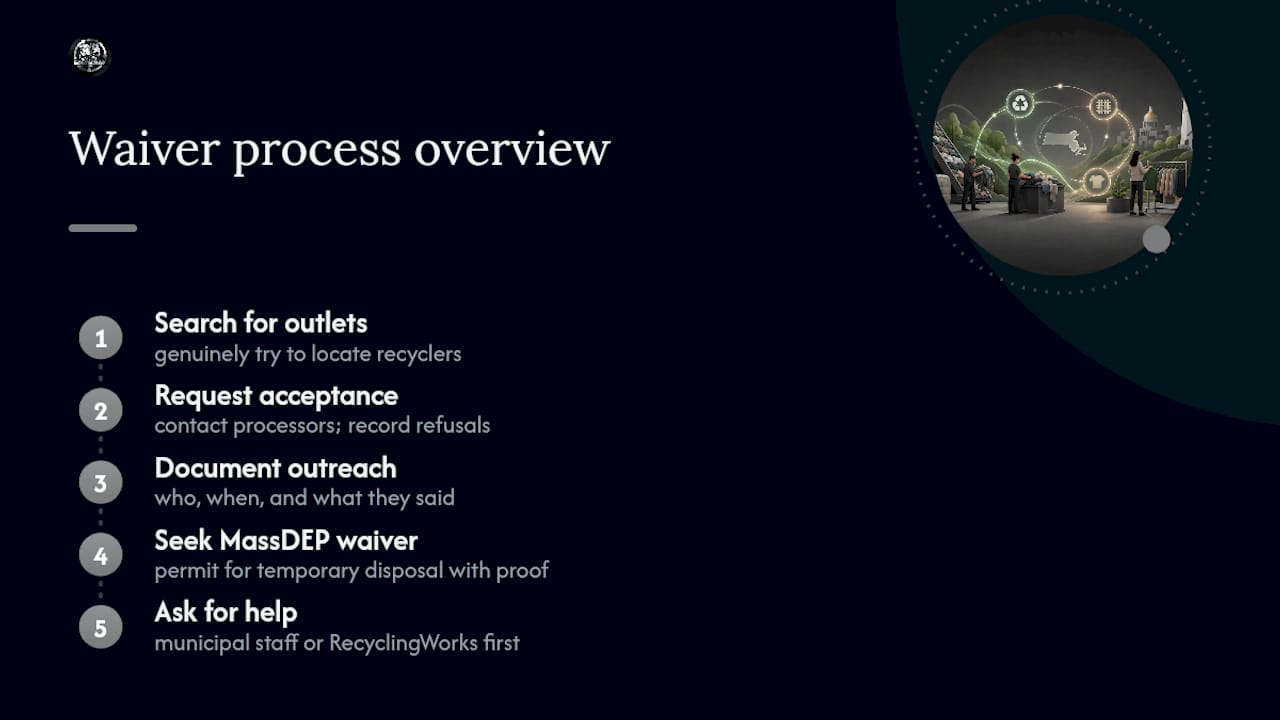
If you genuinely can't locate an outlet, and a processor has refused your material, MassDEP can permit temporary disposal after you document the outreach. That means keeping written records: who you contacted, when, and what they said.
This isn't a shortcut around sorting effort. It's a narrow allowance for situations where contamination or geography genuinely blocks recovery. For questions on your specific case, MassDEP's municipal assistance staff and RecyclingWorks both field these calls regularly, and starting there beats guessing.
What Happens To Textiles After Collection
Sorting facilities grade incoming textiles into three streams: resale-ready clothing, fiber for conversion into insulation or carpet padding, and lower-grade fabric destined for wiping rags used in auto shops and manufacturing. A shirt too stained for a thrift rack can still end up as industrial wiping cloth material, which is why processors want it clean and dry rather than pristine.
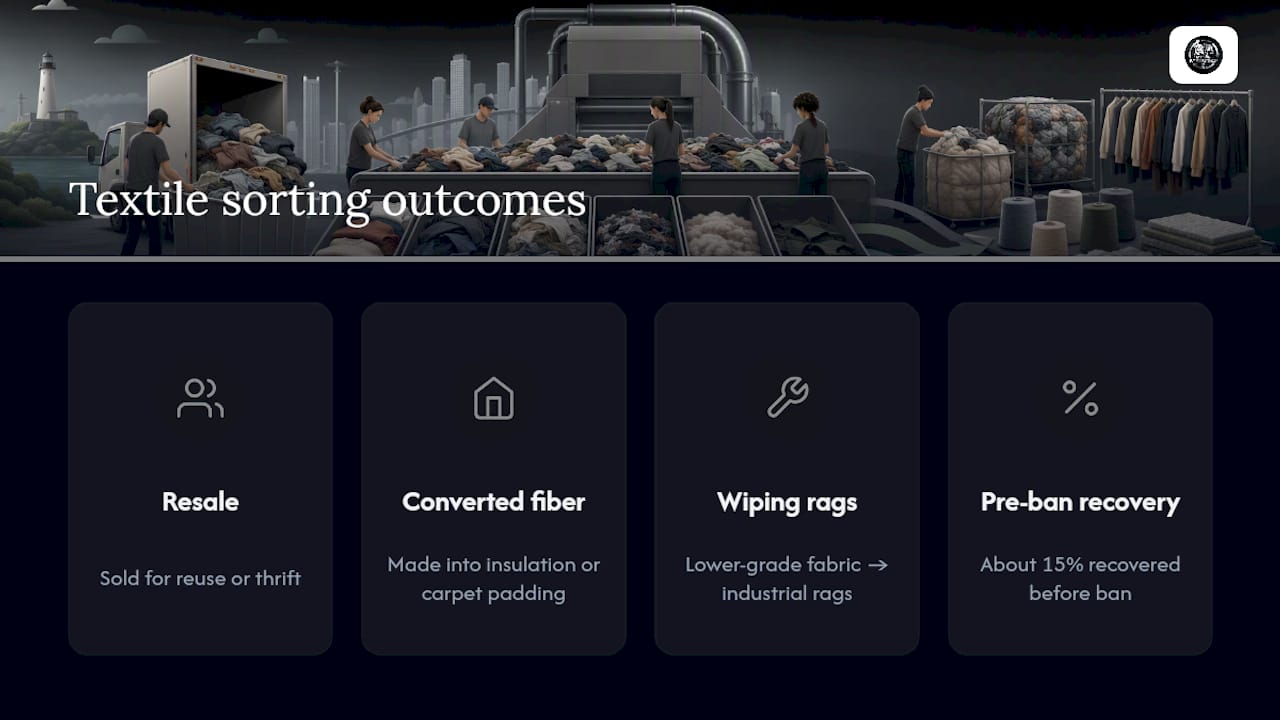
Before the ban, only about 15% of discarded textiles in Massachusetts were recovered. The state's push to change that number isn't just about landfill space. Keeping textiles out of the trash cuts municipal disposal costs and feeds a circular economy that turns old fabric into products with real market demand.
Easy's Local Perspective: DIY Vs. Calling A Hauler
Sorting a dresser drawer of old T-shirts into a donation bag is a five-minute job. Nobody needs help with that. But drag a mattress, a fabric couch, and three trash bags of linens out of a basement cleanout, and the calculation changes fast.
If you're dealing with volume, weight, or a deadline (moving day, an estate cleanout, a landlord turnover), hiring a local removal service makes more sense than multiple car trips to a donation bin. Before you book anyone, ask two questions: what happens to the items after pickup, and can they confirm donation or recycling rather than a straight landfill run. Handling contaminated textiles safely, particularly mattresses with stains or odor, also matters more than most people expect, since that determines whether the item is even eligible for recovery.
— Easy
Book A Textile And Bulk Item Pickup With EasyScrap
If you've got more textiles than a car trip can handle, EasyScrap is the faster route than sorting, bagging, and driving to three different drop-off points yourself. We serve Lawrence, Andover, Boston, Lowell, and Haverhill, and we handle the full load in one visit, from fabric couches to bags of linens to the mattress underneath it all.
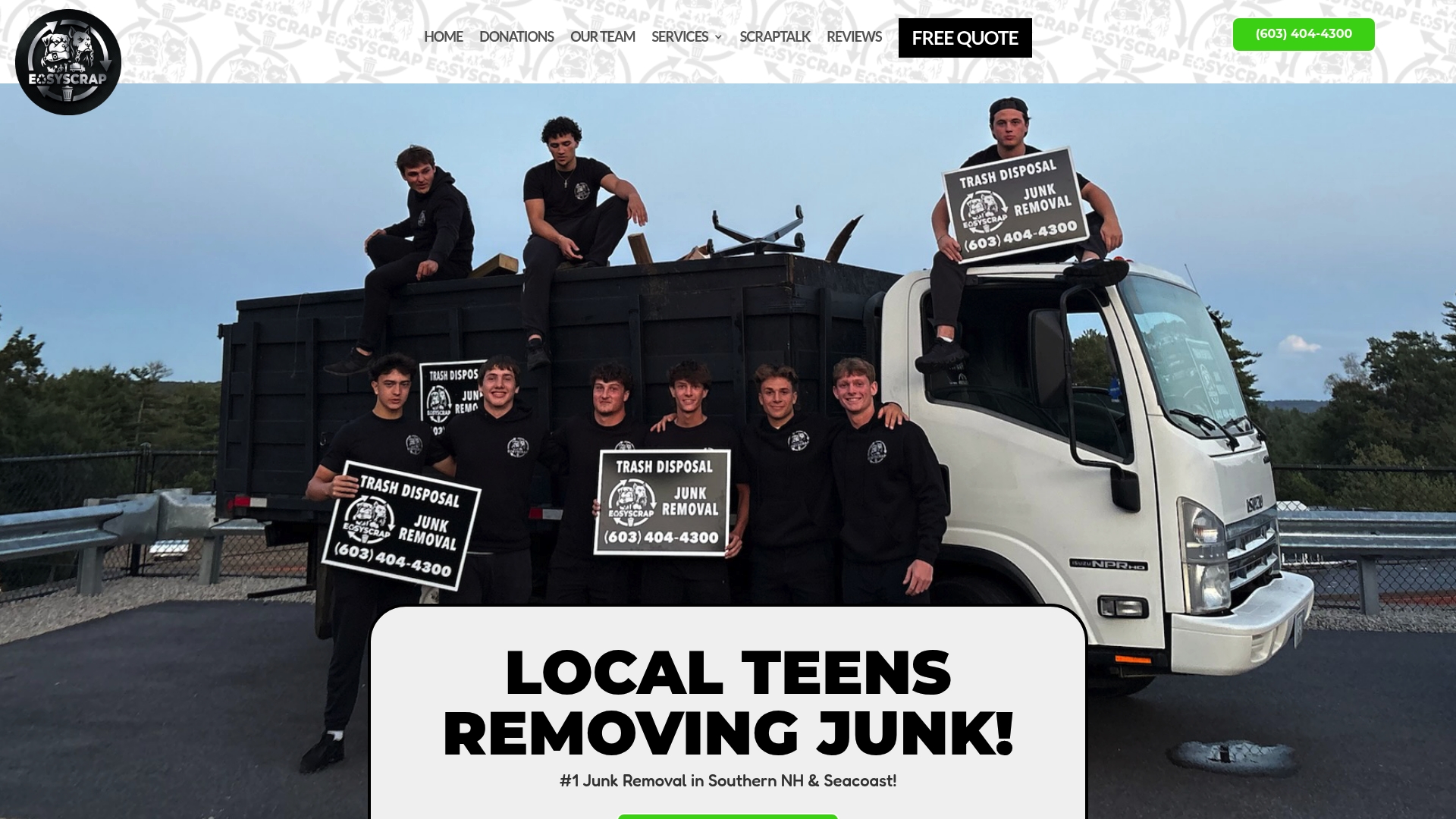
Same-day junk removal is available for households facing a moving deadline or landlord turnover, and our crews are insured. On mattress pickups specifically, we sort for donation and recycling wherever the item qualifies, rather than defaulting straight to disposal. If your cleanout also involves furniture or appliances, our full service catalog covers those in the same trip.
Get a free quote and book your pickup window today.