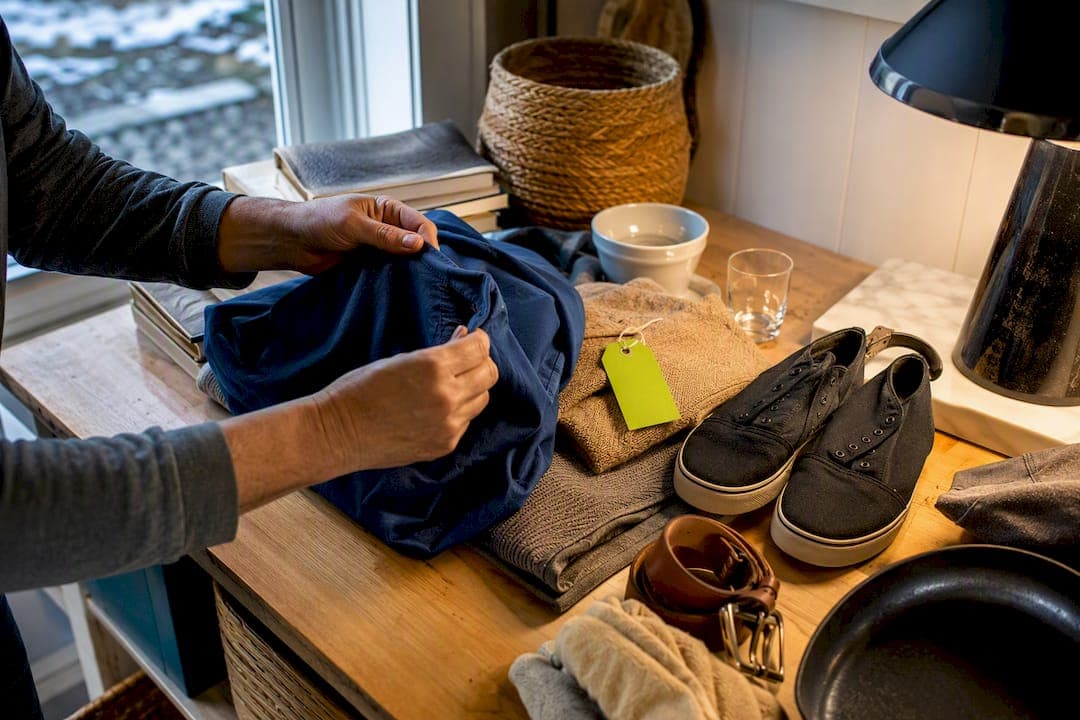
A donation-focused crew sends usable furniture, working appliances, and clean household goods to local charities, routes scrap metal and cardboard to recyclers, and trashes only what's soiled, broken beyond repair, or unsafe to handle. The call hinges on three things: condition, material type, and whether a donation partner will actually take it. A provider like EasyScrap builds its whole pickup process around getting as much as possible into that first bucket instead of a landfill.
TL;DR:
- Many usable household items, including furniture and appliances, often qualify for donation if they are clean, functional, and safe, reducing landfill waste.
- Contaminated, damaged, or unsafe items such as moldy mattresses, broken furniture, or heavily soiled recyclables are typically rejected and sent to disposal.
- Certain regulated and hazardous items like chemicals, paint, or old electronics require special handling and are refused for donation or recycling unless properly declared and processed.
- The decision to donate depends on a three-test standard: it must be clean, work correctly, and be something a thrift store would sell at a fair price, with local acceptance policies heavily influencing what is accepted.
- Proper pre-collection preparation and clear communication with the removal crew, including requesting receipts and flagged items, boost the chances of maximizing donations over landfill disposal.
Table of Contents
- What Crews Commonly Accept for Donation or Recycling
- What Crews Typically Trash or Refuse to Donate
- Hazardous, Regulated, or Specialty Items and How Crews Handle Them
- How Crews Decide: The Three-Test Rule and On-Site Judgment Calls
- How to Prepare Items and Your Home for Maximum Donation
- What to Ask Your Junk-Removal Company Before Booking
- Impact of Local Donation Centers' Acceptance Policies on What Crews Can Donate
- Environmental and Community Benefits of Donating Versus Trashing
- Common Misconceptions About Donation Eligibility
- EasyScrap's Practical Perspective on Donation-Focused Pickups
- How EasyScrap Can Help With a Donation-Minded Cleanout
- Sources
- FAQ
What Crews Commonly Accept for Donation or Recycling
Most of what a crew hauls out of a garage or spare bedroom is in better shape than the owner assumes, and that's exactly the stuff that ends up at a thrift store instead of a transfer station. Junk removal crews sort items onsite and route usable furniture, working appliances, and household goods to donation partners, while sending clean metal and cardboard to recyclers and saving landfill trips for whatever's left over, according to Morse Junk.
Here's what typically clears the bar:
- Furniture: Intact sofas, dining tables, bed frames, and dressers, as long as they're structurally sound and free of major stains or odors. Oversized sectionals sometimes get turned away simply because a partner store lacks the floor space.
- Appliances: Refrigerators, stoves, washers, and dryers that power on and run their basic cycle. Refrigerators need to be defrosted and cleaned out, since a partner won't take one that's still full of last month's leftovers.
- Household goods: Clean kitchenware, linens, books, and small decor items.
- Textiles and small electronics: Clothing in good condition, and gadgets that power on and include their cords or remotes.
- Recyclables: Clean scrap metal, cardboard, and certain plastics. Contaminated recyclables (grease on cardboard, food residue on plastic) usually get bumped out of the recycling stream entirely.
Working with established donation centers, thrift stores, and organizations like Habitat for Humanity ReStores is standard practice for responsible operators, though what actually gets accepted always depends on that partner's own condition rules, as The Junk Thief points out. Mattresses, recalled baby gear, and old tube-style CRT televisions are the classic exceptions. They look donatable to a homeowner, but almost no thrift network will take them.
What Crews Typically Trash or Refuse to Donate
Some items just don't have anywhere else to go, and it usually comes down to hygiene or structural failure rather than age. Donation is the outcome when something is usable but not worth reselling; disposal is the outcome when it's contaminated or unsafe, and that split shapes nearly every call a crew makes on-site, according to Remoovit.
Expect these to head straight to disposal:
- Mattresses and upholstered furniture with stains, odors, or signs of pests.
- Broken laminate or water-swollen particleboard furniture that can't be repaired.
- Food-soiled containers, moldy fabric, and anything with heavy water damage.
- Bulky construction debris mixed in with regular household trash.
- Recyclables that are too contaminated to process, which quietly convert from "recyclable" to "trash" the moment grease, food, or chemical residue gets involved.
None of this is arbitrary. A donation partner rejecting a truckload because one moldy couch snuck through costs a crew far more in reputation than skipping that couch would have cost the homeowner in disposal fees.
Hazardous, Regulated, or Specialty Items and How Crews Handle Them
Certain items never make it into the donation-or-trash decision at all, because they're regulated before condition even enters the picture. Household chemicals, solvents, paint, asbestos-containing materials, propane tanks, and vehicle fluids fall into this category, along with certain batteries and medical waste.
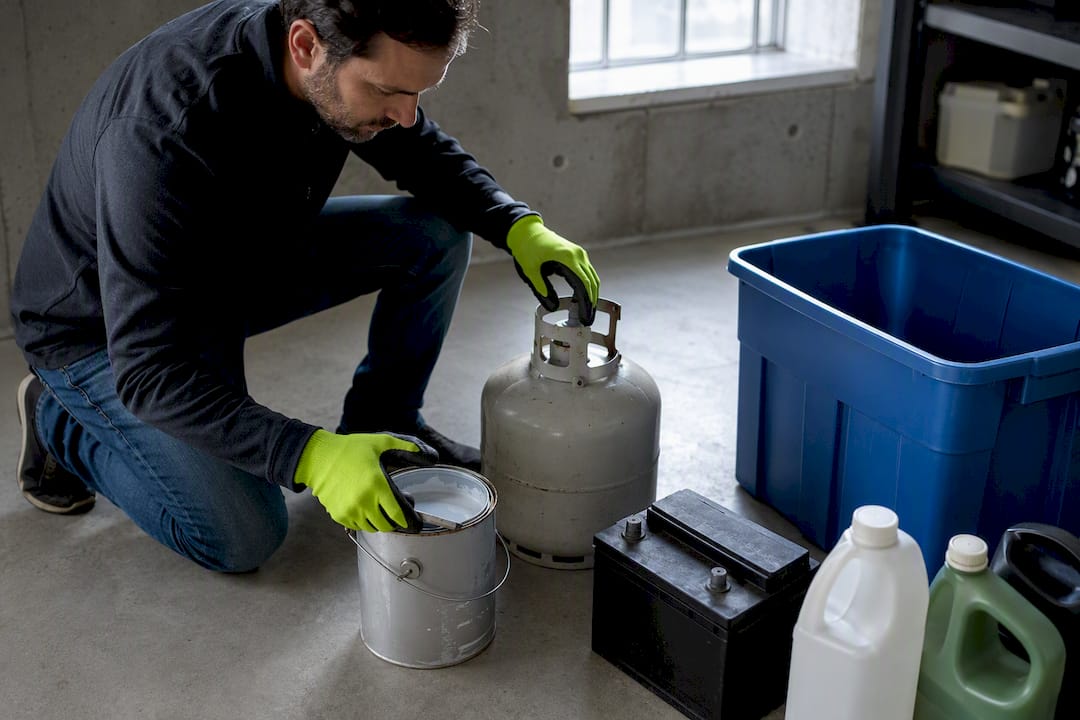
Older CRT televisions and some legacy electronics also need dedicated e-waste processing rather than a standard donation or landfill route. These items are typically refused for donation outright, and some crews won't load them at all unless you've flagged them in advance. Customers should declare hazardous or regulated items at the time of booking, since these require special handling and can carry extra fees, per Remoovit's guidance on job scoping.
Pro Tip: Take a phone photo of anything you're unsure about (a half-full paint can, an old car battery) and text it to the company before pickup day. It takes thirty seconds and saves everyone a wasted trip.
How Crews Decide: The Three-Test Rule and On-Site Judgment Calls
Crews aren't guessing item by item. Most rely on a simple framework, sometimes called the three-test rule, to decide whether something's worth donating:
- Is it visually clean? No stains, no odors, no visible grime that a quick wipe won't fix.
- Does it work as intended? A lamp that turns on, a blender that blends, a chair that doesn't wobble.
- Would you buy it? If it showed up on a thrift-store shelf at a fair price, would it sell?
Donation centers and thrift stores apply a version of this "clean and working" standard themselves, which is why mattresses, broken electronics, and recalled baby gear get rejected even when the owner insists they're fine, according to the decision framework laid out by Titan Group.
Material type, safety, and a partner's current capacity all factor in too. A thrift store that's overloaded with couches this month might turn away a perfectly good sofa it would have accepted in a different season. Crews tend to lean conservative on borderline calls, because a single rejected load can damage a donation relationship that took months to build. EasyScrap follows a donation-first, recycling-second, landfill-last order of operations on every job for exactly this reason.
How to Prepare Items and Your Home for Maximum Donation
A little prep work before the truck shows up changes how much of your pile ends up donated instead of dumped. Follow these steps:
- Clear out personal items first. Pull paperwork, valuables, and prescription medications from drawers and furniture before the crew arrives.
- Clean what you can. Wipe down furniture, vacuum upholstery, and make sure appliances are defrosted and dry.
- Keep accessories together. Cords, remotes, and manuals should stay with the electronics they belong to.
- Stage a donation pile. Group items you want donated in one accessible spot and clear the path to it.
- Flag bulky or unusual items when booking. A crew that knows a hot tub or piano is coming brings the right equipment and crew size.
Quick staging and clear direction from the homeowner genuinely move the needle on how much gets diverted, a pattern Morse Junk has documented across residential pickups.
Pro Tip: Label the donation pile with a sticky note, literally just "DONATE" on a couch cushion. It sounds silly, but it prevents a rushed crew from defaulting a borderline item into the trash pile by mistake.
What to Ask Your Junk-Removal Company Before Booking
A few questions before you commit tell you almost everything about how a company handles your stuff:
- Do you donate or recycle items, and which organizations do you work with?
- Can I get a donation receipt for tax purposes?
- Are there extra fees for sorting, bulky items, or mattress disposal?
- Will I receive an itemized invoice showing what was donated versus disposed of?
Companies that answer these clearly, with real destination names and documentation, tend to be the more trustworthy operators, based on The Junk Thief's reporting on the industry. Fees usually track with volume and weight, and mattresses, electronics, and construction debris often carry surcharges because they need separate handling or disposal fees of their own. If diversion matters to you, ask for a donation receipt or an itemized invoice up front rather than after the truck pulls away. Practices vary quite a bit by company and by what local facilities exist nearby, which is part of why Trash & Stash notes that diversion rates differ from one provider to the next.
Impact of Local Donation Centers' Acceptance Policies on What Crews Can Donate
A crew's donation rate is never entirely up to the crew. It's capped by what the nearest thrift stores, shelters, and ReStores will actually take that week. A donation center running a furniture surplus will turn away perfectly good couches it would have gladly accepted a month earlier, and a crew has no way around that except finding a different partner or, failing that, routing the item to disposal.
This is part of why the same item can be "donatable" in one town and "trash" in another. A rural area with one small thrift shop has far less capacity to absorb bulky furniture than a city with several ReStores and multiple shelters competing for donations. Seasonal demand matters too. Winter coat drives create temporary appetite for clothing that might get declined in July.
Smart crews maintain relationships with several partner organizations rather than just one, which gives them more places to route an item before defaulting to disposal. This is also why local knowledge counts for something. A crew that's worked a region for years knows which thrift store still takes mattresses in usable condition (rare, but it happens) and which shelter always needs kitchen goods this month. Homeowners rarely see this negotiation happening, but it directly shapes whether a coffee table gets a second life or gets shredded at a transfer station.
Environmental and Community Benefits of Donating Versus Trashing
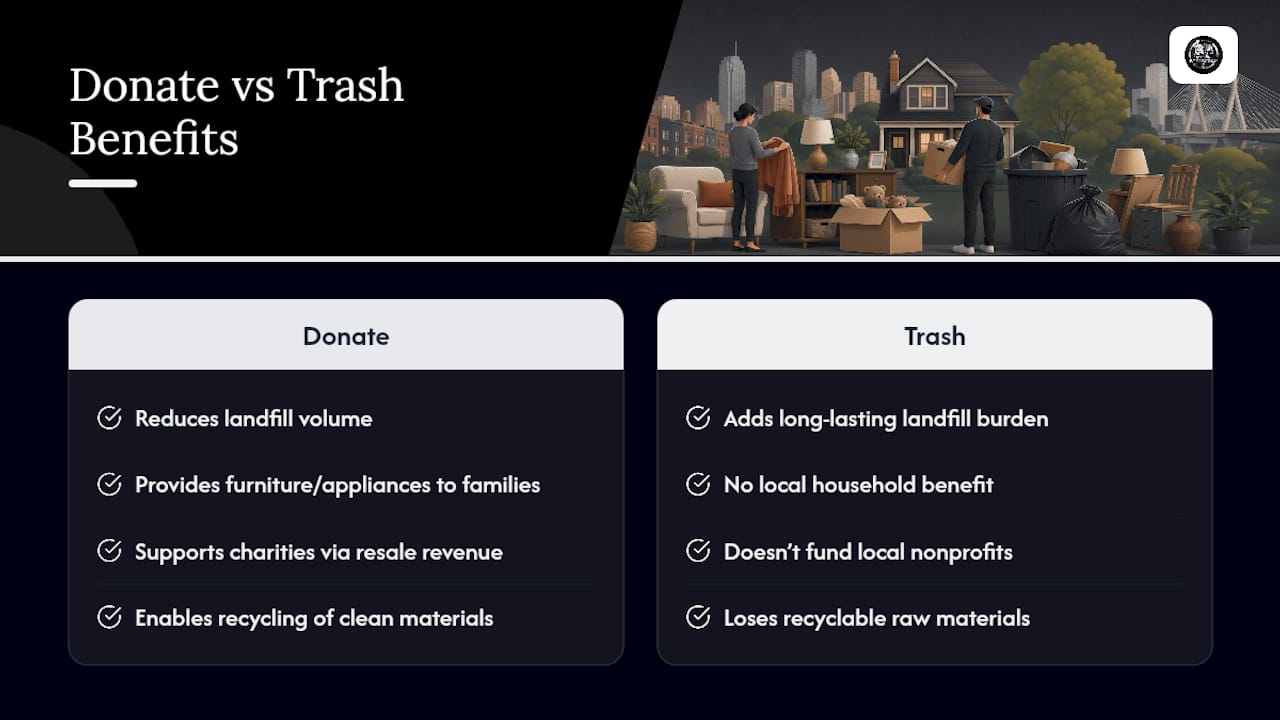
Every couch that goes to a shelter instead of a landfill is one less item taking up space for decades, and one more household getting furniture they'd otherwise have to buy new. Furniture, particleboard especially, doesn't break down quickly, and landfill space in most of the Northeast is neither cheap nor unlimited. Diverting usable goods away from that stream has a direct, measurable effect on how much a community sends to disposal each year.
The community side is just as real. A working refrigerator or washer donated to a family replacing a broken one, a stack of children's books handed to a school, a dresser that furnishes someone's first apartment after a shelter stay. These aren't abstract sustainability points; they're specific, local outcomes that a landfill trip simply can't produce. Local charities and nonprofits also rely on furniture and appliance donations to fund their operations, whether through direct resale at a ReStore or through client services funded by thrift-store revenue.
Recycling clean metal and cardboard closes the loop in a different way. It cuts down on the raw material extraction that virgin production requires. None of this works, though, if items arrive contaminated or damaged. A single load of soiled goods can force an entire batch into the trash stream, which is exactly why the sorting standards on the front end matter so much. Getting the donation-versus-trash call right isn't just about tidiness. It's what determines whether a neighborhood's unwanted stuff becomes someone else's resource or just more volume at the dump.
Common Misconceptions About Donation Eligibility
The biggest misconception is that "still works" automatically means "donatable." It doesn't. A blender that blends but is caked in old batter fails the clean test just as surely as a broken one fails the function test. Homeowners often assume functionality is the only bar to clear, and that assumption sends usable-but-dirty items into the trash pile more often than actual mechanical failure does.
Another common mistake is assuming all donation centers have identical rules. They don't. Some ReStores take mattresses in specific conditions; most don't take them at all. Some thrift stores accept CRT TVs for parts; the vast majority won't touch them. Treating "donation" as one uniform standard rather than a patchwork of individual partner policies leads people to either overestimate what a crew can donate or, just as often, throw away something a specific local partner would have happily taken.
There's also a persistent belief that donation always saves money on the removal bill. Sometimes it does, since some organizations offer free pickup for large furniture donations. But a paid junk-removal crew charges based on volume and labor regardless of where the item ultimately lands, so donation is really about diversion and doing right by the item, not a guaranteed discount. And a fair number of people assume anything "sentimental" or expensive when new automatically qualifies for donation. Recalled baby gear is the clearest example: it can be spotless and barely used, and no responsible donation partner will still take it once it's on a recall list.
EasyScrap's Practical Perspective on Donation-Focused Pickups
We build every pickup around a donation-first order of operations: donate what we can, recycle what's left, landfill only what has nowhere else to go. Customer prep genuinely moves that ratio. A staged donation pile and a clean, dry appliance get diverted far more reliably than the same items pulled straight from a cluttered garage.
We also stay conservative on borderline calls on purpose. Sending a partner one contaminated load can cost us that relationship for good, which hurts every future customer's donation odds, not just yours. If donation matters to you, say so when you book and ask for a receipt. It's a five-second request that changes how we sort your job.
— Easy
How EasyScrap Can Help With a Donation-Minded Cleanout
If you're clearing out a garage, downsizing a rental unit, or handling an estate cleanout, the sorting decisions above happen automatically when you book with a crew that already runs a donation-first process. EasyScrap handles junk removal, furniture removal, appliance removal, and full garage and basement cleanouts across Lawrence, Andover, Boston, Lowell, and Haverhill, and every job gets sorted with the same clean, works, resellable standard covered above.
When you book, just mention that donation matters to you. Ask where your items are headed and request a donation receipt for your records. It costs you nothing extra and gives you documentation if you need it. Crews can often provide same-day service, handle heavy lifting, and aim to route as much as possible away from the landfill before anything else. Get a free quote and lock in a pickup window through our junk removal page today.
Sources
- What Do Junk Removal Companies Do With the Junk After Pickup? - Remoovit (2026)
- How to Donate vs. Dispose: A Decision Framework | Titan Group
FAQ
What items do junk-removal crews usually donate?
Crews typically donate intact furniture, working appliances, clean kitchenware, linens, books, and functioning small electronics. The final call depends on the item passing a basic clean, working, and resellable check, as outlined in the Titan Group's decision framework.
Will a junk-removal crew take my mattress for donation?
Almost never. Mattresses are one of the most commonly rejected items across donation networks nationwide, regardless of how clean they appear, and they typically get routed to disposal or dedicated mattress recycling instead.
Does EasyScrap provide donation receipts?
Yes, you can request a donation receipt when you book with EasyScrap, and asking upfront ensures the crew documents which items were routed to a donation partner during your pickup.
Why would a crew trash something that still works?
An item can still get trashed if it's stained, has an odor, shows pest activity, or has failed structurally, since donation partners reject items on hygiene and safety grounds even when they're mechanically functional.
How do I know if something is safe to donate?
Run it through the three-test check: is it visually clean, does it function as intended, and would you personally buy it at a thrift-store price? If it fails any of those, it's headed for disposal rather than a donation shelf.