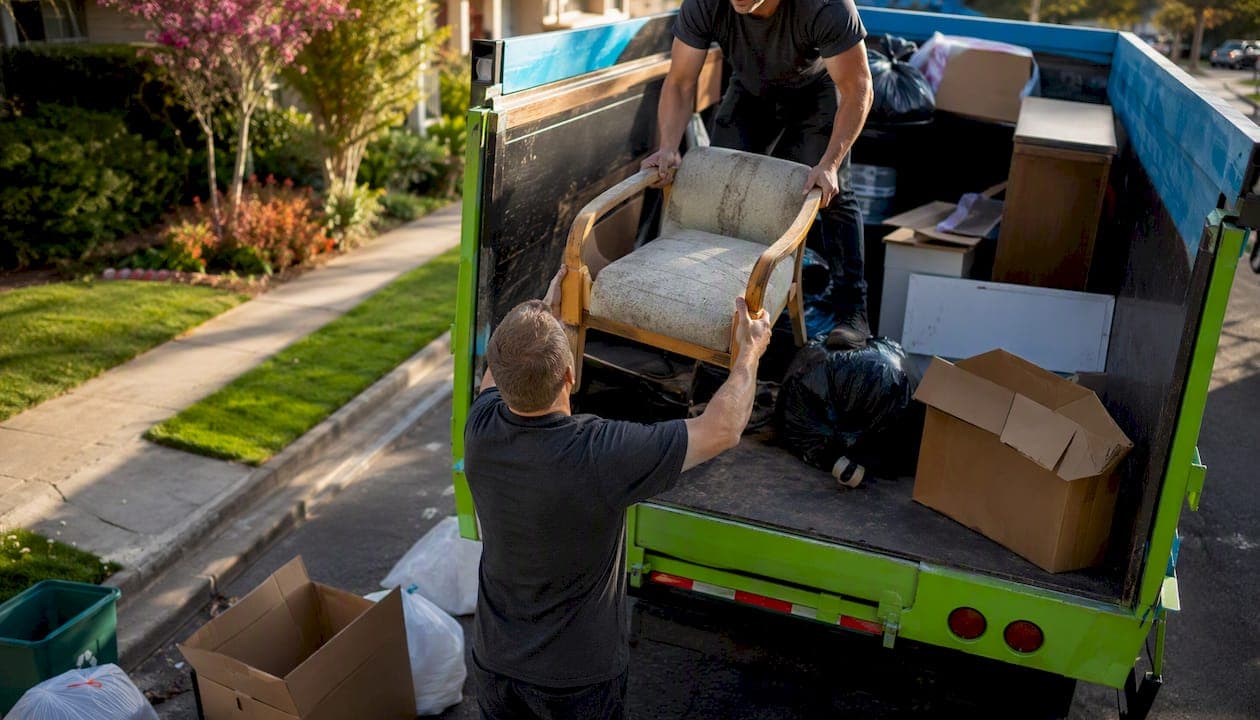
Eco-friendly junk removal means routing your unwanted items through donation, reuse, and certified recycling before anything touches a landfill. Your fastest next step: pull out anything in good condition, photograph the load for an accurate quote, and book a hauler who can document where each item ends up.
Start here — do these three things before you call anyone:
- Set aside furniture, appliances, and electronics that still work (these go to donation or certified recyclers, not the truck)
- Photograph the full pile from two angles so haulers can quote accurately and you can track what left your property
- Write down any items that might be hazardous: paint cans, batteries, propane tanks, or old electronics
Pro Tip: Separating donateable items before the crew arrives almost always reduces your haul volume, which directly lowers your cost.
Key Takeaways
Eco-friendly junk removal works when you follow a diversion-first sequence: donate usable items, recycle the rest through certified channels, and hire a hauler who can document where everything ends up.
| Point | Details |
|---|---|
| Diversion hierarchy | Donate first, then recycle, then certified disposal — landfill is always the last resort. |
| Verify before you book | Ask haulers for diversion percentages, named donation partners, and proof of insurance. |
| Use national donation networks | Habitat ReStore and Salvation Army offer free pickup for qualifying items nationwide. |
| Route hazardous items correctly | Batteries, paint, refrigerants, and e-waste require municipal programs or certified contractors. |
| Easyscrapofficial | Serves Lawrence, Andover, Boston, Lowell, and Haverhill with same-day pickup, insured crews, and documented donation and recycling practices. |
Table of Contents
- What does eco-friendly junk removal actually mean?
- What to do before you book an eco-friendly pickup
- How to remove junk sustainably, step by step
- The right eco-friendly disposal route for common items
- What eco-friendly junk removal typically costs
- How to pick a genuinely eco-friendly junk removal service
- Where to donate, recycle, or arrange hazardous-waste disposal in the U.S.
- Handling hazardous and specialty items safely
- EasyScrap's take on what eco-friendly junk removal actually requires
- Easyscrapofficial handles the eco-friendly haul so you don't have to sort it alone
- Sources
What does eco-friendly junk removal actually mean?
The industry term is "diversion-first disposal," and it follows a clear hierarchy: donate usable items first, repurpose or sell what you can, recycle what remains, and only send to certified disposal what cannot be handled any other way. Landfill is the last resort, not the default.
Why does this matter? The EPA's national overview of materials, waste, and recycling tracks municipal solid waste generation and diversion trends across the U.S., and the data consistently shows that a large share of what ends up in landfills could have been recovered through recycling or donation. Landfills generate methane, a potent greenhouse gas, and they consume land that cannot be reclaimed easily. Every couch donated, every refrigerator recycled, and every bag of textiles diverted represents real resource recovery.
Customers looking for genuinely green junk disposal should watch for a few markers:
- Diversion reporting: Does the hauler tell you what percentage of your load was donated or recycled?
- Named donation partners: Vague "we donate when possible" language is not the same as a confirmed relationship with Habitat for Humanity ReStores or the Salvation Army.
- Certified recycling channels: For electronics and appliances, R2 (Responsible Recycling) certification is the recognized U.S. standard for e-waste processors.
- Hazardous-item handling: A credible hauler will refuse to toss paint, batteries, or refrigerants into a general load and will direct you to the right program instead.
Consumer reporting has documented that many haulers market green credentials without consistent diversion tracking, so verifying those claims before you book is worth the extra five minutes.
What to do before you book an eco-friendly pickup
Arriving prepared saves money and maximizes how much of your load gets diverted. Run through this checklist before you call a hauler.
Sort your items into four piles:
- Donateable (clean, functional furniture, appliances, clothing, tools)
- Recyclable (cardboard, metals, electronics, certain plastics)
- Hazardous (paint, batteries, chemicals, propane, fluorescent bulbs)
- Bulk trash (broken, unsanitary, or non-recyclable items)
Measure your scope:
- Take two or three photos of the full load
- Estimate volume in rough terms: a single-car garage load, half a pickup truck, or a full 20-yard dumpster equivalent
- Note any items that require special handling (refrigerators with refrigerant, TVs, mattresses)
Documentation to request from your hauler:
- Donation receipts (useful for tax deductions on donated goods)
- A diversion report or summary showing what was recycled vs. landfilled
- Proof of insurance and licensing before anyone enters your property
Pro Tip: Wiping personal data from electronics and removing doors from large appliances before pickup speeds up the process and makes items more likely to be accepted by donation centers.
How to remove junk sustainably, step by step
Whether you handle part of this yourself or hand it all to a hauler, the sequence matters.
Step 1: Plan and inventory. Walk through the space with your phone and photograph everything. Flag high-value items — a working washer, solid wood furniture, a functional lawnmower — because these have real donation value and may qualify for a tax deduction if given to a 501(c)(3) organization.
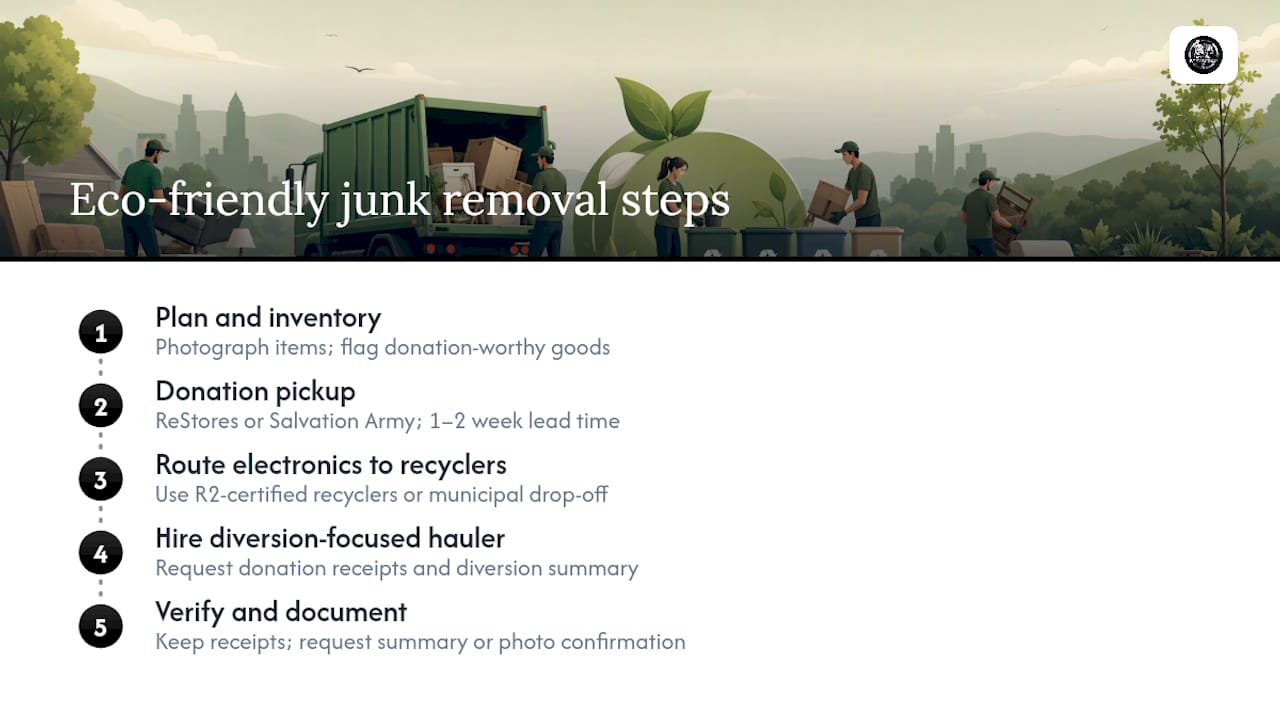
Step 2: Try donation pickup first for reusable items. Habitat for Humanity ReStores accept furniture, appliances, and building materials, and many locations offer free pickup for qualifying donations. The Salvation Army's schedule-a-pickup service covers most metro areas nationwide and handles sofas, dressers, and working appliances. Keep in mind that nonprofit pickups often have lead times of one to two weeks and condition requirements, so treat them as the right channel for your best items, not a substitute for a full cleanout.
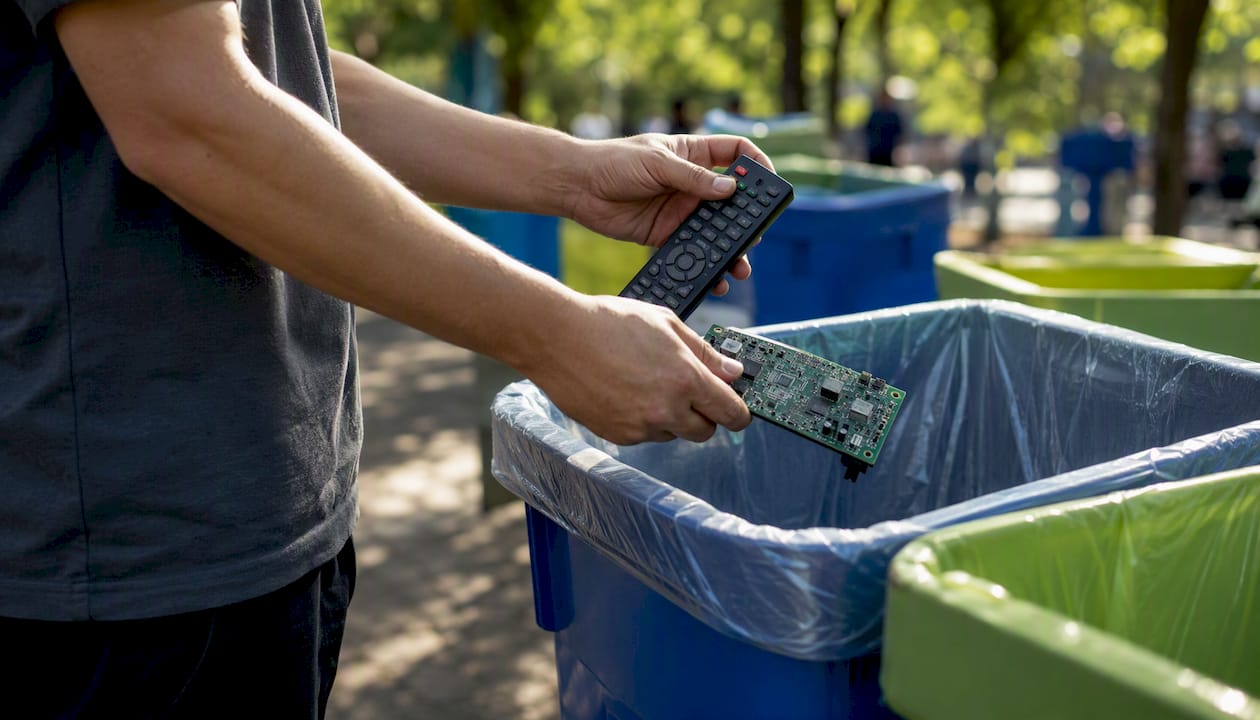
Step 3: Route electronics and appliances to certified recyclers. The EPA is explicit that e-waste requires specialized handling and should not go into regular trash or a general haul. Look for recyclers certified under the R2 standard, or use your municipality's e-waste drop-off program.
Step 4: Hire a diversion-focused hauler for the rest. When you book, specify that you want items donated and recycled wherever possible. Ask directly: "Do you provide donation receipts and a diversion summary?" Confirm the crew is insured and that the company is licensed in your state. A hauler who cannot answer those questions clearly is probably not tracking diversion at all.
Step 5: Verify and document. After pickup, request a brief summary or photo confirmation of where items went. Keep donation receipts with your tax records. If you run a small business, a diversion report can support sustainability reporting or simply give you confidence that your cleanout was handled responsibly.
Pro Tip: For a garage cleanout or basement cleanout, splitting the job into a donation pickup first and a paid haul second often reduces the paid volume by 20–30%, cutting your final bill.
The right eco-friendly disposal route for common items
Not every item follows the same path. Here is a practical guide to the most common categories.
| Item Category | Recommended Route | Quick Prep Steps |
|---|---|---|
| Electronics (TVs, computers, phones) | Certified e-waste recycler or municipal drop-off | Wipe all personal data; remove batteries |
| Large appliances (fridges, washers, dryers) | Certified recycler; donation if working | Drain water lines; confirm refrigerant handling |
| Furniture (sofas, tables, dressers) | Donate if clean and functional; hauler for damaged pieces | Clean surfaces; disassemble if possible |
| Mattresses | Specialized mattress disposal or recycler | No prep needed; most centers refuse soiled mattresses |
| Textiles and clothing | Donation centers, textile recyclers, or municipal programs | Bag separately; label "donate" vs. "recycle" |
| Building materials (lumber, drywall, tile) | Habitat ReStore for usable materials; C&D recycler for debris | Separate clean from contaminated materials |
| Yard waste | Municipal composting or green-waste pickup | Keep separate from general junk |
| Hazardous items (paint, batteries, chemicals) | Municipal hazardous-waste program only | Do not mix with other loads; keep in original containers |
A few items deserve extra attention:
- Refrigerators and air conditioners contain refrigerants regulated under the Clean Air Act. A general hauler cannot legally vent or dispose of refrigerants without EPA Section 608 certification. Always confirm this before booking appliance removal.
- Microwaves are often accepted at e-waste drop-offs; for a detailed walkthrough, the EasyScrap microwave disposal guide covers the legal and eco-friendly steps.
- Mattresses are bulky and largely non-recyclable through standard channels. Specialized processors can recover foam, fiber, and metal, but most donation centers refuse them for sanitation reasons.
What eco-friendly junk removal typically costs
Pricing varies by volume, access, and what the load contains, but understanding the structure helps you budget and negotiate.
Common pricing models:
- Volume-based: Most haulers charge by how much of their truck your load fills. A minimum load (roughly an eighth of a truck) typically starts around $75–$150; a full truck load runs $400–$600 or more depending on your region and the items involved.
- Item-based: Some haulers price per piece for single large items like a sofa, refrigerator, or hot tub.
- Flat-rate cleanouts: For a basement cleanout or attic cleanout, some companies offer flat rates based on a site visit or photo estimate.
What drives the price up:
- Difficult access (narrow stairs, no elevator, long carry distance)
- Items requiring special handling (refrigerants, e-waste, hazardous materials)
- Same-day or weekend scheduling
- High disposal fees in your municipality
How diversion can lower your cost:
Donating your best items before the crew arrives reduces haul volume, which directly reduces the price. Splitting a job — a free nonprofit pickup for the good stuff, a paid haul for the rest — is the most effective way to cut costs while keeping your diversion rate high. Preparing items (disassembling furniture, draining appliances) also speeds up labor, which some haulers factor into pricing.
According to consumer reporting on eco-friendly junk removal services, diversion claims vary widely across haulers, and the cheapest option rarely has the strongest recycling or donation practices. Price and environmental performance are not the same metric.
How to pick a genuinely eco-friendly junk removal service
The checklist below works on a phone call or in an email. Any hauler worth hiring can answer all of these.
Before you book, ask:
- What percentage of a typical load do you divert from landfill through donation or recycling?
- Which donation partners do you work with? Can you provide donation receipts?
- Do you work with R2-certified recyclers for electronics and appliances?
- How do you handle refrigerants and hazardous items?
- Are your crews insured and is the company licensed in this state?
- Can you provide a written quote and a post-pickup diversion summary?
What to look for in the answers:
- Specific diversion percentages, not vague claims
- Named partners (Habitat ReStore, Salvation Army, a named local recycler)
- A clear answer on hazardous items — a good hauler will tell you what they cannot take
- Proof of insurance on request, not just a verbal assurance
- Transparent pricing with no surprise fees at pickup
Hiring professionals for junk removal, as covered in this homeowner-focused guide, also reduces the risk of improper disposal that can expose homeowners to liability. A licensed, insured crew is not just a convenience — it is a legal protection.
Where to donate, recycle, or arrange hazardous-waste disposal in the U.S.
These are the most reliable starting points for most homeowners and small businesses.
Donation pickups:
- Habitat for Humanity ReStores — furniture, appliances, building materials; free pickup at many locations for qualifying items
- Salvation Army schedule-a-pickup — sofas, dressers, working appliances; nationwide coverage with online scheduling
E-waste and electronics:
- EPA's e-waste guidance points to certified recyclers and municipal drop-off programs; search your city or county's website for "e-waste drop-off" or "electronics recycling"
- Many big-box retailers (Best Buy, Staples) accept certain electronics for recycling at no charge
Hazardous-waste programs:
- Search "[your county] household hazardous waste" to find scheduled collection events or permanent drop-off sites for paint, batteries, chemicals, and fluorescent bulbs
- Earth911.com is a reliable national search tool for locating recycling and hazardous-waste programs by item type and ZIP code
Pro Tip: Most municipal hazardous-waste programs are free for residents and run on a scheduled basis — check your county's public works or solid waste department website for dates, because many only run monthly or quarterly.
Handling hazardous and specialty items safely
These items cannot go in a standard junk haul, and mishandling them carries real legal and safety consequences.
Batteries: Lithium-ion batteries (laptops, phones, power tools) are a fire risk in compactor trucks. Remove them before any pickup and bring them to a retailer drop-off (Home Depot, Lowe's, Best Buy) or a municipal collection site. Alkaline batteries can go in regular trash in most states, but check your local rules.
Paint: Latex paint can often be dried out and disposed of in regular trash once solid; oil-based paint is hazardous and requires a municipal hazardous-waste program. Never pour either down a drain.
Household chemicals: Pesticides, pool chemicals, solvents, and cleaning concentrates all require hazardous-waste disposal. Keep them in original, labeled containers and store them away from heat until your next collection event.
Refrigerants: Any appliance with a compressor — refrigerators, window AC units, dehumidifiers — contains refrigerants regulated under the Clean Air Act. Only an EPA Section 608-certified technician can legally recover them. Confirm this certification before booking any appliance removal.
Medical waste and sharps: Never place sharps in regular trash or recycling. Most pharmacies participate in sharps disposal programs, and many municipalities offer mail-back kits.
Pro Tip: When storing hazardous items before disposal, keep them in a cool, dry area away from children and pets, in their original containers with lids tightly closed. A labeled cardboard box in a garage corner works fine for a few weeks.
EasyScrap's take on what eco-friendly junk removal actually requires
Most people assume that booking a junk removal company automatically means their stuff gets recycled. It does not. The difference between a hauler who genuinely diverts material and one who drives everything to the nearest transfer station is invisible on the surface — same truck, same crew, same price. The only way to know is to ask, and to ask specifically.
At Easyscrapofficial, the commitment to diversion is built into the process, not bolted on as a marketing line. Items are assessed for donation potential before the truck leaves, and the company documents donation and recycling work so customers can request receipts. That matters for homeowners who want to claim a charitable deduction, and it matters for small businesses that need to show responsible disposal.
The other thing worth saying plainly: eco-friendly junk removal is not slower or more expensive than standard hauling when it is done right. Sorting at the point of pickup, routing items to the right channels, and working with established donation partners adds maybe fifteen minutes to a job. What it removes is the nagging question of whether your old couch ended up in a landfill three miles from your house.
For seniors or anyone managing a large estate cleanout, the diversion-first approach also tends to produce better outcomes. Usable furniture and appliances go to families who need them. That is a better result than a landfill, and it is achievable on the same timeline as a standard pickup.
Easyscrapofficial handles the eco-friendly haul so you don't have to sort it alone
Sorting, photographing, calling nonprofits, confirming certifications — the process is manageable, but it takes time. Easyscrapofficial is the local alternative for homeowners and small businesses in the Lawrence, Andover, Boston, Lowell, and Haverhill area who want a diversion-first cleanout without coordinating five different pickups themselves.
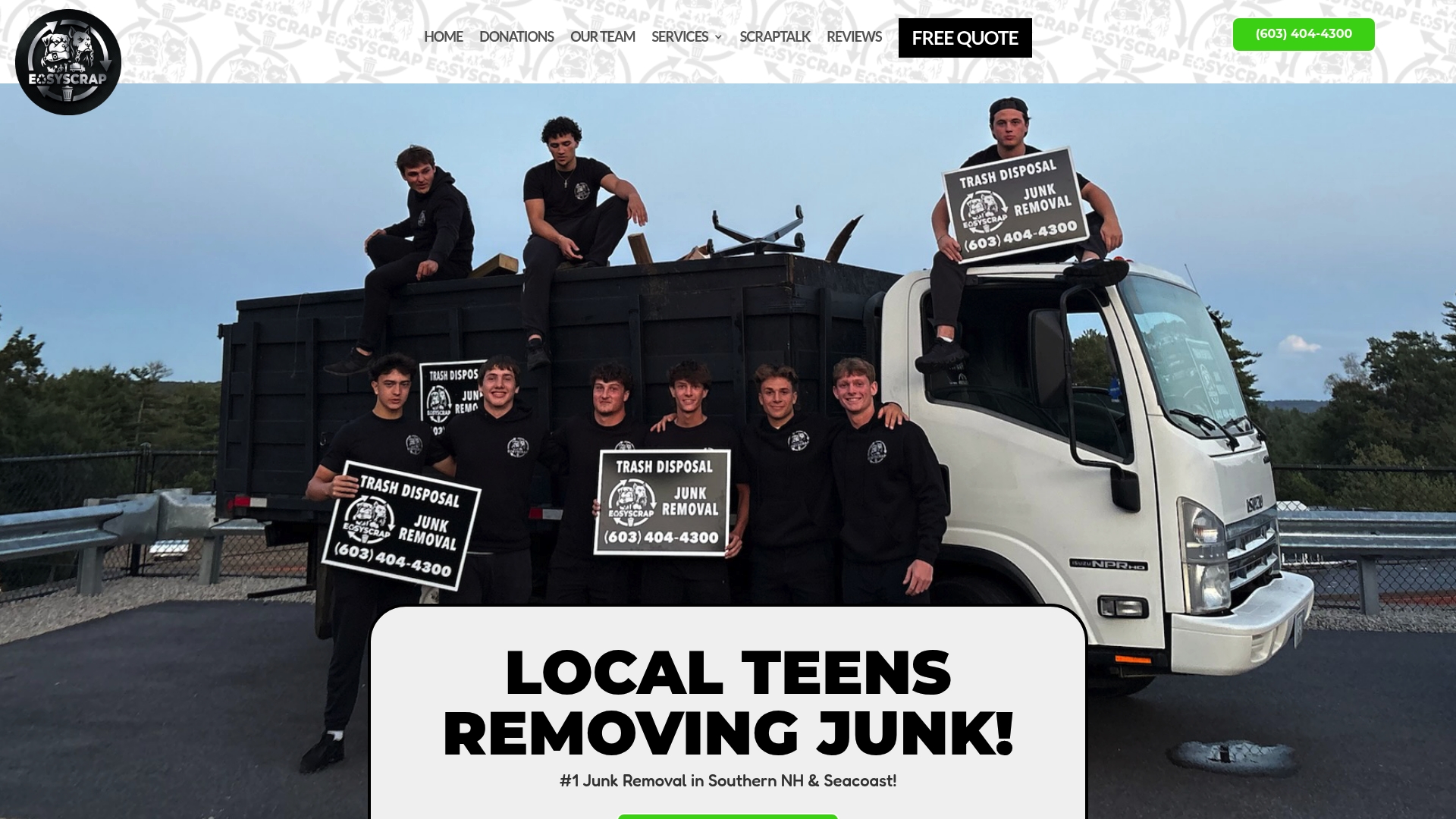
The crew handles same-day junk removal, furniture removal, appliance removal, garage cleanouts, basement cleanouts, and more — all with an insured team and a clear commitment to donating and recycling wherever the items qualify. Customers can request donation receipts directly. The full service catalog covers everything from a single refrigerator to a full estate cleanout. Get a free quote and book your pickup at Easyscrapofficial.
Sources
- National overview: facts and figures about materials, waste and recycling
- Habitat for Humanity ReStores
- The Best Junk Removal Services — EcoWatch (eco-friendly coverage)