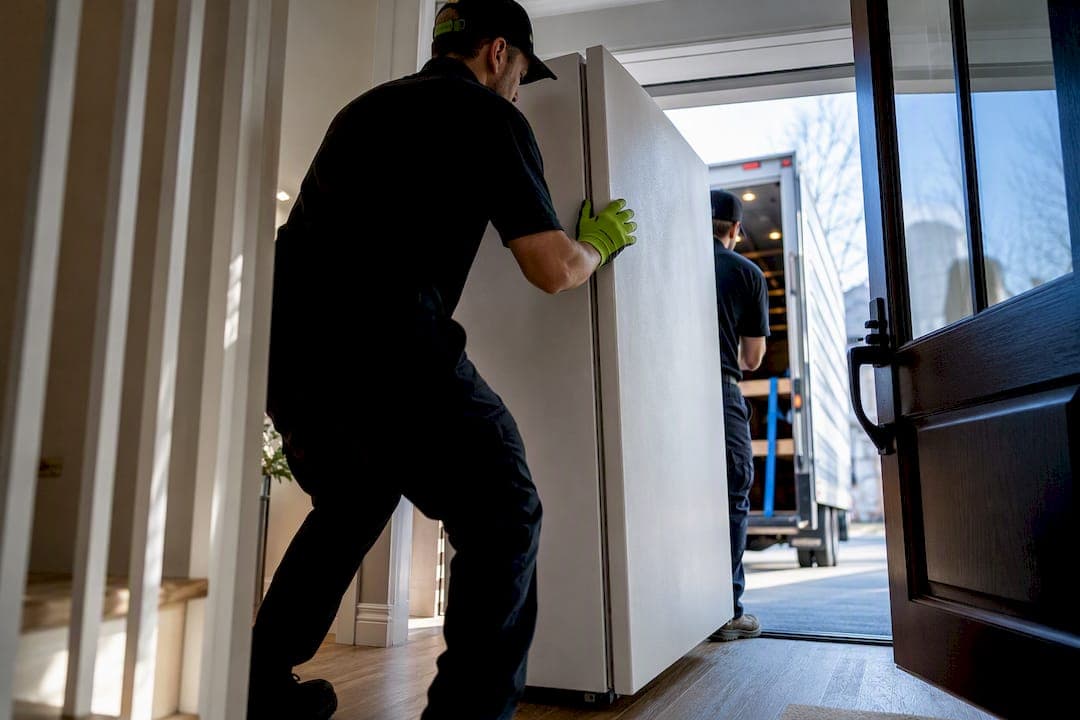
Most Massachusetts homeowners pay an amount that can vary widely for a junk-removal company to haul away a refrigerator, depending on access, weight, and whether refrigerant recovery is included. The fastest way to lock in an accurate number is to send a provider a few photos of the unit and its location. Federal refrigerant rules and job-site difficulty (stairs, tight doorways, built-in cabinetry) are what push a quote toward the higher end.
TL;DR:
- Most Massachusetts junk-removal companies charge between $25 and $100 for refrigerator pickups, depending on location, access, and refrigerant handling.
- Free disposal options are available through Mass Save for working, efficient units, while broken or built-in models require paid services.
- Federal regulations mandate certified refrigerant recovery, often leading to a separate surcharge on quotes to ensure proper disposal verification.
- Providing detailed photos, measurements, and location information upfront reduces the risk of price adjustments upon arrival.
- Same-day service is common for straightforward jobs, but complex installations or built-in units may need scheduled appointments with more extensive estimates.
Table of Contents
- Typical Fridge Disposal Fees in Massachusetts: What the Price Usually Covers
- How Federal and State Rules Change the Price
- Job-Site and Appliance Factors That Change the Quote
- How to Get a Transparent, Accurate Quote From a Massachusetts Junk-Removal Company
- Rebates and Municipal Alternatives in Massachusetts
- How EasyScrap Handles Compliant Fridge Removals
- Book EasyScrap Appliance Removal: What to Expect
- Official Resources on Refrigerant Rules and Rebates
- Sources
- FAQ
Typical Fridge Disposal Fees in Massachusetts: What the Price Usually Covers
A standard curb-side refrigerator pickup, meaning the unit is already outside or in a garage, tends to run on the lower end of the range because there's no carry-out labor involved. In-home carry-out jobs, where a crew has to move the fridge from a kitchen through hallways and down stairs, cost more because they take longer and require more people. Built-in or counter-depth models are the most expensive to remove since they're often anchored to cabinetry and need careful handling to avoid damaging the kitchen.
- Curb-side or garage pickup: typically the most affordable option since the unit is already accessible.
- In-home carry-out: priced higher to cover labor, time, and the number of crew members needed.
- Built-in or counter-depth units: the costliest category, due to disassembly and the risk of cabinetry damage.
A Massachusetts appliance-disposal market report found that hauler and recycler pickup fees across the state vary widely, depending on distance traveled and whether refrigerant removal, sometimes called Freon removal, is part of the job.
What's usually included: labor to disconnect and carry the unit, hauling to a recycling or donation facility, and basic disposal. What can cost extra: certified refrigerant recovery, heavy-lift or stair surcharges, and long carry distances to the truck. If the unit still works and meets efficiency requirements, a rebate program can reduce or eliminate the cost entirely, which is worth checking before booking a paid haul-away.
How Federal and State Rules Change the Price
Refrigerators and freezers hold refrigerant, and federal law treats that refrigerant as hazardous material that can't just be vented into the air. Under EPA safe-disposal requirements. The final disposer, meaning the company or facility that ultimately processes the appliance, is responsible for verifying that refrigerant was properly recovered before the unit is scrapped. That verification typically comes as a signed statement or a contract with a certified recovery provider.
This is the main reason a legitimate junk-removal quote sometimes includes a specific line item for refrigerant handling rather than folding it silently into the base price. According to EPA's disposal procedures brochure, landfills and recyclers must either confirm removal or recover the refrigerant themselves using certified equipment, which means the paperwork trail matters just as much as the pickup itself.
- Ask for written proof of refrigerant recovery, not just a verbal assurance.
- Expect a modest surcharge if a provider contracts out certified recovery rather than doing it in-house.
- Check that local transfer-station rules in your Massachusetts town don't add a separate requirement on top of federal ones.
Municipal transfer stations across the state handle this differently, so a provider working in multiple towns has to account for both the federal rule and whatever local policy applies at drop-off.
Job-Site and Appliance Factors That Change the Quote
A phone estimate is only as good as the details behind it. The biggest swings between a quoted price and a final price come from things a customer forgets to mention.
- Stairs and tight hallways add labor time and sometimes require a second crew member.
- Narrow doorways can force a crew to remove a door or angle the unit carefully, which slows the job.
- Distance to the truck matters more than most people expect. A long driveway or a walk-up apartment adds real time.
- Built-in units require disconnecting cabinetry panels and handling with extra care.
- Hookups still attached, like a water line for an ice maker, need to be disconnected safely before the unit moves.
- Unit size and weight affect whether one or two crew members are needed.
Pro Tip: Snap photos from the front, back, and the path from the fridge to the door before you call, it takes two minutes and usually keeps your quote from changing on arrival.
Every one of these factors either adds time or adds people to the job, and both cost money. Providers who don't ask about them upfront are the ones most likely to revise a price once they're standing in your kitchen.

How to Get a Transparent, Accurate Quote From a Massachusetts Junk-Removal Company
The clearest way to avoid a surprise charge is to over-share details before you book. A good provider will ask for this anyway, but volunteering it speeds things up.
- Send clear photos from multiple angles, including the path from the fridge to the truck.
- Provide measurements if the unit is built-in or the doorway looks tight.
- Describe the exact pickup location: kitchen, basement, garage, or upstairs bedroom.
- Note the number of steps or flights involved.
- Mention whether the unit is attached to cabinetry, a water line, or an ice maker.
Once you've shared those details, ask a few direct questions: does the company handle refrigerant recovery in-house or contract it out? Can they provide a signed disposal verification for your records? What are their surcharges for stairs or long carries, and what's their cancellation policy? Landlords and property managers should also ask about receipts or delivery paperwork, since documentation matters for compliance records. Most Massachusetts junk-removal companies offer same-day service for straightforward jobs, though appointment scheduling is common when a deposit or specialty equipment is involved.
Rebates and Municipal Alternatives in Massachusetts
Before paying for a haul-away, check whether your refrigerator qualifies for a free option. Mass Save's refrigerator and freezer recycling program offers no-cost pickup and a rebate for qualifying, still-working but inefficient units, scheduled by calling 866-527-SAVE. That program is usually the first call for a working fridge that's simply outdated.
Municipal rules vary by town. Some cities offer curb-side pickup with scheduling, while many towns require a transfer-station drop-off or charge a small fee for curb service, according to the Massachusetts appliance-disposal report. Use Mass Save or your town's program for a working unit. Use a paid junk-removal service for broken units, built-ins, or when you need same-day removal that municipal scheduling can't match. Our guide on appliance recycling options in Massachusetts walks through eligibility in more detail.

How EasyScrap Handles Compliant Fridge Removals
Refrigerant recovery is treated as a documented step, not an afterthought, and crews are insured for carry-out work that can complicate DIY removals. Where units are still usable, donation or recycling is prioritized over landfill disposal. Documentation confirming how a unit was handled after pickup can be provided for landlords and property managers who need a paper trail.
— Easy
Book EasyScrap Appliance Removal: What to Expect
If you need a refrigerator gone this week, not next month, EasyScrap's appliance removal service offers free quotes and same-day availability across our Massachusetts service area, with an insured crew that recycles or donates whenever the unit allows it. Our refrigerator removal page walks through what the process looks like from booking to pickup.
To get a fast, accurate quote, have these ready:
- Photos of the fridge from the front and the path to the door.
- The pickup location and number of steps involved.
- Whether the unit is built-in or still connected to a water line.
For a broader cleanout, our junk removal service covers more than just appliances in one trip.
Official Resources on Refrigerant Rules and Rebates
For the federal rule itself, see EPA's Section 608 disposal guidance. For Massachusetts rebates, see Mass Save's recycling program. Our fridge disposal guide covers the legal side in plain language, and Ohana Property Services offers a useful homeowner-facing breakdown of the same EPA rules.
Sources
- Stationary Refrigeration Safe Disposal Requirements | US EPA
- Refrigerator and freezer recycling | Mass Save
- Secondary Market and Appliance Disposal Report (Massachusetts)
FAQ
What is the average fridge disposal fee in Massachusetts?
Most junk-removal companies in Massachusetts charge varying amounts to haul away a refrigerator, depending on access and whether refrigerant recovery is included. A Massachusetts market report found hauler pickup fees ranging from under $25 to $100 depending on distance and services performed.
Can I get my refrigerator picked up for free in Massachusetts?
Yes, if the unit is still working and meets efficiency requirements, Mass Save offers no-cost pickup plus a $75 rebate. Broken or built-in units typically don't qualify and require a paid haul-away instead.
Why do some junk-removal quotes include a refrigerant recovery charge?
Federal rules under EPA's safe-disposal requirements require the final disposer to verify that refrigerant was properly recovered before scrapping the unit. That verification step, whether done in-house or contracted out, is why some quotes list it as a separate charge.
How fast can a company remove my fridge in Massachusetts?
Many Massachusetts junk-removal companies offer same-day pickup for straightforward jobs with clear access. Appointment scheduling is more common for built-in units or jobs that need extra equipment.
What information should I send to get an accurate quote?
Send clear photos of the fridge and the path to the door, along with measurements if it's built-in, the number of steps involved, and whether it's still connected to a water or ice line. Sharing these details upfront is the single best way to avoid a revised price when the crew arrives.