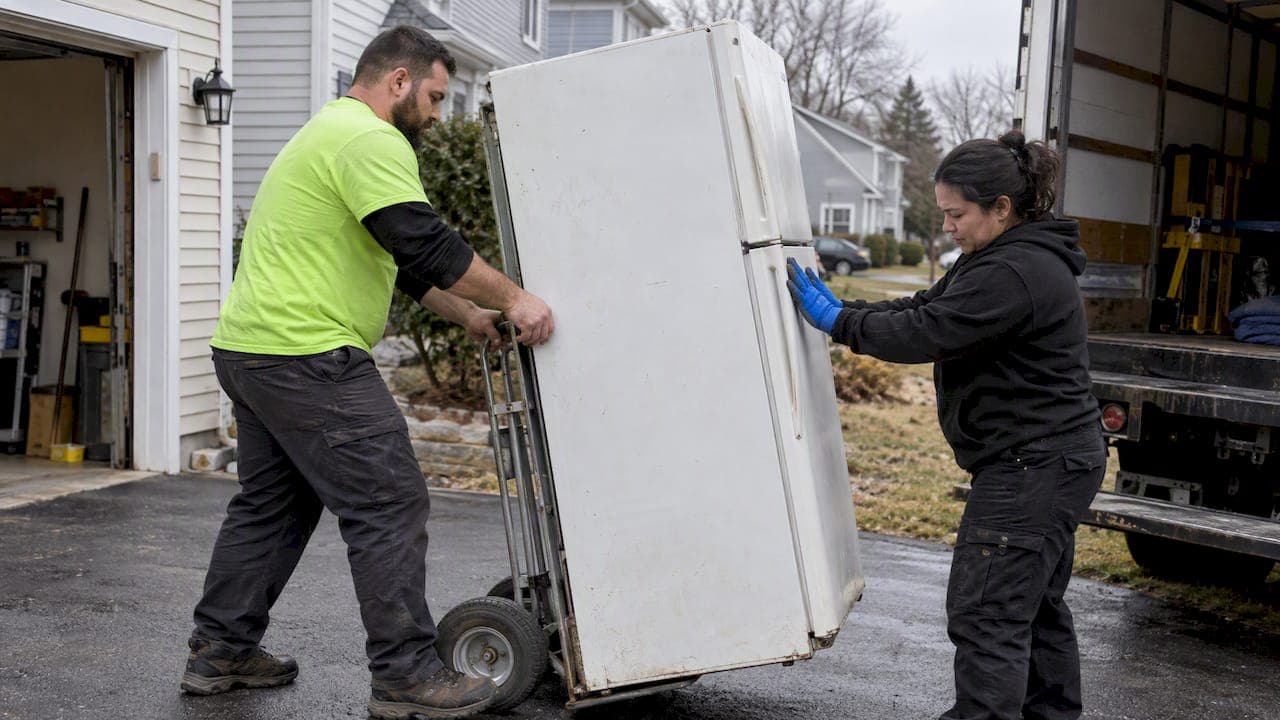
Your main choices for heavy item removal are municipal bulky pickup, a transfer station drop-off, donation or resale, a rented roll-off dumpster, or a professional junk-hauling crew. The right pick depends on how heavy and how many items you have, whether you own a vehicle that can carry them, your timeline, and how much effort you want to put in versus pay someone else to handle.
TL;DR:
- Municipal bulky pickup is cost-effective but requires scheduling, placing items at the curb with tags, and is often limited to a small number of items.
- Transfer stations are cheap if you have a vehicle and are willing to sort and bring items yourself, with fees typically charged per item or category.
- Donation and resale options are free for usable items, but mattresses and appliances may need specialized recycling or certified handling due to EPA regulations.
- Renting a roll-off dumpster suits large projects like renovations, with costs depending on size, rental duration, and prohibited materials; always order a larger bin if unsure.
- Hiring a professional junk-hauler is the fastest, easiest, and safest for heavy or regulated items, especially when dealing with appliances requiring refrigerant recovery.
Table of Contents
- A quick overview of each removal path
- How municipal bulky-item pickup works and what it costs
- Transfer stations and drop-off centers: what to expect on arrival
- Donating, reselling, and recycling instead of tossing
- Renting a roll-off dumpster for bigger cleanouts
- Hiring a professional junk-removal crew: what it covers and when it's worth it
- Why appliances need special handling under EPA rules
- Safety steps and prep that lower your cost
- Matching your situation to the right removal path
- When hiring a local insured crew is the simplest choice
- Book a heavy item pickup with EasyScrap
- FAQ
- Sources
A quick overview of each removal path
Before you commit to one method, it helps to see how they stack up against each other. Each option trades off cost, speed, and physical effort differently, and the best fit often depends on just one or two factors like whether you have a truck or whether the item is an appliance.
- Municipal bulky pickup: Your city or town collects large items curbside on a set schedule, often free or low-cost, but usually requires advance scheduling and placement rules.
- Transfer station drop-off: You haul items yourself to a local facility, which tends to be the cheapest option if you already have a vehicle.
- Donation or resale: Charities, resale platforms, or retailer take-back programs remove usable items at no cost to you and keep them out of landfills.
- Dumpster rental: A roll-off container sits on your property for days or weeks, suited to renovations or whole-house cleanouts with mixed debris.
- Professional junk removal: A crew comes to you, does the lifting, and hauls everything away, usually the fastest and most convenient but priciest per item.
- Retailer or manufacturer pickup: Some appliance and furniture retailers remove your old unit when delivering a replacement.
If you're moving a single couch, donation or a hauler makes sense. If you're clearing a whole garage full of mixed junk, a dumpster or a professional crew usually saves more time than several municipal pickup trips.
How municipal bulky-item pickup works and what it costs
Most cities and towns run scheduled bulky-item collection separate from regular trash pickup. You typically request a pickup through your public works department's website or a local service line, then place items curbside by a set date. Municipalities manage this volume through a mix of transfer stations, scheduled collections, and dedicated mattress recycling programs, since bulky items need handling that regular trash routes aren't built for, according to EPA guidance on bulky items.
Before you schedule anything, check these common constraints:
- Most programs cap the number of items per pickup, usually a small handful.
- Items usually need to be at the curb by a specific time, sometimes with a sticker or tag purchased in advance.
- Placing items out too early or without required tags can result in a fine instead of a pickup.
Some municipalities charge per item rather than offering free pickup. Worcester, Massachusetts runs a residential drop-off program with established per-item fees for bulk waste and separate charges for mattresses and white goods, which illustrates how costs can vary by location, according to the Worcester drop-off center's fee schedule. Always check your local program's specific rules before assuming pickup is free.
Transfer stations and drop-off centers: what to expect on arrival
Driving items to a transfer station yourself is often the cheapest route if you have a vehicle and don't mind the trip. Many facilities require an appointment, proof of residency such as a utility bill or driver's license, and charge small per-item fees rather than billing by weight for residential drop-offs.
Expect these common rules:
- You may need to show ID or a recent bill matching your address before unloading.
- Fees are typically listed per item category, such as a flat rate for furniture and a separate rate for mattresses or appliances.
- Facilities often cap how many items or how much volume you can drop off per visit.
Transfer stations typically sort incoming material into separate streams, directing mattresses toward dedicated recycling programs, constructing and demolition debris toward C&D processors, and scrap metal toward metal recyclers, consistent with how the EPA's bulky items guide describes municipal handling of these categories. If you already have a truck or trailer and a free afternoon, a transfer station run usually beats paying for pickup or hauling, especially for a handful of items rather than a full house.
Donating, reselling, and recycling instead of tossing

Donation and resale keep usable furniture and appliances out of landfills, and many charities will schedule a pickup if the item is in good condition and you live within their service area. Local marketplace apps are another option when a charity won't take something, letting you list a free or low-cost item for a neighbor to pick up directly, similar to how platforms like Marketplace connect local buyers and sellers.
Mattresses need a different path since most curbside programs won't take them loose. State guidance on mattress recycling outlines several models municipalities use, including one-day collection events, dedicated drop-off containers, regional collection centers, and "milk run" routes where a hauler picks up from multiple small sites in one trip, according to Massachusetts mattress disposal guidance.
- Check whether your city participates in a scheduled mattress recycling event before paying for private pickup.
- Ask furniture charities about size and condition limits before arranging a pickup.
- Look into retailer take-back programs, since some appliance and mattress retailers remove your old unit for free when delivering a new one.
Mattress recyclers often require a minimum load size and may charge a surcharge for small, inefficient drop-offs, so coordinating with neighbors or a municipal collection event tends to be cheaper than going it alone.
Renting a roll-off dumpster for bigger cleanouts
A roll-off dumpster makes sense when you're clearing an entire space rather than a few items, like a renovation, estate cleanout, or garage packed with years of accumulation. Pricing depends on a few factors you can control:
- Container size drives the base rental price, with smaller bins costing less but filling up faster than you'd expect.
- Rental period adds cost the longer the container sits on your property, so match the size to how fast you can actually fill it.
- Weight and prohibited materials can trigger overage fees, since mattresses, tires, and electronics are often restricted or billed separately.
You'll also need to think about where the container goes. Driveway placement is usually easiest, but a street placement may require a permit from your city, and a container that blocks a sidewalk or neighbor's access can create friction you don't need.
Pro Tip: Order a size one step larger than you think you need. Underestimating volume and needing a second haul usually costs more than renting the bigger bin upfront.
A roll-off tends to beat multiple municipal pickup trips or a hauler's per-load pricing when you're dealing with mixed debris across several rooms rather than a handful of discrete items.
Hiring a professional junk-removal crew: what it covers and when it's worth it
A professional hauling crew handles the parts that make heavy item removal physically demanding: carrying furniture down stairs, maneuvering appliances through doorways, and loading a truck without damaging your home. Most crews also sort what they collect, routing usable furniture to donation and separating recyclable materials rather than sending everything to a landfill.
Pricing for professional junk removal typically works on a volume or truck-space basis rather than a flat per-item rate, with labor and disposal fees bundled into one quote. A single bulky item like a couch or mattress usually falls on the lower end of that scale, while a full truckload costs more but often beats paying for several smaller jobs separately.
- Crews typically handle loading, hauling, and either donation or disposal in one visit.
- Pricing is usually based on how much space your items take up in the truck, not a flat rate per visit.
- Insured crews protect you if something gets damaged during removal, which matters most for stairs, tight hallways, or delicate flooring.
This option tends to make the most sense when you don't have a vehicle large enough for the load, when an item is too heavy or awkward to lift safely on your own, or when you're on a tight deadline like a move-out date. Appliances in particular often call for a crew that understands certified handling and safe transport, since improper handling can damage the unit or violate disposal rules. We handle exactly this kind of job, offering furniture removal and broader junk removal services for homeowners who want the heavy lifting done for them.
Pro Tip: Take photos of your items before calling for a quote. A clear picture of volume and item type usually gets you a faster, more accurate price over the phone.
Why appliances need special handling under EPA rules
Refrigerators, freezers, and air conditioners contain refrigerants that can't simply be tossed in a truck or left at the curb. The EPA requires that refrigerant be recovered from these units and that the final processor confirms recovery before the appliance is disposed of, which is why many transfer stations ask for signed paperwork or route appliances to a certified technician rather than accepting them like ordinary bulk waste, according to EPA's appliance disposal guidance.
Final processors of appliances must ensure that refrigerant is recovered before the unit is disposed of, and venting refrigerant into the atmosphere is prohibited.
EPA, Section 608 appliance disposal requirements
Venting refrigerant without proper recovery is against federal rules, and technicians who recover it typically need Section 608 certification, according to EPA's Section 608 program. This is one reason municipal programs often reject air conditioners and refrigerators that weren't prepped correctly, along with items that are moldy, waterlogged, or show signs of pest infestation. Planning around these rejections upfront saves a wasted trip to the curb or transfer station.
Safety steps and prep that lower your cost
A little prep work before moving day protects you physically and can shrink your final bill. Follow these steps:
- Remove refrigerator and freezer doors before setting them out, since loose doors create a child entrapment risk that many municipalities specifically prohibit at curbside, per municipal bulky waste guidance.
- Clear a straight path from the item to the truck or curb, and use a furniture dolly or hand truck instead of carrying awkward loads alone.
- Separate scrap metal from general debris, since many haulers and transfer stations price or recycle metal differently.
- Photograph items before requesting quotes so pricing conversations go faster, and more accurately.
Water-damaged or pest-infested items are routinely refused by recyclers and municipal programs, so if a mattress or couch has visible mold or bedbug activity, plan for a separate disposal path rather than assuming a standard pickup will take it.
Matching your situation to the right removal path
The fastest way to decide is to answer a few quick questions about what you're dealing with:
- What's the item and its condition? Clean and usable points toward donation; soiled or damaged narrows your options fast.
- How much volume are you moving? One or two items favors a hauler or transfer station; a full room or garage favors a dumpster.
- Do you have a vehicle that fits it? No truck usually means hiring pickup rather than planning a drop-off run.
- Is cost or speed your priority? Municipal pickup wins on cost if you can wait for the schedule; a professional crew wins on speed.
Before booking any hauler, ask whether they provide disposal receipts, how they handle donation or recycling, whether their crew is insured, and whether they charge extra for appliances needing refrigerant recovery.
| Scenario | Recommended path |
|---|---|
| Single sofa, no vehicle | Hire a professional hauler for same-day pickup |
| Full garage cleanout with mixed debris | Rent a roll-off dumpster |
| Broken, soiled mattress | Municipal mattress recycling drop-off or certified hauler |
| Working refrigerator, replacing it | Retailer take-back or appliance removal service |
| A few usable furniture pieces | Donate or list on a local marketplace |
When hiring a local insured crew is the simplest choice
For heavy, awkward, or regulated items like appliances, a local insured crew often removes more friction than any DIY route. It handles donation sorting, refrigerant compliance, and the physical lifting in one visit, which matters most when a mattress or fridge can't simply wait for the next scheduled pickup.
— Easy
Book a heavy item pickup with EasyScrap
We make heavy item removal simple for homeowners in several communities, showing up with a crew that handles the lifting, hauling, and sorting so you don't have to rent a dumpster or wait on a municipal schedule.
Our services cover the situations this guide walks through:
- Furniture removal for couches, dressers, and bulky pieces too heavy to move alone.
- Appliance removal and refrigerator removal with safe handling for units containing refrigerant.
- Mattress disposal, garage cleanouts, and basement cleanouts for larger jobs.
- Same-day scheduling for items that need to leave today, not next week.
We donate and recycle whenever possible, so usable items get a second life instead of a landfill spot. Get a free quote through our junk removal page and we'll tell you exactly what your pickup will cost before we show up.
FAQ
Where can you dispose of bulky items for free?
Many municipalities offer free scheduled bulky-item pickup or periodic amnesty days, though you'll typically need to request a date in advance and follow placement rules, according to EPA's bulky items guide. Donation centers and local marketplace listings are also free routes if the item is still usable.
What does a flat-rate junk removal service typically include?
A flat-rate or low minimum junk removal charge usually covers a small load, such as a single piece of furniture, including the crew's labor to carry it out and basic disposal or donation handling. Larger loads move to volume-based pricing, since most haulers price by how much space items take up in the truck rather than a flat fee for everything.
What's the cheapest way to get rid of junk?
Donating usable items or listing them on a local marketplace app costs nothing and is often the cheapest option when the item is still in good condition. For items that can't be donated, a municipal transfer station drop-off is usually less expensive than hiring a hauler, provided you have a vehicle to transport them yourself.
How do same-day junk pickup services typically price furniture removal?
Same-day haulers generally price by how much space your items occupy in the truck rather than charging a flat per-item rate, with a single piece of furniture falling at the lower end of that scale. Booking platforms like Pinky's show how this scheduling and pricing model typically works for on-demand pickup. We offer the same kind of same-day scheduling through our own junk removal service.
Do appliances need special disposal steps?
Yes, refrigerators, freezers, and air conditioners contain refrigerant that must be recovered before disposal, and venting it is prohibited under EPA rules. This is why many transfer stations require certified handling or signed paperwork for these units rather than accepting them as standard bulk waste, according to EPA's appliance disposal guidance.
Sources
- Bulky items quick start guide (EPA)
- Worcester residential drop-off bulk waste disposal (municipal example)
- Mass