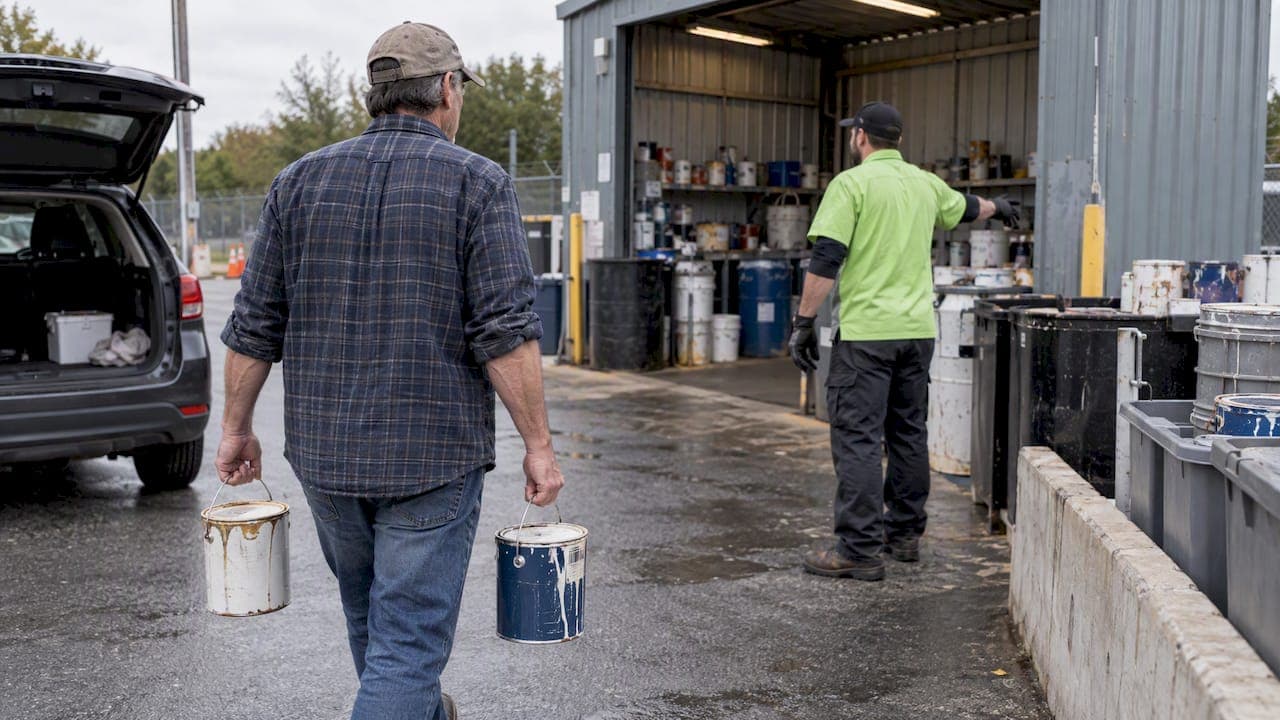
If you have a small amount of leftover latex paint, let it dry out completely and put it in the regular trash. If it is oil-based, or if you have more than a gallon or two, take it to a household hazardous waste event, a permanent collection facility, or a municipal paint shed, and check the MassDEP directory or call your town's recycling coordinator before you make the trip.
TL;DR:
- Dry small amounts of latex paint completely before disposal, while oil-based paint must be kept liquid and taken to hazardous waste facilities.
- Municipal household hazardous waste events are usually free and available a few times each year, but private facilities charge fees and require calls ahead.
- Identifying latex versus oil-based paint involves label instructions, water-based cleaning tests, or noting solvent odors and flammability warnings.
- Consolidate or split larger paint quantities into smaller containers for drop-off, and keep oil-based paint sealed and liquid for proper disposal.
- For large or mixed waste, professional junk removal services like EasyScrap can handle entire cleanouts quickly and properly.
Table of Contents
- Authorized disposal pathways in Massachusetts
- How to tell latex paint from oil-based paint
- Preparing your paint for disposal or reuse
- Finding and using Massachusetts collection programs
- A local view on when paid removal makes sense
- EasyScrap: a local option for large or mixed paint cleanouts
- FAQ
- Sources
Authorized disposal pathways in Massachusetts
Massachusetts gives you four real options for getting rid of paint, and which one fits depends on the type of paint, how much you have, and how far you are willing to drive.
- Dry it and trash it: small amounts of latex paint that have fully solidified can go in your regular trash can.
- Municipal HHW collection day: many towns run one-day or seasonal household hazardous waste events for residents only.
- Permanent HHW facility: some communities operate year-round drop-off sites, and private, permitted centers like the ones in Sutton and Westfield accept paint from residents of any Massachusetts municipality.
- Paint shed or reuse program: usable, labeled latex paint can often be dropped off for someone else to take home for free.
Private facilities tend to charge a fee since they are not funded by your town's budget, while municipal events are usually free for residents but limited to a few dates a year. Hours, accepted items, and residency rules change often enough that calling ahead saves you a wasted trip.
Pro Tip: Call the facility the same day you plan to go. Hours and fee schedules at HHW sites change more often than their websites get updated.
How to tell latex paint from oil-based paint
Before you decide where the paint is going, you need to know what it actually is. The label is the fastest clue: look for cleanup instructions that say "clean up with water" (latex) versus "clean up with mineral spirits" or "thinner" (oil-based or alkyd). Many cans also print the resin type directly, such as "acrylic latex" or "alkyd enamel."
If the label is gone or illegible, a simple test works almost every time:
- Dab a small amount on a scrap surface and try to clean it with water while it is still wet. Latex paint wipes away. Oil-based paint smears and needs solvent.
- Check for warning language like "combustible" or "flammable" on the can. That almost always signals an oil or solvent-based product.
- Note the weight and smell. Oil-based paint has a stronger solvent odor and dries slower than latex.
Getting this wrong matters. Oil-based paint is combustible and can release fumes that pose a fire or air-quality risk if it is poured out, dried in the open, or thrown in household trash. Latex paint carries far less risk once it is fully dry, which is why Massachusetts treats the two types so differently for disposal.
Preparing your paint for disposal or reuse
Once you know what you are dealing with, prepping it correctly keeps you out of trouble and makes any drop-off faster.
- Dry small amounts of latex paint. Remove the lid, spread the paint in a shallow layer inside the can or a disposable container, and let it air-dry, or speed things up with kitty litter or a commercial paint hardener.
- Split larger quantities. If you have several half-full cans, consolidate or portion them into smaller containers rather than hauling full five-gallon buckets to a collection event.
- Keep oil-based paint liquid and sealed. Do not try to dry it out. MassDEP guidance is clear that oil-based and solvent-containing products need to go to an HHW program, not the trash, even in small amounts if they are still liquid.
- Pack for transport. Use a sturdy box lined with a trash bag, keep lids on tight, and separate paint from other chemicals like pesticides or solvents so nothing reacts in transit.
- Bring what the facility asks for. Proof of residency, an appointment confirmation, or a small fee are common requirements at both municipal and private sites.
The Massachusetts EPR Commission paint letter estimates that leftover paint generation statewide is significant each year, with a majority ending up at landfill or waste-to-energy facilities rather than being reused. That gap is part of why towns keep pushing reuse programs over straight disposal.
While you wait for a collection date, store paint away from heat sources, out of reach of children and pets, and somewhere it will not freeze.

Finding and using Massachusetts collection programs
The MassDEP household hazardous products directory is the starting point for almost every disposal decision in this article. It lists municipal collection events, permanent facilities, and private centers by town, along with notes on who can use each one.
Facilities generally fall into three access categories:
- Open-to-all: anyone in Massachusetts can use the site, often for a fee.
- Member municipality: only residents of towns that pay into a regional program can drop off there, usually for free.
- Host-only: limited to residents of the specific town running the event.
New England Disposal Technologies, a Veolia company, runs permanent HHW centers in Sutton and Westfield that accept household hazardous products from residents of any Massachusetts municipality. Sutton operates on scheduled collection days, while Westfield runs closer to year-round. Call 866-769-1621 to confirm current hours, accepted materials, and fees before you load the car.
At a typical municipal paint collection day, expect a volume limit per household, a check-in table, and sometimes a separate bin or shed for paint that is still usable. Reuse rules vary by town: a local paint shed might take any labeled, half-full can of latex, while another program only accepts paint collected on a specific event date.
Pro Tip: Keep a photo of the can label on your phone before you drop it off. Some facilities ask what is inside before they let you unload.
For a sense of how other recycling programs in the state handle verification and fees, this appliance recycling guide walks through a similar process for a different waste stream.
A local view on when paid removal makes sense

Municipal programs work well when you have a weekend free, a car that can handle the drive, and one or two cans to deal with. They get a lot less practical when you are clearing out a garage with a decade of half-used cans, a basement with mixed chemicals, or a rental property where you cannot wait three months for the next HHW event.
In those cases, the math changes. A single trip to a fee-based facility might cost less per can, but the time, gas, and multiple visits for larger loads add up fast. Keeping containers labeled and separated by type still matters no matter who hauls them, since that is what lets any disposal handler sort the load correctly.
— Easy
EasyScrap: a local option for large or mixed paint cleanouts
When a garage or basement cleanout turns up more paint, debris, and discarded items than one HHW trip can handle, EasyScrap can clear it all at once instead of you sorting and hauling loads yourself.

- Junk removal for mixed garage, basement, and attic cleanouts that include paint cans alongside other debris.
- Garage cleanouts and basement cleanouts when the paint is just one part of a bigger job.
- Appliance removal and trash pickup service for everything else that comes out of the same space.
- Prompt service when you need the space cleared quickly.
Keep original containers and labels intact and separate anything flammable or chemical from the rest of your pile before we arrive. For a documented quote, visit the Junk Removal page and tell us what you are clearing out.
FAQ
How do I get rid of old paint in Massachusetts?
Dry small amounts of latex paint completely, then place it in your regular trash. For oil-based paint or larger quantities, use the MassDEP directory to find a municipal collection event or a permanent facility near you.
Does Home Depot take back old paint?
Home Depot does not run a paint take-back program in Massachusetts, since PaintCare does not currently operate in the state. Dried latex paint goes in household trash, and oil-based paint needs a municipal or private HHW facility.
Will Sherwin-Williams accept my old paint?
Sherwin-Williams stores do not have a statewide paint recycling program for consumer drop-offs in Massachusetts. Your best options remain your town's HHW collection day, a permanent facility, or a local paint shed if the paint is still usable.
What's the best way to dispose of leftover paint?
For small latex amounts, dry it out with kitty litter or a hardener and trash it once solid. For oil-based paint or large volumes of either type, call ahead to a household hazardous waste facility such as the ones listed in the MassDEP guide and bring it in properly sealed.
Is it illegal to dump paint in Massachusetts?
Pouring liquid paint down a drain or leaving it with regular trash violates Massachusetts hazardous waste handling rules, and municipalities can enforce penalties for improper disposal. Using an approved HHW program or drying latex paint fully before trashing it keeps you within the rules described in state guidance.
Sources
- Guide to safely managing household hazardous products (MassDEP)
- Safely manage household hazardous products (MassDEP directory)