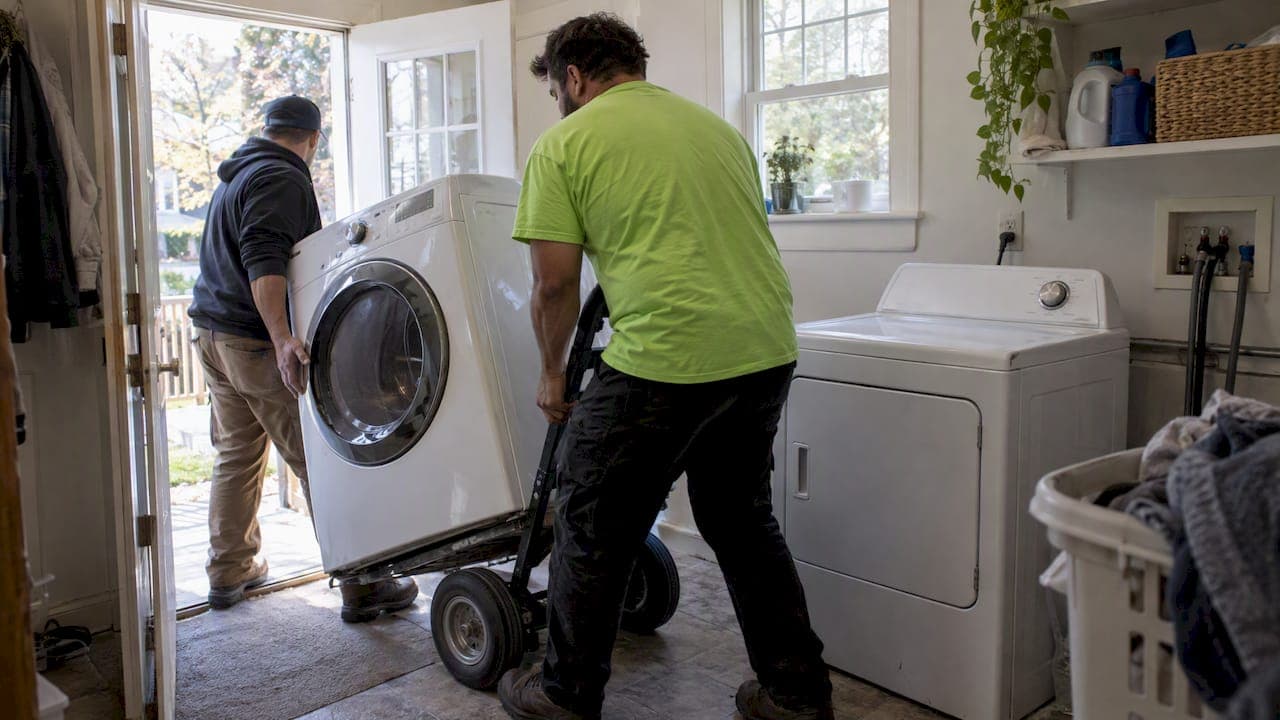
If your washer or dryer still works, donate or sell it. If it's broken but has scrap value, a recycler will often take it for free or even pay you. If you're buying a replacement, schedule retailer haul-away at delivery. And if you need it gone today with zero hassle, a paid junk-removal crew is the fastest route. Appliances with refrigerants call for EPA-aligned handling, so ask any hauler how they manage hazardous parts.
TL;DR:
- Before donating or selling a working unit, clean it, run a test cycle, disclose defects, and keep its model and serial numbers available.
- Municipal pickup can be free or low cost but may take one to two weeks; transfer stations may require residency proof, and doors must be secured.
- Washers and dryers contain no refrigerants, but refrigerators and freezers require refrigerant recovery before shredding; ask recyclers how they handle and document that work.
- Paid removal can offer same day or next day service, with price shaped by appliance weight, carry distance, and whether crews handle a larger cleanout.
- Retailer haul away works best when a replacement is arriving; confirm any fee, disconnection responsibility, and whether delivery delays change the pickup date.
Table of Contents
- Quick reference: your realistic disposal options
- Donate or sell a working washer and dryer
- Retailer or manufacturer haul-away and take-back programs
- Municipal bulk pickup, transfer stations, and recycling programs
- Scrap metal recyclers and appliance recycling centers
- Paid junk removal: the fastest route, done for you
- How to prepare a washer or dryer for pickup or drop-off
- Typical costs, timelines, and possible incentives
- Tips to maximize reuse and recycling value
- What years of appliance pickups have taught us
- Booking appliance removal with EasyScrap
- FAQ
- Sources
Quick reference: your realistic disposal options
Before you commit to a plan, it helps to see all the routes side by side. Each one fits a different situation, from a washer that still spins fine to a dryer that died mid-cycle and needs to leave the laundry room today.
- Donate or sell: best for a clean, working unit you can test before handoff.
- Retailer or manufacturer haul-away: convenient when you're buying a new appliance anyway.
- Municipal bulk pickup or transfer station: low or no cost, but scheduling and rules vary by town.
- Scrap metal recyclers: good for broken units with metal value, especially when a retailer won't take them.
- Paid junk removal: fastest option when you need the appliance gone now, with no lifting or driving required.
Each option below covers how it works, what it costs, and when it makes the most sense.
Donate or sell a working washer and dryer
A washer or dryer that still runs has real value to someone else, and donating it keeps a functional appliance out of a landfill. Major charities operate local donation programs that accept household appliances, often with pickup included depending on your area. The Salvation Army and Goodwill are two nationwide networks that commonly accept large appliances and maintain donation centers or pickup scheduling in many regions.
Before you donate or sell, take a few minutes to prepare the unit properly:
- Clean it inside and out, including the lint trap, drum, and detergent tray.
- Run a test cycle so you can honestly describe its condition to a buyer or charity.
- Document any issues, like a slow spin cycle or a dryer that runs hot, so the next owner isn't surprised.
- Keep the model and serial numbers handy in case the recipient asks.
Online marketplaces like local buy-and-sell groups or classifieds work well for selling, but always arrange pickup in a public or well-lit spot, or have the buyer come during daylight hours if they're collecting from your home. If you donate, ask for a receipt. Charitable donations of appliances can sometimes be claimed on your taxes, so keep that paperwork with your other deduction records.
Retailer or manufacturer haul-away and take-back programs
If you're buying a new washer or dryer, haul-away is often the easiest way to get rid of the old one. Many retailers will remove your existing appliance when they deliver the new one, sometimes for free and sometimes for a modest fee depending on the store and your location. Some manufacturers also run take-back programs tied to extended warranties or trade-in promotions, though availability depends on the brand and model.
Before scheduling delivery, ask a few questions so there are no surprises on moving day:
- Is haul-away included, or is there a separate charge?
- Will the crew disconnect the unit, or do you need to do that yourself beforehand?
- Do they provide a disposal or recycling receipt, especially useful if you're a landlord or property manager who needs documentation?
- What happens if the new appliance delivery is delayed, and does that affect the pickup date?
Retailer haul-away is convenient specifically because it's bundled with a purchase you're already making. It's less useful if you just want the old unit gone without buying a replacement right away.
Municipal bulk pickup, transfer stations, and recycling programs
Most towns and cities offer some form of bulk item pickup or a transfer station where residents can drop off large appliances, often at low or no cost. Curbside bulk pickup usually means scheduling a specific day through your city's public works or solid waste department, while a transfer station requires you to load and transport the appliance yourself.
Rules vary by municipality, but a few things are common across most programs:
- You'll likely need to schedule ahead, sometimes weeks in advance for curbside service.
- Proof of residency may be required at a transfer station.
- Doors must be taped shut or secured, and many haulers will reject an appliance left with an unsecured door for safety reasons, according to municipal guidance on used appliances.
- Some programs charge a small per-item fee, while others fold bulk pickup into your regular trash service.
Search your city or county's website for "bulk item pickup" or "transfer station hours" to find the exact rules and fees that apply where you live.
Scrap metal recyclers and appliance recycling centers
A washer or dryer that's beyond repair still has value in its steel frame, copper wiring, and motor. Scrap metal recyclers and dedicated appliance recycling centers often accept these units for free, and some will pay a small amount depending on current scrap prices and the appliance's weight.
Washers and dryers don't contain refrigerants, so they aren't subject to the same recovery rules that apply to refrigerators and freezers. Still, EPA guidance on appliance disposal outlines how hazardous components like mercury switches and capacitors must be managed in appliances that do contain them, and it's worth knowing the distinction if your pickup includes a mix of appliances. For any unit with a refrigerant, EPA disposal procedures for refrigerant-containing appliances require that final processors recover the refrigerant before shredding, and either the owner or a certified contractor must document that recovery.
Before dropping off a washer or dryer with a recycler, ask whether they handle appliances with refrigerants in-house and whether they can provide documentation. A legitimate recycler will have no trouble answering either question.

Paid junk removal: the fastest route, done for you
When you don't have the time, the truck, or the patience to coordinate a donation pickup or wait for the next municipal bulk day, a paid junk-removal service gets the appliance out the door the same day you call. This route makes the most sense when speed matters, when the unit is too heavy or awkward to move alone, or when you're a landlord or property manager who needs the job done and documented quickly.
Pricing for junk removal typically depends on a few factors:
- Size and weight of the appliance, since a dryer is lighter than a washer.
- How far the crew has to carry it, especially from a basement or upstairs laundry room.
- Whether it's part of a larger job, like a basement or garage cleanout.
- Local labor and disposal costs in your area.
A professional crew should disconnect the appliance safely, haul it out without damaging your home, and either donate it if it's still usable or recycle it responsibly. For commercial clients, many services also provide disposal receipts for paperwork and compliance records. Our appliance removal crews handle exactly this kind of pickup, with same-day booking, an insured team, and donation or recycling of every appliance we can.
Pro Tip: Ask any junk-removal company upfront whether they donate or recycle appliances rather than landfilling them, since that single question tells you a lot about how the job will actually be handled.
How to prepare a washer or dryer for pickup or drop-off
Whether a charity, a recycler, or a hauling crew is coming to get your appliance, a little prep work avoids a rejected pickup or an injury.
- Disconnect the power and water lines, unplugging the unit and shutting off the water supply valves behind the washer.
- For gas dryers, call a professional technician to disconnect the gas line safely rather than attempting it yourself.
- Tape the doors shut and secure any loose panels, hoses, or detergent trays so nothing shifts during transport.
- Drain remaining water from the washer and hoses, and remove any detergent, softener, or dryer sheets left inside.
- Pad the appliance with an old blanket or moving pads if you're transporting it yourself, to prevent dents or scratches.
- Place it where crews can access it easily, clear of stairs, narrow doorways, or parked cars that could slow the pickup.
Pro Tip: A dryer that's been running inefficiently is sometimes due for vent cleaning rather than full replacement, so it's worth checking dryer vent cleaning costs before you decide the appliance itself is the problem.
Typical costs, timelines, and possible incentives
Costs vary widely depending on which route you choose. Municipal bulk pickup is often free or low cost but may take one to two weeks to schedule. Retailer haul-away is frequently bundled with delivery of a new appliance, though some stores charge a separate fee. Scrap recyclers may take a broken unit for free or offer a small payment. Paid junk removal costs more than the free options but delivers same-day or next-day pickup with no waiting on a municipal calendar.

Some state and utility programs have offered recycling bonuses to encourage residents to retire old appliances properly, according to the Department of Energy's state appliance rebate program report. These programs can include free pickup or a small incentive payment, so it's worth checking your utility's website before you dispose of an old unit. In Massachusetts, some appliance recycling rebates are available alongside same-day removal options.
Tips to maximize reuse and recycling value
A few small steps improve your odds of a quick donation, a fair scrap payment, or a faster sale.
- Clean and test the unit, and keep the model and serial number on hand for buyers or recyclers who ask.
- Disclose any known defects upfront rather than letting a buyer discover them after pickup.
- Ask recyclers for documented proof of refrigerant recovery if the pickup includes a refrigerator or freezer alongside your washer and dryer.
- If selling, price it fairly for its age and condition, and offer clear pickup details to close the sale faster.
What years of appliance pickups have taught us
We've hauled enough washers and dryers out of basements, apartments, and driveways to know that most people just want the job done without worrying if it's handled responsibly. That's why we lean on donation and recycling partnerships whenever a unit still has life left in it, and we provide disposal receipts for property managers and landlords who need the paperwork. The details change from house to house, but the goal stays the same: get it out safely and keep it out of a landfill when we can.
— Easy
Booking appliance removal with EasyScrap
Once you've decided a paid pickup is the right move, booking is simple. Our appliance removal service covers washers, dryers, refrigerators, and more, and every job starts with a free quote so you know the cost before we show up.
When you book with us, you get a professional crew, often same-day scheduling, and responsible disposal through donation or recycling whenever possible. Customers can request disposal receipts for their records. If your job involves more than one appliance or you're clearing out a whole space, our junk removal service covers that too. Get your free quote today and we'll take the appliance off your hands, often the same day you call.
FAQ
How do I get rid of my washing machine for free?
Donating a working washing machine to a charity like Goodwill or The Salvation Army is usually free, and some locations offer pickup. Scrap metal recyclers also often take broken units at no cost, and your city's bulk pickup program may remove it for free as part of regular waste service.
Where can I dispose of my appliances locally?
Check your city or county's solid waste department website for bulk item pickup schedules or transfer station drop-off hours, since rules and fees vary by location. You can also search for nearby scrap metal recyclers or appliance recycling centers, or contact a paid junk-removal service for same-day pickup.
Can I throw a washer in a dumpster?
Most dumpster rental agreements exclude large appliances, and many waste haulers won't pick up a dumpster with an appliance inside it. Washers and dryers are usually handled separately through bulk pickup, donation, scrap recycling, or a junk-removal service instead.
Does a home improvement store take old appliances for free?
Many major appliance retailers offer haul-away when they deliver a new appliance, though whether it's free or carries a small fee depends on the store and your location. It's best to ask directly when you schedule delivery, since policies vary by retailer and region.
What happens to the refrigerant in an old appliance during disposal?
Washers and dryers don't contain refrigerants, but refrigerators and freezers do, and EPA rules require that refrigerant be recovered before the unit is shredded or landfilled. If your pickup includes a refrigerator alongside your laundry appliances, ask the hauler or recycler how they document refrigerant recovery.
Sources
- Appliances Quick Start Guide — EPA
- State Energy-Efficient Appliance Rebate Program: Volume 2 — U.S. Department of Energy
- The Salvation Army (U.S.)
- Goodwill