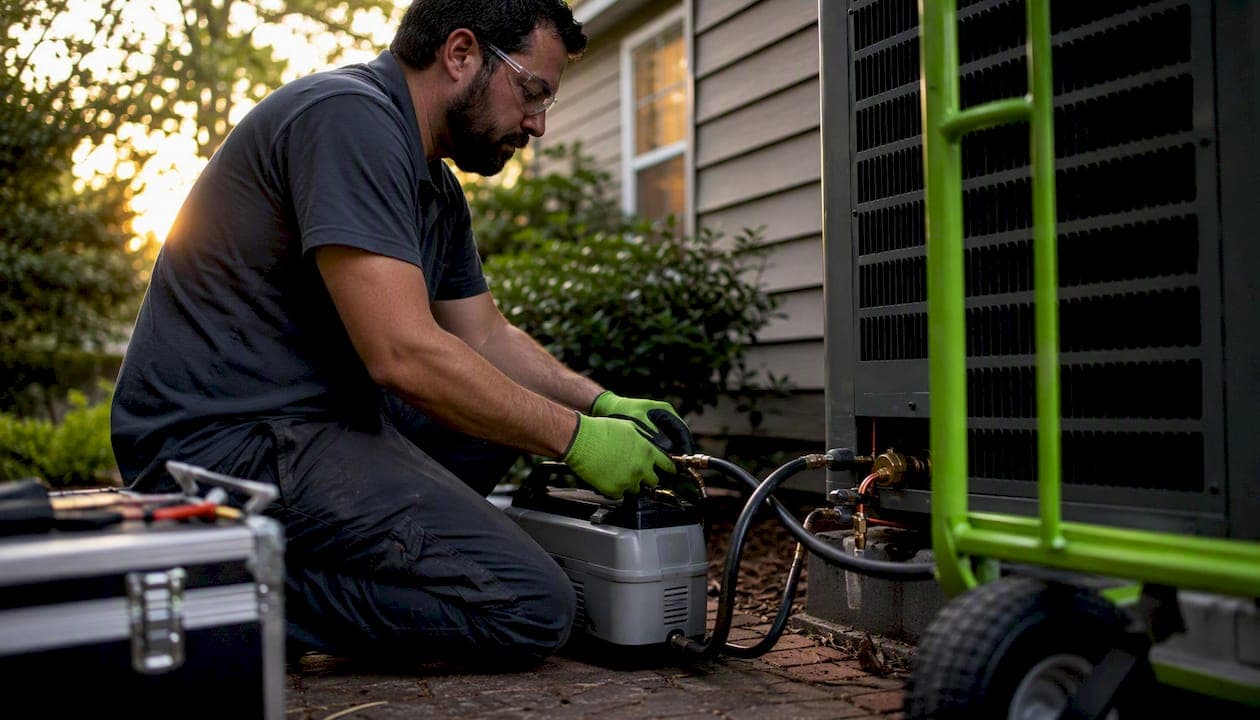
You cannot legally toss a refrigerant-containing air conditioner in the trash or leave it at the curb without scheduling proper recovery first. Under EPA Section 608 of the Clean Air Act, intentionally venting refrigerant during disposal is a federal violation, and the legal responsibility follows the unit all the way to its final processor. The fastest, safest path: confirm your HVAC installer will handle refrigerant recovery, or hire a certified technician or a trusted local hauler that documents the process.
Your three immediate next steps:
- Confirm with your HVAC installer. If you're replacing the unit, ENERGY STAR notes that contractors often include removal and refrigerant handling in the installation contract. Verify this before the job starts.
- If no installer is involved, schedule refrigerant recovery with an EPA Section 608-certified technician before the unit leaves your property.
- Then choose your haul-away route: municipal bulky-item pickup, a certified appliance recycler, a retailer take-back event, or a local service like EasyScrap that coordinates compliant removal and provides a disposal receipt.
Keep that receipt. The EPA appliances guide requires final processors to retain signed recovery statements for three years.
Key Takeaways
Proper air conditioner disposal requires documented refrigerant recovery before the unit is transported, recycled, or scrapped, and the property owner is legally responsible for that documentation under EPA Section 608.
| Point | Details |
|---|---|
| Venting refrigerant is a federal offense | EPA Section 608 prohibits intentional venting; fines can reach tens of thousands of dollars per day per violation. |
| Recovery documentation is mandatory | Keep signed refrigerant recovery statements for at least three years per EPA requirements. |
| Verify installer haul-away upfront | ENERGY STAR recommends confirming removal and recovery are included in your HVAC installation contract. |
| Municipal pickup requires an appointment | Most city programs need advance scheduling; wait times can reach several weeks during peak season. |
| EasyScrap handles AC removal end-to-end | Insured crew, certified refrigerant recovery coordination, recycling/donation, and a disposal receipt included. |
Table of Contents
- What are the legal air conditioner disposal options?
- Why you can't vent or trash a refrigerant-containing AC
- How to prepare your AC for pickup or drop-off
- What does air conditioner disposal actually cost?
- How to pick who removes the unit
- How EasyScrap handles AC removal
- Why the paperwork matters more than people think
- Ready to book EasyScrap for appliance removal?
- Sources
What are the legal air conditioner disposal options?
Five routes cover most situations. Each has a different trade-off on cost, wait time, and who handles the refrigerant.
| Disposal Route | Refrigerant Recovery Included? | Typical Cost | Typical Timeline | Recycling/Donation Proof |
|---|---|---|---|---|
| Municipal bulky-item / HHW pickup | Usually yes (city-arranged) | Varies up to moderate fees | a few weeks; appointment required | Receipt from city program |
| HVAC contractor (during replacement) | Yes, standard practice | Often included in install quote | Same day as installation | Ask for written confirmation |
| Retailer / utility turn-in event | Yes, at certified events | Free or rebate offered | Seasonal; limited dates | Event receipt |
| Certified appliance recycler / drop-off | Yes, required by law | a drop-off fee | Same day if you transport | Recycler certificate |
| Private junk-removal service (e.g., EasyScrap) | Yes, when coordinated | a removal fee | Same day to a few days | Disposal receipt provided |
Municipal programs are the most common first thought, but they are not always the fastest. New York City's DSNY, for example, requires residents to schedule CFC-containing appliance pickups through 311 and enforces specific refrigerant removal rules before collection. Many cities work the same way, and wait times can stretch to several weeks during peak summer months.
Retailer and utility turn-in events are worth checking if you have time. Some utilities offer rebates alongside free haul-away, which effectively pays you to dispose of the unit correctly. The catch: these events run on fixed schedules, often once or twice a year.
If you need the unit gone quickly, a certified private hauler or an HVAC contractor is your best bet. Hvac confirms that most HVAC companies include haul-away and refrigerant recovery when installing a replacement, but you should ask explicitly before signing the contract.
Newer portable AC models sometimes use flammable refrigerants such as R-32 or R-600a, marked by a yellow warning triangle on the unit. Standard disposal programs may refuse these, so call ahead before transporting one to a drop-off site.
Why you can't vent or trash a refrigerant-containing AC
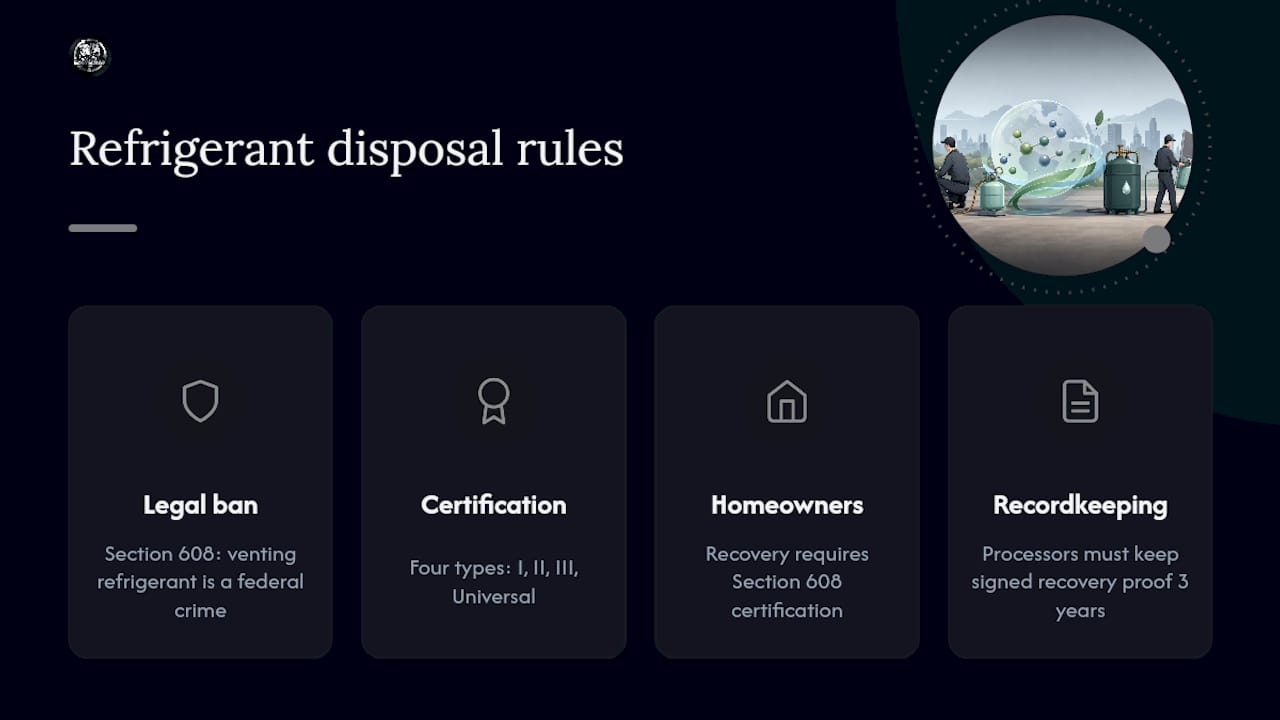
The prohibition is not a technicality. Section 608 of the Clean Air Act makes it a federal offense to knowingly vent refrigerants during servicing or disposal. That applies to homeowners, contractors, and recyclers alike.
The refrigerants in most residential ACs, including older R-22 and common R-410A, are potent greenhouse gases. R-22 also depletes the ozone layer. Releasing even a small charge into the atmosphere carries real environmental consequences, which is why the EPA built a certification and documentation chain around every step of the disposal process.
Technician certification under Section 608 comes in four categories: Type I (small appliances), Type II (high-pressure systems), Type III (low-pressure systems), and Universal (all types). A homeowner cannot legally recover refrigerant without this certification and the required recovery equipment. The EPA factsheet on equipment disposal details evacuation levels, equipment testing requirements, and the approved reclamation or destruction routes for recovered refrigerant.
Recordkeeping matters too. Final processors, including recyclers and landfills, must hold signed statements confirming refrigerant recovery for three years. If you hand a unit to a hauler who cannot produce that documentation, the legal exposure does not disappear with the truck.
How to prepare your AC for pickup or drop-off
Getting the unit ready takes less than 30 minutes and prevents rejections at recycling centers or delays on pickup day.
For window and room AC units:
- Unplug the unit completely and let it sit for at least an hour so internal components settle.
- Drain any standing water from the drain pan. Tip the unit gently toward the back to clear it.
- Remove and bag the air filter separately. Some recyclers want it out; others don't care, but bagging it keeps debris contained.
- Locate the model and serial number sticker (usually on the side panel) and photograph it. Note the refrigerant type listed, typically R-410A or R-22.
- Coil the power cord and secure it with a zip tie or tape so it doesn't snag during transport.
- If you're transporting the unit yourself, keep it upright. Laying a window AC on its side can shift compressor oil into the refrigerant lines.
For central AC systems:
Confirm in writing that your HVAC installer will recover the refrigerant before disconnecting the lines. Do not cut refrigerant lines yourself under any circumstances. Once the installer completes recovery, ask for a signed recovery statement on the spot.
Pro Tip: Label the unit with a tag showing "Refrigerant Recovered — [Date] — [Technician Name/Company]" before it goes to a recycler or hauler. Some facilities require this at the gate, and having it ready saves a phone call.
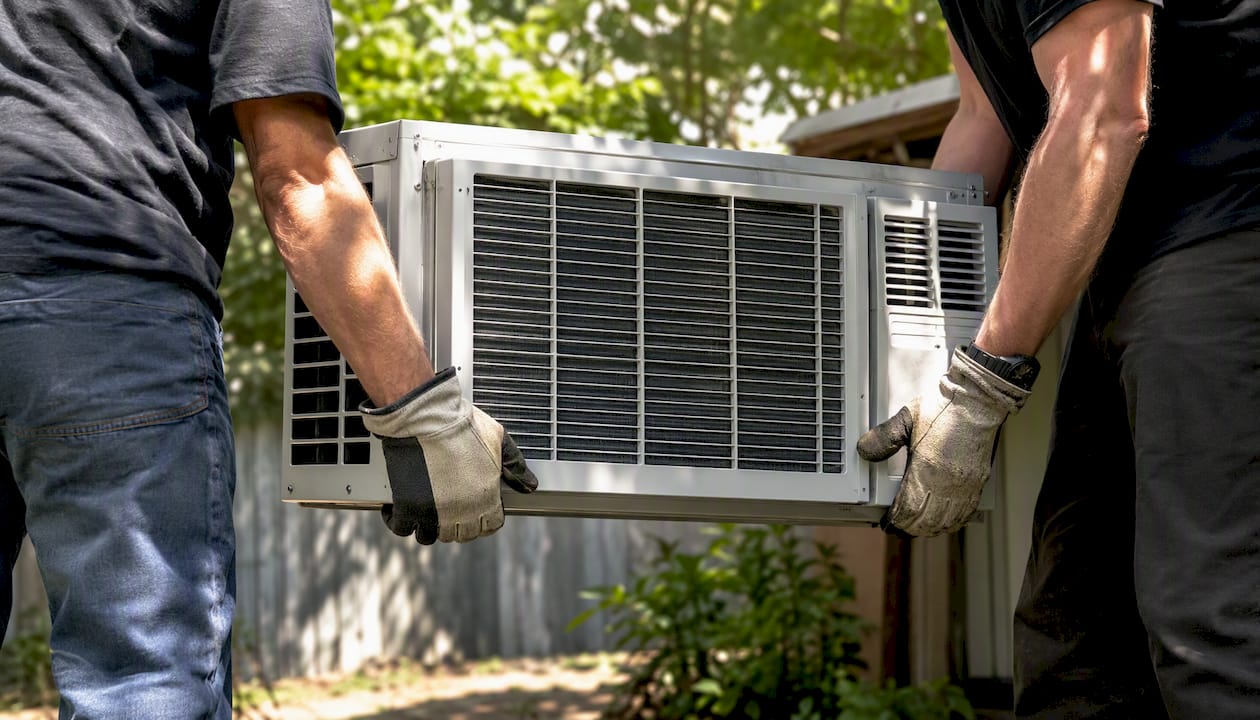
Wear work gloves when moving any AC unit. Sharp sheet-metal edges on older window units can cut through light gloves, and the units are heavier than they look. A central condenser typically weighs 60–150 pounds; get a second person or use a hand truck.
What does air conditioner disposal actually cost?
Costs vary more than most guides admit, and the range depends heavily on who handles the refrigerant and how far the unit needs to travel.
The scrap-metal route is worth knowing about. Older central condensers contain copper coils and aluminum fins that scrap yards will pay for, but only after refrigerant has been properly recovered. Show up with a recovery certificate and you may offset part of the disposal cost.
Seasonal timing matters. Scheduling a certified technician in July, when every HVAC company is running at capacity, can push your timeline out by a week or more. If you know a replacement is coming, book the recovery appointment before the installation date.
Pro Tip: Before signing an HVAC installation contract, ask one direct question: "Does this quote include haul-away and refrigerant recovery for the old unit?" If it does not, get the cost in writing before the crew arrives.
Municipal programs are often the cheapest option, but the wait time is the real cost. If you need the space cleared quickly, a private hauler like EasyScrap can often schedule same-day or next-day pickup, which is worth the price difference for most homeowners.
How to pick who removes the unit
The right provider answers three questions without hesitation: who recovers the refrigerant, what documentation you receive, and whether they carry insurance.
Decision checklist:
- Does the hauler or contractor hold EPA Section 608 certification, or do they coordinate with a certified technician?
- Will they provide a signed refrigerant recovery certificate or disposal receipt?
- Are they insured? Ask for proof of general liability coverage.
- Do they recycle or donate usable components, or do they send everything to a landfill?
- Do they accept your specific unit type (window, portable, central, or flammable-refrigerant models)?
Questions to ask before booking:
- "Do you provide a refrigerant recovery certificate after removal?"
- "Are your technicians EPA Section 608 certified, or do you use a subcontracted certified tech?"
- "Do you crush appliances on-site, or do you transport them intact to a certified facility?"
- "What recycling or donation practices do you follow for removed appliances?"
- "Are you insured, and can you provide proof of coverage?"
Red flags that should stop you from booking:
- Vague or evasive answers about refrigerant handling ("we take care of it" with no specifics).
- Refusal to provide any written documentation after removal.
- A price significantly below the market range with no explanation.
- No verifiable business address or license information.
The legal burden for proving refrigerant recovery ultimately rests with the property owner. A hauler who cannot or will not provide documentation is transferring that legal risk to you.
How EasyScrap handles AC removal
EasyScrap's appliance removal service covers the full process from scheduling to documentation, with an insured crew that handles the heavy lifting and coordinates certified refrigerant recovery where required.
Here is what the service looks like in practice:
- Schedule: Book online or by phone. Have the unit's location, accessibility notes, and approximate size ready.
- On-site assessment: The crew confirms the unit type and refrigerant status before moving anything.
- Refrigerant coordination: If recovery has not already been completed, EasyScrap arranges it with a certified technician before the unit is transported.
- Safe removal and transport: The insured crew handles all lifting, loading, and haul-away.
- Recycling or donation: Usable components go to recycling or donation partners whenever possible, consistent with EasyScrap's eco-friendly disposal commitment.
- Documentation: You receive a disposal receipt confirming the removal and recovery process.
EasyScrap serves Lawrence, Andover, Boston, Lowell, and Haverhill, with same-day options available. The refrigerator removal service page covers similar refrigerant-containing appliances and gives a clear picture of what the documentation process looks like.
Pro Tip: If you have multiple appliances to clear out at once, a combined garage cleanout or basement cleanout booking often costs less per item than scheduling individual pickups.
Why the paperwork matters more than people think
Most homeowners focus on getting the unit out of the house and stop thinking about it the moment the truck pulls away. That is the wrong place to stop. The three-year recordkeeping requirement in the EPA appliances guide exists because liability in the disposal chain does not end at the curb.
At EasyScrap, every AC removal goes through a documented process. We coordinate with certified technicians where required, and we do not hand units to facilities that cannot produce a recycler certificate. The receipt you get after removal is not just a courtesy. It is the document that closes the loop on your legal responsibility.
Keep that receipt for at least three years. If you have questions about the process before booking, contact EasyScrap directly.
Ready to book EasyScrap for appliance removal?
Skipping the municipal wait list and the contractor scheduling hassle is exactly what EasyScrap is built for. Where municipal pickup can take weeks and HVAC contractors are booked solid in summer, EasyScrap offers same-day and next-day appliance removal with an insured crew that handles every step.
Before you book, have these details ready: the unit's location in your home (window, basement, attic, or outdoor pad), any access restrictions (narrow stairs, locked gates), your preferred pickup date, and whether refrigerant has already been recovered. EasyScrap will confirm the rest on-site.
What you get: an insured crew, verified refrigerant recovery coordination, recycling or donation of usable parts, and a signed disposal receipt. Get a free quote and book your junk removal pickup today.