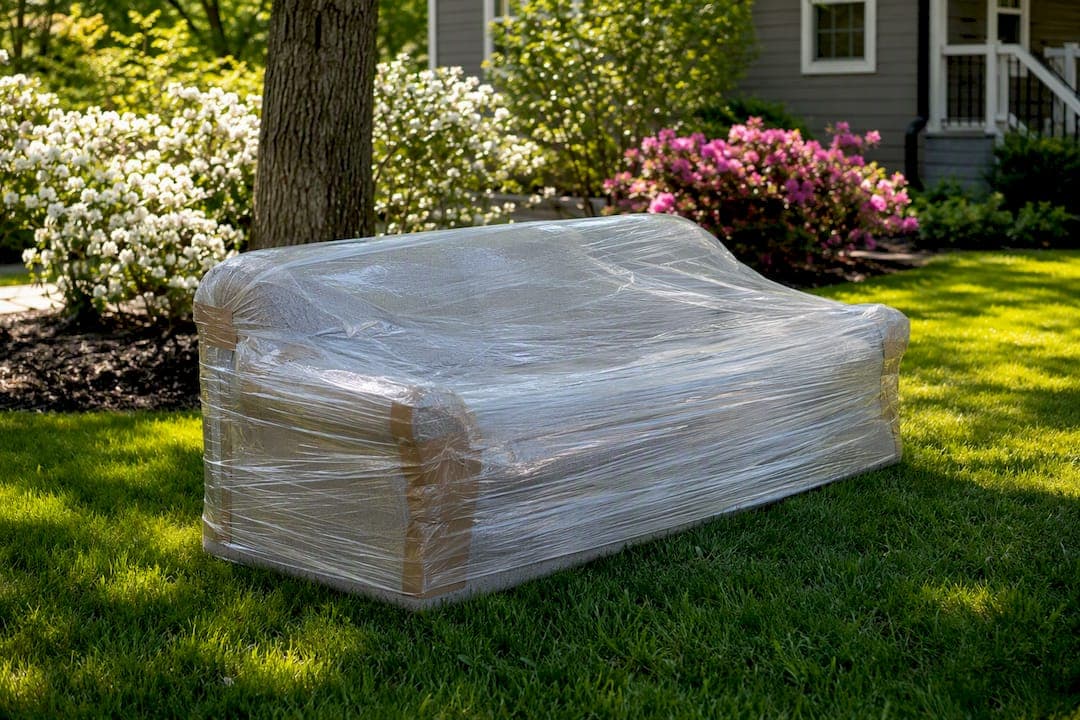
Most bed bug infested furniture can be treated, not trashed. Reserve disposal for pieces too damaged, too porous, or too infested to save. When you do dispose of an item, the priority order is containment, labeling, and fast removal.
If you're standing over a couch or mattress right now trying to decide what to do, here's your immediate move:
- Seal the item in heavy plastic before it leaves the room
- Label it "BED BUGS — DO NOT TAKE" in large letters
- Line up removal or transport to a disposal site the same day
- Keep treating the rest of the home while the item is gone
Hiring a professional crew for bed bug furniture disposal cuts the risk of spreading pests through hallways, elevators, or curbside pickup — the moments when infestations usually jump to new places.
Key Takeaways
Safe bed bug furniture disposal depends on sealing the item completely, labeling it clearly, and removing it fast enough that it never sits exposed to others.
| Point | Details |
|---|---|
| Treat before you toss | Encasements and professional treatment often save mattresses and furniture that seem beyond hope. |
| Containment beats speed | Sealing seams with contractor plastic or mattress bags matters more than how fast the item leaves the house. |
| Damage discourages scavengers | Slashing upholstery or removing legs stops someone from picking up a labeled item anyway. |
| Vacuuming has limits | It removes visible bugs but not every egg, so bag and discard the contents right away. |
| Professional removal cuts risk | Easyscrapofficial's insured crews transport infested furniture directly to disposal without staging it in shared spaces. |
Table of Contents
- How Do You Decide Whether to Treat or Dispose of Furniture?
- What Are the Steps for Safely Disposing of Infested Furniture?
- Which Disposal Route Is Right for Your Situation?
- How Do You Prep Fabrics and Belongings Before Removal?
- What Happens After the Furniture Is Gone?
- Why Easyscrapofficial Often Gets the Call for This Job
- Book Same-Day Bed Bug Furniture Removal With Easyscrapofficial
- Sources
How Do You Decide Whether to Treat or Dispose of Furniture?
Not every infested piece belongs in a dumpster. The National Pest Management Association's best practices treat disposal as a case-by-case call, not a default reaction, and lean toward encasement and treatment whenever an item can realistically be saved.
Disposal usually makes sense when you see:
- Bed bugs or eggs deep in seams, tufts, or frame joints that treatment can't reach
- Structural damage, sagging, or age that makes the furniture not worth saving anyway
- Porous upholstery or foam so saturated that heat or chemical treatment won't fully penetrate
- A replacement cost lower than what professional treatment would run
Furniture worth saving includes newer mattresses that can be zipped into certified encasements, box springs in good shape, and solid wood furniture without deep upholstery, since exposed wood surfaces are usually far easier to inspect and treat than fabric.
Throwing furniture away also has consequences beyond your own living room. A discarded couch dragged to the curb without containment can seed a new infestation in a neighbor's home within days, and improperly discarded items often end up costing a whole building more in follow-up treatments than one careful disposal would have.
Pro Tip: Before you write off a mattress, price out a certified encasement first. It's usually a fraction of replacement cost and can salvage an otherwise expensive piece once treatment is done.
What Are the Steps for Safely Disposing of Infested Furniture?
Once you've decided a piece has to go, the sequence matters as much as the decision itself.
- Decide who removes it. A professional junk removal crew that carries insurance and transports directly to disposal reduces the chance of pests escaping en route, compared to hauling it yourself through shared hallways or in your own vehicle.
- Plan the exit route first. Pick the shortest path out of the house, close doors behind you as you go, and keep kids and pets out of the area while the item moves.
- Seal it completely. Use a mattress bag, 6 mil contractor plastic, or commercial stretch wrap, and tape every seam so nothing can crawl out during the move. Purdue Extension's furniture disposal protocol treats this sealing step as the single most important part of safe removal.
- Label it in large letters. Write "BED BUGS — DO NOT TAKE" somewhere impossible to miss, and add the date so anyone handling it later knows the timeline.
- Make it unsalvageable if it's going curbside. Slash the upholstery, cut the springs, or remove the legs. Marking alone doesn't stop scavengers, but physically damaging the item does.
- Move it out immediately. Transport straight to the agreed disposal point. Never stage it on a porch, in a garage, or in a shared hallway overnight, since that window is exactly when someone else picks it up.
If you live in a multi-unit building, loop in management before you move anything through common areas. Some complexes require the building to authorize or supervise the move, since one improperly wrapped chair in a stairwell can put every unit on that floor at risk.
Pro Tip: Skip the "leave it outside overnight" shortcut. Cold weather rarely kills bed bugs in upholstery unless temperatures stay extreme for a sustained stretch, and a piece left outside is also easiest for a scavenger to grab.
Which Disposal Route Is Right for Your Situation?
You've got three realistic paths once furniture is sealed and labeled, and each carries different trade-offs.
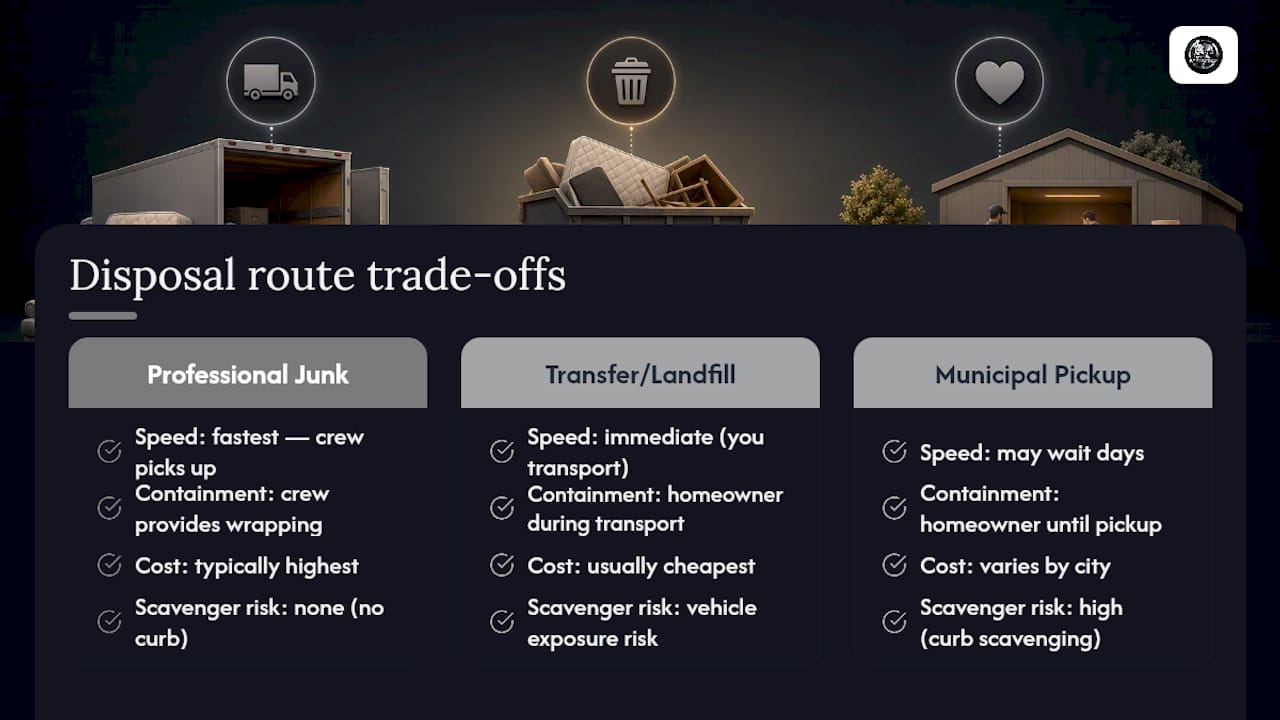
Professional junk removal is the fastest option and the one that keeps the item off your curb entirely. Crews come to the door, load it directly, and drive it to disposal. Tell whoever schedules the pickup that the item is bed bug infested. That way they bring the right wrapping and route the truck to avoid cross-contaminating other jobs.
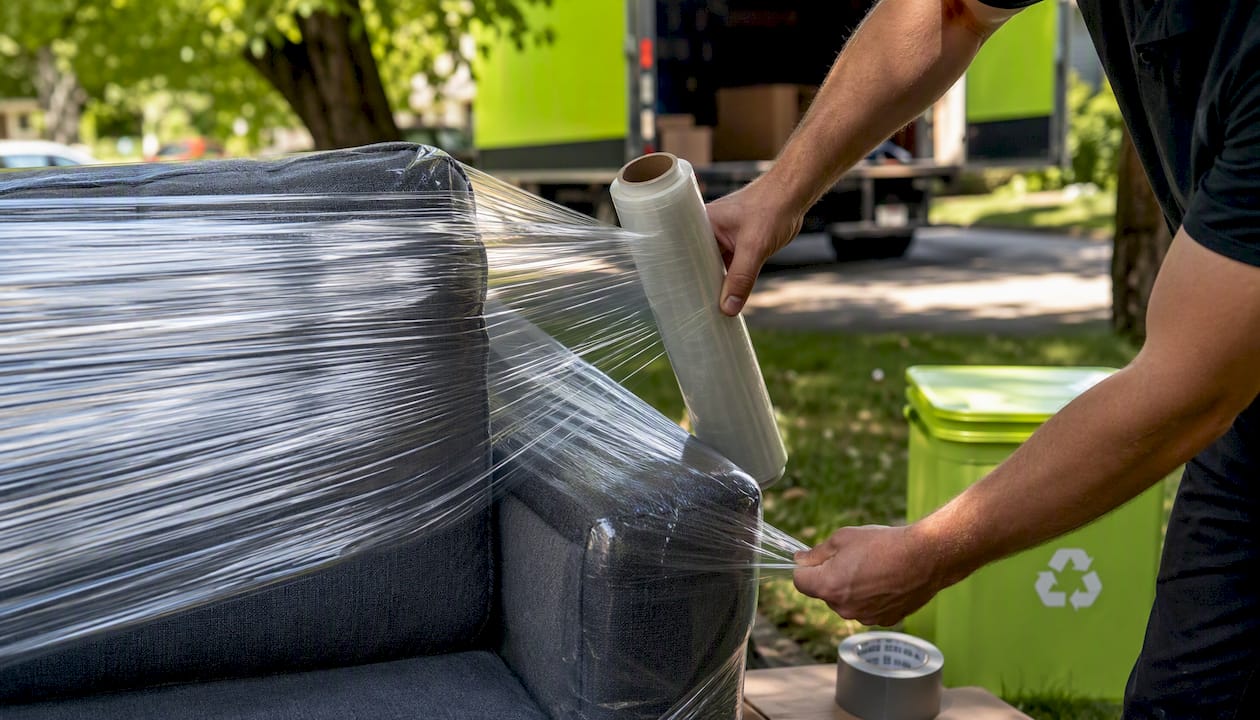
Transfer stations and landfills are usually the cheapest route, but the burden of secure transport falls entirely on you. That means your own vehicle gets exposed if the item isn't sealed properly, and King County's public health guidance puts that containment responsibility squarely on the homeowner during transit.
Municipal bulky-item pickup may work depending on your city's rules, but expect a wait, sometimes days, and real scavenger risk if the item sits at the curb that whole time. Check your city's specific policy on infested items before assuming standard bulky pickup applies.
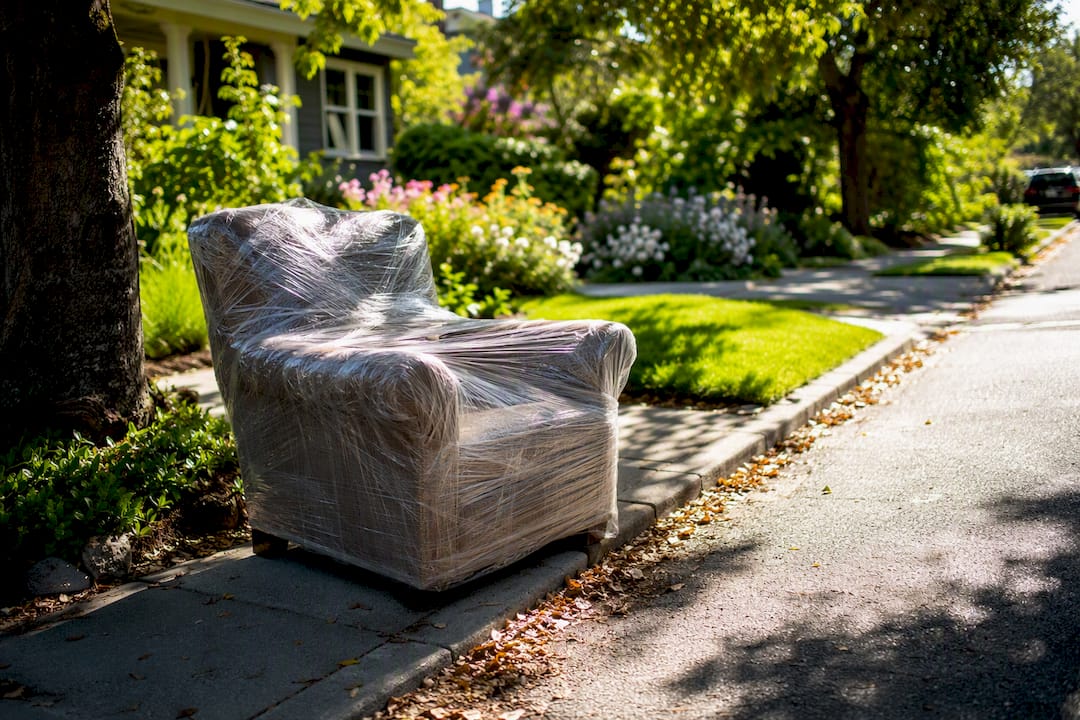
Whichever route you choose, never donate an infested piece. Donation centers routinely reject items marked or suspected of bed bugs, and passing the problem to someone else is how neighborhoods end up with repeat outbreaks.
How Do You Prep Fabrics and Belongings Before Removal?
Everything that touches the infested item needs its own containment plan before the furniture leaves the house.
- Strip all bedding and linens and launder them on the hottest setting your fabric allows.
- Run the dryer for at least 30 minutes on high heat. EPA guidance points to dryer heat, not the wash cycle, as the step that actually kills bed bugs and eggs at every life stage.
- Vacuum seams, zippers, tufts, and crevices on the furniture itself, but don't stop there. Rutgers Cooperative Extension notes that vacuuming pulls out visible bugs but won't get every egg, so seal and toss the vacuum contents in a bag immediately after.
- Slip a knee-high stocking over the vacuum wand before you start on seams, then remove and seal it once you're done. It keeps live insects out of the vacuum's internals instead of just relocating them.
- Fit mattresses and box springs with certified bed bug encasements where you're salvaging rather than disposing.
- Bag every loose item and small belonging near the furniture and keep the bags sealed until treatment wraps up.
What Happens After the Furniture Is Gone?
Getting the item out of the house is a milestone, not the finish line. Keep pest control treatments and monitoring going, including interceptor traps under bed and furniture legs, and schedule a follow-up inspection to confirm the rest of the home is clear.
- Hold off on new furniture until treatment is fully complete, and inspect and encase anything you bring in as a precaution.
- Keep laundering fabrics on a rolling schedule until your pest control provider confirms the infestation is resolved.
- Empty vacuum bags or canisters into a sealed bag immediately after each use during this follow-up period.
- Take photos of the disposed item and keep any receipts, useful if you're renting, dealing with a property manager, or reassuring neighbors in a shared building.
Why Easyscrapofficial Often Gets the Call for This Job
We've hauled plenty of infested couches and mattresses out of homes across our service area, usually same-day, with insured crews trained to contain and transport without staging in hallways or driveways. Homeowners almost always weigh the same question: pay for removal now, or risk a treatment that doesn't fully take. When you book with us, tell us upfront that the item is infested. We'll walk you through prep, confirm wrapping, and hand you a receipt when it's done.
— Easy
Book Same-Day Bed Bug Furniture Removal With Easyscrapofficial
You've got three routes for getting rid of an infested couch or mattress: haul it yourself to a transfer station, gamble on municipal bulky pickup, or call a crew that handles the whole thing. Easyscrapofficial exists for homeowners who don't want to wrap, load, and drive a bed bug infested mattress across town themselves. Our insured crews show up, seal and remove the item directly, and transport it straight to disposal, no curbside staging, no risk of it sitting in your driveway overnight.

When you book, just mention the item is bed bug infested so we bring the right containment and route the job correctly. We handle mattresses through our mattress disposal service and bulkier pieces like couches and sectionals through our furniture removal service. For safe items nearby that don't need disposal, we still donate and recycle whenever it's appropriate. Get a free quote and get the item out of your house today.
Sources
- National Pest Management Association Best Management Practices for Bed Bugs
- Purdue Extension — Bed bug furniture inspection and disposal protocol
- Rutgers NJAES — Cost-Effective and Money-Wasting Bed Bug Control Methods
- Pest Management Professional — Bed-bug-infested furniture: Deface, defile or deconstruct?
- King County — Bed bug cleaning and infestation guidance