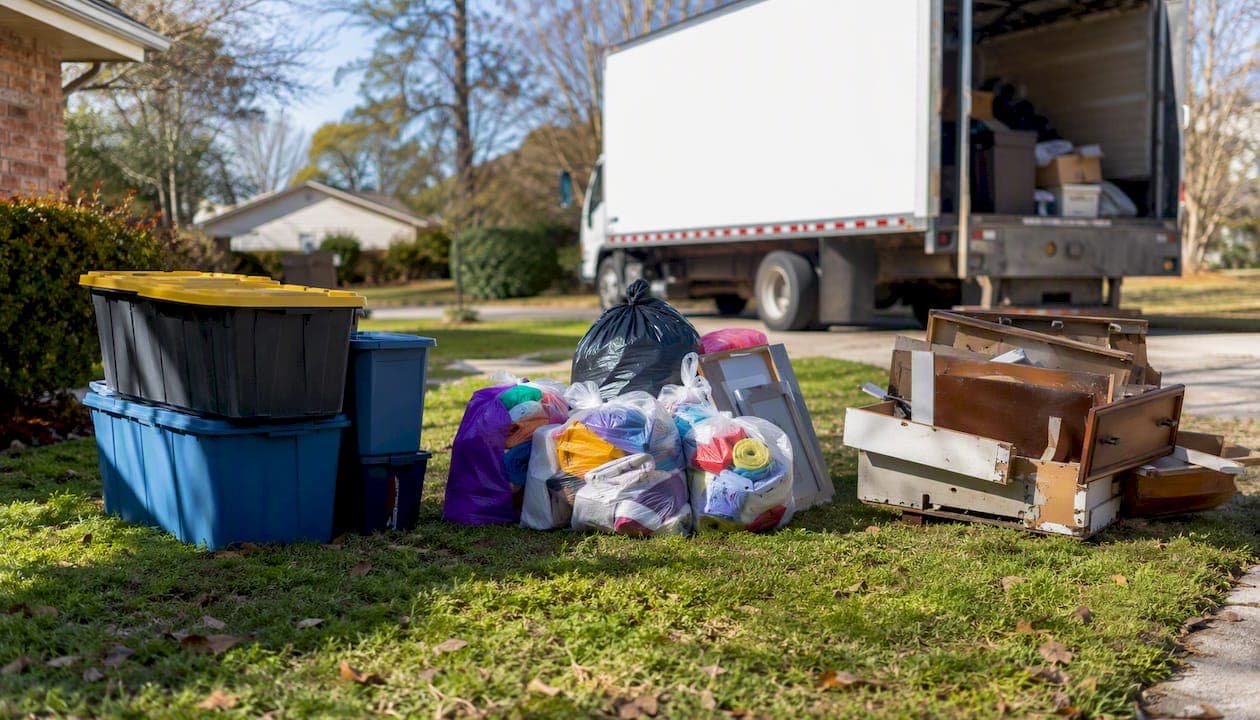
The fastest junk removal appointments share one thing: the homeowner did a little work the night before. Walk your property, sort items into keep/donate/recycle/trash piles, clear a path from the truck to the junk, move valuables out of the way, photograph the piles, and confirm your booking details. That sequence, which takes 15–30 minutes for a standard residential job, is the difference between a crew that loads in an hour and one that spends half the appointment asking questions.
Here is the quick checklist to run through before pickup:
- Walk the property room by room. Note every item going out so nothing gets missed.
- Sort into four piles: keep, donate, recycle, and trash. Anything donate-worthy shrinks your final load and your bill.
- Move valuables and documents. Pull cash, jewelry, and personal papers out of drawers and boxes before the crew arrives.
- Clear the path. Open gates, move vehicles, and remove obstacles between the truck's parking spot and your items.
- Photograph the piles. Send photos to Easyscrapofficial for a virtual estimate before the crew shows up.
- Confirm the appointment. Verify the time window, access instructions, and payment method.
- Secure pets. Put dogs and cats in a closed room or crate for the duration of the job.
- Mark "maybe" items. Use a sticky note or colored tape on anything you are still deciding about so the crew does not haul it by mistake.
Easyscrapofficial's insured crew serves Lawrence, Andover, Boston, Lowell, and Haverhill, routes donation-quality items to local partners whenever possible, and offers same-day availability with free quotes.
Key Takeaways
Preparing for junk removal takes 15–30 minutes the night before and directly affects your quote accuracy, loading speed, and final cost.
| Point | Details |
|---|---|
| Sort before the crew arrives | Divide items into keep, donate, recycle, and trash piles to reduce haul volume and cost. |
| Photos speed up your quote | Send clear photos of every pile to get a reliable virtual estimate for small-to-medium jobs. |
| Clear paths and note access | Move vehicles, open gates, and flag stairs or tight hallways when you book. |
| Secure valuables and pets | Remove documents and cash from furniture being hauled; put pets in a closed room. |
| Easyscrapofficial | Insured crew, donation-first routing, free quotes, and same-day availability across the Greater Boston area. |
Table of Contents
- How to prepare for junk removal: a time-boxed plan
- How to sort your items: keep, donate, recycle, or trash
- Labeling and inventory tips that get you an accurate quote
- What crews usually won't take and how to handle restricted items
- How do estimates and pricing work for junk removal?
- Day-of checklist: what to do when the crew arrives
- What Easyscrapofficial does differently on pickup day
- How to prepare your family and pets for removal day
- How to communicate special instructions to the crew
- The one thing most customers miss before pickup
- Easyscrapofficial handles the heavy lifting so you don't have to
- Useful resources for donation, hazardous waste, and booking
- Sources
How to prepare for junk removal: a time-boxed plan
Breaking prep into three short windows makes the whole thing manageable.
The night before (20–30 minutes)
- Walk every room and the garage. Write down or photograph each item leaving the house.
- Sort into your four piles. Anything in good condition goes in the donate pile before it goes in the trash.
- Pull valuables, important documents, and medications out of furniture being hauled. A dresser with a passport still in the drawer is a problem.
- Close doors to rooms that are off-limits. A piece of tape across the doorframe is a clear signal to any crew.
The morning of (10–15 minutes)
- Move vehicles so the truck has a straight shot to your front door, garage, or driveway.
- Clear the path: remove rugs, extension cords, and anything else that creates a trip hazard between the truck and the items.
- Stage items near the exit when you can. Clearing a straight path from the truck to the items speeds loading and can cut labor time significantly.
At arrival (5 minutes)
- Walk the crew through the space before they start. Point out the donate pile, the trash pile, and anything marked "do not touch."
- Confirm the final price before loading begins.
Room-by-room example: In the living room, pull the couch and coffee table to the center of the room and stack smaller items on top. In the garage, group items along one wall so the crew can assess volume at a glance. For a basement cleanout, create a single lane from the stairs to the pile so no one is navigating around boxes in the dark.
Pro Tip: Staging items curbside or at the garage door, when your crew allows it, can qualify you for a faster pickup window and sometimes a small labor discount since the crew spends less time navigating interior spaces.
How to sort your items: keep, donate, recycle, or trash
Four piles. That is the whole system. The goal is to reduce what the crew actually hauls, because most junk removal pricing is volume-based and a smaller load costs less.
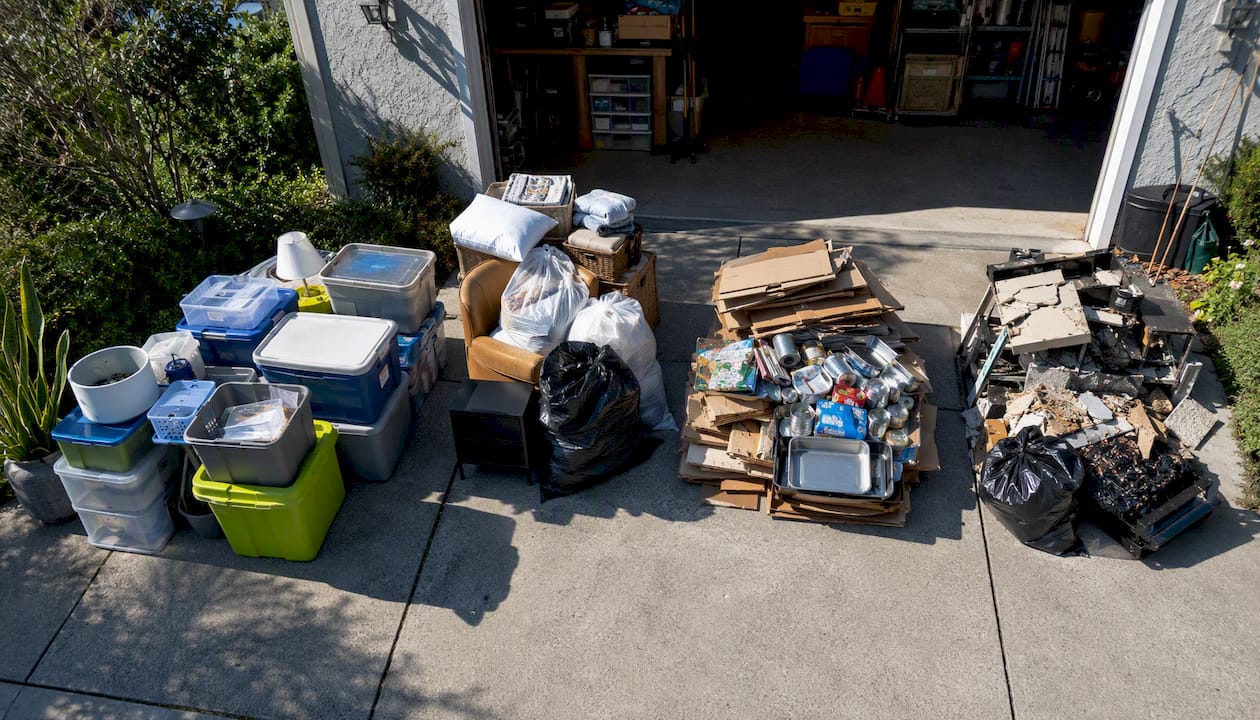
Keep: Anything you actively use or plan to use within six months. If you have to think about it for more than ten seconds, it probably belongs in one of the other piles.
Donate: Items in working condition or without major damage. Furniture, clothing, small appliances, and housewares are all fair game. Sorting donatable items separately reduces landfill waste and can shrink the final load, which directly lowers your cost.
Common donation outlets:
- Goodwill accepts clothing, furniture, electronics, and housewares at drop-off locations across the country. Check goodwill.org for your nearest site.
- Habitat for Humanity ReStore takes building materials, appliances, and furniture in good condition. Their stores resell items to fund affordable housing projects.
- Local shelters and community organizations often need bedding, kitchen items, and clothing on short notice. A quick call before pickup day can get a van to your door.
If you want the crew to route items directly to a donation partner, ask when you book. Easyscrapofficial prioritizes donation and recycling whenever items qualify.
Recycle: Electronics, metals, cardboard, and certain plastics. Many municipalities offer curbside electronics recycling or drop-off events. Check Earth911.com to find recycling locations by material and zip code.
Trash: Broken, contaminated, or unsalvageable items. Anything that cannot be donated or recycled goes here.
Pro Tip: Snap a photo of your donate pile and keep a written list of items for tax purposes. Goodwill and Habitat for Humanity ReStore both provide donation receipts, and the IRS allows deductions for donated goods at fair market value. A five-minute photo log on pickup day is worth it come tax season.
For a deeper look at deciding what to keep versus toss, this downsizing guide walks through the decision framework item by item.
Labeling and inventory tips that get you an accurate quote
Customers consistently underestimate how much they have. An inventory or a set of photos minimizes surprises and reduces disputes about what was included in the job. Sending photos ahead and making a simple room-by-room inventory enables reliable virtual estimates for small-to-medium jobs and prevents missed items.
Simple inventory template:
Keep it simple. Room, item, rough size, and where it goes. That is enough for a crew to plan truck space and manpower.
Labeling methods that work:
- Masking tape and a marker: write "HAUL," "DONATE," or "KEEP" directly on the item or on a strip of tape stuck to it.
- Colored stickers: green for go (haul), yellow for maybe, red for keep. Pick up a pack at any office supply store.
- Mark heavy items explicitly. Write "HEAVY" on anything over 75 lbs or anything requiring two people. Labeling heavy items and noting access constraints beforehand results in better crew planning, including extra crew members, the right truck size, and the right tools.
Photograph each pile from two angles before the crew arrives. Share those photos when you book for a virtual estimate. For large or complicated jobs, an on-site quote is more reliable than photos alone, but for a typical room cleanout, photos get you close.
What crews usually won't take and how to handle restricted items
Not everything can go on the truck. Crews cannot legally haul many household hazardous materials, and showing up with these items on pickup day causes delays or outright refusals.
Commonly excluded items:
- Latex and oil-based paint
- Motor oil and automotive fluids
- Propane tanks (full or partially full)
- Pesticides, herbicides, and fertilizers
- Household chemicals and solvents
- Medical waste and sharps
- Car batteries and lithium batteries in bulk
- Asbestos-containing materials
Where to take them instead:
- Municipal HHW (Household Hazardous Waste) facilities: Most counties run drop-off days or permanent facilities. Search your county name plus "HHW drop-off" to find the nearest location.
- Retail take-back programs: Home Depot and Lowe's accept latex paint. Best Buy takes electronics and batteries. Call2Recycle has drop-off locations for rechargeable batteries nationwide.
- Earth911.com: Enter the material and your zip code for the closest disposal option.
For a full breakdown of what a professional crew will and won't load, this accepted-items reference is a useful pre-booking checklist.
Measuring and prepping large items:
- Measure height, width, and depth of anything over 50 lbs or too large to fit through a standard door without tilting.
- Note stair counts, elevator dimensions, or narrow hallways on your booking form.
- For items like hot tubs or built-in shelving, let the crew handle disassembly. Attempting it yourself without the right tools risks injury and can damage walls or floors.
- Disconnect appliances from water and gas lines before the crew arrives. Pull the refrigerator away from the wall. Unplug the washer and dryer and coil the hoses.
How do estimates and pricing work for junk removal?
Pricing is almost always volume-based. The crew looks at how much truck space your items will occupy and quotes accordingly. Labor, access difficulty, and special handling are the main cost drivers on top of that base volume rate.
Virtual vs. on-site quotes:
| Quote type | Best for | Reliability |
|---|---|---|
| Virtual (photos) | Small-to-medium loads, single-room cleanouts | Good when photos show full scope |
| On-site | Full-house cleanouts, complicated access, large appliances | Most accurate; recommended for big jobs |
A photo estimate works well when you send clear, well-lit shots of every pile from multiple angles. For a basement full of furniture or a garage with 20 years of accumulation, ask for an on-site visit.
Main pricing drivers to communicate when booking:
- Total volume (number of truckload fractions)
- Item types: appliances, mattresses, and hot tubs often carry individual fees
- Access: stairs, narrow doorways, long carry distances, no elevator
- Location: disposal fees vary by municipality
- Special handling: electronics, tires, or items requiring disassembly
Questions worth asking before you confirm:
- Is the quote all-inclusive, or are there add-on fees for specific items?
- Does the price change if the actual volume is larger than estimated?
- Do you donate or recycle, and does that affect the price?
Day-of checklist: what to do when the crew arrives
The appointment itself should take 30–90 minutes for a standard residential job. Here is how to make sure it does.
Before the crew starts:
- Do a final walk of every room. Check closets, under beds, and in the garage for anything you forgot to add or remove.
- Confirm pets are secured in a closed room or crate.
- Move your vehicles so the truck can park as close as possible to the items.
- Have your payment method ready.
- Photograph your piles one more time before loading begins. This protects you if there is any question later about what was included.
During the job:
- Walk the crew through the space and point out each pile. Show them the donate items separately.
- If the crew gives a final on-site price that differs from your estimate, ask why before agreeing.
- Stay available but out of the way. Hovering slows loading.
Safety steps:
- Keep children and pets away from the loading area at all times.
- Wear closed-toe shoes if you are helping point out items or moving anything yourself.
- Watch for trip hazards: dollies, straps, and furniture corners in narrow hallways.
- Do not lift anything heavy yourself. That is what the crew is there for.
After loading: Do a final walk-through with the crew before they leave to confirm nothing was taken by mistake and to check walls and floors for scuffs. Two minutes now prevents a dispute later.
What Easyscrapofficial does differently on pickup day
Easyscrapofficial's crew is fully insured and trained for residential and commercial jobs across Lawrence, Andover, Boston, Lowell, and Haverhill. Every job starts with a free quote, either virtual from your photos or on-site for larger cleanouts.
- Donation-first routing: Usable furniture, appliances, and housewares get routed to local donation partners before anything goes to the landfill.
- Full-service hauling: The crew handles the heavy lifting for furniture removal, appliance removal, garage cleanouts, and more. You point; they carry.
- Same-day availability: For urgent cleanouts, same-day booking is available when slots are open.
- Transparent pricing: The final price is confirmed before loading starts, not after.
You can verify Easyscrapofficial's local presence and read recent customer reviews on Google Maps and Yelp before booking.
Pro Tip: When you call or message to book, mention any access constraints (stairs, narrow gate, no parking on street) upfront. That one detail lets the dispatcher send the right truck size and crew count, which keeps your appointment on schedule.
How to prepare your family and pets for removal day
A junk removal crew moving through your home is loud, physically disruptive, and involves strangers carrying large objects through tight spaces. A little planning keeps everyone calm.
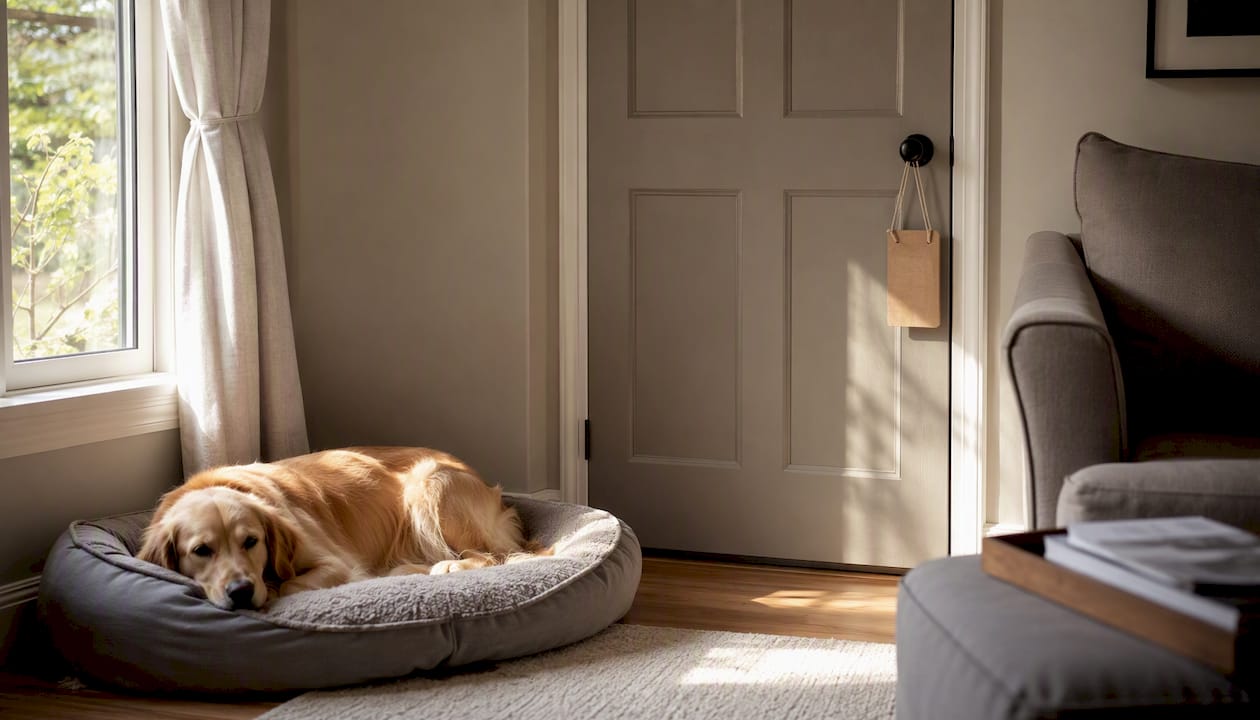
Pets: Secure dogs and cats in a room the crew will not enter, or arrange for them to be elsewhere for the morning. Even a friendly dog can become anxious around strangers carrying furniture, and an open front door is an escape risk. Put a note on the door: "Dog inside, please knock."
Children: Keep kids out of the loading zone. Dollies, hand trucks, and heavy furniture moving through hallways are genuine hazards. If young children are home, assign another adult to keep them in a separate area of the house.
Other household members: Let everyone in the home know the appointment time and which areas are off-limits during the job. A family member who wanders into the garage while the crew is loading a refrigerator creates a safety problem. A quick five-minute conversation the night before prevents it.
For estate cleanouts or larger jobs where multiple family members have opinions about what stays and what goes, resolve those decisions before the crew arrives. The appointment is not the time to debate whether to keep the old dining set.
How to communicate special instructions to the crew
Clear communication before and during the appointment prevents the most common junk removal frustrations: items hauled that should have stayed, items left that should have gone, and pricing surprises.
Before booking: State access constraints, item types, and any hazardous materials when you first contact the company. This is not the time to be vague. "I have a refrigerator, a treadmill, and about 20 boxes of miscellaneous junk in the basement, accessed by a narrow staircase with a 90-degree turn" gives a dispatcher everything needed to plan the job correctly.
When you confirm: Send your photos and inventory list. Note which items are donate-only and which are trash. If you have a "maybe" pile, say so explicitly so the crew knows to ask before loading those items.
On the day: Write down any special instructions on a piece of paper and hand it to the crew lead when they arrive. Verbal instructions get forgotten once loading starts. A written note stays in their hand. Common things worth writing down: "Do not enter the back bedroom," "The blue dresser is a KEEP," "All items in the garage go except the red toolbox."
If something changes during the job, speak directly to the crew lead rather than individual crew members. One point of contact keeps instructions consistent.
The one thing most customers miss before pickup
Most prep guides focus on sorting and clearing paths, and that advice is solid. What they rarely mention is the hidden time cost of forgotten spaces.
Drawers left full, attic corners that were not walked, and the shelf above the garage door that nobody checked in years: these are the spots that add 20–30 minutes to a job that should have taken 45. The crew has to stop, ask, wait for a decision, and sometimes move items twice when the homeowner realizes mid-job that something in a drawer should have stayed.
The fix is simple. Before the crew arrives, open every drawer in every piece of furniture being hauled. Check every shelf, every cabinet, and every box. If you find something worth keeping, move it to a clearly marked "KEEP" zone. If you are not sure, put it in a box labeled "DECIDE LATER" and move that box out of the work area entirely.
That 15-minute pass through forgotten spaces is the single highest-return prep task most homeowners skip. It keeps the crew moving, keeps your belongings safe, and keeps the job on the timeline you were quoted.
Easyscrapofficial handles the heavy lifting so you don't have to
When you have sorted, labeled, and staged your items, the last thing you want is a crew that shows up unprepared or adds fees at the door. Easyscrapofficial gives you a free quote upfront, sends an insured and trained crew, and routes usable items to donation partners before anything hits the landfill.
Serving Lawrence, Andover, Boston, Lowell, and Haverhill, Easyscrapofficial covers residential and commercial jobs from single-item pickups to full estate cleanouts. Same-day slots are available for urgent jobs. Book your junk removal appointment today and get a free quote in minutes.
Useful resources for donation, hazardous waste, and booking
- Goodwill: Find the nearest drop-off location for clothing, furniture, and housewares.
- Habitat for Humanity ReStore: Accepts furniture, appliances, and building materials in good condition; proceeds fund affordable housing.
- Earth911.com: Search by material and zip code to find recycling and HHW drop-off locations near you.
- ConsumerAffairs: How junk removal works: Clear overview of the process, pricing, and what to expect on pickup day.
- Easyscrapofficial junk removal service: Book a free quote or same-day appointment for residential and commercial jobs.
- Easyscrapofficial garage cleanout service: Specific prep tips and booking for garage cleanouts.
- Easyscrapofficial appliance removal: Prep instructions and booking for refrigerators, washers, dryers, and more.
Sources
- How does junk removal work? — ConsumerAffairs
- How to Prepare for a Junk Removal Appointment (5 things to do beforehand) — DrHomey
- How to Prepare for Junk Removal (Step-by-Step Guide) — Take Care Junk
- How to Prepare for Junk Removal — Junk Doctors