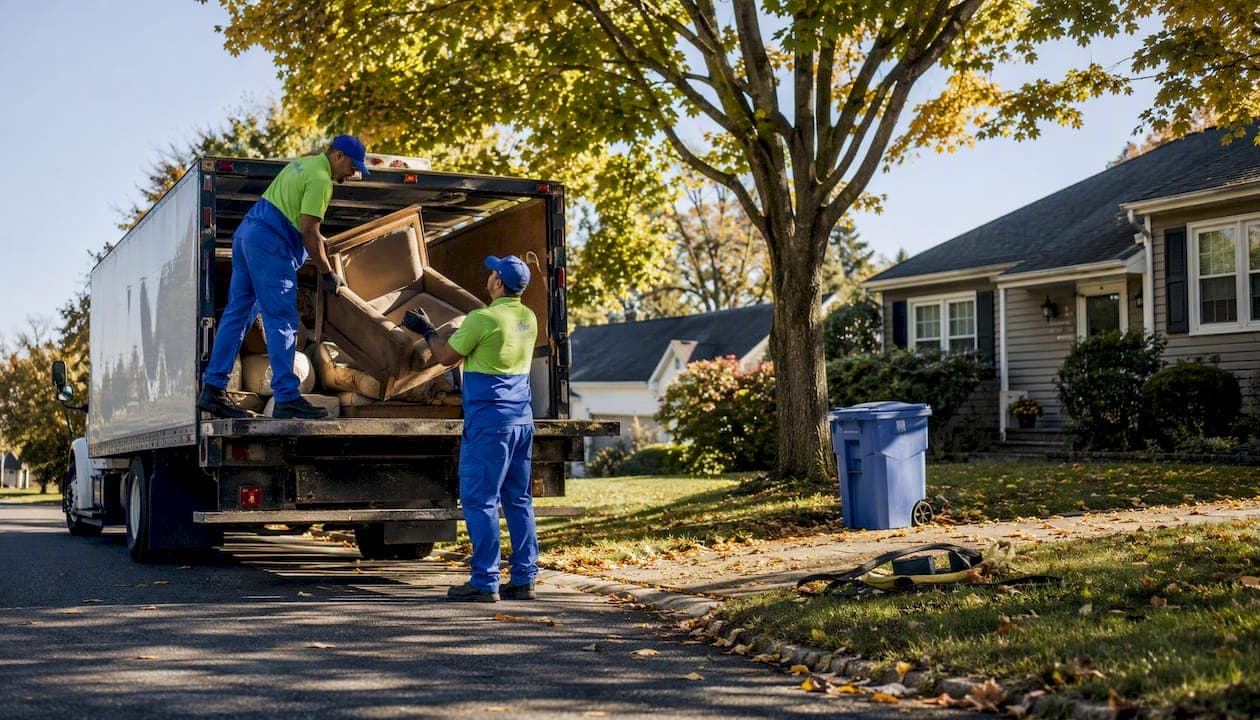
Junk removal wins for most single-day cleanouts, mixed household loads, and any project where you can't or won't do the heavy lifting yourself. Dumpster rentals make more sense for multi-week renovations, heavy construction debris, or large, predictable volumes where you're comfortable loading everything yourself over several days. That's the short answer — most guides agree on this split, and the scenarios below show exactly where the line falls.
Three quick rules of thumb:
- Best for: Junk removal for estate cleanouts, furniture, appliances, and mixed loads. Dumpster rental for kitchen remodels, roofing tear-offs, and ongoing demo work.
- Time and labor: Junk removal crews do all the loading. With a dumpster, every item is yours to move, bag, and toss in.
- Cost pattern: Junk removal charges by volume or truckload, which can run higher per cubic yard. Dumpster rentals advertise lower base rates but often add delivery, pickup, and weight overage fees that push the real total up.
Call a full-service crew immediately if: someone in the household can't safely lift or carry items, the load includes appliances with refrigerants, the property is an estate or hoarder cleanout, or you need everything gone in a single visit.
Key Takeaways
Junk removal is the better default for most homeowners: it handles mixed loads, requires no permit, and eliminates the labor burden that makes dumpster rentals more expensive than they appear on paper.
| Point | Details |
|---|---|
| Default choice for most cleanouts | Junk removal wins for single-day jobs, mixed loads, and labor-limited households. |
| Dumpster advantage for long projects | Roll-off rentals are cost-effective for multi-week renovations with uniform, heavy debris. |
| Hidden cost: your labor | Loading a dumpster yourself can take 6–10 hours; factor that time into your total cost comparison. |
| Refused items apply to both | Hazmat, refrigerant appliances, tires, and e-waste are excluded by nearly every provider. |
| Easyscrapofficial for hands-off removal | Easyscrapofficial offers insured, same-day full-service junk removal with donation and recycling for Lawrence, Andover, Boston, Lowell, and Haverhill. |
Table of Contents
- How do junk removal and dumpster rental actually compare?
- What is a junk removal service, and when does it make sense?
- What are dumpster rentals, and when do they beat full-service removal?
- How do the costs actually compare across real scenarios?
- What won't be accepted, and how do you dispose of it safely?
- Why full-service removal is often the smarter call
- Easyscrapofficial handles the heavy lifting so you don't have to
- Useful sources and disposal resources
How do junk removal and dumpster rental actually compare?
The table below maps the eight decision dimensions homeowners and property managers care about most. Use it as a quick reference before the deeper sections.
| Dimension | Junk removal service | Dumpster rental |
|---|---|---|
| Best for / ideal projects | Estate cleanouts, furniture/appliance removal, mixed loads, single-day jobs | Multi-week renovations, roofing, heavy demo, predictable large volumes |
| Convenience / labor required | Crew loads and hauls everything | You load every item yourself |
| Typical cost range | $150–$300 per truckload (volume-based) | — |
| Timeline / scheduling | Same-day or next-day in most markets | Delivery + rental period (3 days typical) + pickup scheduling |
| Accepted / refused items | Most household items; hazmat, tires, and some e-waste refused | Construction debris, yard waste; same hazmat exclusions apply |
| Environmental / recycling options | Many crews sort and donate/recycle; ask upfront | Depends on the hauler's disposal facility |
| Permits & placement | None required | Street placement often requires a city permit; HOA rules may apply |
| Safety & liability (insurance) | Reputable crews carry liability insurance | Homeowner bears all loading risk; container can damage driveways |
High-impact differences worth highlighting:
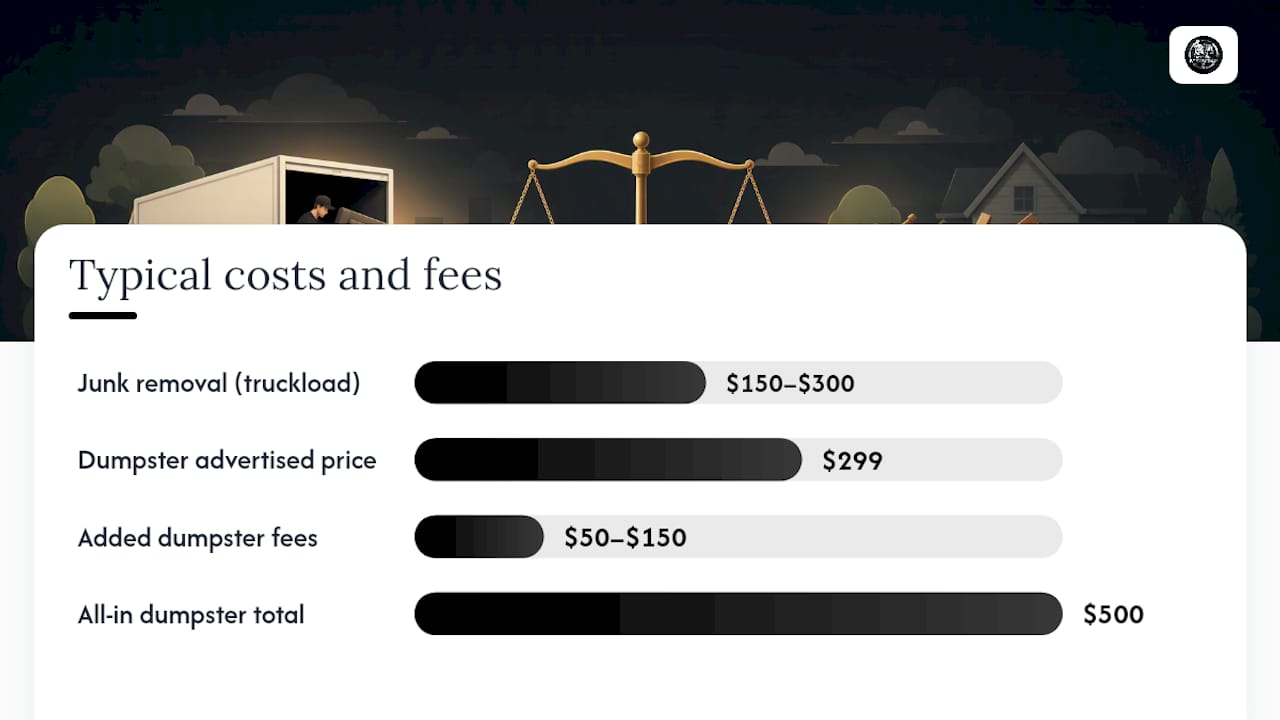
- Dumpster rental pricing is frequently quoted without delivery, pickup, or weight overage fees — those can add $50–$150 or more to the final bill, per industry pricing guides.
- Weight overages on dumpsters are charged per ton and can surprise homeowners who underestimate concrete, tile, or soil weight
Pro Tip: Before booking a dumpster, ask for an all-in quote that includes delivery, pickup, the included weight allowance, and the per-ton overage rate. A $299 advertised price can easily become $500 once those line items are added.
What is a junk removal service, and when does it make sense?
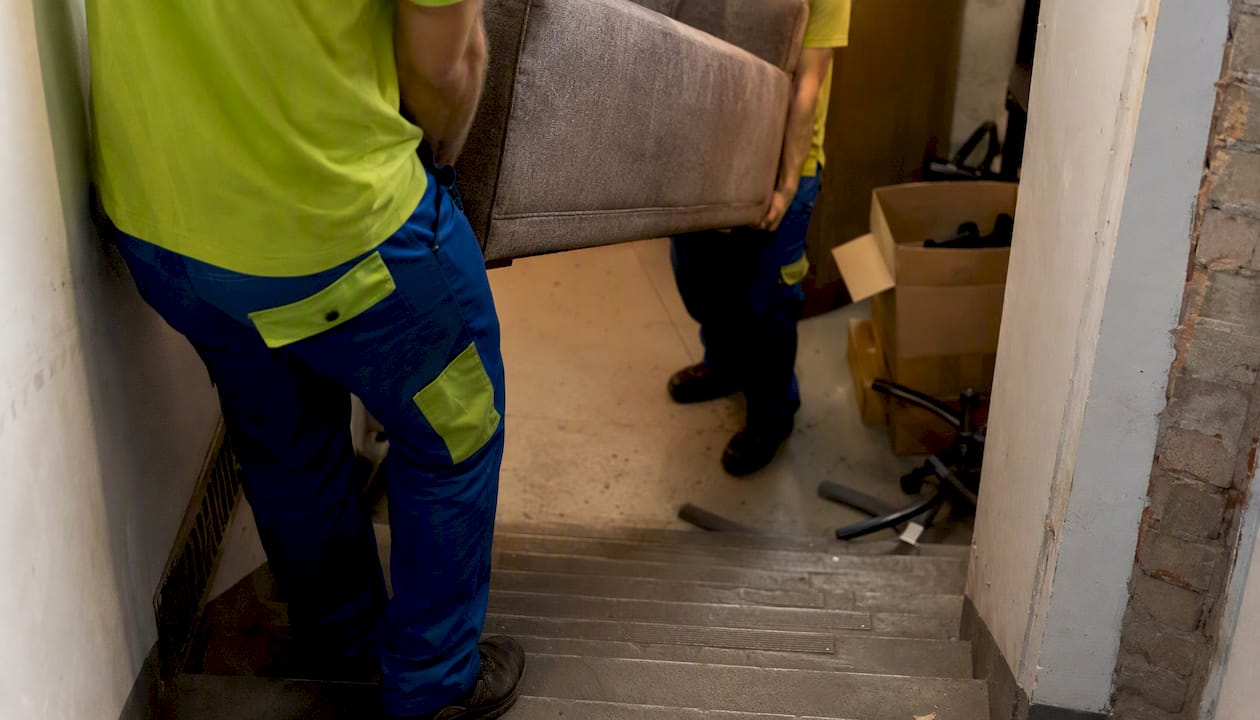
A junk removal service is a full-service pickup operation: a crew arrives, loads everything onto their truck, and hauls it away. You point, they lift. Pricing is typically based on how much truck space your load fills, sometimes combined with item type or weight. Full-service junk removal requires no permit and handles mixed loads in a single visit, which is why it's the default recommendation for most residential cleanouts.
Pros of hiring a junk removal crew
- No permit needed, no driveway damage risk, no scheduling a separate pickup
- Insured crews handle the physical risk of moving heavy or awkward items
- Same-day service is available in most markets
- Mixed loads are fine: old furniture, broken appliances, boxes of junk, and yard debris can all go in one trip
- Many providers sort loads and donate or recycle reusable items rather than sending everything to the landfill
Cons to know before you book
- Per-load pricing can run higher per cubic yard than a dumpster for very large, sustained debris volumes
- You may need to schedule a day or two out during busy seasons
- Always verify the prohibited items list before booking — some crews won't take certain electronics or construction materials
Best projects for junk removal
Estate cleanouts, single-room furniture swaps, appliance removal (especially refrigerators and washers), garage or basement cleanouts, and any job where the homeowner or tenant physically cannot move items safely. Property managers turning over a unit find it especially useful: one call, one visit, done.
Sample price ranges
| Load size | Typical price range | Common drivers |
|---|---|---|
| Minimum load (a few items) | $50–$150 | Item count, weight, access |
| Quarter-truck load | — | Volume, stairs, disassembly |
| Half-truck load | — | Volume, mixed item types |
| Full-truck load | $400–$700 | Total volume, heavy items, distance |
Prices vary by market, item type, and whether the crew needs to disassemble furniture or navigate stairs. Always get a quote before the crew starts loading.
Many junk removal providers, including Easyscrapofficial, sort loads after pickup and divert reusable furniture, working appliances, and clean materials to local donation partners or recycling facilities. If eco-friendly disposal matters to you, ask the provider directly what percentage of loads they divert from the landfill.
What are dumpster rentals, and when do they beat full-service removal?
A dumpster rental puts a roll-off container in your driveway or on the street. You fill it on your own schedule, and the hauler picks it up when you're done. Roll-off dumpsters come in sizes from 10 to 40 cubic yards, covering everything from a single-room cleanout to a full home renovation. The Bagster, a collapsible dumpster bag sold at home improvement stores, is a smaller alternative that holds roughly 3 cubic yards and up to 3,300 lbs — useful for very small, lightweight jobs but more expensive per cubic yard than a standard roll-off.
Pros of renting a dumpster
- Cost-effective per cubic yard for large, sustained debris volumes
- Flexible fill timeline: load it over days or weeks at your own pace
- Handles heavy construction materials like concrete, tile, and drywall well (within weight limits)
- One flat rental period covers an entire renovation without multiple pickups
Cons that catch homeowners off guard
- You do all the loading — every trip up and down stairs, every heavy bag, every awkward piece of drywall
- Street placement requires a city permit in most municipalities; HOA rules may prohibit dumpsters on driveways
- Weight overages are charged per ton and can add significantly to the final bill
- Prohibited items lists still apply: no hazmat, no refrigerant appliances, no tires in most cases
- A heavy container sitting on a driveway for a week can crack asphalt or damage pavers
Dumpster sizes and typical uses
| Container size | Typical capacity | Common residential use |
|---|---|---|
| Bagster bag | ~3 cubic yards | Small bathroom remodel, minor cleanout |
| 10-yard roll-off | ~10 cubic yards | Single-room renovation, small garage cleanout |
| 20-yard roll-off | ~20 cubic yards | Kitchen remodel, full garage, deck removal |
| 30-yard roll-off | ~30 cubic yards | Whole-home renovation, large estate cleanout |
| 40-yard roll-off | ~40 cubic yards | Major construction, commercial demo |
Pro Tip: For a Bagster vs. dumpster decision, run the math: if your project fills more than 3 cubic yards or involves anything heavier than light household debris, a 10-yard roll-off almost always costs less per cubic yard. The cost-per-cubic-yard gap widens quickly as volume increases.
Permits and placement basics
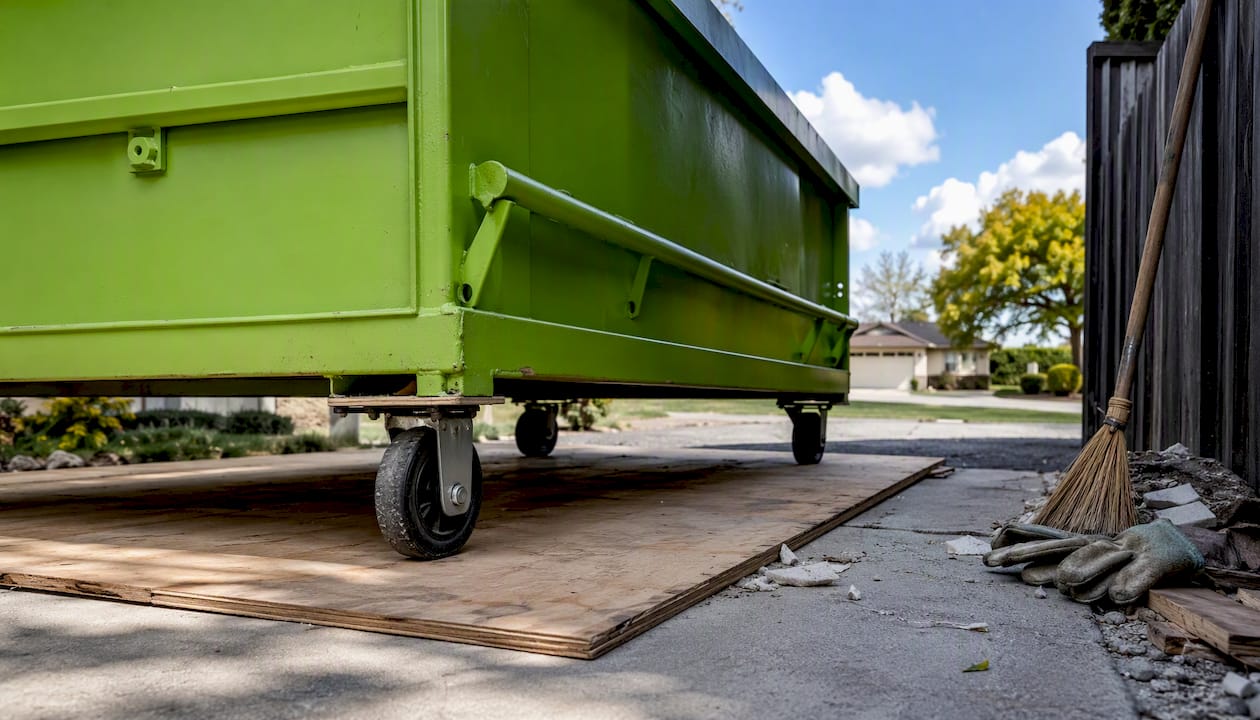
A dumpster sitting on a public street requires a permit from your city or county in most jurisdictions. Permit costs and processing times vary widely, so check with your local public works department before scheduling delivery. If you're placing the container on your own driveway, a permit is usually not required — but confirm with your HOA if one applies. Always put plywood under the container's wheels to protect the driveway surface.
How do the costs actually compare across real scenarios?
Advertised dumpster rates routinely leave out delivery, pickup, and weight overage fees. Homeowners also consistently undercount the labor required to fill a dumpster, which matters when your time has real value. The three scenarios below model realistic all-in costs.
Questions to ask any provider before booking
- What's the all-in price, including delivery, pickup, and the included weight limit?
- What items do you refuse, and what happens if a refused item is found in the load?
- Are you licensed and insured?
- Do you donate or recycle any portion of the load?
Red flags that should make you walk away
- No clear answer on weight limits or overage rates
- No proof of liability insurance
- Refusal to take items they initially said were fine
- No mention of recycling or donation practices when you ask directly
Pro Tip: Transparent pricing that lists delivery, pickup, included weight, and overage rates upfront is the single most reliable trust signal when comparing providers. If a company won't give you a line-item quote, that's your answer.
What won't be accepted, and how do you dispose of it safely?
Both junk removal services and dumpster rental companies refuse certain materials. The reasons are a mix of safety regulation, landfill bans, and liability. Knowing this list before you book prevents the worst-case scenario: a crew that can't take half your load, or a dumpster that gets rejected at the transfer station.
Commonly refused items:
- Household hazardous waste: paint, solvents, pesticides, motor oil, batteries
- Refrigerant-bearing appliances: refrigerators, window AC units, dehumidifiers (require EPA Section 608-certified handling before disposal)
- Tires (most haulers; some accept a limited number for a fee)
- E-waste: TVs, computers, monitors (landfill bans apply in most states)
- Medical waste, asbestos-containing materials, and contaminated soil
On safe disposal: The EPA's materials, waste, and recycling resources are the most reliable starting point for identifying regulated waste streams and finding certified disposal options in your area. For refrigerant appliances, look for a certified appliance recycler through the EPA's Responsible Appliance Disposal (RAD) program. For e-waste, most counties run certified drop-off events, and retailers like Best Buy accept many electronics for recycling. Household hazardous waste events are typically held by municipal public works departments several times a year — check your city or county website for the schedule.
For items that are still usable, ask your junk removal provider about donation pathways. Many crews sort loads and route working furniture, appliances, and household goods to local nonprofits rather than the landfill. It costs you nothing extra and keeps reusable goods out of the waste stream.
Why full-service removal is often the smarter call
Most articles frame this as a pure cost comparison, and that framing misses the point. The real question isn't which option is cheaper on paper — it's which one actually gets the job done without creating new problems.
A dumpster sitting in your driveway for a week is a commitment. You have to load it, stay within the weight limit, keep prohibited items out, and schedule pickup before the rental period ends. For a homeowner managing a kitchen remodel while living in the house, that's a reasonable tradeoff. For an estate executor clearing out a parent's home, or a landlord turning over a unit between tenants, it's the wrong tool entirely.
The cases where full-service removal is clearly the right answer are the ones people tend to undervalue: when the homeowner is physically limited, when the load is mixed and unpredictable, when the timeline is tight, or when the property has access challenges that make dumpster placement impractical. In those situations, the labor cost of a dumpster isn't just inconvenient — it's a real barrier.
Easyscrapofficial's full-service junk removal covers all of those scenarios: insured crew, same-day availability, donation and recycling for reusable items, and free quotes so you know the cost before anyone lifts a finger. For property managers and homeowners who want the job done in one visit, that's the practical choice.
Easyscrapofficial handles the heavy lifting so you don't have to
Skip the dumpster math. Easyscrapofficial provides local, insured, same-day junk removal across Lawrence, Andover, Boston, Lowell, and Haverhill — no permit headaches, no loading, no surprise overage fees. One call and a crew shows up, loads everything, and hauls it away. Furniture, appliances, garage junk, basement cleanouts, estate loads: it's all covered, and usable items get donated or recycled whenever possible.

Whether you need a full garage cleanout, a single appliance removed, or a complete property cleared out, Easyscrapofficial gives you a free quote with no obligation. Request your free quote or book same-day pickup and get it done today.
Useful sources and disposal resources
External resources for safe disposal and permit guidance:
- Dumpster Rental vs. Junk Removal: Which Is Right for You? | Angi
- Dumpster Bags vs Dumpster Rentals - Which is Best? | Dumpsters.com
- Dumpster Rental vs Junk Removal - moveBuddha
- Bagster vs Dumpster (2026): Which Wins? | RightDumpster
- Dumpster Rental vs Bagster: Which Saves You More? (2026 Guide) | DumpsterComparison
- Facts and figures about materials, waste and recycling | EPA
- Junk Removal vs Dumpster Rental | Which Is Better? | Junk Doctors
- All Junk Removal Services | EasyScrap
Easyscrapofficial service pages:
| Service | Link |
|---|---|
| All junk removal services | easyscrapofficial.com/services |
| Same-day junk removal and quotes | easyscrapofficial.com/junk-removal |
| Garage cleanouts | easyscrapofficial.com/garage-cleanouts |
| Basement cleanouts | easyscrapofficial.com/basement-cleanouts |
| Appliance removal | easyscrapofficial.com/appliance-removal |
| Furniture removal | easyscrapofficial.com/furniture-removal |