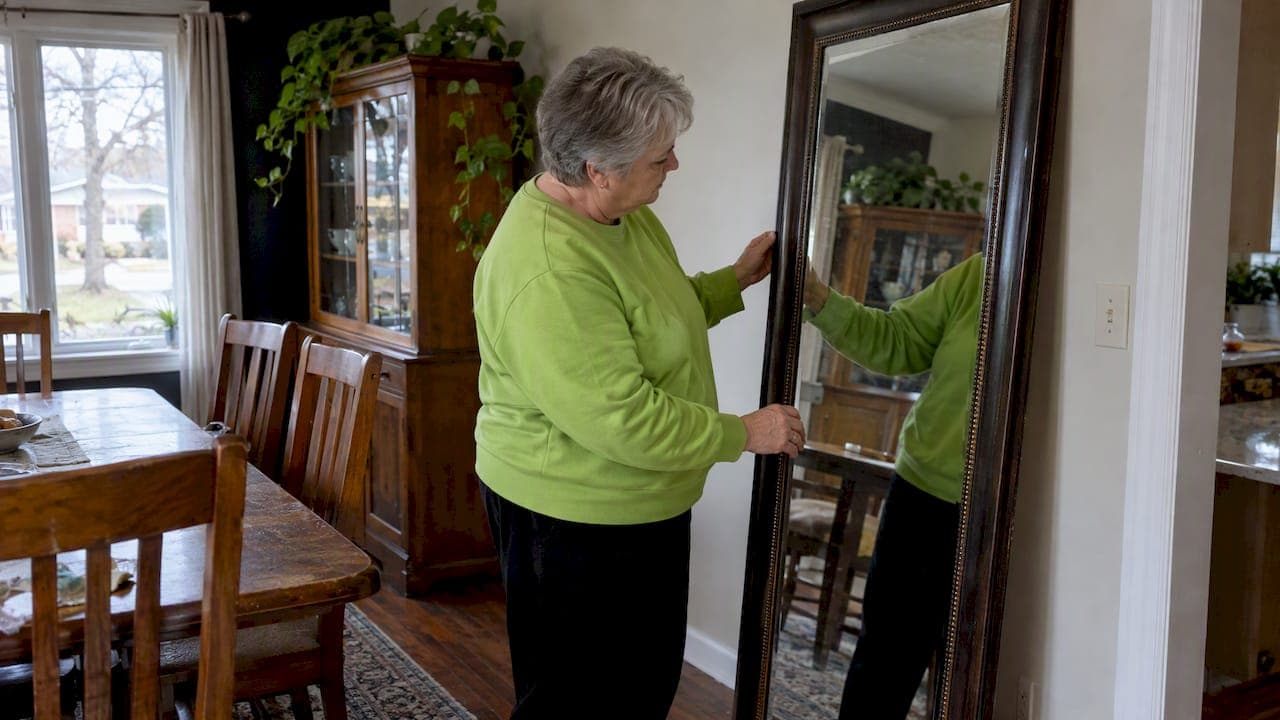
Most large mirrors cannot go in curbside glass recycling, so the right move depends on condition: donate or resell it if it's intact and in good shape, package it and follow your hauler's garbage or bulky-item rules if it's not, or book a removal crew when the mirror is too heavy, glued, or awkward to move safely. The one rule that holds everywhere: never toss a mirror in with bottles and jars.
TL;DR:
- Donate or resell only intact, attractive mirrors; thrift stores commonly reject chips, cracks, peeling backing, or damaged frames, so inspect before arranging pickup.
- Small mirrors may go with regular garbage after packaging, while large pieces usually require bulky item pickup or transfer station drop off; check local size rules first.
- For intact mirrors, wrap them in a thick blanket and box them if possible; secure all seams and mark at least two sides MIRROR or GLASS.
- Broken shards belong in heavy paper or a lidded box, never a loose trash bag; tape it shut, label it BROKEN GLASS, and keep it liftable.
- Use two people, gloves, eye protection, and an X of tape across the glass before lifting a mirror from brackets; stop and hire help if it is glued or awkwardly positioned.
Table of Contents
- Quick disposal options: donate, trash, bulky pickup, or drop-off
- How to take down a large mirror safely
- Packaging and labeling a mirror for pickup
- Donation, resale, and reuse: what actually gets taken
- When to call in a professional crew
- A homeowner's quick perspective: reuse first, safety always
- Getting mirror removal handled without the risk
- FAQ
- Sources
Quick disposal options: donate, trash, bulky pickup, or drop-off
Mirrors confuse a lot of people because they look like glass but behave like a disposal problem. The coating on the back, usually a thin layer of metal and paint, contaminates standard glass recycling streams, which is why most mirrors cannot be recycled through curbside bottle-and-jar programs. That single fact shapes every choice below.
If the mirror is intact, undamaged, and reasonably attractive, reuse comes first. Donation keeps it out of the waste stream entirely and saves you a hauling trip. If it's cracked, chipped, or simply unwanted and no one will take it, it typically goes in with regular garbage or a scheduled bulky-item pickup rather than recycling.
Your options generally break down like this:
- Donation or resale: best for framed, undamaged mirrors; call ahead since many thrift stores reject damaged glass.
- Curbside garbage: works for smaller mirrors that fit your regular trash setup once packaged correctly.
- Bulky-item pickup: the usual route for large or heavy mirrors; check your city's scheduled pickup day and size limits.
- Transfer station or landfill drop-off: an option when there's no bulky pickup available or you're clearing several items at once; some facilities charge by weight or load.
San José's guidance is a good example of how local programs actually treat mirrors: it explicitly warns residents to not mix mirrors with glass recycling and directs broken or unwanted mirrors toward bagging and landfill disposal instead. Rules like this vary by city, so a quick check of your municipality's page before you haul anything saves a wasted trip.
How to take down a large mirror safely
Before you touch a wall-mounted mirror, get your setup right. You'll want two people (mirrors over a few feet wide are not a one-person job), thick work gloves, safety glasses, painter's tape or masking tape, moving blankets or old towels, and a screwdriver or stud finder if you're not sure how it's mounted.
- Clear the floor path from the wall to the door, including rugs and furniture that could catch a foot.
- Tape an X across the front of the mirror with painter's tape to hold shards together if it cracks during the move.
- Locate the mounting hardware. Screws or brackets can usually be removed with basic tools; if the mirror is glued directly to drywall or tile, stop.
- With one person on each side, lift straight up off the hooks or brackets rather than pulling outward, and set it down flat on a blanket immediately.
- Wrap the mirror in a moving blanket before carrying it anywhere, and keep it vertical during transport to reduce flex and cracking.
Pro Tip: If you're unsure whether hardware is behind the mirror or it's adhesive-mounted, don't pry at it. Forcing a glued mirror off the wall is one of the most common ways people end up with a lap full of broken glass.
Glued mirrors, oversized pieces, or anything mounted somewhere awkward (above a fireplace, in a stairwell) are the cases where hiring help beats a DIY attempt.
Packaging and labeling a mirror for pickup
However you're disposing of it, packaging determines whether sanitation workers can handle it safely and whether your hauler will even take it.

For an intact mirror: wrap it completely in a thick blanket or moving sheet, then place it inside a flattened cardboard box if one fits, taping all seams and edges shut. Municipal guidance from Michigan's Royal Oak glass disposal rules specifically recommends this wrap-and-box approach, with the package clearly marked "GLASS" or "MIRROR" on at least two sides.
For a broken mirror, the approach changes:
- Collect shards into heavy paper or a lidded box, never a loose trash bag.
- Tape the container shut completely so nothing shifts in transit.
- Label it "BROKEN GLASS" in visible, legible writing.
- Keep the package light enough for one person to lift without strain; split larger amounts into two containers.
Bulky-item programs frequently spell out exactly this kind of packaging. Noblesville's bulk pickup guidance lists wrapping broken mirrors in cardboard, taping them shut, and labeling the package before setting it curbside, which reflects how most municipal haulers expect broken glass to arrive.
Placement matters too: smaller packaged mirrors usually go beside your regular trash cart, while larger ones need to be set at the curb on your bulky-item collection day or hauled to a transfer station, depending on your city's program.
Donation, resale, and reuse: what actually gets taken
Before you assume a mirror is trash, check it over. Chips along the edge, cracked glass, a loose or peeling backing, or a damaged frame are the usual reasons thrift stores and resale shops turn mirrors away.
- Inspect for cracks, chips, cloudy or peeling silver backing, and frame damage before listing or donating.
- Be upfront about condition when posting online; buyers and donation centers both reject "like new" claims that don't hold up.
- Framed, undamaged mirrors have the best shot at donation acceptance; frameless or damaged pieces are harder to place.
- Factor in pickup logistics (stairs, parking, mirror size) when arranging a donation pickup so it doesn't fall through.
If a mirror is in rough shape but the frame has value, consider stripping the glass and repurposing the frame rather than scrapping the whole piece. For broader guidance on sorting usable household items before a bigger cleanout, our moving boxes disposal guide and this donation-first sorting approach for estate items both walk through what's worth saving versus hauling away.
When to call in a professional crew
Some mirrors just aren't a solo job: oversized pieces, anything glued to the wall, mirrors mounted above furniture you can't move, or ones already shattered into dangerous shards. That's when a professional hauling crew earns its cost.
- Insured crews handle lifting, packing, and transport, which matters most with glued or oversized mirrors.
- Many services sort usable items for donation before anything goes to a landfill.
- Same-day scheduling is common for straightforward single-item pickups.
When you call for a quote, have the mirror's dimensions, whether it's intact or broken, and its location in the house ready. A mirror in a third-floor bedroom with narrow stairs quotes differently than one leaning in a garage. Most crews offer free, no-obligation quotes once they know those basics.
A homeowner's quick perspective: reuse first, safety always
Reuse should win more often than it does. A mirror headed for the landfill is usually fine for someone else's wall, and donating it is less work than hauling it yourself. But don't let "I'll just handle it myself" turn into a dangerous DIY removal. If a mirror is glued, oversized, or awkwardly placed, tape it, label it, and get help instead of forcing it.
— Easy
Getting mirror removal handled without the risk
We take the lifting, packing, and hauling off your hands, and sort out usable items for donation before disposal. For a mirror that's glued to the wall, too heavy to move alone, or just one more thing on a long list, booking junk removal with us gets it gone the same day in many cases, without you needing to rent a truck or find a second pair of hands.

When you reach out, tell the dispatcher the mirror's size, whether it's intact or broken, and where it is in your home (stairs and tight hallways change the job). A free quote will be given based on those details.
| What you tell us | Why it matters |
|---|---|
| Mirror dimensions | Determines crew size and vehicle needed |
| Intact or broken | Affects packaging and handling approach |
| Location and access | Stairs, narrow doorways, or tight parking change timing |
We also handle the rest of the room while we're there: furniture removal, garage cleanouts, and basement cleanouts all fall under the same booking.
FAQ
How do I get rid of a large mirror?
Donate it if it's undamaged and framed, or package it and follow your city's garbage or bulky-item pickup rules if it's not. For anything heavy, glued, or hard to access, a professional removal service handles the lifting and disposal safely.
How do I dispose of unwanted mirrors?
Wrap an intact mirror in a blanket and box it, taping all seams and labeling it "MIRROR" or "GLASS." For a broken mirror, bag or box the shards, tape the container shut, and label it "BROKEN GLASS" before setting it out.
Will garbage take a mirror?
In many areas, yes, small to mid-sized mirrors can go in with regular garbage once properly wrapped and labeled, though some municipalities require bulky-item scheduling for larger pieces. Check your local waste program since rules on size and packaging vary by city.
How do I take down a large mirror safely?
Work with a second person, tape an X across the glass face first, and locate the mounting hardware before lifting straight up off hooks or brackets. If the mirror is glued to the wall or unusually heavy, stop and call a professional rather than prying it loose.
Sources
- Mirrors | Hennepin County
- Glass | Royal Oak, MI
- Mirrors | San Jose Recycles
- Bulk and Heavy Items pick-up guidance | Noblesville (Republic Services)