If you want the fastest, safest, and most eco-friendly way to remove an unwanted piano, hire a local junk or piano removal crew that donates or recycles parts first. That one step covers logistics, safety, and environmental responsibility in a single call.
But it's not the only route. If the piano is still playable, a local school, church, or community music program may take it off your hands, sometimes for free. If it has resale value, listing it on a local marketplace with a free-pickup offer can move it within days. And if it's beyond saving, a recycler or salvager can recover the cast iron plate, steel strings, and hardwood before anything is sent to a landfill.
Cost expectations vary widely. Private-sale pickups can run $0–$300 if the buyer arranges their own movers, professional removal typically costs $200–$1,000+, and recycling or disposal fees often land between $50–$300 depending on access, stairs, and distance. Timeline ranges from same-day with a junk removal crew to two or three weeks if you're waiting on a nonprofit to confirm pickup availability.
Key Takeaways
The fastest, most eco-friendly piano disposal route for most U.S. homeowners is: assess condition first, try donation or local resale, then hire an insured removal crew that donates or recycles before any landfill disposal.
| Point | Details |
|---|---|
| Assess condition first | Check playability, structural damage, and water damage before contacting any donor, buyer, or hauler. |
| Donation is the best first step | Playable pianos can go to schools, churches, or nonprofits, but always confirm pickup availability before assuming it's free. |
| Cost range varies widely | Professional removal runs $200–$1,000+; private-sale pickups can be $0–$300 if the buyer arranges movers. |
| Salvage before you dispose | Cast iron plates, steel strings, and hardwood cabinet panels are all recoverable and keep material out of landfills. |
| Easyscrapofficial handles it end-to-end | Insured crews, same-day availability, and an eco-first disposal process in Lawrence, Andover, Boston, Lowell, and Haverhill. |
Table of Contents
- How to assess whether your piano is worth donating, selling, or recycling
- Where to donate a piano and who offers free pickup
- Selling or giving away your piano: platforms, pricing, and logistics
- Recycling and salvage: which parts have value and where to take them
- What professional piano movers and junk-haulers actually do
- How Easyscrapofficial handles piano removal
- How to prepare your piano and home for pickup
- How to choose the right disposal route and avoid red flags
- Why piano disposal matters for the environment
- What people get wrong about piano disposal
- Easyscrapofficial takes care of piano removal for you
- Sources
How to assess whether your piano is worth donating, selling, or recycling
Before you call anyone, spend ten minutes with the instrument. The answer to every downstream question, from whether a charity will accept it to what a buyer will pay, comes from this first look.
Condition indicators that matter to donors and buyers:
- All or most keys play and respond (stuck or silent keys are a red flag for donors)
- The piano holds a tune or is tunable (severely warped soundboards usually aren't)
- No structural cracks in the cabinet, legs, or frame
- No water damage, swelling, or mold (this is a hard no for most organizations)
- The brand and approximate age are identifiable from the serial number plate, usually inside the lid or on the cast iron frame
Assessing size, type, and condition up front shapes whether you sell, donate, or recycle — and uprights are almost always easier to move than grands, which matters for every quote you request.
Measurements and access notes every hauler or buyer will ask for:
- Height, width, and depth of the instrument
- Width of every doorway between the piano and the exit
- Number of stairs, including half-flights and landings
- Any tight hallway turns or low ceilings along the path
- Distance from the door to where a truck can park
Before you contact anyone, pull out a tape measure. A standard upright piano is roughly 58 inches wide and 48–60 inches tall, but door frames in older U.S. homes can run as narrow as 28–30 inches. Knowing your numbers before the first call prevents wasted site visits and surprise charges.
Photos to take and share when requesting quotes:
- Full front view of the piano
- Close-up of the keyboard (show any missing or damaged keys)
- The brand/serial number plate
- The underside and legs
- Any visible damage (cracks, water stains, missing hardware)
- The path from the piano to the exit, especially tight corners or stairs
Pro Tip: Snap a photo of the serial number plate and run it through the Piano Atlas database or contact a local piano technician. Age and brand affect resale value significantly, and a 1920s Steinway upright is a very different conversation from a 1980s off-brand console.
Where to donate a piano and who offers free pickup
Donation is the best first move when a piano is playable. It keeps the instrument in use, avoids landfill, and may qualify for a charitable tax deduction if you itemize. The catch: many organizations accept uprights in serviceable condition but have limited storage and may decline pickups, so you can't assume free removal comes with the deal.
Types of recipients worth contacting:
- Public schools and music departments (especially those that lost instruments to budget cuts)
- Churches and houses of worship with active music programs
- Community arts centers and youth music nonprofits
- College music departments or practice rooms
- Instrument lending libraries and refurbishment nonprofits
- Local musicians or music teachers who post in community Facebook groups
Common donation eligibility criteria:
- Piano must be playable or tunable with reasonable effort
- No mold, pest damage, or severe structural failure
- Safe to move without special rigging (most organizations won't take grands that require crane access)
- Modest cosmetic damage is usually fine
Nonprofits that accept donated pianos sometimes offer pickup, but donors must confirm current needs and pickup policy before assuming free removal is available. Call ahead, send your photos, and ask directly: "Do you have space right now, and can you arrange pickup, or do I need to deliver it?"
If the recipient can't collect the piano, you have two practical options: hire a mover to deliver it, or ask the organization if they know a local musician or student who might want it and can arrange their own transport.
Pro Tip: Check EasyScrap's donation coordination page to see how a removal crew can handle the delivery leg for you, so the piano goes directly to the recipient without you coordinating two separate parties.
For a broader look at how donation logistics work with large items, the furniture donation process in Boston follows the same general steps and is worth a read before you call a charity.
Selling or giving away your piano: platforms, pricing, and logistics
Resale is worth attempting if the piano is in decent shape and you have a week or two to spare. The market is thin but real, and a free-pickup offer dramatically increases your response rate.
Best platforms for piano listings:
- Facebook Marketplace (highest local reach for free-pickup offers)
- Craigslist (still active for large items in most U.S. markets)
- OfferUp (good for local transactions with in-app messaging)
- PianoMart.com (specialty buyers who know what they're looking for)
- Local music school bulletin boards, both physical and digital
Realistic price expectations by type and condition:
A playable upright in good cosmetic condition might fetch $200–$500 with the buyer arranging their own movers. A well-maintained console or studio upright from a recognized brand can go higher. A baby grand in good condition can realistically sell for $1,000–$3,000 or more, though the buyer pool is smaller and the moving cost is higher.
Here's the honest reality: a lot of uprights, especially older spinets and consoles, sell for $0 with free pickup. That's not a failure. Getting someone else to move it for free is a legitimate win when the alternative is paying $300–$600 for removal.
Logistics that actually matter:
- Post at least five clear photos (use the list from the assessment section)
- Write an honest condition description, including any keys that stick or strings that buzz
- State the dimensions and access situation upfront so buyers can assess moving costs before they contact you
- Buyers almost always arrange their own movers for large instruments, so don't promise delivery unless you've budgeted for it
Pro Tip: Offering "free to a good home" with buyer-arranged pickup on Facebook Marketplace often generates more serious inquiries than a low asking price. Serious buyers who want the piano will find a mover. Bargain hunters looking for a deal often disappear when moving costs become real.
Recycling and salvage: which parts have value and where to take them
When donation and sale both fail, the piano doesn't have to go straight to a landfill. A standard upright contains a surprising range of recoverable materials.
Material breakdown:
- Cast iron plate: 200–400 lbs of scrap metal with real value at a metal scrap yard
- Steel strings: Accepted at most scrap metal facilities
- Hardwood cabinet and soundboard: Usable for furniture, shelving, or art projects
- Brass hardware: Hinges, pedals, and brackets have scrap or decorative value
- Felt and leather: Limited recycling options, but some craft salvagers will take it
- Keys: Older ivory keys require special handling (see below); modern plastic keys have limited value
Refurbishers and makers repurpose piano components, including soundboards, keys, and cabinet wood, for furniture, art, and educational projects. Some salvage programs partner directly with designers and craftspeople to give piano wood a second life.
Where to take parts:
- Metal scrap yards accept the cast iron plate and steel strings (call ahead to confirm they handle cast iron, since not all do)
- Wood reclaimers and architectural salvage shops often want the cabinet panels and soundboard
- Craft salvage markets and Etsy-adjacent makers sometimes post "wanted" listings for piano keys and hammers
- Local art schools or maker spaces may take the whole instrument for deconstruction projects
A note on ivory keys: Pre-1989 pianos may have real ivory keytops. Selling or transporting ivory across state lines is regulated under the Endangered Species Act. If you suspect ivory, contact a piano technician or your state wildlife agency before disassembling or selling the keys.
Some recycling services assess every instrument for rehoming first, then dismantle non-rehomeable pianos to separate wood and metal for recycling, keeping material out of landfills. That's the model to look for when hiring a recycler.
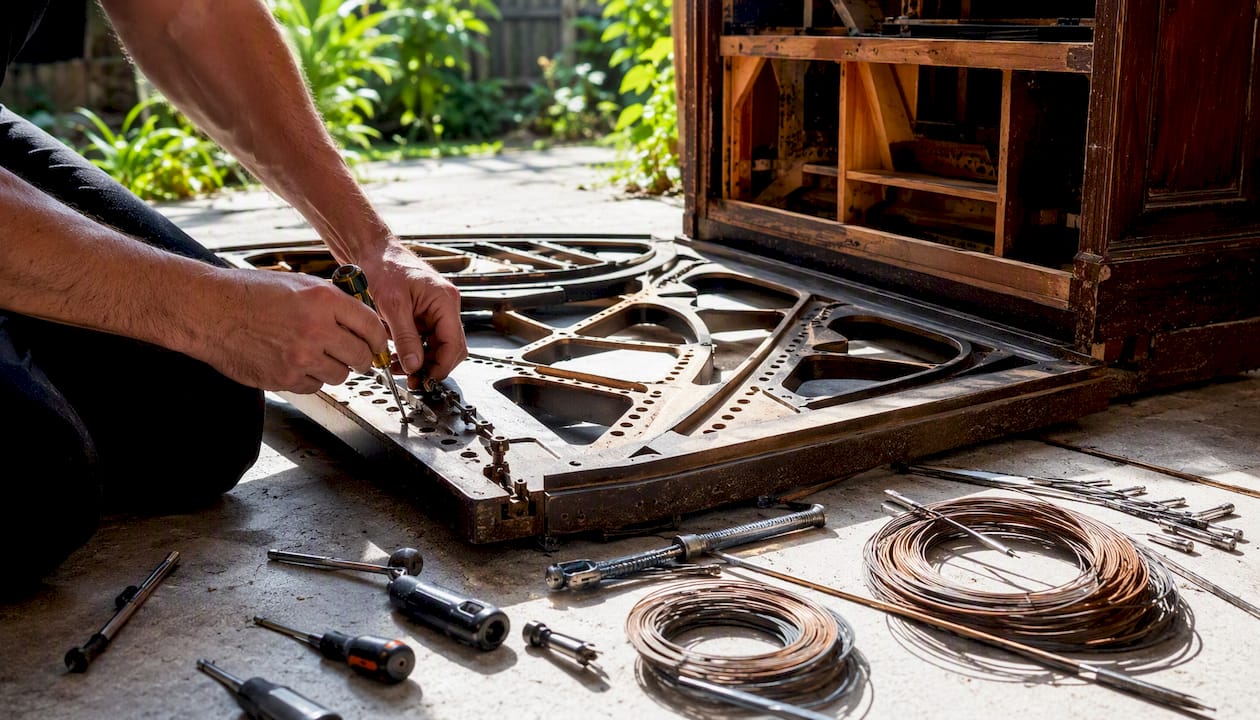
Pro Tip: Before calling a scrap yard, remove the cast iron plate from the cabinet. It's heavy work, but separating metal from wood before transport often gets you a better scrap price and makes the load easier to handle.
Disassembly is appropriate when the piano is structurally unsound, has water or mold damage, and no organization will take it. If you're not comfortable with the work, hire a pro to dismantle it for salvage. The scrap value of the cast iron plate alone sometimes offsets part of the removal cost.
What professional piano movers and junk-haulers actually do
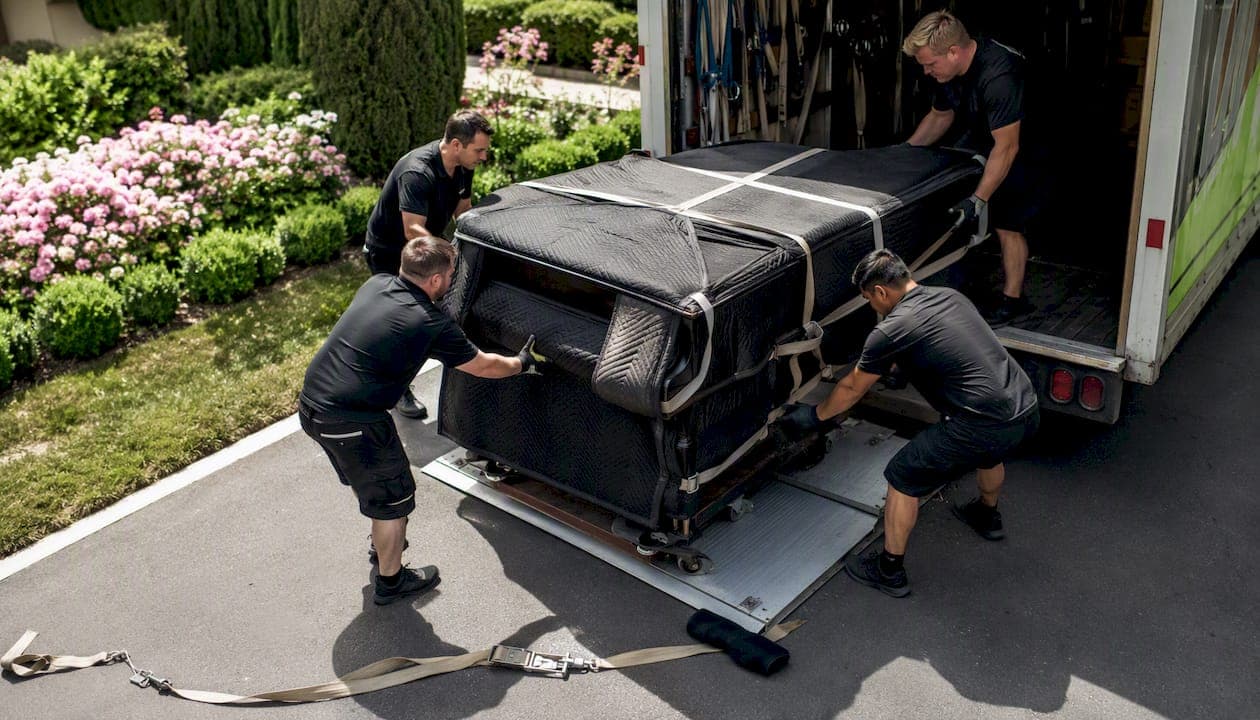
Uprights weigh 400–800 lbs and grands exceed 1,000 lbs, which means moving a piano without professional help is genuinely dangerous. Most professional crews follow a consistent process: assess the instrument and access route, wrap and protect the piano, partially disassemble if needed (legs, pedal lyre, lid), load it onto a truck, and transport it to a donation recipient, recycler, or disposal facility.
Typical pricing by scenario:
| Scenario | Estimated Cost Range |
|---|---|
| Buyer arranges own pickup (private sale) | $0–$300 |
| Ground-floor upright, easy access | $200–$400 |
| Upright with stairs or narrow halls | $200–$1,000+ |
| Grand piano, standard access | $500–$1,000+ |
| Recycling or disposal fee (added to removal) | $50–$300 |
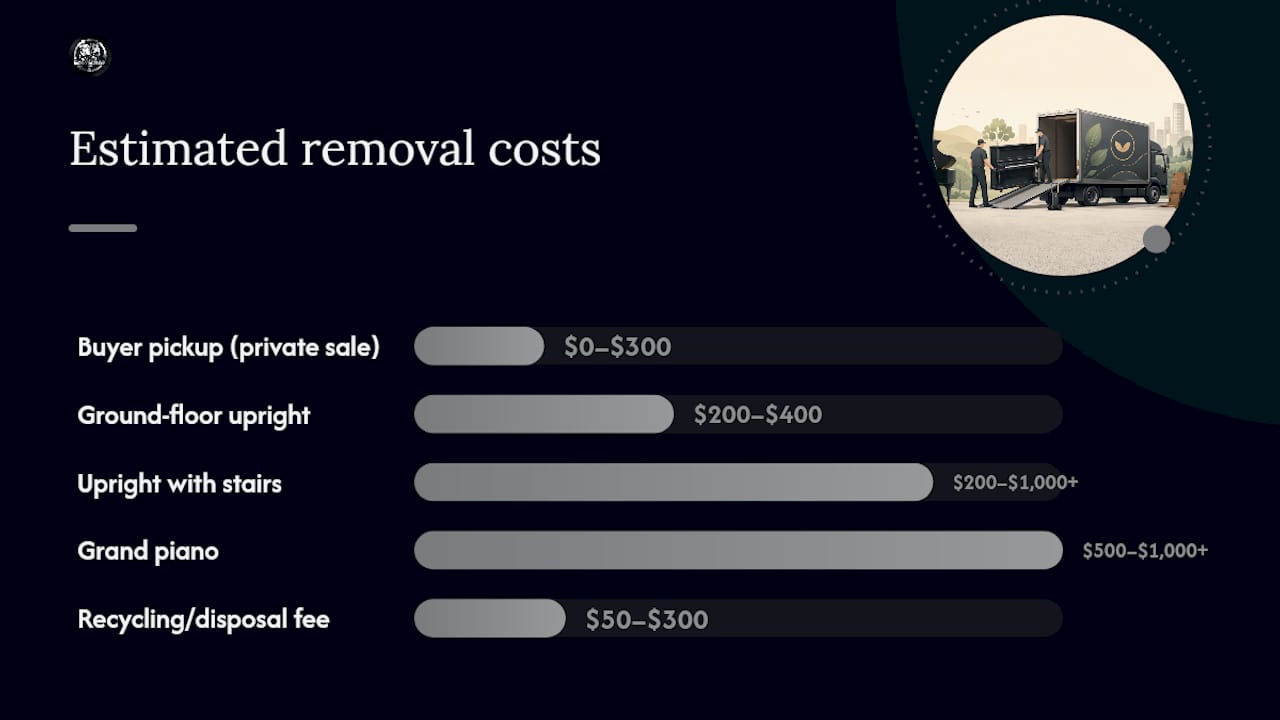
These ranges reflect commonly reported figures for professional removal and vary by region, distance, and the crew's disposal network.
Specialized piano mover vs. general junk-hauler:
A specialized piano mover brings purpose-built dollies, skid boards, and experience with the instrument's weight distribution. They're the right call for a valuable grand or a move into a new home. For disposal, a general junk-hauler with an insured crew and a donation or recycling network is usually faster, more available, and less expensive. The key question isn't which type of company you hire; it's whether they carry liability insurance, have a written disposal plan, and can document where the piano ends up.
Questions to ask any removal provider before booking:
- Are you fully insured, and does that cover damage to my home during removal?
- Will you provide a written estimate before the job?
- Where does the piano go: donation, recycling facility, or landfill?
- Do you have relationships with local donation recipients?
- Are there any additional fees for stairs, distance, or disposal?
For specialty item removals, professional crews that handle large and unusual items follow similar insurance and crew-size requirements to what piano removal demands.
How Easyscrapofficial handles piano removal
Easyscrapofficial's process is straightforward. You send photos, measurements, and access notes; the team provides a free quote, usually the same day. An insured crew handles the protected move from wherever the piano sits, including upstairs rooms and tight hallways. The default approach is donation or recycling first: if the piano is playable, Easyscrapofficial coordinates with local recipients before considering disposal. If it's beyond saving, materials go to recyclers rather than a landfill.
What you get with Easyscrapofficial:
- Same-day or next-day scheduling in Lawrence, Andover, Boston, Lowell, and Haverhill
- Fully insured crew trained on heavy, awkward items
- Eco-first disposal: donation and recycling before landfill
- Documentation of donation or recycling for your records (useful for tax purposes)
- No surprise fees: the written quote covers stairs, distance, and disposal
EasyScrap's furniture removal service gives a clear picture of how the crew handles large, heavy items with the same protected-move approach used for pianos.
Pro Tip: When you request a quote, include the piano's brand, approximate age, and whether it's playable. That one detail lets Easyscrapofficial check donation availability before the crew arrives, which can save you money if a recipient is willing to take it.
For readers combining piano removal with a larger cleanout, garage cleanout services can be bundled into the same visit.
How to prepare your piano and home for pickup
Good prep prevents extra charges and makes the job faster for everyone. Most surprises on removal day come from access problems that a five-minute walkthrough would have caught.
Step-by-step pre-pickup checklist:
- Measure every doorway between the piano and the exit (width and height).
- Measure any hallway turns and note ceiling height along the path.
- Count stairs and measure the width of each staircase.
- Measure the distance from your front door to where a truck can legally park.
- Clear the path completely: move rugs, furniture, wall art, and anything fragile within three feet of the route.
- Secure pets in a separate room before the crew arrives.
- Remove any items stored on top of or inside the piano (sheet music, figurines, items in the bench).
- If the piano has a lid, close and latch it.
Photos and measurements to include in your quote request:
- Full front and side views of the piano
- The path from the piano to the exit, including any stairs or tight turns
- The narrowest doorway along the route (with a tape measure visible if possible)
- Any damage or unusual features that affect how the instrument can be moved
Protection tips:
- Ask the crew if they bring moving blankets; most professional services do, but it's worth confirming.
- Remove fragile objects from shelves along the removal path before the crew arrives, not after.
- If the floor is hardwood or tile, let the crew know so they can use floor protection.
How to choose the right disposal route and avoid red flags
The right route depends on three variables: the piano's condition, your timeline, and how much you're willing to spend. Here's a practical decision framework.
When to donate: The piano is playable or tunable, you have one to three weeks, and you're willing to coordinate with an organization. Free pickup is possible but not guaranteed.
When to sell or give away: The piano has some resale value, or you're willing to offer free pickup to move it quickly. Budget one to two weeks for a local listing to get traction.
When to recycle or salvage: The piano is structurally damaged, has water or mold issues, or no organization will accept it. Scrap value from the cast iron plate can offset some costs.
When to hire a removal crew: You need it gone fast, you don't want to coordinate multiple parties, or the access situation is complicated. This is also the right call when you want documentation of eco-friendly disposal.
Questions to ask any provider:
- Do you carry liability insurance for in-home removal?
- Can you provide a written estimate before the job?
- What is your disposal plan, and can you document it?
- Do you work with donation partners, or does everything go to a landfill?
- Are there permits required for large-item removal in my municipality?
Red flags to watch for:
- No written estimate, only a verbal quote
- Pressure to decide immediately or pay a deposit before seeing the piano
- No clear answer about where the piano goes after pickup
- Unusually low flat fees with no breakdown of what's included
- Requests to meet in an unusual location for "pickup"
Local piano shops and technicians often advise owners on options and sometimes accept trade-ins or refer owners to donation and resale channels. If you're unsure where to start, a ten-minute call to a local piano technician can point you toward the right route before you commit to anything.
Pro Tip: Always ask for the disposal destination in writing. A removal crew that can't tell you where the piano goes after pickup is one you probably don't want handling it.
Why piano disposal matters for the environment
A standard upright piano contains roughly 12,000 individual parts. The cabinet alone can hold 200–400 lbs of hardwood. The cast iron plate adds another 200–400 lbs of recoverable metal. Sending all of that to a landfill, where treated wood and metal sit compressed under other waste, is a significant and avoidable loss.
The eco-first order of operations:
- Donate if playable: keeps the instrument in active use, zero material waste
- Sell or give away with free pickup: same environmental outcome as donation
- Salvage parts for reuse: recovers metal, wood, and hardware before disposal
- Recycle through a dismantling service: separates materials for proper processing
- Dispose as a last resort: only after all recovery options are exhausted
Municipal bulk pickup services often do not accept pianos because of their size and mixed materials, so curbside disposal is rarely an option. Always check with your local waste management authority before putting a piano at the curb.
Materials commonly reclaimed from pianos:
- Cast iron plate (scrap metal)
- Steel strings (scrap metal)
- Hardwood cabinet panels (furniture, flooring, art)
- Soundboard spruce (instrument repair, woodworking)
- Brass pedals and hardware (scrap or decorative reuse)
- Felt and leather (craft and upholstery projects)
The environmental case for donation or recycling isn't abstract. A piano that gets donated plays for another decade. One that gets dismantled for scrap keeps hundreds of pounds of metal and hardwood out of a compactor. The landfill option costs more, recovers nothing, and is almost always avoidable.
What people get wrong about piano disposal
The most common mistake is waiting. A piano that's playable today may not be in six months if it sits in a damp basement or unheated garage. Humidity warps soundboards, swells cabinet wood, and rusts strings fast. Once that happens, the donation window closes and you're looking at recycling or disposal costs instead of a free pickup.
The second mistake is underestimating the moving complexity. People assume a piano is just a heavy piece of furniture. It isn't. The weight is concentrated unevenly, the legs are fragile under load, and a grand piano's lid and pedal lyre have to come off before it moves through most doorways. Attempting a DIY move without the right equipment risks injury and property damage.
A third pitfall: accepting a verbal offer without written terms. Buyers who promise to "come get it next weekend" often disappear. Donors who say "we'll send someone" sometimes never do. Get a date, a name, and a written confirmation before you clear your schedule.
Two micro-checks to do before anyone arrives:
- Walk the removal path yourself with a tape measure and confirm every measurement you gave in the quote request. Discrepancies between quoted and actual access are the most common source of extra charges.
- Confirm the pickup appointment by text or email the day before. A written confirmation creates a record and dramatically reduces no-shows.
Easyscrapofficial takes care of piano removal for you
Skip the coordination headache. Easyscrapofficial's insured crew handles piano removal in Lawrence, Andover, Boston, Lowell, and Haverhill with a donation-and-recycle-first approach that keeps your piano out of a landfill whenever possible. Same-day and next-day slots are available, and the free quote covers everything: crew, protected move, stairs, and eco-friendly disposal.

To get an accurate quote fast, send photos of the piano and the removal path, the instrument's dimensions, and any access details (stairs, narrow halls, distance to parking). Easyscrapofficial handles the rest, from coordinating with local donation recipients to documenting recycling for your records.
Book your free piano removal quote and get it scheduled today.
Sources
These are the most useful external resources referenced in this guide. U.S.-focused links are noted; non-U.S. resources are flagged and useful as process models.
- How Do You Get Rid Of A Piano: 7 Easy Removal Options -
- How to Dispose of a Piano? - HTuse
- Piano Recycling UK | Piano Disposal for Old and Unwanted Pianos
- Pianos Recycled | Victoria | Australia
- DONATE YOUR PIANO - Society of Unique Artists
When searching locally, use these sites as a benchmark for what good donation and recycling programs look like, then search "[your city] + piano donation" or "[your city] + piano recycling" to find in-market equivalents.