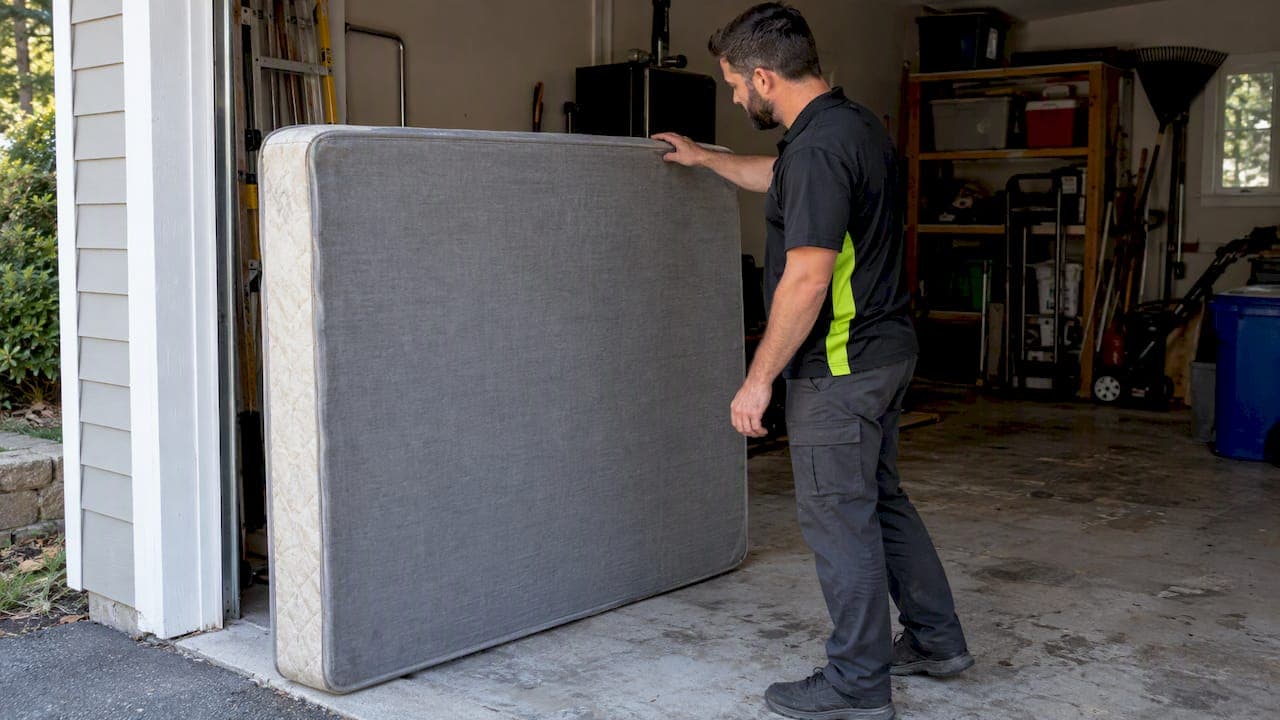
The right way to get rid of a box spring depends on two things: whether it's clean and reusable, and whether you can move it yourself. A clean, intact box spring should go to a donation center or back to the retailer when you buy a new mattress; one that's worn out but dry belongs at a municipal drop-off or mattress-recycling program. If it's wet, moldy, infested, or you simply can't haul it down the stairs, a paid junk-removal pickup is the faster, cleaner route. Check your city's rules before you move it anywhere.
TL;DR:
- Municipal drop off sites inspect box springs, often reject wet or infested items, may limit household quantities, and charge fees that vary by location.
- Retailer take back when buying a mattress may be free or low cost; donation centers generally require clean fabric and an intact, supportive frame.
- Call the hauler before curbside placement, confirm scheduling and fees, and use required sealed plastic; New York City fines reach $50 for a first offense and $100 for a second.
- If bed bugs are suspected, seal the entire box spring in plastic and skip disassembly, since opening it can spread pests through the home.
- Hire junk removal when stairs, weight, or lack of a vehicle prevents transport; ask whether the price includes fees and where the item will go.
Table of Contents
- Municipal drop-off and mattress-recycling programs
- Retailer take-back, donation, and resale routes
- Curbside bulk pickup rules you need to follow
- How to break down a box spring for removal
- When a box spring can't be recycled
- When hiring a junk-removal service makes sense
- What removal crews notice on the job
- Book a box spring pickup with EasyScrap
- FAQ
- Sources
Municipal drop-off and mattress-recycling programs
Mattress stewardship programs and municipal transfer stations exist to pull box springs out of the regular waste stream and route the steel, foam, and wood into recycling instead of a landfill. Massachusetts made this mandatory: the state's mattress disposal ban has required reuse, recycling, or donation of mattresses and box springs since November 1, 2022, and towns had to set up acceptance and inspection criteria to comply.
Finding a drop-off point usually starts with your municipal website or your state's environmental agency page, or by reviewing mattress recycling options for homeowners, since most transfer stations list accepted items and hours there. A few things to expect once you arrive:
- Staff typically inspect the item on-site before accepting it.
- Clean, dry box springs are accepted; wet or visibly infested ones are usually turned away.
- Many sites cap how many bulky items one household can drop off per visit.
- Fees range from free to a per-item charge depending on the municipality.
A large portion of a mattress and box spring's components are recyclable when the item arrives clean and dry, according to EPA guidance on bulky items. That figure only holds if a recycler is actually within reach, which is still the biggest obstacle for people trying to handle this on their own.
Retailer take-back, donation, and resale routes
If your box spring still has life in it, donation or retailer take-back is usually the fastest path to keeping it out of a landfill entirely. When you buy a new mattress, ask the retailer at checkout whether they'll haul away the old set. Many will, often for free or a small fee, and it saves you a separate trip.
Donation centers are pickier about condition than you might expect. Before you load it up, call ahead and ask:
- Is the box spring free of stains, tears, and odors?
- Does the frame feel structurally sound, with no sagging or broken slats?
- Does the center have a pickup option, or do you need to drop it off?
Some nonprofits run resale or refurbishment programs that clean and resell used mattresses and box springs rather than scrapping them outright, which stretches the item's life even further. For anything still in usable shape, this route tends to beat municipal recycling on speed since there's no waiting for a scheduled transfer-station visit.
Curbside bulk pickup rules you need to follow
Curbside bulk pickup works for box springs in many cities, but you need to call your waste hauler first since rules vary block by block, let alone city by city. Skipping that call is how people end up with a fine instead of a pickup.
- Call your hauler or municipal sanitation line to confirm box springs are accepted curbside and get the pickup date.
- Wrap the box spring in heavy plastic sheeting or a mattress bag, since many jurisdictions require sealed bagging to stop bed bugs from spreading.
- Set it out only on the scheduled night, not days early, to avoid a missed pickup or a litter citation.
- Ask about fees upfront, since bulky items often carry a per-piece charge separate from regular trash service.
Noncompliance gets expensive fast. New York City's bedding rules carry fines of $50 for a first offense and $100 for a second if a mattress or box spring isn't properly bagged curbside. Transfer stations enforce their own penalties too, including charges for uncovered loads arriving by truck or trailer, on top of standard per-item fees.
How to break down a box spring for removal
Breaking a box spring into pieces makes it easier to fit in a car, meet a transfer station's size rules, or just get it out of a tight stairwell. Gather a utility knife, a flathead screwdriver or staple remover, work gloves, a dust mask, and eye protection before you start.
- Lay the box spring flat and cut away the fabric cover with the utility knife.
- Pull or pry out the staples and tacks holding the fabric and padding in place.
- Separate the wooden frame pieces from the metal springs or wire grid.
- Bundle the wood separately from the metal and bag loose fabric and padding.
- Sort the metal for scrap recycling and set the wood aside for bulky-item pickup or drop-off.
Work slowly around staples, since they're the most common source of cuts during teardown.
Pro Tip: If you suspect bed bugs, skip disassembly entirely and seal the whole box spring in plastic instead, since cutting it open can spread pests through your home.

When a box spring can't be recycled
Recyclers and donation centers reject box springs that are wet, moldy, heavily soiled, or showing signs of a bed-bug infestation, and for good reason: moisture and pests contaminate the foam, fabric, and wood that would otherwise be processed. If you suspect bed bugs, bagging the item and avoiding donation is the safer move, and our bed bug furniture disposal checklist walks through the safe handling steps in more detail.
- Wet or moldy items are turned away at nearly every recycling drop-off point.
- Infested items should be sealed in plastic immediately, never left curbside unbagged.
- Heavily damaged frames or torn-open units are usually treated as regular waste, not recyclable material.
Some municipalities still allow disposal of contaminated items, but only after the item is documented and certified as unrecyclable under the state's waste-ban rules. Check your local transfer-station page before assuming an item simply goes in the trash.
When hiring a junk-removal service makes sense
A heavy box spring, a narrow stairwell, no truck, or a tight moving deadline are all good reasons to pay for pickup instead of handling it yourself. Fee-for-service junk removal exists specifically to cover the labor and transport that municipal drop-off and donation programs don't provide.
Before booking any service, ask a few direct questions:
- Where does the box spring actually go: a recycler, a donation center, or a landfill?
- Can they provide a receipt or photo confirming where it ended up?
- Is the quoted price final, or does it exclude transfer-station fees?
- Do they carry insurance in case something gets damaged during removal?
Pro Tip: A company that can't tell you where your old box spring is headed probably isn't sorting it for recycling or donation at all.
What removal crews notice on the job
Box springs rarely cause trouble until they meet a narrow stairwell or turn out to be soaked from a basement leak nobody mentioned beforehand. Crews also run into homeowners who assume curbside pickup is automatic, when plenty of towns require a scheduled appointment instead. The practical lesson holds regardless of the obstacle: match the disposal route to the item's actual condition, not how it looked a year ago.
— Easy
Book a box spring pickup with EasyScrap
When a box spring is too heavy, too awkward, or too contaminated to handle alone, we pick it up and sort it the right way. We serve multiple local areas, and same-day booking is available for most jobs.
- We take the box spring directly from wherever it sits, including basements and upper floors.
- We prioritize donation and recycling over landfill disposal whenever the item qualifies.
- Our crews carry insurance to handle potential damages during removal.
For mattresses and box springs specifically, our mattress disposal service covers scheduling and pricing details, and our general junk removal page works well if you're clearing out more than one item at once. Request a free quote and we'll handle the rest.
FAQ
How do I get rid of a box spring?
Donate it if it's clean and intact, drop it at a municipal recycling program if it's just worn out, or book a junk-removal pickup if it's heavy, contaminated, or hard to move. Massachusetts residents are required to route box springs to reuse, recycling, or donation rather than regular trash.
What should I do with an old box spring?
Check its condition first: a clean, structurally sound box spring is a good donation candidate, while a damaged or soiled one should go to a transfer station or recycling program instead. Local rules vary, so a quick check of your municipal website before you move it saves a wasted trip.
Can I throw away a box spring in a dumpster?
In many areas, no, since box springs are often banned from regular trash and dumpsters under state or municipal rules. Curbside placement typically requires bagging first, and unbagged bedding can draw fines, including penalties as high as $50 to $100 for noncompliance in some cities.
Where can I find free or affordable disposal options?
Retailer take-back at the time of a new mattress purchase is often free or low-cost, and donation centers typically accept usable box springs at no charge. Municipal drop-off programs range from free to a small per-item fee, so it's worth comparing your local transfer station against a retailer's haul-away offer before paying for private pickup.
What happens to a box spring that can't be recycled?
Wet, moldy, or infested box springs are generally rejected by recyclers and donation centers and may need to be documented by the municipality before disposal is allowed. If you suspect bed bugs, seal the item in plastic and avoid donating it; our bed bug disposal checklist covers the safe steps.
Sources
- Mass
- Bulky items quick start guide | EPA
- NYC 311 mattress and bedding rules
- Bulk trash pickup | Waste Management