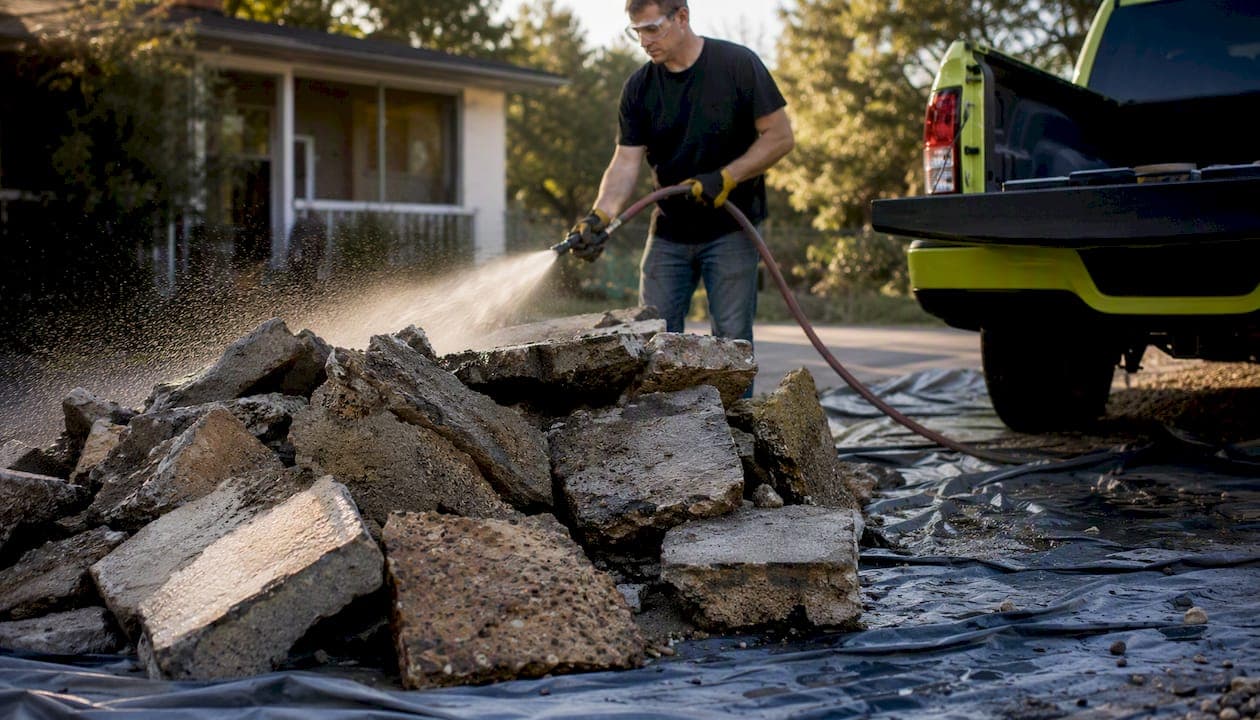
If you have clean, cured concrete to get rid of, the best move is to call a local concrete recycling center first. Recyclers accept broken slabs, chunks, and even rebar-reinforced pieces, crush them into aggregate, and often charge less than a landfill tipping fee. If you can't self-haul, rent a heavy-debris (inert) dumpster or book a licensed junk-haul service that routes material to a C&D recycler.
Start here:
- Search "concrete recycling near me" or call your city's public works department for permitted C&D facilities.
- Rent a heavy-debris dumpster if you have more than a pickup-truck load and can't transport it yourself.
- Book a local hauler for same-day removal when volume, access, or contamination makes self-hauling impractical.
- Never put wet concrete slurry in a standard dumpster. Slurry hardens inside the container, damages equipment, and triggers costly surcharges. The U.S. Environmental Protection Agency is clear that slurry requires containment and licensed contractor handling.
Table of Contents
- What are your main concrete disposal options?
- Where can you drop off concrete locally?
- Should you DIY the haul or hire a service?
- How to prepare and sort concrete before disposal
- Transport logistics and vehicle weight limits
- What does concrete disposal actually cost?
- Can you reuse or give away concrete instead of hauling it?
- Safety rules and legal requirements you need to know
- Practical tips from junk-removal crews
- Key Takeaways
- The part most guides skip
- Easyscrapofficial takes care of the heavy work for you
- Useful sources and where to check local rules
What are your main concrete disposal options?
Four routes cover nearly every situation: concrete recycling centers, C&D transfer stations or landfills, dumpster rental, and junk-haul services. The right one depends on how much you have, whether you can load and transport it, and your budget.
Recycling centers are the cheapest option when you can self-haul. They accept clean concrete, process it into road-base aggregate, and charge tipping fees that are often lower than landfill rates. C&D transfer stations and landfills accept mixed or contaminated loads that recyclers won't touch, but fees are higher. Heavy-debris dumpster rental suits medium jobs like a full driveway or patio where you need a container on-site for a day or two. Junk-haul services handle everything from loading to disposal, which is worth the premium when you lack a truck, time, or the ability to lift heavy material safely.
For a small job (one pickup load or less), self-hauling to a recycler is almost always the cheapest path. A medium job (a patio or short driveway) usually fits a 10-yard heavy-debris dumpster. Contractor-scale demolition often warrants a roll-off plus a haul service, or on-site mobile crushing for very large volumes.
Pro Tip: Confirm the dumpster company's included tonnage before you book. Concrete is dense, and many standard rentals cap included weight at 2 tons. Overage fees of $50–$100 per ton add up fast on a concrete-only load.
Where can you drop off concrete locally?
Facility types that accept concrete
Four types of facilities commonly handle concrete debris disposal:
- Municipal transfer stations — many city and county facilities accept concrete from residents, often with piece-size limits and volume caps. The Onondaga County Resource Recovery Agency (OCRRA) is a good example of a municipal program that publishes size restrictions and fee schedules online.
How to find facilities near you
- Search "concrete recycling near me," "C&D transfer station [your city]," or "inert debris drop-off [your county]."
- Call your city or county public works department and ask for a list of permitted C&D facilities.
- Check your state environmental agency's website. Many states maintain searchable databases of licensed C&D processors. The South Carolina Department of Environmental Services is one example of a state agency that publishes C&D guidance and facility listings.
Questions to ask before you drive over
- What is the maximum piece size you accept?
- Do you take reinforced concrete with rebar, or must metal be removed first?
- Is painted or chemically treated concrete accepted?
- What are your current tipping fees (per ton or per load)?
- What are your drop-off hours?
- Do you require proof of origin or a permit for contractor loads?
Should you DIY the haul or hire a service?
The honest answer: it depends on four things — volume, vehicle, time, and whether the concrete is clean.
DIY makes sense when:
- You have a half-ton or one-ton pickup and a load under the truck's payload rating.
- A recycling center or transfer station is within a reasonable drive.
- The concrete is clean, broken into manageable pieces, and free of rebar or contaminants.
- You have help loading (concrete is heavy — a cubic foot of solid slab weighs roughly 150 lbs).
Hire a service when:
- Volume exceeds what a pickup can safely carry in one trip.
- You don't have a truck or trailer rated for the weight.
- The concrete is contaminated with paint, asbestos, or chemicals and needs specialist handling.
- You need same-day removal and can't spend a weekend breaking and hauling.
- The job involves mixed debris (concrete plus wood, soil, or appliances) that a single dumpster or hauler can handle together.
When hiring a dumpster company or junk-haul service, ask these questions before you commit:
- What is the weight allowance included in the base price?
- What do you charge per ton for overage?
- Where does the concrete go — recycler or landfill?
- Are there extra fees for rebar, painted concrete, or contaminated material?
- Is the crew insured and licensed for C&D debris?
For mixed renovation cleanouts that include concrete alongside other debris, a garage cleanout service can handle the entire load in one trip rather than requiring you to sort and haul separately.
How to prepare and sort concrete before disposal
Getting material ready before drop-off or pickup saves time, prevents rejection at the facility, and often lowers your cost.
Pre-disposal checklist:
- Remove all wood, soil, trash, and non-concrete material from the pile.
- Pull out large rebar and cut or bend it flat so it doesn't puncture tires or damage equipment.
- Separate painted concrete, chemically treated slabs, or any material you suspect contains asbestos. These go to a C&D landfill or specialist, not a recycler.
- Break large slabs into pieces that meet the facility's size limit. Many municipal stations cap pieces at roughly 2×2 feet; call ahead to confirm.
- Keep the pile dry. Wet concrete is heavier and some facilities won't accept saturated loads.
For breaking concrete safely, a rented electric demolition hammer (rotary hammer or jackhammer) works faster than a sledgehammer and creates less dust. Score the slab first, then work along the score lines.
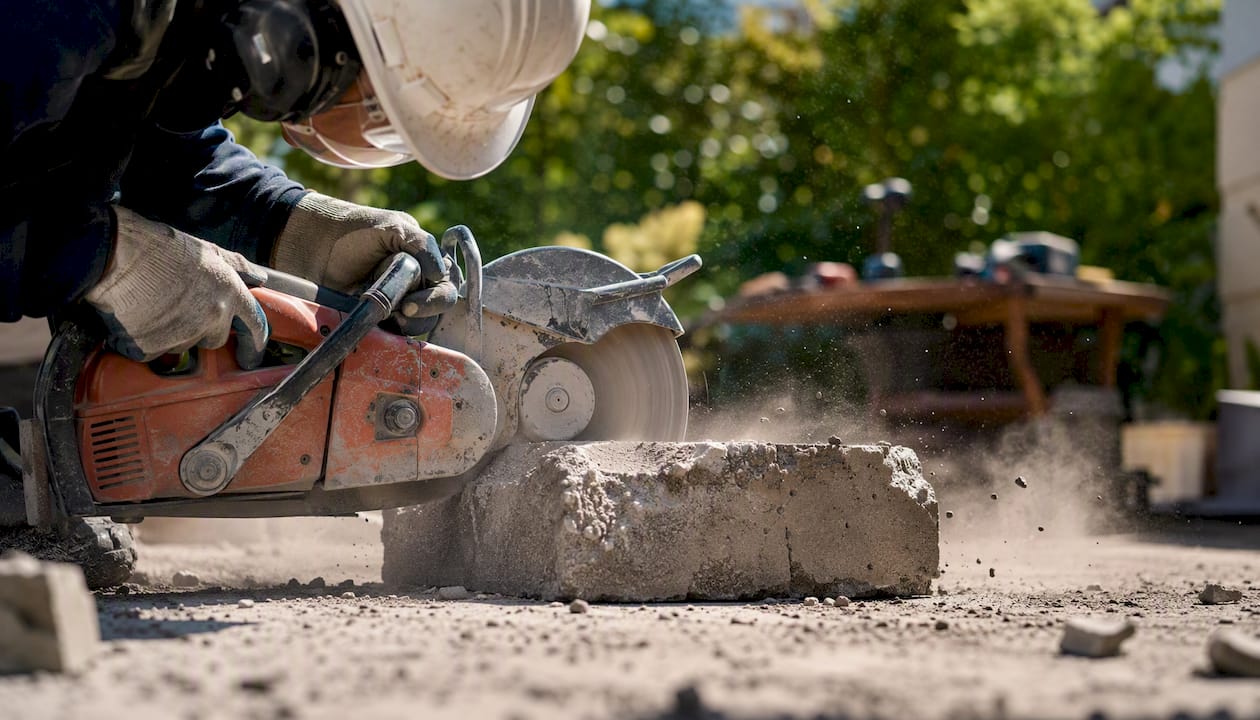
Pro Tip: When cutting or grinding concrete, wet the surface with a hose to suppress silica dust. Wear an N95 respirator (not just a dust mask) and safety glasses. Concrete dust contains crystalline silica, which causes serious lung damage with repeated exposure. The Home Depot's disposal guide specifically flags PPE as non-optional for this work.
Transport logistics and vehicle weight limits
Weight is the number that matters most when hauling concrete. According to industry weight data, solid concrete slab runs about 4,050 lbs per cubic yard, while broken rubble drops to roughly 2,025 lbs per cubic yard because of the air gaps between pieces. That difference matters a lot when you're loading a pickup.
| Material | Weight per cubic yard | Fits in a half-ton pickup? |
|---|---|---|
| Solid concrete slab | ~4,050 lbs | No (exceeds payload) |
| Broken concrete rubble | ~2,025 lbs | Marginal (well below 1 yard per trip) |
| Gravel (for comparison) | — | Borderline |
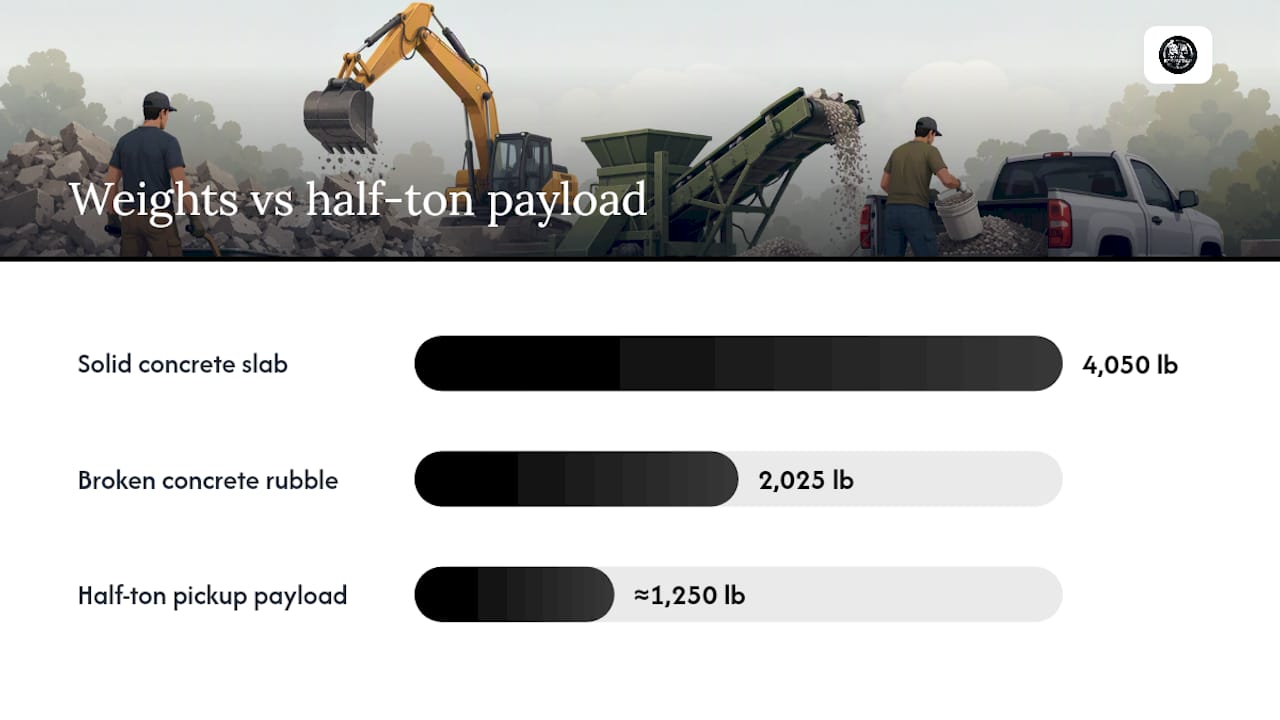
A standard half-ton pickup has a payload rating of roughly 1,000–1,500 lbs depending on the model. That means you can safely carry less than one cubic yard of broken rubble per trip. A three-quarter-ton or one-ton truck handles more, but always check your door-jamb sticker for the actual payload rating before loading.
A few transport rules that apply in every state:
- Cover your load with a tarp. Unsecured debris is illegal on public roads in most states and creates serious hazards.
- Don't stack material above the bed rails.
- Weigh your loaded truck at a public scale if you're unsure. Overloaded vehicles face fines and create liability if debris falls.
Lowe's disposal guidance also recommends distributing weight evenly across the bed and keeping heavier pieces toward the cab to avoid rear-axle overload.
What does concrete disposal actually cost?
Pricing varies by region, facility type, and whether you're hauling yourself or hiring out. Here are realistic ranges based on industry data.
| Disposal method | Typical cost range | Notes |
|---|---|---|
| Self-haul to recycler | varies by region | Some recyclers charge no tipping fee for clean concrete |
| C&D landfill tipping fee | varies by region | Higher for contaminated or mixed loads |
| 10-yard heavy-debris dumpster | varies by region | Usually includes 2–4 tons; overage at $50–$100/ton |
| Junk-haul service (full-service) | varies by region | Includes labor, loading, and disposal |
Industry cost guides note that many 10-yard rentals include 2–4 tons for concrete and charge $50–$100 or more per ton for overage, which is why confirming included tonnage upfront is so important.
What drives the price up:
- Distance to the nearest permitted facility.
- Contamination (paint, asbestos, chemicals) requiring a specialist disposal path.
- Rebar that must be cut and separated before the facility will accept the load.
- Fuel surcharges on haul services, especially for heavy loads.
- Overage tonnage on dumpster rentals when you underestimate weight.
For most homeowners, a single patio or driveway removal lands somewhere between a dumpster rental and a full-service haul, depending on how much labor you want to do yourself.
Can you reuse or give away concrete instead of hauling it?
Clean concrete has real value before it becomes waste. On-site reuse cuts disposal costs to zero and keeps heavy material out of the waste stream entirely.
On-site reuse ideas:
- Break slabs into flat stepping stones for a garden path or utility walkway.
- Use chunks as garden bed edging or retaining borders.
- Crush or stack rubble as a base layer under a new gravel driveway or shed pad.
- Stack larger pieces as informal retaining walls in low-traffic areas.
If you can't use it yourself, clean concrete is easy to give away. Post it on Facebook Marketplace, Craigslist, or Nextdoor as "free concrete rubble" and landscapers, farmers, and small contractors will often pick it up within days. Many are happy to haul it themselves if the pieces are manageable.
Reuse beats recycling on cost when the alternative is paying a tipping fee plus fuel. The math shifts if you'd need to rent equipment to break the concrete into usable sizes, or if the nearest recycler charges no tipping fee. Run the numbers before you commit to hauling.
Safety rules and legal requirements you need to know
Hazardous contamination
The U.S. EPA is clear: standard cured concrete is generally classified as non-hazardous solid waste. The classification changes the moment concrete contains lead paint, asbestos, or chemical contamination. Under RCRA (the Resource Conservation and Recovery Act), contaminated concrete must be handled and disposed of as hazardous waste, which means a licensed specialist, not a standard dumpster or recycler.
If your concrete is from a pre-1980 structure, test for asbestos and lead before breaking it up. Breaking contaminated concrete releases fibers and dust that are dangerous to you and anyone nearby.
PPE and dust control
- N95 respirator or half-face respirator with P100 filters when cutting, grinding, or breaking.
- Safety glasses or a full face shield.
- Heavy work gloves for handling sharp edges and rebar.
- Steel-toed boots.
- Wet the surface before and during cutting to suppress silica dust.
Legal and permitting notes
Illegal dumping of concrete on roadsides, vacant lots, or waterways carries fines in every U.S. state, and some localities require a permit even for legitimate fill use on private property. State environmental agencies like the South Carolina Department of Environmental Services publish C&D regulations and warn that improper fill or dumping can trigger enforcement action. Check your state's environmental agency website before using concrete as fill on any property.
This article is general information, not legal or environmental compliance advice. Confirm current rules with your state environmental agency or a licensed contractor before disposing of any concrete you suspect is contaminated.
Practical tips from junk-removal crews
Field experience changes how you approach a concrete job. Here's what pros do differently.
Before the crew arrives:
- Pre-cut slabs into pieces under 2 feet wherever possible. Smaller pieces load faster, reduce injury risk, and often lower your quote because the job takes less time.
- Stack broken pieces in one accessible area rather than leaving them scattered across the work zone.
- Separate any rebar, wire mesh, or metal on-site. Crews can handle it, but pre-sorting speeds the job.
- Take photos before calling for a quote: one wide shot showing the full volume, one close-up of any rebar or contamination, and one shot of the truck access path. Family Handyman's concrete removal guide specifically recommends photo documentation to reduce quoting surprises and speed on-site work.
Pro Tip: Schedule your hauler for early morning if possible. Crews are fresher, trucks aren't yet loaded from earlier jobs, and you're more likely to get same-day service during peak season.
Avoiding weight overages:
Pros estimate volume first (length × width × depth in feet, divided by 27 for cubic yards), then multiply by the weight-per-cubic-yard figure for broken rubble to get a rough tonnage. That number tells them whether a job fits a single truck or needs a second run, and it's the same math you should do before renting a dumpster.
Protecting your property during loading matters too. Concrete is abrasive and heavy. A good crew uses plywood sheets on driveways and lawns to prevent gouging, and they stage material in a way that doesn't require dragging chunks across finished surfaces.
Key Takeaways
Recycling clean concrete is almost always the cheapest and most environmentally responsible route — the key is preparing material correctly and knowing your local options before you haul.
| Point | Details |
|---|---|
| Recycle first | Self-haul clean concrete to a recycler for the lowest cost and least environmental impact. |
| Weight drives cost | Broken rubble weighs ~2,025 lbs per cubic yard; confirm dumpster tonnage limits before renting. |
| Prepare before drop-off | Remove rebar, separate contaminated pieces, and break slabs to facility size limits. |
| Contamination changes everything | Concrete with lead, asbestos, or chemicals is regulated under RCRA and needs specialist disposal. |
| Easyscrapofficial handles it | For same-day hauling in the Lawrence, Andover, Boston, Lowell, and Haverhill area, Easyscrapofficial provides insured concrete removal with free quotes. |
The part most guides skip
Most concrete disposal articles stop at "call a recycler or rent a dumpster," which is fine advice as far as it goes. What they underplay is the contamination question, and that gap causes real problems.
Homeowners breaking up a 1960s garage slab or a basement floor from a pre-1980 house are often working with concrete that was poured when asbestos-containing additives were common and lead paint was the standard finish on surrounding surfaces. The concrete itself may test clean, but the paint chips embedded in it or the asbestos-containing floor tile bonded to its surface change the entire disposal path. A recycler won't take it. A standard dumpster company shouldn't take it. And breaking it up without proper PPE puts you and your family at risk.
The practical takeaway: before you swing a sledgehammer at anything older than 1980, spend $30–$50 on a mail-in asbestos and lead test kit. If it comes back clean, proceed with the recycler-first approach. If it doesn't, the money you save by skipping the specialist is not worth the liability or the health risk.
The other thing guides understate is how much the weight math matters. People consistently underestimate how heavy a "small" concrete job is. A 10×10 patio slab at four inches thick is roughly 1.2 cubic yards of solid concrete, which is close to 5,000 lbs. That's not a pickup-truck job. Running the numbers before you rent or haul prevents overloaded vehicles, rejected loads, and overage fees that can double your disposal cost.
Easyscrapofficial takes care of the heavy work for you
Hauling concrete yourself is doable for a small load, but most homeowners and contractors reach a point where the weight, the logistics, and the facility rules make hiring out the smarter call. That's exactly where Easyscrapofficial comes in.
Easyscrapofficial provides local concrete and heavy-debris hauling across Lawrence, Andover, Boston, Lowell, and Haverhill, with an insured crew that handles the loading, transport, and proper disposal routing for you. Same-day service is available, and quotes are free. The crew knows which local facilities accept concrete, what the current tipping fees are, and how to handle jobs that involve rebar, mixed debris, or contamination questions. No guessing, no surprise weight overages, no renting equipment you'll use once.
If you have a driveway, patio, foundation section, or mixed renovation debris that includes concrete, book your removal with Easyscrapofficial today. You can also browse the full range of junk removal and hauling services to see what else the crew can clear in a single visit.
Useful sources and where to check local rules
Regulations, tipping fees, and facility hours change. Always call ahead and verify with the primary source before hauling.
- U.S. Environmental Protection Agency
- Concrete Recycling & Disposal | Texas Disposal Systems
- How to Dispose of Concrete: 6 Methods + Costs (2026)
- How to Get Rid of Concrete | Family Handyman
- How To Dispose of Concrete | The Home Depot
- How To Dispose of Concrete | Lowe's
- How Do I Get Rid Of Concrete? | OCRRA
- Construction & Demolition Debris | South Carolina Department of Environmental Services
Call any facility before you haul to confirm current hours, accepted materials, piece-size limits, and fees. What's posted online is often outdated.