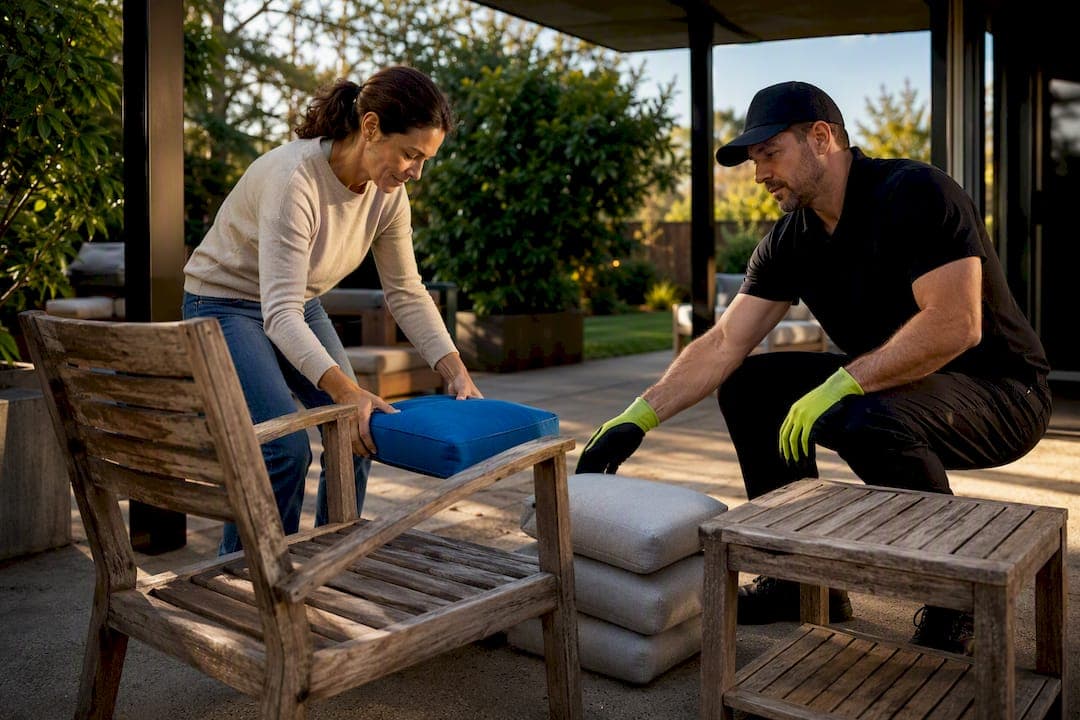
If your patio set is still usable, donate or sell it. If it's metal, recycle it. If it's a mixed pile of broken plastic, rotted wood, and moldy cushions, that's when municipal bulk pickup or a paid crew like EasyScrap earns its cost.
TL;DR:
- Metal furniture is the easiest to recycle, especially if a magnet sticks to the frame, indicating steel or iron.
- Plastic furniture with resin codes #2 or #5 may require specialty drop-off or manufacturer take-back programs to ensure proper recycling.
- Untreated wood can sometimes be yard-waste, but treated or painted wood typically needs disposal or upcycling rather than recycling.
- Bulk pickup services are convenient but require careful disassembly and timing, with some exclusions for treated wood or glass.
- Hiring a junk removal service is ideal for heavy, mixed, or hazardous furniture, as they sort for donation and recycling first before landfill disposal.
Table of Contents
- What Are Your Outdoor Furniture Disposal Options?
- How Do You Inspect and Prepare Furniture for Disposal?
- Recycling Outdoor Furniture by Material: Metal, Plastic, Wood, and More
- How Do Municipal Bulk Pickup Programs Work?
- When Should You Hire a Junk Removal Service?
- What Homeowners Get Wrong About Outdoor Furniture Disposal
- Book Furniture Removal That Skips the Landfill First
- Where to Check Local Rules and Find Recyclers
- Sources
What Are Your Outdoor Furniture Disposal Options?
Every homeowner facing outdoor furniture disposal has roughly four paths, and the right one depends on condition, material, and how fast you need it gone.
- Donate or sell: Works for anything sturdy and clean; for helpful advice on donation and community reuse programs, see how to give away unwanted furniture. Charities and buy-nothing groups want chairs and tables that don't need repair, and several accept free pickup if you call ahead.
- Municipal bulky-item pickup: Free or low-cost in most towns, but scheduled on a fixed day and often requires you to break furniture down first.
- Material-specific recycling: Scrap yards take metal frames readily. Plastic and treated wood are harder and usually need a specialty drop-off.
- Professional junk removal: Costs money, but it's same-day in many areas and handles heavy, mixed-material sets without you lifting a thing.
- Landfill drop-off: The last resort. It's legal almost everywhere but it's the option with the worst environmental payoff, so treat it as a backup, not a default.
How Do You Inspect and Prepare Furniture for Disposal?
Before you decide anything, walk around the piece and check it like you're buying it used. That five-minute inspection determines whether it's worth donating, recycling, or hauling to the curb.
- Test stability. Wobbly legs or a cracked frame usually mean repair isn't worth the effort.
- Check for structural damage. Rust holes in metal or splitting wood joints push an item toward recycling instead of resale.
- Inspect fabric and cushions. Faded is fine for donation; moldy or bug-infested is not, ever.
- Look for pest or mold signs. Any hint of mildew smell or insect activity means it goes straight to disposal, no donation attempt.
- Decide your threshold. Solid frame and clean fabric: donate or sell. Solid frame, ruined fabric: recycle the frame, toss the cushions. Everything failing: skip straight to pickup or removal.
Once you've made the call, prep it. Pull off cushions, wipe down and dry the frame, and disassemble anything that unbolts. Bag small hardware separately so it doesn't get lost or left on the ground. Stepwise disassembly by material genuinely improves your recycling odds, and a quick photo of the item's condition makes donation or resale listings faster to post.
Pro Tip: Photograph furniture from three angles before you touch it. Donation centers and buyers almost always ask for a picture, and you'll want proof of condition if a pickup driver questions what they're loading.

Recycling Outdoor Furniture by Material: Metal, Plastic, Wood, and More
Outdoor furniture recycling options split hard along material lines, and knowing which bucket your piece falls into saves a wasted trip.
- Metal. Run a magnet over the frame. If it sticks, it's steel or iron and nearly any scrap yard will take it, often for cash. Aluminum won't stick but is still valuable to yards that separate nonferrous metal. Metal patio furniture is the easiest category to recycle in almost every U.S. market.
- Plastic. Flip the piece and look for a resin code, usually #2 or #5. Even with an accepted code, size is the real problem: curbside programs are built for bottles and tubs, not five-foot chairs, so most large plastic furniture gets rejected at the curb. Search by ZIP code on Earth911 for a specialty drop-off, and know that mail-back or manufacturer take-back programs exist but often charge shipping and handling fees.
- Wood. Untreated, unpainted wood can sometimes go to yard-waste or wood-chip programs. Treated or painted wood is a different story. It's frequently excluded from recycling altogether, so repair, upcycle, or bulky-waste disposal are your realistic options.
- Cushions and textiles. Donate if dry, unstained, and odor-free. Toss immediately if you see mold or any sign of bed bugs. Some textile recyclers will take fabric that's simply worn out but structurally intact.
- Glass tabletops. Tape a large X across the surface before moving it so it doesn't shatter into loose shards. Intact glass can sometimes be donated with the frame; broken glass generally goes to a glass recycler, never in with mixed curbside recycling.
How Do Municipal Bulk Pickup Programs Work?
Most cities run a scheduled bulky-item collection, and it's often the cheapest way to get rid of patio furniture you can't donate. Gainesville, Florida, for example, collects bulk items on the same weekly day as regular trash with no appointment needed, but items must be curbside by the required time specified by your local waste management authority and large pieces may need to be broken down first. That timing detail trips up more homeowners than any other rule in this guide.
Before you set anything out:
- Check your city or county Public Works page for the exact collection day and any disassembly requirements.
- Confirm whether treated wood, glass, or certain plastics are excluded from bulk pickup in your area.
- Note whether your town uses a sticker or call-ahead system instead of automatic weekly service.
- Find your nearest transfer station and its hours in case you miss the scheduled pickup.
Municipal recycling guides spell out exactly what's accepted, and checking one before you drag furniture to the curb beats guessing and getting a citation or a missed pickup.
When Should You Hire a Junk Removal Service?
Hiring removal makes sense when a set is too heavy to move alone, mixed enough that no single recycling stream takes all of it, or when you simply need it gone today. Most companies quote by truck volume rather than a flat per-item rate, and stairs, long carries, or on-site disassembly can add to that estimate. Booking usually runs through a quick call or online form, with same-day slots available in many local markets.
Before you book anyone, ask:
- Do they donate or recycle first, or does everything go straight to a landfill?
- Are they insured, and will they show proof if asked?
- What's their actual coverage area, and do they charge extra outside it?
- Will they take wet cushions, glass, or anything flagged as hazardous?
Pro Tip: A provider that asks about your furniture's condition before quoting you is usually one that's sorting for donation, not just landfill runs.
What Homeowners Get Wrong About Outdoor Furniture Disposal
The mistakes are almost always the same three. People skip the resin code check and haul a plastic set to the curb, only to have it left behind. They leave cushions out in the rain, turning something donatable into something moldy and unusable within a week. And they forget glass tabletops entirely, which means a crew or a recycler shows up unprepared for a hazard nobody mentioned.
Some junk removal services sort for donation and recycling first on every job, so a crew arriving at your driveway isn't just there to dump your old set. For anything more complicated, like bed-bug-affected furniture or heavy concrete planters, our posts on furniture removal prep and concrete disposal cover the edge cases this guide doesn't.
— Easy
Book Furniture Removal That Skips the Landfill First
Junk removal services provide an alternative to spending a Saturday hauling a broken patio set to different drop-off sites. Insured crews handle the heavy lifting, sort for donation and recycling before anything hits a landfill, and may offer same-day pickup depending on your schedule.
This is the right call when you've got a heavy metal-and-glass set too awkward to move alone, a mixed pile of rotted wood and cracked plastic that no single recycler will take whole, or you just need the yard cleared before a weekend deadline. We quote by the job, not by guesswork, and free estimates mean you know the cost before we show up. Get a free quote for furniture removal and pick a pickup window that works for you.
Where to Check Local Rules and Find Recyclers
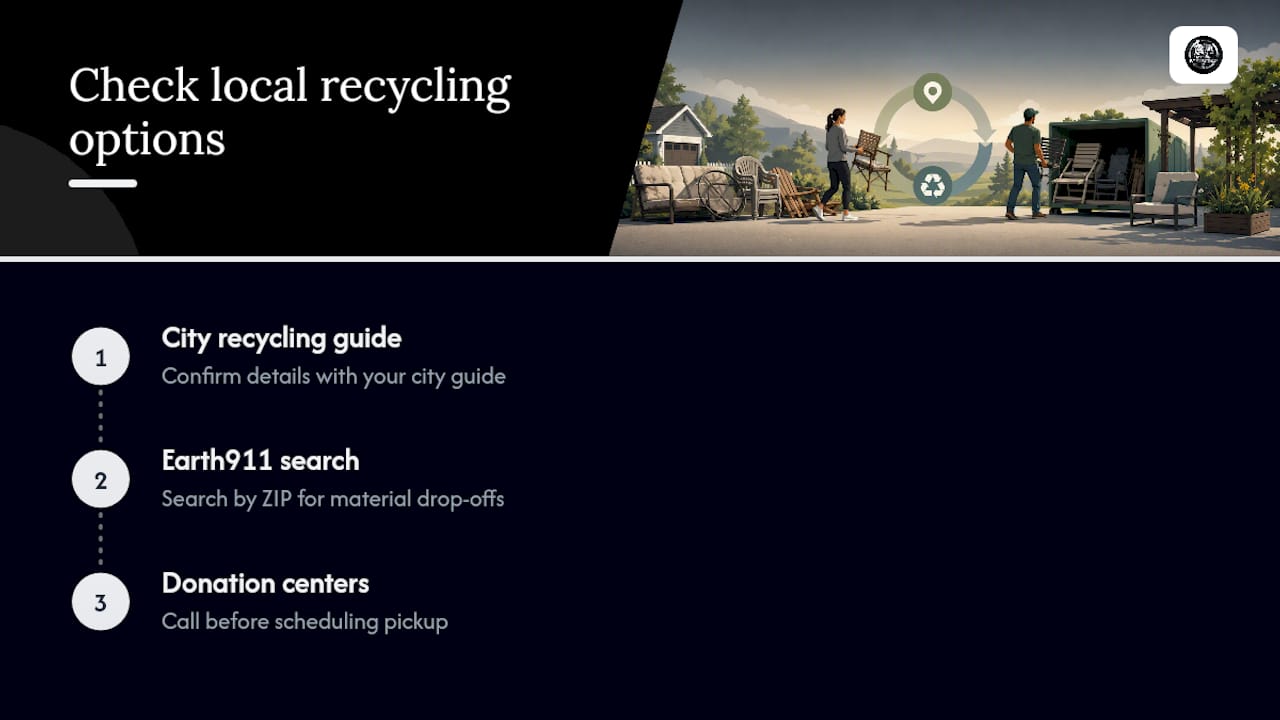
Confirm details with your city recycling guide, search Earth911 by ZIP code for material drop-offs, and call local donation centers directly before scheduling pickup.
Sources
- Bulk Item Collection | City of Gainesville
- Recycling Guide | Dakota County (municipal example)
- Recycling mystery: patio furniture | Earth911
- How to Dispose of Old Patio Furniture: Easy & Eco-Friendly Tips | Yardilo