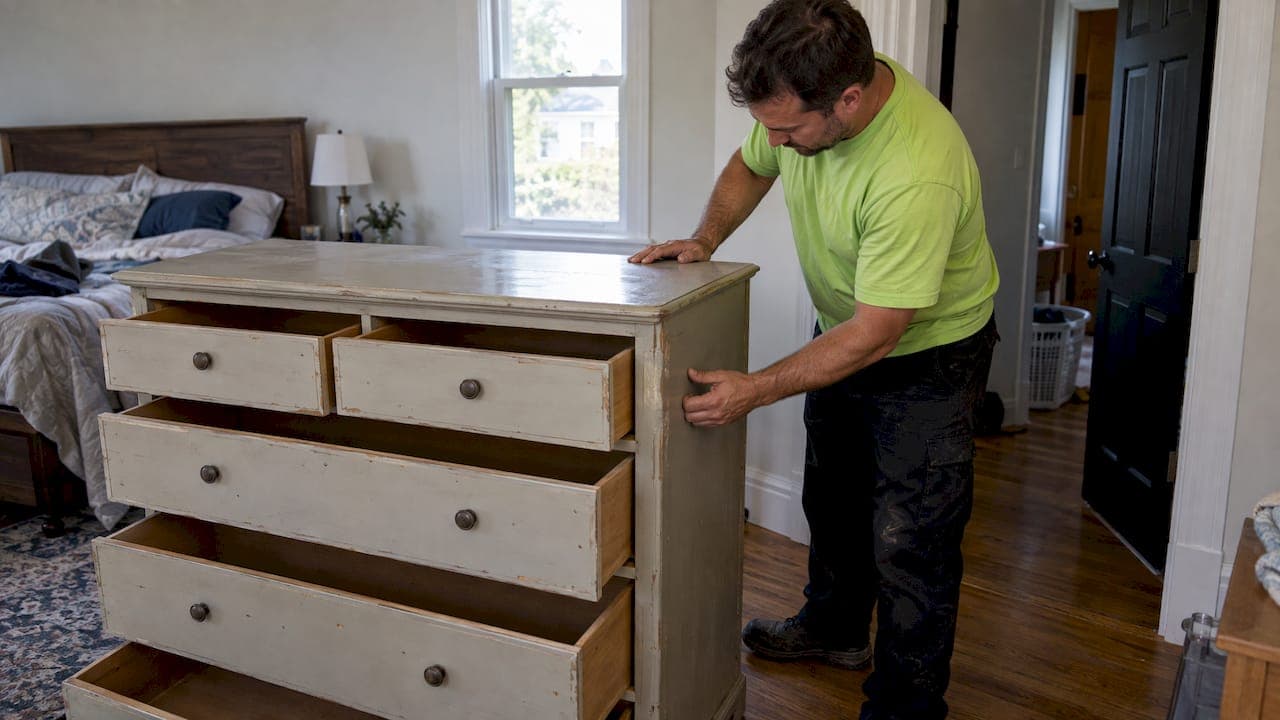
The fastest ways to dispose of a dresser are donating or giving it away if it's in good shape, or using bulky-item pickup, a transfer station, or a paid junk removal crew if it isn't. Good condition often means free. Damaged or urgent usually means paying a hauler. Rules vary by town, and illegal dumping can bring steep fines.
TL;DR:
- Charities commonly reject dressers with broken frames, water damage, missing drawers, stains, or odors; confirm acceptance and pickup availability before transporting one.
- Bulky pickup programs set eligibility, tags, placement times, and disassembly rules, so confirm local requirements before leaving a dresser curbside.
- Transfer stations may charge $20 to over $100 per large item or load, and may require identification, proof of residence, and unloading the dresser yourself.
- Solid wood is easier to donate or recycle, while particleboard is often refused; check hazardous waste rules if paint or chemical residue is present.
- Leaving furniture curbside against local rules can count as illegal dumping, with fines exceeding $1,000; check collection instructions before setting it out.
Table of Contents
- Which disposal route fits your dresser?
- Can you donate a dresser?
- How do you sell or give away a dresser quickly?
- How does curbside and municipal bulky pickup work?
- What does a transfer station drop-off cost?
- Can you recycle a dresser?
- How should you prepare a dresser for pickup?
- Our take: match the route to your dresser and your deadline
- Need your dresser gone? We'll haul it away
- FAQ
- Sources
Which disposal route fits your dresser?
- Donate: Free if accepted. The dresser needs to be clean and undamaged, and pickup is sometimes offered for larger donations.
- Sell or give away: Often the fastest free removal. Expect a lower price when you want someone to collect it quickly.
- Municipal bulky pickup: Scheduled through your city or hauler. It may be free or fee-based, with set-out rules.
- Transfer station drop-off: Usually a fee, and you may need ID or proof of residence. You do the lifting.
- Junk removal service: A convenient haul-away option for heavy or damaged dressers, or when you need it removed quickly.
Can you donate a dresser?
Yes, if it's in decent shape. Habitat for Humanity ReStores typically accept dressers, nightstands, and chests that are clean and free of rips, stains, or odors. They refuse pieces that are broken, water-damaged, missing drawers, or showing pet damage, because they pay to dispose of anything they can't resell. Solid wood pieces are the easiest to place.
Pickup is usually reserved for larger donations and must be scheduled ahead. For a single dresser, ask whether drop-off or pickup is available.
- Wipe it down and photograph it from several angles.
- Measure width, height, and depth.
- Call or use the charity's online portal to confirm they want it.
- Ask whether pickup is available for your item, and book a time.
Pro Tip: Check that every drawer is present and slides smoothly before you call. Missing drawers can lead to a refusal.
How do you sell or give away a dresser quickly?
A local listing is often the fastest way to get a dresser out of your house without paying anyone. Post accurate measurements, honest photos that show scratches, and a clear "pickup only" line. A free listing usually moves within days, while a low asking price for quick pickup brings in buyers who show up with a truck.
- List exact dimensions so buyers know it will fit their space and vehicle.
- Photograph every flaw so nobody argues at your door.
- Set a pickup window and stick to it.
- Have the dresser by the entry or garage so strangers don't walk through your home.
- Meet in daylight and keep a second person nearby for heavy lifting.
How does curbside and municipal bulky pickup work?
Most cities and haulers run a bulky-item program, but the details differ. Nashville's bulky item collection shows how local programs handle dressers, and some cities offer free collection for limited items while others require pre-purchased tickets or permits. Minneapolis's large item collection is an example of strict set-out rules and tagging.
- Contact your city or waste hauler and ask whether dressers qualify.
- Ask about fees, since some cities include pickup and others charge per item.
- Learn the set-out time, plus any tag or ticket you must display.
- Place the dresser where the rules say, not in the street or on a neighbor's property.
- Confirm before you take it apart. Disassembly can help with size limits, but it can change how a program classifies the load, and a dresser in pieces may be refused as construction debris.
Some cities also publish plain curbside rules, like NYC's furniture guidelines, which set out when certain large items may go out. A missed rule can mean a missed pickup. Our guide to bed frame disposal covers the same pitfalls.
What does a transfer station drop-off cost?
Transfer stations accept large furniture, but they typically charge. Fees vary widely: some towns charge flat rates from $20 to $100+ per large furniture item or load, while others charge by vehicle type or weight, according to Nashville's waste services. A published example is the Mattapoisett transfer station fee schedule, which lists vehicle-based minimums such as $20+ for cars and $50+ for pickups, plus per-item charges for large pieces.
- Bring photo ID and proof of residence if your town asks for it.
- Expect to unload the dresser yourself.
- Check whether the station limits vehicle size or items per visit.
- Look for periodic bulk drop-off days. Some cities, like O'Fallon, Missouri, run them with per-household limits and ID checks.
Can you recycle a dresser?
Sometimes, and the material decides. A dresser's construction is the most important factor: solid wood holds resale value and is often accepted by charities, while particleboard is fragile and frequently rejected by donation centers, as Habitat for Humanity Salt Lake's drop-off guidance explains.
- Solid wood: The best candidate for reuse or wood recycling.
- Particleboard or flat-pack: Hard to donate and harder to recycle, so it often goes to the landfill stream.
- Mixed materials: Furniture combines wood, metal, foam, and fabric, which complicates recycling. The EPA's bulky items guide notes that many parts need disassembly and specialized processing.
- Local options: Oregon Metro's recycler finder is one example of a regional directory for wood or metal processors, though availability varies by area.
Furniture recycling infrastructure is more limited than mattress recycling programs, which exist in some states.
How should you prepare a dresser for pickup?
A little prep prevents rejections and keeps your cost down.
- Measure width, height, and depth, then photograph it from several angles.
- Note damage, stains, or odors, since these can lead to a refused donation.
- Remove the drawers and tape them shut or carry them separately.
- Bag small parts like knobs and screws in a labeled bag taped to the frame.
- Wrap the body in a moving blanket or old sheets to protect floors and walls.
- Call ahead to ask whether the hauler wants it intact and what time to set it out.
Pro Tip: Take a photo of the dresser at the curb after you set it out. If a pickup is missed or disputed, you have proof you followed the rules.
If the dresser has paint or chemical residue on it, check your local household hazardous waste resources instead of the regular bulky stream, as EPA waste guidance advises.

Our take: match the route to your dresser and your deadline
If the dresser is in good shape and you have a week or two, donate or sell it first. If it's damaged or heavy, or you need it removed quickly, hire a service. Before you leave anything at the curb, read your city's bulky rules, because abandoned furniture can count as illegal dumping and fines can exceed $1,000. When you want guaranteed removal, an insured local hauler saves time and risk.
— Easy
Need your dresser gone? We'll haul it away

When a dresser is too heavy, too damaged, or too urgent for the other routes, our crew handles it. We offer junk removal, and we donate and recycle whenever possible. Our furniture removal service fits a one-piece job, and our junk removal service covers bigger cleanouts.
- We haul away dressers, couches, mattresses, and other furniture.
- Our crew is insured and does the heavy lifting.
- We serve Lawrence, Andover, Boston, Lowell, and Haverhill.
- Quotes are free, and pricing is available on request.
If you're also clearing a whole property, this partner guide on selling a hoarder house walks through your options. Book your dresser pickup with us today.
FAQ
How do I dispose of an old dresser?
Start with reuse: donate or sell it if it's clean and undamaged. If it isn't, schedule a bulky-item pickup with your hauler, drop it at a transfer station, or hire a junk removal service. Check local rules first so you avoid fines.
Where can I dispose of furniture for free?
Charities and local listings are the usual free routes when the piece is in good condition. Some cities also offer free bulky collection for limited items, and certain towns hold bulk drop-off days. Fees and eligibility vary by location.
Can I throw away furniture at the dump?
Often yes, but usually for a fee. Transfer stations commonly charge per item or per vehicle, and you may need ID or proof of residence. Call ahead to confirm accepted items and hours.
How do I get rid of old wooden furniture?
Solid wood has the most options: donation, resale, or wood recycling through a local processor. Particleboard is harder to place. If it's worn out, a bulky pickup or junk removal service is the simplest exit.
Sources
- Nashville
- Large Item Collection - City of Minneapolis
- Bulky Items Quick Start Guide
- TOWN OF MATTAPOISETT, TRANSFER STATION