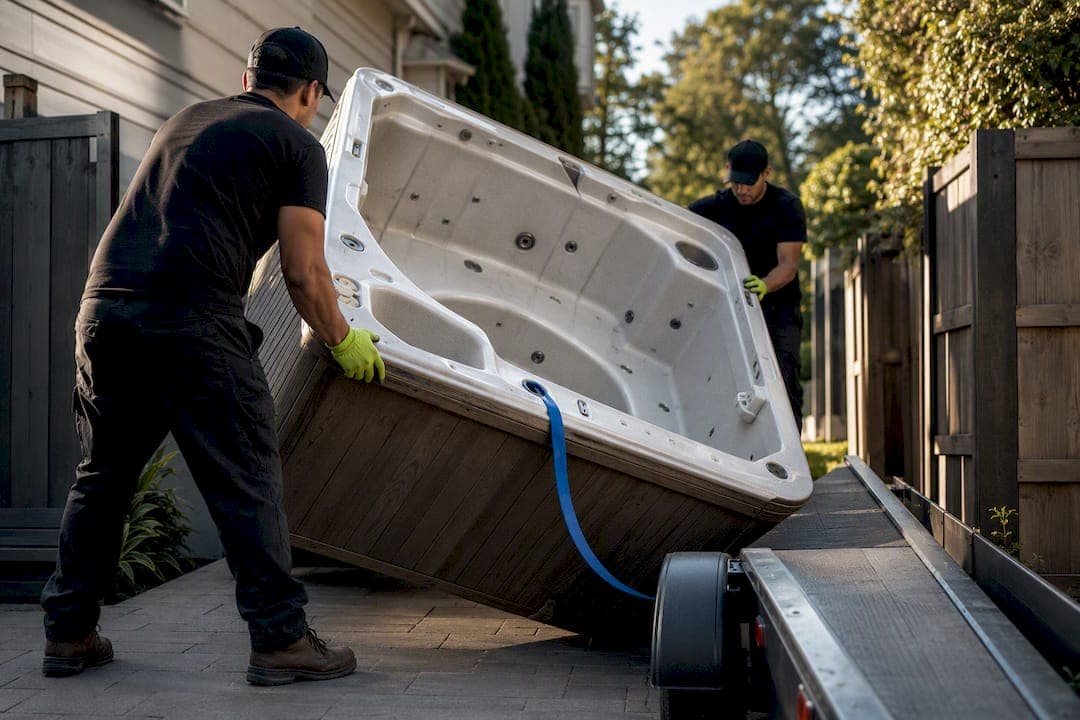
A working hot tub that still holds water should be sold or listed free for pickup. One that runs but you just don't want any more goes to a giveaway platform or trade-in program. A broken, leaking, or hardwired unit almost always needs paid professional removal. A cracked shell with no working parts is the only real candidate for DIY cutting and hauling, and even then, access and electrical safety decide whether that's actually a good idea.
TL;DR:
- A functioning hot tub worth selling must be fully operational, leak-free, and generally in good condition, with recent covers and no major cracks or electrical issues.
- Professional removal typically costs between $300 and $700, with access, size, and complexity of disassembly being the main cost drivers.
- DIY dismantling is only cost-effective if the tub is fully drained, easily accessible at ground level, and you have or can rent proper cutting tools with safety precautions.
- Most materials, such as pumps, motors, and wiring, can be scrapped for resale value, but the shell usually ends up in landfill because it is not recyclable.
- Accurate upfront assessment of access and electrical connections, along with proper preparation, can prevent unexpected charges or delays in the removal process.
Table of Contents
- Which option fits your hot tub: sell, give away, pay for removal, or cut up yourself
- Professional removal: step-by-step process, cost drivers and questions to ask
- DIY dismantling: tools, safety steps, and a realistic timeline
- Recycling, scrapping, donation and repurposing: what to keep and how to route materials
- Preparing your property for removal: drain, disconnect, and measure access
- When to hire a pro vs attempt DIY: quick checklist
- EasyScrap's take: what we do differently
- Hire EasyScrap for hot tub removal: how to get a quote
- Sources
Which option fits your hot tub: sell, give away, pay for removal, or cut up yourself
Start by being honest about what you're dealing with. A tub that heats, jets, and holds water without leaking is worth real money to someone else, even a used one. A tub that runs but is outdated or the wrong size for your new patio plan is still valuable, just less so. Anything with a cracked shell, a dead pump, or a control panel that won't power on stops being a resale item and becomes a removal problem.
- Sells fast: working tub, no leaks, recent cover. List it on Facebook Marketplace or Craigslist with dimensions, seating capacity, and clear photos of the shell and equipment bay. Expect a range depending on brand and age.
- Give it away: functional but unwanted. Buyers who'll rent equipment to move it themselves show up quickly for free listings, especially if you mention it's still running.
- Pay for removal: broken, leaking, or hardwired into a 240-volt circuit. This is the most common outcome for tubs over eight years old, and typical removal costs run $300 to $700 depending on access and disposal fees.
- DIY cut-up: no working parts, easy ground-level access, and you own or can rent a reciprocating saw.
One thing that changes the calculation: an electrician visit. If you're not sure whether the tub is truly dead or just tripped a GFCI breaker, a $75-$150 diagnostic call can save you from scrapping something that only needed a new heater element.
Professional removal: step-by-step process, cost drivers and questions to ask
Reputable companies ask for photos before quoting, not out of caution, but because access is the single biggest variable in pricing hot tub jobs. A tub sitting on a ground-level patio with a clear gate path costs far less to remove than one wedged into a deck corner up a flight of stairs.
The on-site process follows a consistent sequence:
- Confirm the tub is fully drained, or drain it on arrival if it's small enough.
- Verify power is off at the breaker, and check for a hardwired 240-volt connection.
- Bring in an electrician on the spot if the circuit needs professional disconnection, rather than guessing.
- Cut the acrylic or fiberglass shell into manageable sections.
- Pull motors, pumps, heater elements, and copper wiring for scrap.
- Load everything onto the truck and sweep the site clean.
Crews typically finish a standard above-ground acrylic tub in 60 to 90 minutes with a three or four person team; larger swim-spa units can take two to three hours.
Cost drivers stack in a predictable order: base labor and disposal, then access (stairs, narrow gates, tight side yards), then deck integration (is the tub built into a deck that needs partial demo, a task specialized companies like Barnes Demolition handle expertly), then size and weight. Most quotes in the $300 to $700 range assume reasonable ground-floor access; expect the high end or above it if a crew has to hand-carry pieces around a fence line or through a house.
Pro Tip: Ask two questions before you book anyone: is the dump or tipping fee already included in the quote, and where do the cut pieces actually go? Vague answers to either usually mean a surprise invoice later.
Also confirm insurance and ask how long they've been doing hot tub jobs specifically, since general junk crews sometimes underestimate the electrical step.
DIY dismantling: tools, safety steps, and a realistic timeline
Cutting up your own hot tub is doable, but the math is less generous than most people expect. Rental saws, a truck or trailer, and a landfill tipping fee eat into the savings fast.
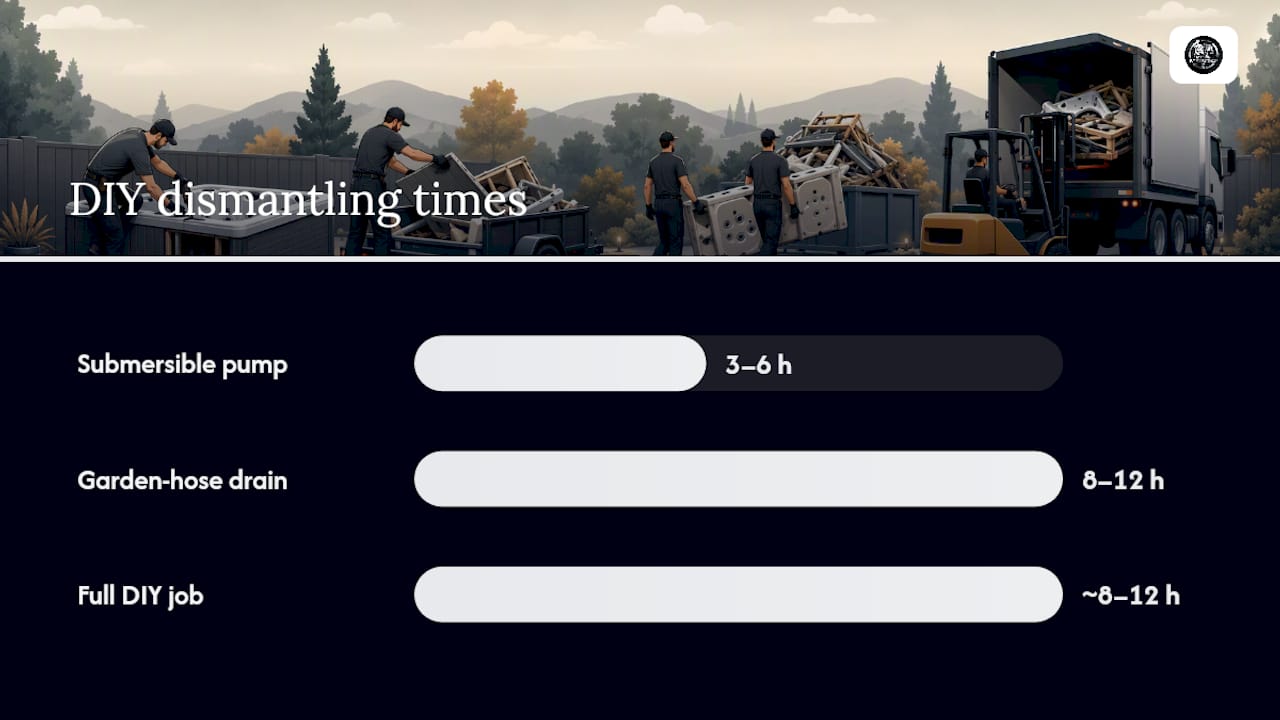
Drain it first, and drain it the day before. A submersible pump clears a typical 500-gallon tub in three to six hours; gravity draining through a garden hose fitting takes eight to twelve. Skipping this step is the single most common DIY mistake, because a full tub weighs thousands of pounds more than an empty one and makes cutting dangerous.
Statistic to know: homeowners who go the DIY route typically save only $150 to $300 compared to a professional quote, once rental gear and disposal fees are counted. That's a real number to weigh against a full weekend of physical labor.
Electrical safety comes next, and it's non-negotiable. Turn off the breaker before touching anything. If the tub is hardwired rather than plugged into a standard outlet, call a licensed electrician to disconnect the circuit. Do not attempt this yourself.
Once power is confirmed off and the tub is dry:
- Gather a reciprocating saw with metal and wood blades, safety glasses, cut-resistant gloves, and a dust mask for fiberglass particles.
- Cut the shell into sections small enough for two people to carry.
- Separate the metal frame, motor, pump, and wiring from the acrylic shell as you go.
- Load pieces into a rented trailer or pickup, and confirm your local transfer station will accept the cut sections before you drive there.
Budget for tool rental ($40-$80 for a day), a trailer or truck rental if you don't own one, and a tipping fee that varies by facility. Total time for an average tub, including draining, runs a full day, not an afternoon. If access is tight or the tub sits on a deck you also want to keep intact, DIY savings shrink fast against the risk of a dropped saw blade or a strained back.
Recycling, scrapping, donation and repurposing: what to keep and how to route materials
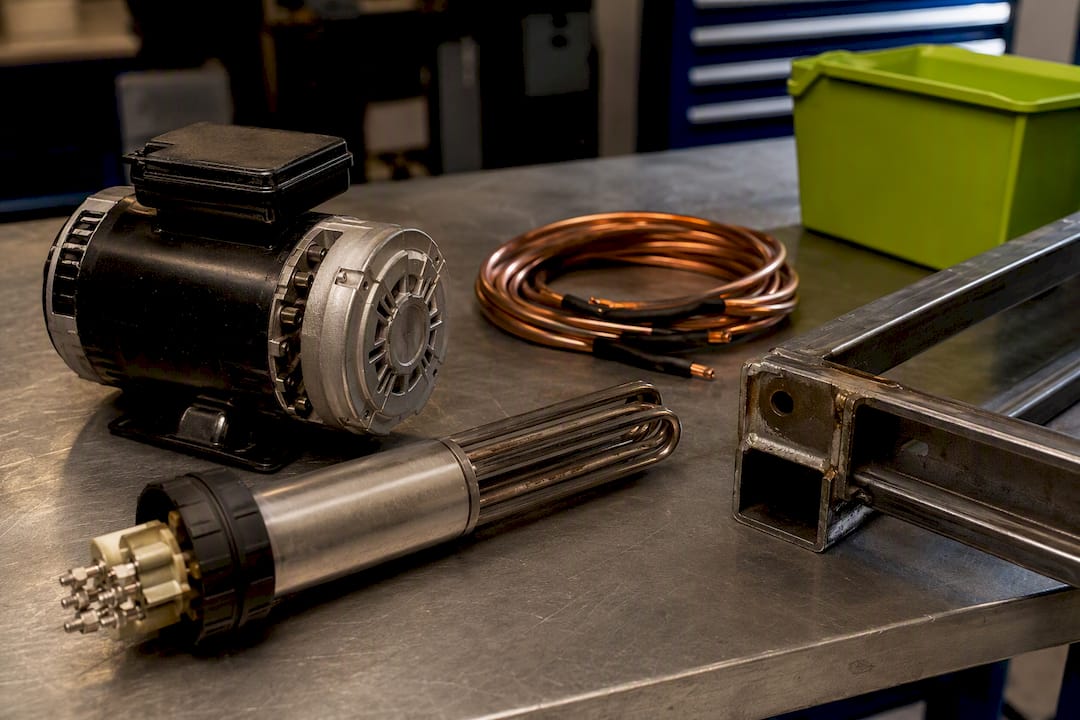
True recycling here is narrower than most people assume. Motors, pumps, heater elements, and copper wiring have real scrap value, and pulling them out before disposal can offset $50 to $150 of your total cost depending on local metal prices. The steel frame underneath the shell is also scrap-worthy.
The shell itself is the disappointment. Acrylic and fiberglass shells, along with the foam insulation packed underneath, typically aren't recyclable and end up in construction-and-demolition waste streams or landfill. Professional crews separate the valuable metal from the shell specifically because the shell has no scrap credit and the metal does.
Where materials actually go:
- Scrap yard: pumps, motors, heater elements, copper wiring, steel frame components.
- C&D or landfill: acrylic/fiberglass shell, foam insulation, wood skirting that's rotted or damaged.
- Donation: intact wood skirting or usable jets and covers, if a local reuse center accepts them.
If the tub still works, resale or donation beats scrapping every time, but be realistic about logistics. Moving a functional tub requires at least two strong people, a dolly, and a vehicle that can handle the weight, so screen buyers for that before agreeing to a free pickup. Some homeowners repurpose an empty shell as a raised garden bed or a stock tank, though that only works with structurally sound acrylic and a lot of drilled drainage holes.
Preparing your property for removal: drain, disconnect, and measure access
Good prep is the difference between a quote that holds and one that balloons on removal day.
- Drain the tub the day before your appointment. Submersible pump: three to six hours. Gravity drain: eight to twelve.
- Confirm the breaker location and shut off power at least a day ahead. If it's hardwired, schedule an electrician before the removal crew arrives.
- Walk the exit path yourself, measuring gate widths, deck stairs, and any tight turns, then photograph the whole route.
- Send those photos and measurements to whoever you're getting quotes from.
Crews that know the access ahead of time price accurately the first time. Crews that discover a narrow side gate on arrival often need to charge more or reschedule.
When to hire a pro vs attempt DIY: quick checklist
- Hire a pro if: the tub is hardwired, it's built into or surrounded by a deck, access involves stairs or a narrow gate, or you can't physically lift and carry cut sections.
- DIY if: the tub sits at ground level with a clear path, it's fully dead electrically (confirmed, not assumed), and you're comfortable running a reciprocating saw.
- Expect: professional removal runs $300–$700 and takes under two hours on-site; DIY saves roughly $150–$300 but costs a full day and real physical risk.
EasyScrap's take: what we do differently
Most quotes fall apart because nobody checked access or the electrical setup beforehand. Easyscrapofficial prices from photos first, keeps insured crews on every job, and routes scrap metal and usable items to recycling or donation whenever the material allows it.
— Easy
Hire EasyScrap for hot tub removal: how to get a quote
There's a real cost to guessing on this job yourself: a rented saw, a trailer, a tipping fee, and a full weekend, for savings that often land under $300. If you'd rather skip that math, Easyscrapofficial's hot tub removal service handles the whole sequence: drain coordination, an electrician call if your tub is hardwired, cutting and dismantling, and hauling everything to the right disposal or recycling stream.

To get an accurate quote, have a few things ready: photos of the tub from a couple of angles, a photo or description of your exit path (gates, stairs, deck edges), rough dimensions, and whatever you know about the electrical connection. That's usually enough for us to price the job without a surprise on removal day. Insured crews, free quotes, and same-day availability in some markets make this the faster route compared to renting gear and burning a weekend. Get in touch through Easyscrapofficial's junk removal booking page and we'll walk you through next steps.
Sources
- Hot tub removal is the single hardest cleanout item on a residential property | Titan Group
- How to Get Rid of an Old Hot Tub (Sell or Remove) - Commonplace
- Disposing of an Old Hot Tub: Removal Options and Recycling | Cal Spas