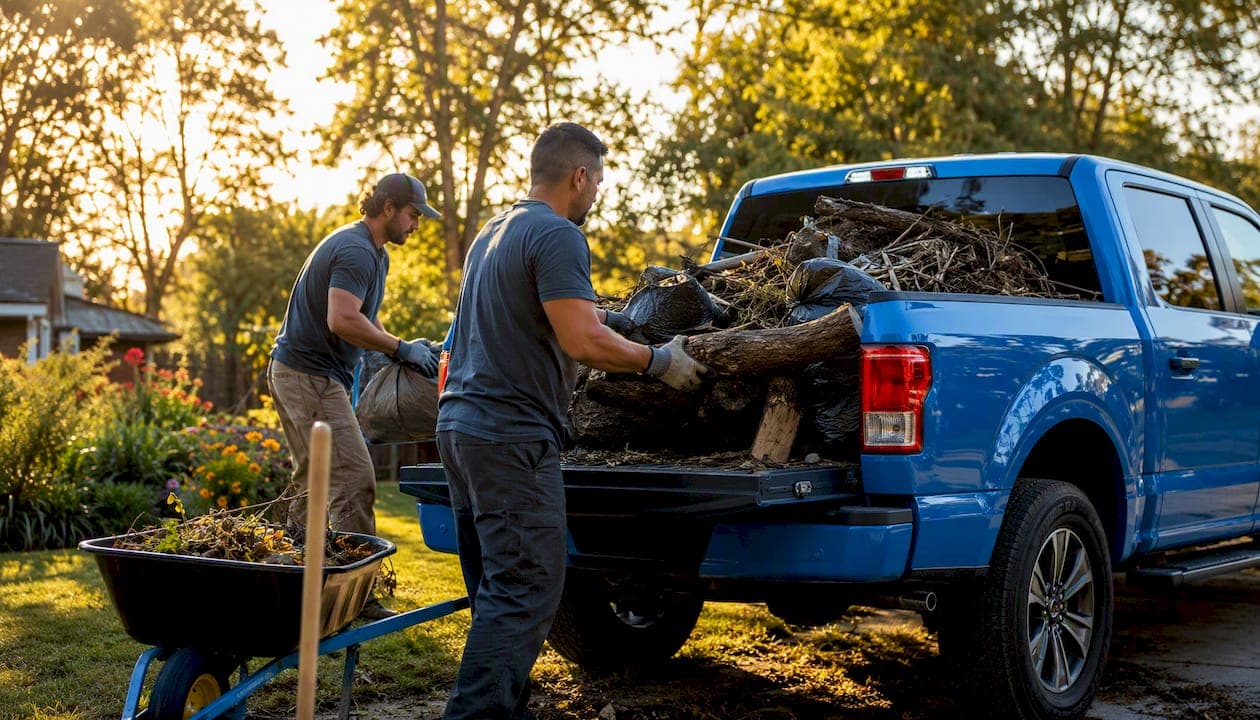
Hire a paid yard-waste disposal crew when your project involves heavy logs, stumps, multiple cubic yards of brush, or any job where safety or time is a real constraint. According to Thumbtack, the national average cost for yard waste removal runs $155–$368, with simple jobs starting near $88 and large cleanups reaching $745 or more. For most homeowners and property managers, the math is straightforward: a crew loads, hauls, and disposes of everything in a single visit.
- Hire a pro when debris includes heavy logs, stumps, or more than 2–3 cubic yards of material.
- Expect to pay a moderate price for a typical job nationally; complex or large-volume work pushes the cost higher.
- Take a photo of your pile and request a written, itemized quote from a licensed local hauler like Easyscrapofficial before committing to anything.
Key Takeaways
Hiring a paid yard-waste disposal crew is the right call when volume, weight, or time make DIY impractical, and the national average cost of $155–$368 reflects that most jobs are well within reach.
| Point | Details |
|---|---|
| National cost range | Most yard waste removal jobs fall between $155 and $368; large cleanups can reach $745. |
| Photo-based quoting | Send a photo of your pile before booking to get an accurate line-item quote and avoid on-site surprises. |
| Prep to save money | Stage debris in one curbside pile and keep yard waste separate from construction material to avoid surcharges. |
| Red flag to avoid | A flat quote with no line-item breakdown is a warning sign; always ask for labor, hauling, and disposal listed separately. |
| Local crew option | Easyscrapofficial serves Lawrence, Andover, Boston, Lowell, and Haverhill with insured crews, written quotes, and same-day availability. |
Table of Contents
- What does a yard-waste disposal service actually include?
- How much does yard-waste removal cost?
- What six things actually drive your quote?
- How to stage your yard to lower the bill
- How do you choose a reliable local yard-waste hauler?
- What happens on service day?
- Easyscrapofficial handles yard waste pickup fast and locally
- Why paying a pro usually saves more than just time
- Sources
What does a yard-waste disposal service actually include?
A full-service yard-waste crew does more than show up with a truck. They load everything on-site, haul it away, and deliver it to a permitted compost facility or transfer station. The scope typically covers leaves, grass clippings, brush, shrubs, branches, logs, and root balls. Stump grinding is usually a separate line item, so confirm that upfront.
Most providers offer a few service tiers. Curbside pickup is the lightest option: you stage the pile, they load and go. Full-service on-site loading means the crew walks your property, collects debris from multiple spots, and handles all the heavy lifting. Some haulers also offer chipping or mulching on-site, which reduces volume and can cut disposal fees.
Before you book, confirm three things: the crew carries liability insurance, you'll receive a written line-item quote, and the hauler disposes at a licensed facility. Reputable services will also sort out any reusable organic material for composting or donation when possible. Angi notes that hiring a local yard-cleanup service lets you schedule on your own timeline rather than waiting for a municipal pickup window.
Pro Tip: Ask specifically whether stump removal, root ball extraction, or chipping are included in the base quote. These are the three most common add-ons that inflate a final invoice.
How much does yard-waste removal cost?
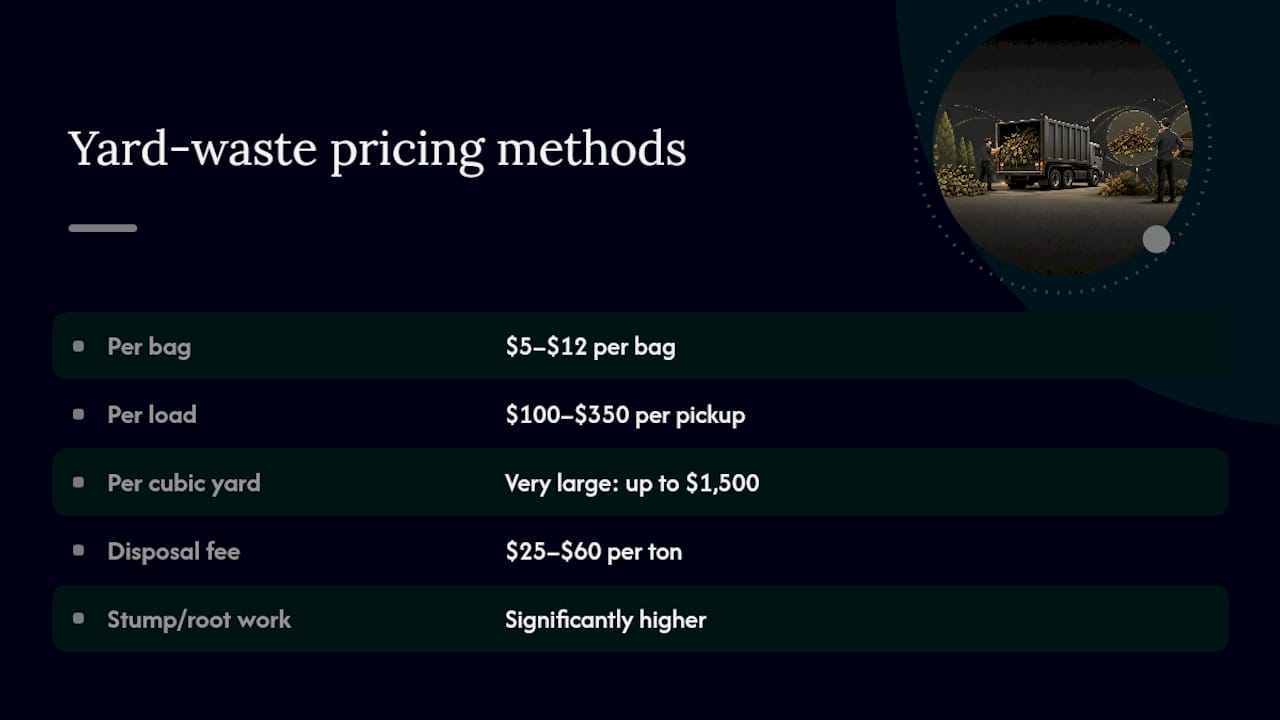
Pricing varies by volume, material type, and how much labor the job requires. LatestCost reports that haulers commonly price by the bag ($5–$12 per bag), by the load ($100–$350 for a single pickup), or by the cubic yard, with very large full-yard cleanups reaching $1,500. WellBuiltFlorida's cost guide breaks it down further: curbside pickups typically run $50–$280, full loads $120–$450, and stump or root work significantly higher.
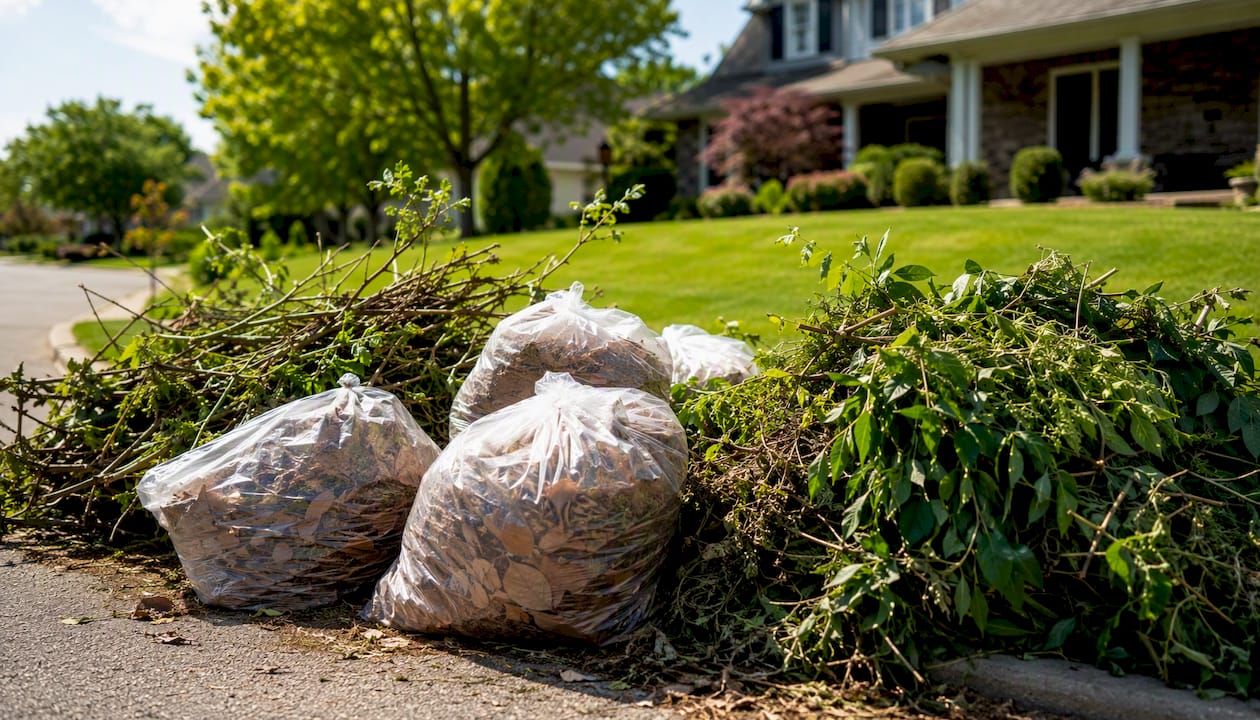
Disposal fees add to every quote. CurrentCost shows that facilities commonly charge by weight or volume, with yard waste dump fees often clustering around $25–$60 per ton. Haul distance, local tipping charges, and seasonal demand can all push a quote above the national average. Always ask for a line-item breakdown so you can see exactly where the money goes. For a deeper look at local cost drivers, the junk removal cost guide on the Easyscrapofficial blog covers regional pricing in detail.
What six things actually drive your quote?
Providers build quotes from a short list of variables. Knowing them helps you compare bids fairly and spot where you might be able to trim costs.
- Volume and material type. A truckload of light leaves costs far less to haul than the same volume of dense logs or root balls. Heavy material means more trips, more fuel, and higher tipping fees.
- Site access and difficulty. A pile staged at the curb takes minutes to load. A pile behind a locked gate, down a slope, or through a narrow passage adds labor time and sometimes requires smaller equipment.
- Labor and crew size. Most quotes are built on estimated hours multiplied by the number of workers needed. A two-person crew on a two-hour job is a very different cost than four workers for a half-day.
- Equipment requirements. Jobs that need a chipper, stump grinder, or dumpster carry equipment rental costs that get passed to the customer. Confirm what's needed before you accept a quote.
- Disposal fees and tipping charges. Every load ends at a facility that charges by weight or volume. Those fees are real costs, and transparent haulers show them as a separate line item.
- Urgency, distance, and mixed loads. Same-day or next-day service often carries a premium. Long drive times add to the bill. Mixed loads — yard waste combined with construction debris or hazardous material — are the most common reason for refusals or surcharges, because facilities have strict separation rules.
How to stage your yard to lower the bill
A little prep before the crew arrives can meaningfully reduce your final invoice. The goal is to make loading fast and straightforward.
- Consolidate debris into one pile near the curb or driveway. Crews charge for time, and a scattered yard takes longer to clear than a single staged pile.
- Separate yard waste from everything else. Keep construction debris, treated wood, and any hazardous materials completely apart. Mixed loads often trigger surcharges or outright refusals at disposal facilities.
- Clear the path. Unlock gates, move vehicles, and remove any obstacles between the pile and the street. A crew that can back a truck directly to the pile works faster.
- Photograph the pile before booking. Sending photos lets a hauler give you an accurate quote without an on-site visit. It also reduces the chance of price adjustments when the crew arrives and finds something unexpected.
- Schedule off-peak when possible. Spring and fall are peak seasons for yard cleanup. Booking in late winter or midsummer can sometimes reduce wait times and pricing pressure.
- Bundle tasks into one visit. If you also need a garage cleanout or basement cleanout, combining them into a single appointment often lowers the effective per-job cost.
How do you choose a reliable local yard-waste hauler?
The difference between a smooth job and a headache usually comes down to three or four questions asked before you book.
Ask these before you commit:
- Is your crew fully insured, and can you provide a certificate of insurance?
- Will I receive a written, itemized quote before work begins?
- Where exactly do you take the waste, and can you provide a disposal receipt?
- Are there any fees not included in this quote — fuel surcharges, mixed-material fees, or minimum charges?
Red flags to walk away from:
- A very low flat quote with no line-item breakdown. Transparent pricing shows labor, hauling, and disposal separately.
- Reluctance to name the disposal facility or provide a receipt. Legitimate haulers have nothing to hide about where debris goes.
- No local service address or verifiable insurance. An uninsured crew working on your property is a liability risk.
- No clear cancellation or refund policy.
Trust signals that matter:
- A current certificate of liability insurance.
- A written quote that separates labor, hauling, and disposal fees.
- Stated recycling or donation sorting options for organic material.
- A clearly defined local service area with real contact information.
Pro Tip: For large commercial jobs or storm-cleanup projects, ask the hauler for a permitted transfer-station receipt or composting facility ticket. It's proof of responsible disposal and protects you if questions arise later.
What happens on service day?
Most jobs follow a predictable sequence. Knowing the flow helps you avoid surprises on the invoice.
- Scheduling window: Most haulers offer a 2–4 hour arrival window. Same-day service is available from some providers, including Easyscrapofficial, depending on crew availability.
- On-site assessment: The crew walks the job, confirms the scope against the written quote, and flags anything unexpected — hidden dirt at the base of a pile, embedded foreign objects, or root balls attached to stumps. These are the most common triggers for price adjustments.
- Load time: A small curbside pickup (1–2 cubic yards) typically takes 20–45 minutes. A full-service cleanup with logs and heavy debris can run 2–4 hours for a standard residential property.
- Hauling and disposal: The crew transports debris to a licensed compost facility or transfer station. JunkPunk describes this as the core value of professional hauling: crews handle loading, transport, and disposal, turning what would be a multi-day DIY project into a single appointment.
- Final invoice: Compare the delivered service to the written quote line by line. If the scope changed on-site, the crew should explain why before you pay. Ask for a disposal receipt on large jobs.
Easyscrapofficial handles yard waste pickup fast and locally
When you need a crew that shows up, loads everything, and hauls it away the same day, Easyscrapofficial covers Lawrence, Andover, Boston, Lowell, and Haverhill with full-service yard waste pickup and hauling. The crew handles leaves, brush, branches, logs, and heavy debris, with responsible disposal at licensed facilities and sorting for recycling or donation whenever possible.
Every job starts with a free, written quote. Send a photo of your pile and get a line-item estimate before any work begins. The crew is insured, the pricing is transparent, and same-day availability is often possible. For branch and log work, the tree branch disposal guide on the Easyscrapofficial blog covers what to expect for heavier debris. Ready to clear the yard? Book your pickup or get a free quote and the crew will handle the rest.
Why paying a pro usually saves more than just time
The real value of a professional yard-waste crew isn't the truck. It's the labor and the disposal chain. Loading a full pickup bed of wet leaves and branches, driving to a transfer station, unloading, and repeating takes most homeowners the better part of a weekend. A crew does it in hours.
Where I see the clearest wins: storm cleanup after a major weather event, tenant move-outs where a landlord needs the property cleared fast, and any job involving heavy logs, stumps, or debris piled in a difficult-to-access area. These are jobs where the physical risk and time cost of DIY are genuinely high.
The honest caveat: a small, clean pile of leaves near a transfer station that accepts walk-in drop-offs might still make sense to handle yourself. But once the volume grows, the material gets heavy, or the timeline gets tight, the math shifts quickly in favor of hiring a crew.
Sources
- Yard Waste Removal Cost: Prices & Factors | Thumbtack
- Cost of Dumping Yard Waste: Price Ranges, Fees, and Practical Budgeting 2026 – Current Cost
- Yard Waste Removal Cost: Price Ranges, Factors, and Ways to Save 2026 – Well Built Florida
- Yard Waste Removal Cost Guide 2026 – LatestCost
- Who picks up yard waste? | Angi
- Yard Waste Hauling Service: What to Expect | Junk Punk Junk Removal