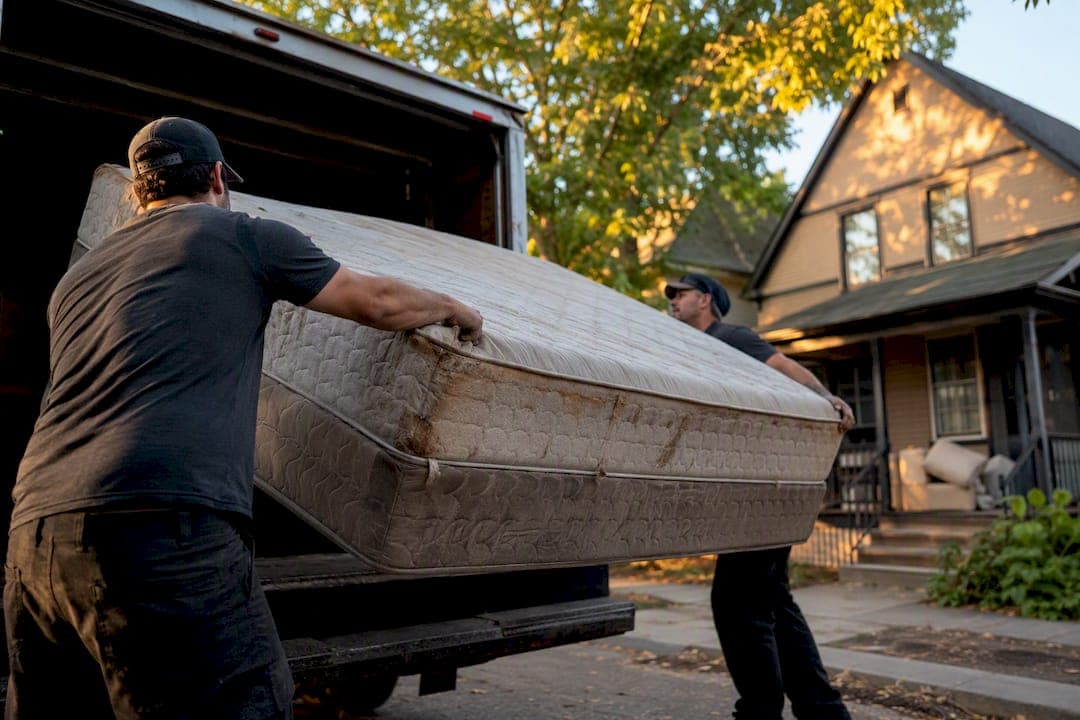
The moment you find belongings left behind, resist the urge to toss anything or claim it as your own. Photograph every room and build a dated inventory first. Then send written notice by certified mail and wait out your state's holding period before you touch the disposal question. An insured junk-removal crew comes in only after that clock runs out, or immediately for spoiled food and genuine safety hazards.
TL;DR:
- Landlords must photograph, inventory, and document belongings before disposal to avoid disputes and provide proof in case of legal challenges.
- The legal hold period varies by state, typically lasting several days to a month, and begins after proper written notice describing the property.
- Items posing immediate health or safety risks can be removed immediately, but non-hazardous belongings require waiting for the hold period to end.
- Deducting cleanout costs from the security deposit is usually legal if costs are itemized, with extra steps if property value exceeds state thresholds for sale or auction.
- Properly insured, documented cleanouts with reputable crews reduce legal exposure, and donation receipts can offset costs while promoting reuse.
Table of Contents
- Landlord Junk Left Behind: Your Step-by-Step Checklist
- How Long Must a Landlord Hold Tenant Belongings?
- What Proof Do You Need Before Disposing of Anything?
- Can a Landlord Throw Away Junk Immediately?
- Can I Deduct Cleanout Costs From the Security Deposit?
- Setting Up an Efficient Cleanout After the Hold Period
- What We've Learned From Handling Hundreds of Cleanouts
- Book a Documented, Insured Cleanout With EasyScrap
- Where to Check Your State's Rules
- Sources
Landlord Junk Left Behind: Your Step-by-Step Checklist
Before you move a single box, confirm what actually happened. Did the tenant hand back keys and sign off on the lease, or are you guessing based on unpaid rent and a quiet unit? That distinction changes your legal footing entirely, so start here:
- Confirm possession has ended. Look for returned keys, a lease termination notice, or clear signs of moving out. If it's ambiguous, send a formal notice stating your belief that the unit has been abandoned rather than assuming and re-keying the door yourself.
- Photograph and inventory everything. Shoot wide-angle room photos plus close-ups of anything with resale or sentimental value, then list each item with a rough dollar estimate.
- Attempt contact and send written notice. Mail an abandoned-property notice to the tenant's last known address and any forwarding address you have, using certified mail or tracked delivery so you have proof it was sent and received.
- Log storage and calendar the deadline. Note where you're storing items, keep any storage receipts, and mark your state's statutory deadline on a calendar so you don't act too early.
- Dispose, donate, or sell after the hold period. Once the clock runs out, follow your state's rules for disposal, donation, or sale, and keep every receipt for your records.
Skipping step two is the single most common mistake landlords make, and it's the one that turns a routine cleanout into a small-claims headache.
How Long Must a Landlord Hold Tenant Belongings?
The answer depends on how the tenancy ended, not just on how much stuff is sitting in the unit. A tenant who moves out voluntarily and returns keys is treated differently than one removed through eviction, and a tenant who dies mid-lease triggers an entirely separate legal path. In that last case, belongings belong to the estate, and you cannot dispose of them without contacting the estate or executor first, no matter how badly you need to re-rent the unit.
Before you can call anything "abandoned," you need a reasonable belief that the tenant has actually left for good. Unpaid rent alone doesn't prove abandonment. Neither does a tenant going silent for a few days. Courts want to see objective signs: utilities shut off, mail piling up, neighbors confirming a move, or a lease that's already expired without renewal. Acting on a hunch and changing the locks without proper notice counts as illegal self-help eviction in most states, and it can expose you to damages even if the tenant genuinely had left.
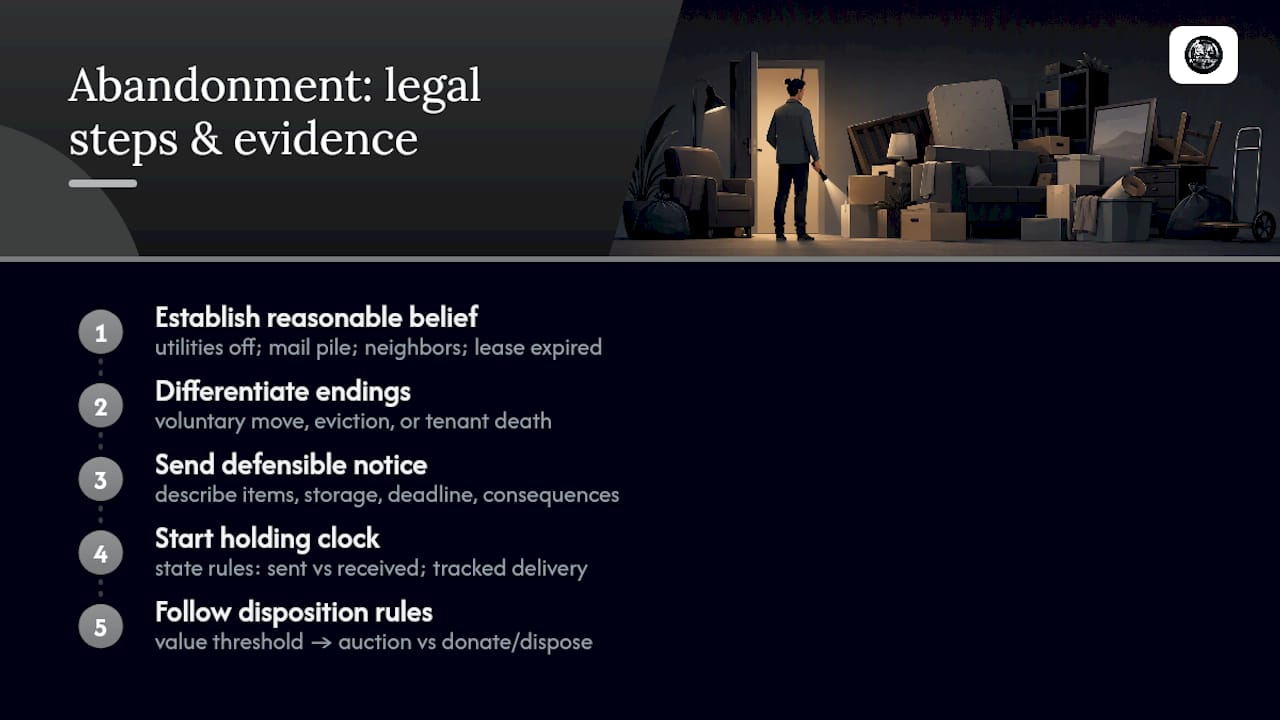
Once you have that reasonable belief, the notice you send is what actually starts your legal clock. A defensible notice describes the property left behind, states where it's currently stored, gives a firm deadline to claim it, and spells out what happens if nobody does. Nolo's overview of abandoned tenant property notes that this kind of notice is usually the trigger for the statutory holding period, not the date you first noticed the belongings.
Storage and notice windows vary by state, but most fall within a range of commonly cited holding periods lasting several days to about a month. Some states start the clock the day you send the notice; others start it the day the tenant actually receives it, which is exactly why tracked delivery matters. A landlord's guide to abandoned property walks through how these timelines and value thresholds shift from state to state, and it's worth reading the specific rules for wherever your property sits rather than assuming a national standard exists.
Value thresholds matter just as much as timing. Many states set a dollar amount, typically a modest value threshold, above which you can't simply throw items in a dumpster once the hold period ends. Cross that threshold and you may be required to hold a public sale or auction, then remit any leftover proceeds to the tenant. Fall under it, and you can typically donate, sell privately, or dispose of items outright. LegalClarity's breakdown of tenant property rights points out that this patchwork means a landlord in one state can legally toss a $150 bookshelf while a landlord two states over is required to auction the same item.
If your state's statute doesn't address a situation you're facing, don't guess. A local landlord-tenant attorney costs far less than losing a conversion lawsuit over a broken dresser you assumed was trash. Courts have sided with tenants over items that looked worthless to everyone else in the room.
What Proof Do You Need Before Disposing of Anything?
Documentation is what separates a clean cleanout from a lawsuit. Landlords who skip photos and a real inventory lose most small-claims disputes over left-behind belongings, because a judge has nothing to weigh against the tenant's version of events.
Here's what a defensible paper trail actually looks like:
- Photo protocol: wide shots of every room before you touch anything, plus close-ups of anything valuable, timestamped automatically by your phone's metadata.
- A real inventory, not vague labels: "men's leather jacket, worn, size L, approx. $60" holds up in a dispute. "Clothes" does not.
- Proof of notice: certified mail receipts, tracking numbers, and a log of every delivery attempt, even the failed ones.
- Storage records: receipts for the storage unit or space you used, plus a note of who had access and when.
- One combined timeline: photos, inventory, notice date, statutory deadline, and final disposition, all in one document you can hand to an attorney or a judge without explanation.
Pro Tip: Keep a single folder, physical or digital, that holds every piece of this timeline in date order. When a dispute lands on your desk six months later, you want to open one file, not reconstruct a story from memory.
Can a Landlord Throw Away Junk Immediately?
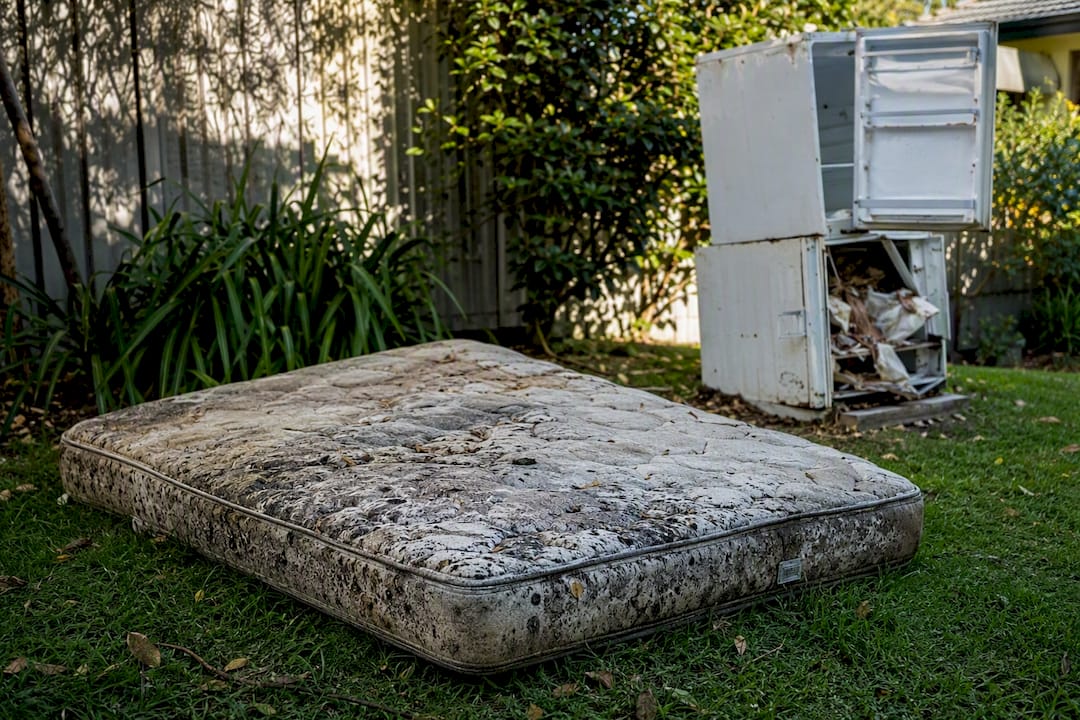
Some items don't require any of that waiting period. Perishable food, biohazardous waste, and anything posing an immediate health or safety risk can typically be removed right away, hold period or not. Rotting food in a fridge, a mattress soaked with bodily fluids, or a pile of moldy trash falls into this category in most states.
Prescription medications and medical equipment deserve extra caution. Some states require specific handling or disposal through a pharmacy or licensed facility rather than a regular trash run, so check before you bag up a drawer full of pill bottles. Abandoned vehicles and anything that looks like hazardous material, propane tanks, chemicals, unlabeled containers, generally call for a call to local authorities rather than a DIY removal, since towing and hazmat disposal both carry their own regulations.
Whatever you remove immediately, write down why. A quick note with the date, a photo of the condition that justified urgent removal, and who authorized it protects you later if the tenant claims you tossed something salvageable.
Can I Deduct Cleanout Costs From the Security Deposit?
In most states, yes. Reasonable removal and storage costs can come out of the security deposit, provided you itemize the deduction the way you would any other repair charge. That means listing what you removed, what it cost to remove or store, and attaching receipts, not just subtracting a flat number and hoping the tenant doesn't ask.
Where the dollar value of left-behind items crosses your state's threshold, you may be required to hold a public sale rather than simply keep or discard everything. Storage periods and value thresholds vary enough between states that what triggers a public sale in one jurisdiction might not in the neighboring one. When a sale is required, net proceeds after costs typically go back to the tenant, not into your pocket, and you'll want a paper trail showing exactly what sold and for how much.
Some landlords assume they can simply hold onto belongings until back rent is paid. That's rarely true. Most states don't grant landlords a broad lien over abandoned property just because rent is owed, and a few carve out narrow exceptions for specific situations. Treat "I'll hold it hostage until they pay" as a legal risk, not a strategy.
The accounting side is simple even when the legal side isn't: keep every receipt, record what happened to each item, and send the former tenant a written notice of any proceeds from a sale. That paperwork is your defense if the deduction ever gets challenged.
Setting Up an Efficient Cleanout After the Hold Period
Once your statutory clock runs out, the legal question is settled and the operational one begins. Time the crew's arrival for right after the hold period ends, unless you're dealing with a trash or biohazard exception that lets you move sooner.
Before the crew shows up, have a few things ready:
- Keys or access confirmed, and any lockbox codes shared ahead of time.
- Items already marked for donation, recycling, or disposal, so the crew isn't guessing.
- Notes on anything hazardous, like old paint cans or a broken glass table, flagged in advance.
- A clear answer on whether you want donation receipts for tax or deposit-accounting purposes.
Job size drives equipment. A single bedroom of left-behind clothes and boxes might only need a truck run, while a full unit with furniture, appliances, and years of accumulated stuff calls for a dumpster. Dumpster sizing guidance generally recommends a 10-yard container for light debris, 15-yard for a standard turnover, and 20 to 30-yard for a full-house cleanout or hoarding situation.
Cost and timing matter for your bottom line, too. A standard turnover cleanout often runs $250 to $450 and can clear a unit in days rather than weeks, which speeds up re-renting and limits vacancy loss. Hiring an insured, documented crew, one that hands you disposal manifests and donation receipts, reduces your legal exposure and gives you the paperwork you'll need if a deposit deduction ever gets questioned.
What We've Learned From Handling Hundreds of Cleanouts
The disputes we hear about almost always trace back to the same gap: a landlord who eyeballed the unit instead of photographing it, or who wrote "misc. items" on a list instead of naming what was actually there. Weak documentation is what turns a routine move-out into a drawn-out argument.
Donation and recycling routes have quietly become a cost-saver in practice, not just a feel-good add-on. Diverting usable furniture and electronics away from the dumpster often cuts hauling fees and gives landlords a receipt worth keeping for their own records.
If you're booking a crew, ask a few direct questions before you commit: Are you insured? Can you provide proof of proper disposal? Do you handle donations separately and give receipts? A crew that hesitates on any of those answers isn't the one you want holding your keys.
— Easy
Book a Documented, Insured Cleanout With EasyScrap
EasyScrap gets your unit turnover ready fast, without you chasing dump runs or borrowing a truck between showings. We handle same-day junk removal, appliance and furniture pulls, and full garage, basement, or attic cleanouts, and every job comes with an insured crew.

We know landlords need more than a clean unit. You need proof. Every EasyScrap job includes documentation you can hand to a tenant or attorney if a deposit dispute ever comes up, plus donation receipts whenever items go to a local charity instead of a landfill. Send us photos of what's left behind, and we'll quote the job before the crew ever shows up.
If a former tenant left a couch, a mattress, or a dead refrigerator behind, get a free quote on junk removal and get the unit back on the market. Need appliances specifically hauled? Check our appliance removal service for pricing on refrigerators, washers, and dryers left behind after move-out.
Where to Check Your State's Rules
State abandoned-property statutes set the real deadlines, so check your own state's landlord-tenant code or a resource like Nolo's overview of abandoned tenant property before finalizing notice language. HUD's tenant-rights pages and your state housing agency's website are also worth bookmarking for model notice templates and updated thresholds.
Sources
- A Tenant Left Their Stuff Behind: The Landlord's Guide to Abandoned Property After Move-Out · DiscoveryMark
- Handling a Tenant's Abandoned Property: An Overview - Nolo
- Can a Landlord Throw Away Your Property? Tenant Rights - LegalClarity
- Landlord Turnover Cleanout Checklist | Titan Group
- Eviction Cleanout Dumpster Rental: Landlord & Property Manager Guide (2026) | DumpsterMap