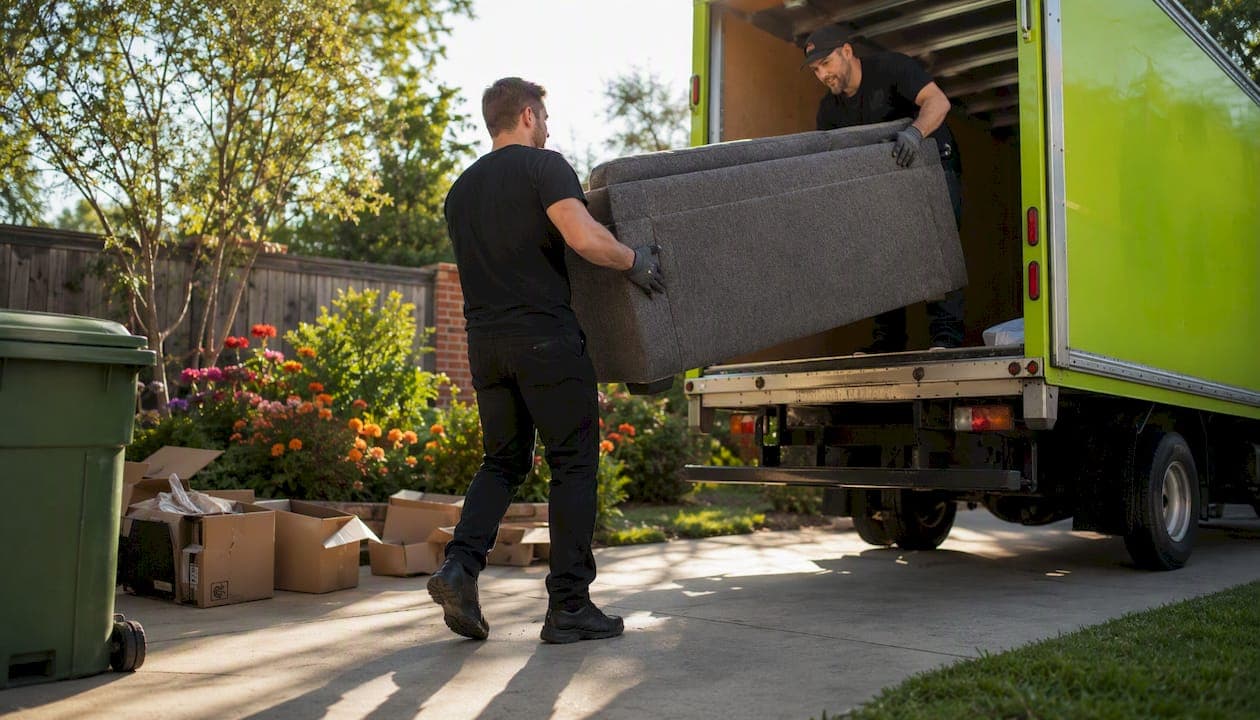
Tipping junk removal crews is optional, not expected, but it's a genuinely appreciated gesture when the job is harder than average. Two rules cover most situations: tip per person in cash so the money reaches each crew member directly, and if you pay by card, ask the company how tips are routed before the job ends. Angi's tipping guide puts the standard range at $10–$20 per person for simple jobs and 10–20% of the total for complex ones. The U.S. Department of Labor distinguishes private-sector gratuities from public-sector rules, which is why private junk removal crews can legally accept tips while municipal garbage workers often cannot.
Quick rules to keep in mind:
- Tip per worker, not per job, so each crew member gets a fair share.
- Cash handed directly to each person is the most reliable method.
- For card tips, ask how the company distributes them before you hand over your card.
Key Takeaways
Tipping junk removal workers is optional, but cash per person is the most reliable method and a small gesture goes a long way on a tough job.
| Point | Details |
|---|---|
| Tipping is optional | No tip is required; it's a voluntary thank-you for above-and-beyond service. |
| Tip per person in cash | $10–$20 per worker for standard jobs; cash reaches crew members directly. |
| Tip more for harder jobs | Estate cleanouts, heavy items, stairs, or extreme weather justify $30–$50 per person. |
| Check company policy first | Ask how card tips are distributed before paying; some companies pool or delay them. |
| Easyscrapofficial accepts tips | Cash tips go directly to the crew; confirm card tip routing when you book. |
Table of Contents
- When is tipping junk removal workers actually appropriate?
- How much should you tip junk removal workers?
- What situations call for a bigger tip?
- Who should you give the tip to, and how?
- What are the tipping policies at major junk removal companies?
- What can you do instead of tipping?
- How does Easyscrapofficial handle tips and crew compensation?
- What if you can't afford to tip?
- Quick reference: sample tips by job size
- The honest take on tipping junk removal crews
- Book with Easyscrapofficial and ask about tipping upfront
- Sources
When is tipping junk removal workers actually appropriate?
Tipping makes sense when the crew does more than show up and load a truck. Heavy furniture carried down three flights of stairs, a same-day booking squeezed into a packed schedule, or a garage cleanout that took twice as long as quoted — those are the moments a tip signals real appreciation.
Situations where tipping is commonly offered:
- Heavy or oversized items (sofas, refrigerators, pianos, hot tubs)
- Multiple flights of stairs or tight, awkward access points
- Same-day or last-minute jobs
- Emotionally sensitive cleanouts such as estate or hoarding jobs
- Extreme weather — very hot summer days or cold winter conditions
Tipping is typically not expected for a small curbside pickup, a single-item removal that took under 20 minutes, or any job where the quoted price already includes a service fee labeled as gratuity. When in doubt, call the company before the appointment and ask directly whether tips are encouraged, discouraged, or built into pricing.
Pro Tip: Ask one simple question when you book: "Do your crews accept cash tips?" That 10-second call removes all the awkwardness at the end of the job.
How much should you tip junk removal workers?
Tip per worker rather than on the job total. When you hand $15 to each of two crew members, both walk away with something. When you leave $15 on the counter for the team, one person might pocket it and the other might not even know it existed.
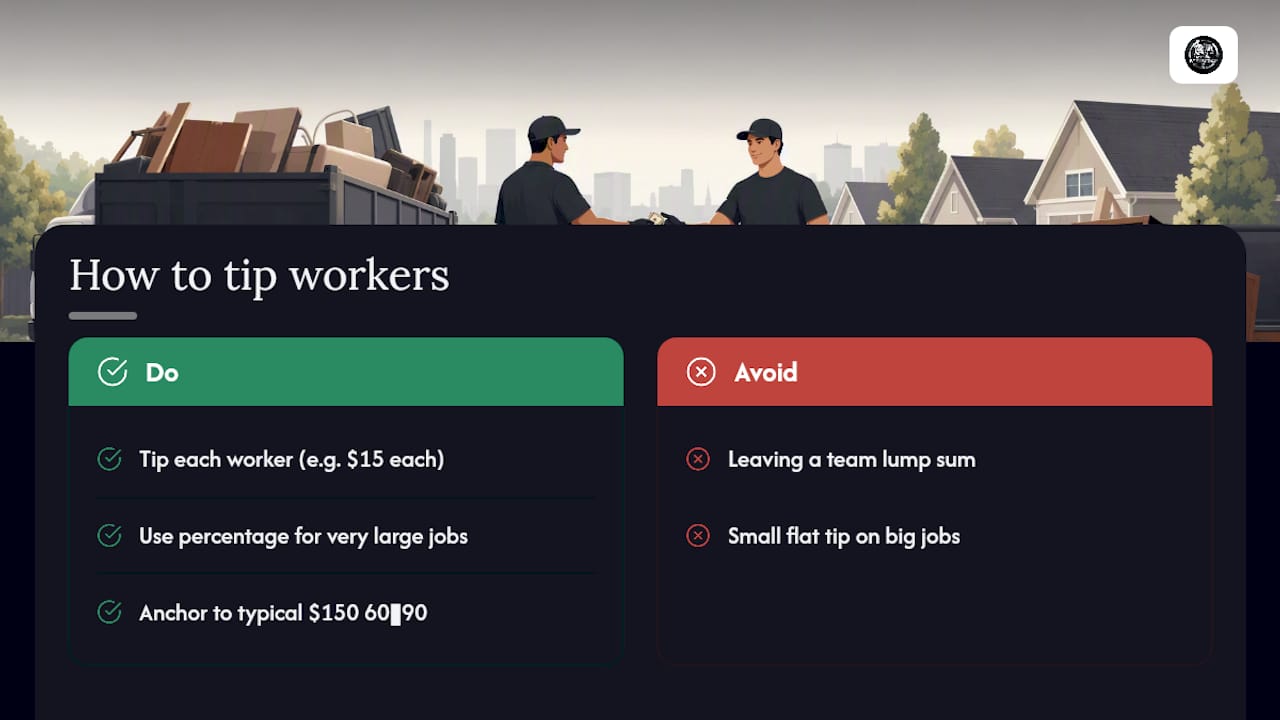
For most U.S. residential jobs, typical pricing runs roughly $150–$350, which gives you a useful anchor for percentage-based math. That's the floor for a standard job done well.
The percentage approach works best for very large or complex jobs where a flat amount feels too small relative to the effort.
What situations call for a bigger tip?
Some jobs are genuinely harder than others, and the tip should reflect that. A crew that hauls a 600-pound gun safe down a narrow staircase in July heat is doing something categorically different from loading a few boxes into a truck.
Specific scenarios that justify going higher:
- Heavy or awkward items: Pianos, hot tubs, gun safes, and large appliances require extra physical strain and coordination. Appliance removal jobs, for example, often involve disconnecting units, navigating tight spaces, and managing refrigerant-safe disposal — all of which add real effort.
- Stairs and tight access: Every flight of stairs multiplies the physical load. Three floors with no elevator is a different job than a ground-floor garage.
- Full-day or multi-stop jobs: When a crew spends six or more hours on a single property, a flat per-person amount that reflects the full day's work is appropriate.
- Estate cleanouts and senior moves: These jobs require patience, discretion, and often emotional sensitivity. Crews may handle personal belongings, family heirlooms, or items left behind after a death. That emotional labor deserves recognition.
- Weather and urgency: A same-day booking in 95°F heat or a last-minute call during a snowstorm puts real pressure on a crew. Tipping more in those conditions is a straightforward way to acknowledge it.
Industry practitioners generally describe an elevated per-person tip range as meaningful for these high-effort, high-sensitivity jobs, though the right amount always depends on the specific circumstances.
Who should you give the tip to, and how?
Hand cash directly to each crew member at the end of the job. That's the most reliable method because the money goes straight to the person who did the work, with no intermediary, no pooling, and no delay.

Card tips are convenient but come with a catch. Depending on company policy, a card tip might go into a general fund, get distributed at the end of the week, or be subject to processing fees. Before you pay by card, ask: "If I add a tip to my card payment, how does that get distributed to the crew?" A company with a clear, fair policy will answer that question without hesitation.
App-based tipping works the same way as card — confirm the routing before you use it. Some platforms send tips directly to the assigned crew; others pool them across all drivers for a given week.
If you want to tip but only have a card, the simplest workaround is to stop at an ATM before the job. A $20 bill handed to each crew member at the end of a tough job lands differently than a digital transaction they may not see for days.
What are the tipping policies at major junk removal companies?
Many companies publish tipping guidance on their websites or in their FAQ sections. Check before the appointment, not after. Franchise notes that franchised and corporate networks commonly centralize customer policies, including gratuity guidance, to keep pricing and service consistent across locations. That means a franchise location may follow a corporate tipping policy rather than setting its own.
Questions worth asking customer service before your job:
- "Does your company have a policy on crew tips?"
- "If I tip by card, does that go directly to the crew or into a shared fund?"
- "Are your crews permitted to accept cash tips?"
- "Is gratuity already included in my quoted price?"
If a company's website says something like "our crews are compensated fairly and tips are not expected," take that at face value — the crew may not be permitted to accept cash, and pushing a tip on them puts them in an awkward position. When a company is silent on the topic, tips are almost always welcome.
What can you do instead of tipping?
Cash is not the only way to show a crew they did good work. Non-monetary gestures are genuinely valued, especially in conditions where a small financial tip might feel token.
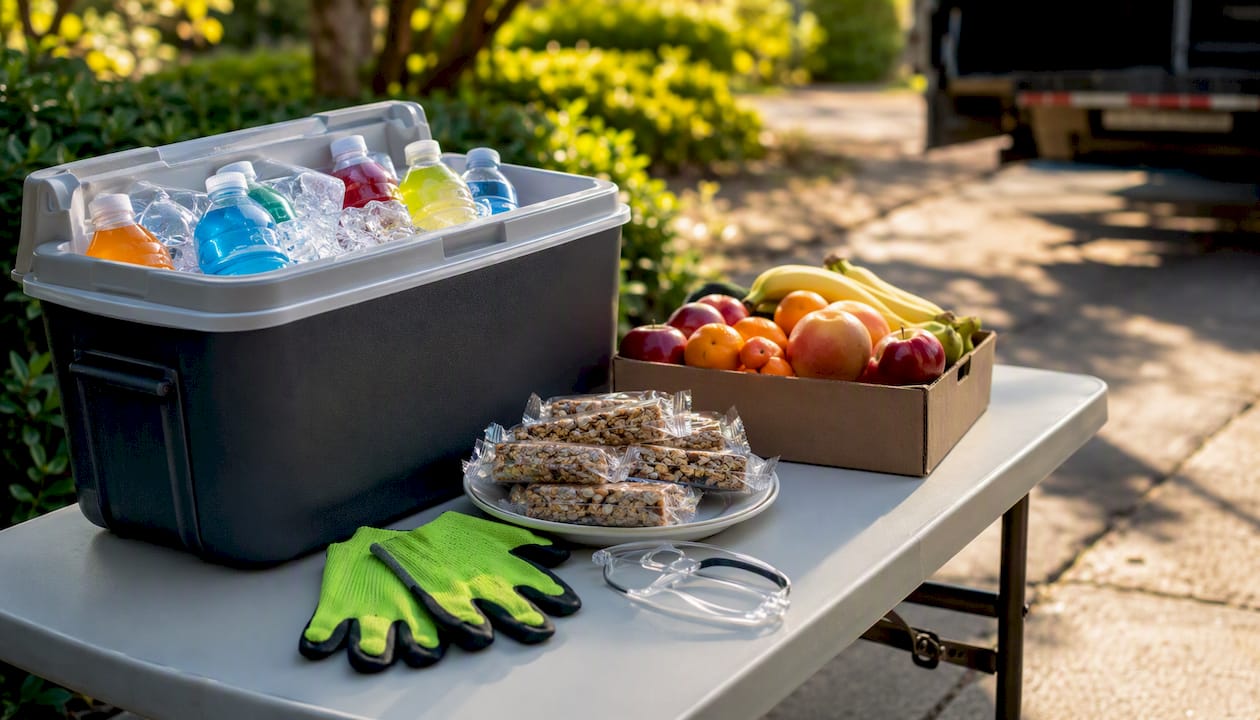
Cold bottled water or sports drinks on a hot day can mean more to a crew than a $5 bill. Snack packs, granola bars, or a box of donuts for a morning crew are small, inexpensive, and memorable. These gestures work especially well when company policy discourages cash tips or when you simply don't have cash on hand.
The alternative with the most lasting value is a named online review. A Google review that mentions crew members by name, describes what they did well, and gives specific details about the job can help those workers professionally for months or years. It costs nothing, takes three minutes, and has a real impact on their reputation and the company's ability to attract more business.
Pro Tip: When you write a review, name the crew members if you know them. "Mike and Jason carried a piano down two flights of stairs without a scratch" is worth far more to those workers than a generic five-star rating.
You can also email the company directly to compliment specific crew members. Management notices, and it often factors into performance reviews and scheduling preferences.
How does Easyscrapofficial handle tips and crew compensation?
Easyscrapofficial crews serving Lawrence, Andover, Boston, Lowell, Haverhill, and surrounding areas are paid wages for their work. Tips are accepted as a voluntary gesture of appreciation and are not built into quoted pricing.
A few specifics about how Easyscrapofficial approaches this:
- Cash tips handed directly to crew members are the preferred method and go straight to the workers.
- Card or digital tips added at payment time should be confirmed with the Easyscrapofficial team so you know exactly how they're distributed.
- No tip is ever required — crews are compensated for the job regardless of gratuity.
- Easyscrapofficial handles heavy-item removals including furniture, appliances, mattresses, and full garage or basement cleanouts — the kinds of jobs where a tip is most commonly offered.
- The company donates and recycles usable items whenever possible, so eco-friendly disposal is part of every job, not an add-on.
To confirm tipping policy for a specific crew or job, contact Easyscrapofficial directly through the services page or call before your appointment.
What if you can't afford to tip?
Tipping is optional. No crew expects a mandatory gratuity, and a job well done is a job well done regardless of whether a tip follows. If your budget is tight, the most meaningful thing you can do is say thank you directly and mean it. A genuine verbal acknowledgment of hard work costs nothing and lands better than a perfunctory $5.
Beyond that, a positive Google review with specific details about the crew's work is free and genuinely useful. Referring the company to a neighbor or posting about the experience on a neighborhood app like Nextdoor has real business value for a local crew. If you have cold drinks in the fridge, offering them at the end of a hot job is a low-cost gesture that crews consistently describe as meaningful.
The bottom line: crews appreciate gratitude more than they expect a mandatory tip. Do what you can, and don't stress the rest.
Quick reference: sample tips by job size
Use this table to pick an amount fast. All figures are per-person suggestions for a standard U.S. residential job.
| Job Type | Per-Person Tip Range | Notes |
|---|---|---|
| Small, under 20 minutes | $10–$15 | Curbside or single-item pickup |
| Medium (partial truck, 1–2 hours) | $15–$20 | Standard home cleanout |
| Large (full truck, multi-hour) | $20–$30 | Multi-room or garage cleanout |
| Estate or senior cleanout (full day) | $30–$50 | Emotionally sensitive, extended effort |
A few quick translations from the table:
- Two-person crew, standard job: $30–$40 total ($15–$20 each)
- Three-person crew, large cleanout: $60–$90 total ($20–$30 each)
- Full-day estate job with two workers: $60–$100 total ($30–$50 each)
Regional costs vary. In higher cost-of-living metro areas like Boston, tipping toward the top of each range is more common. In smaller markets, the midpoint is typically appropriate. Check junk removal pricing context if you want to translate percentage guidance into specific dollar amounts for your job.
The honest take on tipping junk removal crews
The tipping question gets overthought. Junk removal is hard physical work — hauling heavy, awkward items in all weather, often up stairs, often on tight schedules. The crews doing it are not expecting a mandatory gratuity, but they notice when someone takes a moment to acknowledge the effort.
At Easyscrapofficial, the feedback from crews is consistent: a cold drink on a hot day and a genuine "thank you" matter as much as the dollar amount. When a customer takes the time to leave a named review or send a note to management, that recognition has real staying power. A one-time tip is appreciated and forgotten; a strong review follows a worker's professional reputation.
The fairest approach is to tip when the job genuinely warrants it, use cash when you can, and never feel obligated when the job was routine and the price was fair. Tipping should reflect appreciation, not anxiety.
Book with Easyscrapofficial and ask about tipping upfront
Easyscrapofficial makes it easy to get a straight answer on tipping before your crew arrives. When you book a junk removal job in Lawrence, Andover, Boston, Lowell, or Haverhill, you can ask directly how tips work for your specific crew and payment method — no guessing at the end of the job.
Services available for booking include same-day junk removal, appliance and furniture removal, garage and basement cleanouts, and estate cleanouts. Every job comes with a free quote, an insured crew, and eco-friendly disposal wherever possible.
Get your free quote at Easyscrapofficial and confirm tipping details when you call.