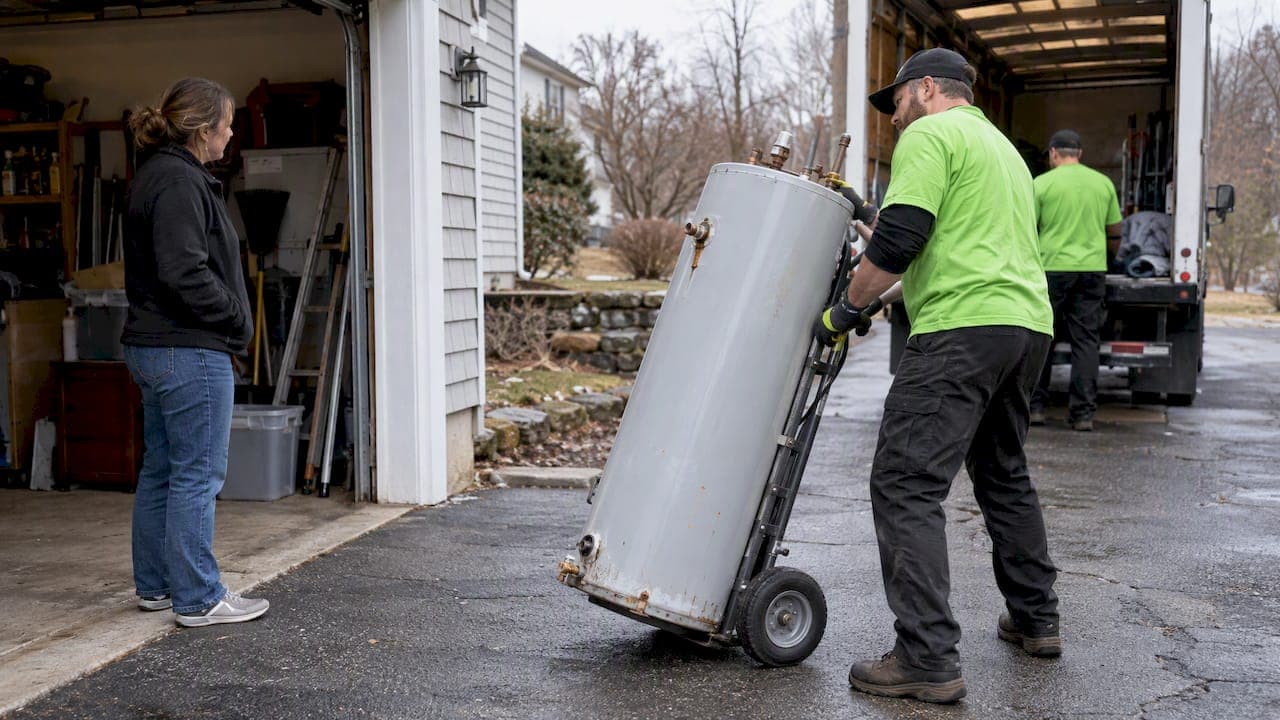
Donate it if it still works, recycle it at a scrap yard or transfer station, schedule a municipal bulk pickup if your city offers one, or hire a junk removal service to haul it away. Before you move it anywhere, drain the tank, shut off the power, and for gas units have a licensed technician cap the gas line. Check your local rules first since acceptance and fees vary by town.
TL;DR:
- Donation is ideal for recent, working water heaters that meet charity requirements, potentially eliminating disposal fees completely.
- Scrap-metal recycling suits old, rusted, or damaged tanks, especially those with little or no resale value, and some yards pay based on metal weight.
- Municipal bulk pickup only works if the program lists water heaters as accepted items and may require scheduling, tagging, or fees.
- Paid junk removal services provide fast, convenient pick-up, especially if lifting or transportation is difficult, but confirm acceptance and prepare the unit beforehand.
- Proper preparation includes draining the tank, disconnecting power or gas with licensed assistance, and securing valves, to ensure safety during removal or disposal.
Table of Contents
- Comparing your disposal options at a glance
- How to prepare a water heater safely for transport or drop-off
- How to choose the right disposal route for your unit and circumstances
- Where to take it: recyclers, transfer stations, and donation outlets
- Costs, scrap value, and fees
- When DIY makes sense and when to call in a pro
- Appliance removal: what we do and how to book
- FAQ
- Sources
Comparing your disposal options at a glance
Four routes cover almost every situation, and the right one depends on the unit's condition and how fast you need it gone.
- Donation: best for a working unit under a few years old; charities like Habitat for Humanity ReStore often accept units that meet their age and condition rules, and you may skip disposal fees entirely.
- Scrap-metal recycling or transfer station drop-off: best for an old or rusted tank with no resale value; you haul it yourself, and some yards pay by weight for the metal.
- Municipal bulk pickup or curbside program: convenient if your city includes appliances in bulk collection, though most require an appointment, a tag, or a sticker.
- Paid junk removal service: best when you want it gone fast, can't lift it, or have no working vehicle for the trip.
Donation keeps the unit in use and produces the least waste, recycling recovers the steel and copper, and landfill disposal should be the last resort. Whichever route you pick, confirm appointment windows, item limits, and tagging rules before moving the tank.
How to prepare a water heater safely for transport or drop-off
A water heater is heavy, full of water, and in many homes connected to gas or 240-volt electrical service, so preparation matters as much as the disposal route itself.
- Shut off the cold water supply valve at the top of the tank.
- Connect a garden hose to the drain valve and open a nearby hot water faucet to break the vacuum, then let the tank drain completely.
- Turn off the power at the breaker for electric units, and check it with a voltage tester before touching any wiring.
- For gas units, have a licensed technician shut off and cap the gas line. The Department of Energy's removal job aid treats this as a core safety step, not an optional one.
- Disconnect the flexible water connectors and secure any loose valves so they don't snag during the move.
- Protect flooring and doorways if you're moving the tank through the house, and plan for its weight since an empty residential tank can still require two people to carry safely.
If you have a heat pump water heater, it contains refrigerant that cannot be handled by a homeowner. Tell the recycler or hauler in advance so they route it correctly, and never attempt to cut lines or vent refrigerant yourself, a point the EPA's Appliances Quick Start Guide emphasizes for any refrigerant-bearing appliance.
Pro Tip: Keep the drained tank tilted slightly toward the drain valve for a few minutes after draining. Sediment at the bottom holds water longer than you'd expect.

How to choose the right disposal route for your unit and circumstances
Match the route to the tank's condition, your timeline, and what your city actually allows.
- If the unit is relatively new and still heats water reliably, call a donation outlet first. Many require proof it works.
- If the tank is rusted, leaking, or more than a decade old, skip donation and head straight to scrap-metal recycling or a transfer station.
- If you have no vehicle, no help, or a tight deadline, a paid removal service solves the logistics in one call.
- If your city runs a bulk pickup program, check whether water heaters are on the accepted list before setting it at the curb.
Before committing, ask any facility or hauler the same four questions: do you accept water heaters, what prep do you require, is there a fee or will I get paid, and do I need an appointment or paperwork. One phone call usually settles which route makes sense.
Where to take it: recyclers, transfer stations, and donation outlets
Scrap-metal recyclers, county transfer stations, donation centers, and municipal bulk programs all handle water heaters, but each has its own rules worth confirming before you load the truck.
- Ask whether the facility accepts water heaters at all. Some county recycling guides list them explicitly as acceptable scrap-metal drop-offs, while others route them differently.
- Ask about fees or payment. Some scrap yards pay for the metal, others charge a disposal fee, and some do both depending on condition.
- Ask if an appointment is required. Municipal bulk-item programs frequently require scheduling, tags, or stickers, and limit how many items you can set out at once.
- Ask about hours and documentation, especially if you need a disposal receipt for a landlord, property sale, or insurance record.
For donation, Habitat for Humanity ReStore locations and similar outlets typically require the unit to be recent and in working order. For everything else, check your city's solid waste or 311 page, your county recycling directory, or simply call the nearest transfer station before you drive over. A scrap-metal disposal guide can also walk through what most yards expect at drop-off.
Costs, scrap value, and fees
There's no fixed scrap value for a used water heater. Payout depends on current metal prices, whether the yard pays for the whole appliance or only separated metal, and how much recoverable copper and brass the unit contains.
Municipal programs add their own cost variables. The EPA notes that metal content often determines whether an appliance gets recycled or treated as ordinary waste, which affects whether a facility charges a fee at all. Many cities also charge appointment fees or extra charges if you set out more bulk items than your allotment permits.

Before you commit to a route, ask the recycler or hauler for a current rate on appliance drop-off or pickup, in writing if possible, so you know whether you're getting paid or paying a fee. Some removal services also quote a flat rate that already accounts for recycling fees, similar to how bulky items like hot tubs are often priced as a single job rather than itemized separately.
When DIY makes sense and when to call in a pro
A working, already-drained electric water heater is a reasonable DIY job if you have a dolly, a truck, and a drop-off point nearby. Once gas lines, heavy awkward tanks, stairs, or a same-day deadline enter the picture, the math changes. A licensed plumber or electrician handles the disconnection safely, and a removal service takes it from there, coordinating pickup, hauling, and routing to recycling or donation along with a disposal receipt. We've found that homeowners who skip this step usually underestimate the weight, not the mess.
— Easy
Appliance removal: what we do and how to book
We handle water heater removal the way we handle any appliance: we show up, assess the unit, and haul it away the same day in most cases. We route appliances to donation or recycling whenever the condition allows, so old tanks don't just end up in a landfill by default.
- We provide a free quote before any work starts.
- Heavy lifting, including awkward stairwells and tight basement doors, is managed by the crew.
- Same-day scheduling options are available when the timeline is tight.
- Disposal records can be provided on request for documentation.
Getting started takes three steps: request a quote through our appliance removal page, pick a pickup time that works for your schedule, and let our crew handle the draining logistics, hauling, and responsible disposal from there. If you're clearing out more than one appliance or tackling a larger cleanout, our full junk removal service covers that too. Reach out for a written quote and we'll get your old water heater out of the house.
FAQ
How do I get rid of a water heater?
Donate it if it's still working and meets a charity's age and condition rules, recycle it at a scrap-metal yard or transfer station if it's old or broken, check whether your city's bulk pickup program accepts appliances, or hire a junk removal service to haul it away. Always drain the tank and shut off power or gas before moving it.
How much is a 40 gallon water heater worth in scrap?
There's no fixed scrap value for a water heater because payout depends on current metal market prices and how much recoverable copper and steel the unit contains. Ask your local scrap yard for their current appliance rate before drop-off, since quotes can vary widely between facilities.
What do I do with my old hot water heater?
Drain it, disconnect the power or have the gas capped by a licensed technician, then choose a route: donation for a working unit, scrap-metal recycling for an old one, municipal bulk pickup if available, or a paid removal service for convenience. Confirm your chosen facility's acceptance and prep rules before you move it.
Will garbage take a hot water heater?
Regular curbside trash pickup usually does not accept water heaters; most cities route them through bulk-item programs, transfer stations, or scrap-metal recyclers instead. Check your municipal solid waste or bulk collection page for appointment and tagging requirements before setting it out.
Can a heat pump water heater be disposed of the same way?
Not quite. A heat pump water heater contains refrigerant, which requires special handling, so you need to tell the recycler or hauler in advance rather than treating it like a standard tank. Never attempt to cut lines or release refrigerant yourself.
Sources
- EPA — Appliances Quick Start Guide (Appliance disposal and refrigerant guidance)
- OCRRA — How do I get rid of water heaters? (recycling and reuse guidance)
- DOE — Job aids for retrofit installation and removal of water heaters (safety and removal steps)
- City of Paducah — Household Bulk Item Collection Program