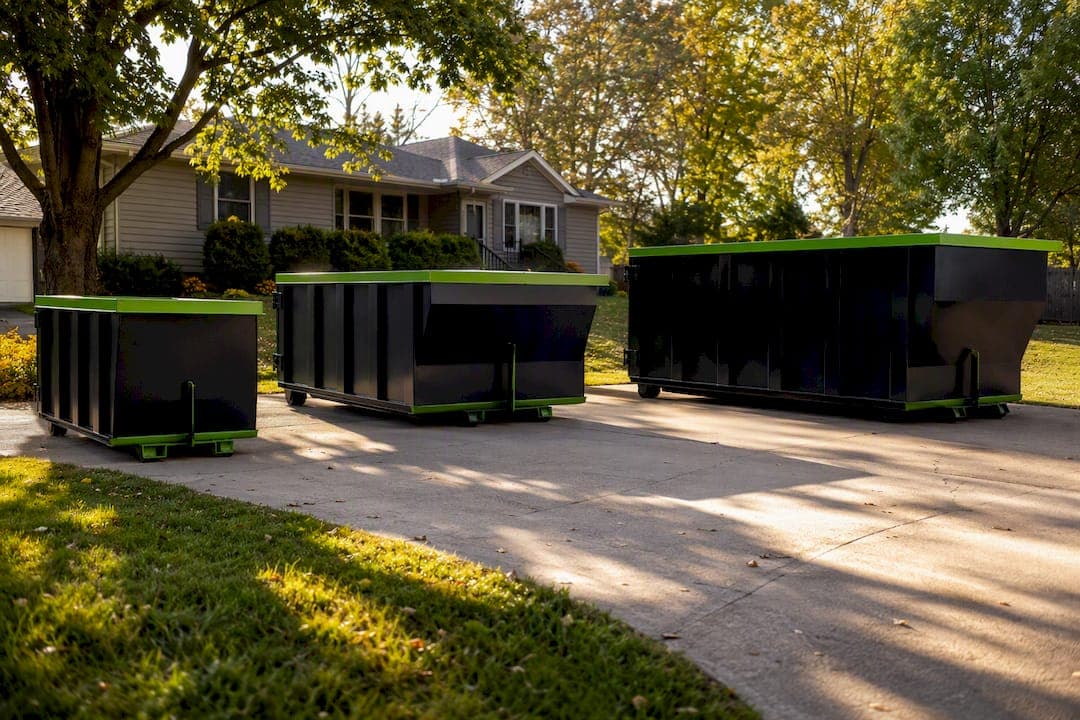
For most homeowners, a 20-yard roll-off dumpster is the right call, since it holds about six pickup-truck loads while still fitting a standard driveway. Here's the quick map before we go deeper.
-
Small projects (10–15 yd): single-room cleanouts, small bathroom or deck teardowns.
-
Typical homeowner projects (20 yd): kitchen remodels, garage cleanouts, medium roofing jobs.
-
Large projects (30–40 yd): whole-house cleanouts, new construction, major additions.
-
Front-load bins (2–8 yd): ongoing commercial or multiunit trash service, not one-time projects.
Heads up: heavy debris like concrete, dirt, or shingles hits weight limits fast, so bigger isn't always better once density enters the picture.
Key Takeaways
Choosing the right dumpster size comes down to matching project volume to a standard cubic-yard size while confirming weight limits before heavy debris goes in the bin.
| Point | Details |
|---|---|
| Default to 20-yard | Most homeowner remodels and cleanouts fit a 20-yard roll-off, which holds about six pickup-truck loads. |
| Size down for heavy debris | Concrete, brick, and dirt call for a 10-yard bin regardless of how much space is left in a larger one. |
| Measure driveway access | Roll-offs need about 60 feet of straight clearance and 14 feet of vertical clearance for delivery. |
| Check HOA and permit rules | Confirm rental duration limits and street-placement permits before the container arrives. |
| Consider a crew instead | Easyscrapofficial offers same-day junk removal for projects too small or tight-spaced for a dumpster rental. |
Table of Contents
- Standard Roll-Off Dumpster Sizes: 10, 12, 15, 20, 30, 40 Yards
- Front-Load Dumpster Sizes: 2, 4, 6, 8 Yards
- How to Match Your Project to the Right Dumpster Size
- Weight Limits: The Rule That Trips Up Most Renters
- Getting the Dumpster Delivered Without a Headache
- When a Junk-Removal Crew Beats a Dumpster Rental
- HOA Rules and Local Permits You Shouldn't Skip
- Weather and Seasonal Timing Affect Your Rental
- Estimating Your Debris Volume Before You Book
- Our Take: The Size Chart Isn't the Hard Part
- Frequently Asked Questions
- Sources
Standard Roll-Off Dumpster Sizes: 10, 12, 15, 20, 30, 40 Yards
Six sizes cover almost every residential and construction job: 10, 12, 15, 20, 30, and 40 cubic yards. The 20-yard dumpster is the size haulers rent out most, and for good reason. It splits the difference between real capacity and a footprint that still fits most driveways.
Exterior dimensions shift from one hauler to another, since bins are built by different manufacturers and volume, not the exact footprint, is the number that actually matters when you're sizing a container. Still, some example measurements help you picture what's showing up in your driveway.
| Size | Approx. dimensions | Truckload equivalent | Best for |
|---|---|---|---|
| 10 yd | 12' L × 8' W × 3.5' H | 3 pickup loads | Small cleanouts, single-room demo, heavy debris |
| 12 yd | 13' L × 8' W × 4' H | 3-4 pickup loads | Bathroom remodels, small yard cleanups |
| 15 yd | 16' L × 8' W × 4' H | 4 pickup loads | Garage cleanouts, flooring removal |
| 20 yd | 22' L × 8' W × 4' H | 6 pickup loads | Kitchen remodels, roofing, medium renovations |
| 30 yd | 22' L × 8' W × 6' H | 6 pickup loads | Whole-house cleanouts, additions |
| 40 yd | 22' L × 8' W × 8' H | 12 pickup loads | New construction, commercial demo |
A 20-yard bin generally measures around 22 feet long, 8 feet wide, and 4 feet tall, and the 30 and 40-yard versions grow taller rather than wider, which matters if you're worried about tree branches or a garage overhang.
A few use-case notes worth remembering:
- The 10-yard size is your default choice for concrete, brick, or dirt, since its lower volume keeps total weight manageable even with dense material.
- The 20-yard covers most kitchen remodels and mid-size roofing tear-offs, though shingles will push you toward checking weight caps before you commit.
- The 30 and 40-yard sizes are overkill for a single room but right-sized for gutting an entire house or clearing a construction site.
If you're stuck between two sizes for a mixed-debris project, lean toward the larger one. Most rental guides note that the marginal cost of one size up almost always beats paying for a second haul.
Front-Load Dumpster Sizes: 2, 4, 6, 8 Yards
Front-load bins solve a different problem than roll-offs. They're built for ongoing pickup, not a one-time cleanout, and businesses lease them for weekly or biweekly service rather than a single rental window.
- 2-yard: small offices, cafes, or retail units with light daily trash.
- 4-yard: the most common size for small businesses, roughly equal to 24 trash bags a week.
- 6-yard: restaurants, small apartment buildings, higher-volume retail.
- 8-yard: larger multiunit properties, grocery stores, and busy commercial kitchens.
Front-load dumpsters need a concrete pad or enclosure since they get lifted and dumped by a specialized truck arm, unlike roll-offs that slide on and off a flatbed. If your project is temporary, even a big one, you want a roll-off. Front-load service only makes sense when you're generating trash on a recurring schedule, not clearing out a single space.
How to Match Your Project to the Right Dumpster Size
Run through this checklist before you call a hauler:
- Identify your project category. Garage or basement cleanouts usually land in the 10 to 15-yard range. Kitchen remodels fit a 20-yard bin. Whole-house or estate cleanouts need 30 to 40 yards. Roofing jobs typically call for a 20-yard, but shingle weight can change that fast.
- Check your debris type. Mixed household junk behaves differently than concrete or dirt. Heavy material means either a 10-yard bin or multiple smaller ones rather than one oversized container.
- Measure your space. Most roll-offs need roughly 60 feet of straight clearance for delivery and about 10 feet of width. A single-car driveway usually handles a 10 to 20-yard bin; anything larger may need street placement.
- Weigh the cost trade-off. Renting one size larger costs less than ordering a second dumpster, so when you're unsure, size up, unless you're dealing with dense material where the rule flips.
Pro Tip: Call the hauler and describe your debris by weight, not just volume. "One old couch and a bunch of drywall" gets you a far more accurate size recommendation than "I have some junk to get rid of."
Weight Limits: The Rule That Trips Up Most Renters
Volume is only half the equation. Weight is the other half, and it's the one that generates surprise fees. Light debris like cardboard, drywall scraps, and furniture rarely comes close to a dumpster's weight cap. Concrete, brick, dirt, and roofing shingles are a different story entirely, since they pack far more mass into the same cubic yard.
Every rental includes a set weight allowance, and going over it triggers an overage charge. Guides commonly cite $50 to $100 per extra ton once you cross that line, and haulers will often refuse pickup outright if a bin is loaded well past its rated capacity.
- Cardboard, furniture, general household junk: light debris, low overage risk.
- Roofing shingles, drywall in bulk: moderate weight, worth confirming caps in advance.
- Concrete, brick, dirt, tile: heavy debris, almost always calls for a 10-yard bin or a partially filled larger one.
If you're tackling a demolition with mixed debris, ask your hauler for the included weight limit before delivery, not after the truck shows up to collect it.
Getting the Dumpster Delivered Without a Headache
A single-car driveway typically fits a 10 to 20-yard dumpster; anything larger often needs a two-car driveway or a section of the street. Delivery trucks need roughly 60 feet of straight approach and about 14 feet of vertical clearance to swing the container off the flatbed.
- Measure your driveway's length, width, and any low branches or wires before booking.
- If the bin has to sit at the curb, check with your city, since street placement often requires a permit.
- Lay down plywood or plank boards where the container's rails will rest to prevent driveway cracking.
- Schedule delivery and pickup on days that avoid blocking trash collection or street sweeping.
When a Junk-Removal Crew Beats a Dumpster Rental
Renting a dumpster isn't always the smarter move. If your driveway is tight, your project is a handful of bulky items rather than ongoing demolition debris, or you need everything gone the same day, a crew usually gets the job done faster and with less hassle.
- Limited space: no driveway clearance for a 10 to 40-yard container.
- Small, heavy loads: a couch, a fridge, and a washer don't need a dumpster rental sitting in your yard for a week.
- Same-day timelines: Easyscrapofficial runs same-day pickups when a rental's delivery window doesn't work.
- Donation and recycling: a crew can sort usable furniture and appliances for donation instead of sending everything to a landfill.
Compare costs directly. A per-load or per-item quote from a crew, insured and ready to haul, often lands close to what you'd pay for a mid-size dumpster once you factor in delivery, pickup, and any overage fees.
HOA Rules and Local Permits You Shouldn't Skip
Homeowners associations regularly restrict where a dumpster can sit and for how long, and skipping that check is one of the fastest ways to rack up fines during a renovation. Many HOAs cap rental duration at 7 to 14 days, require the container to sit on your own driveway rather than the street, and sometimes ban visible roll-offs entirely outside daylight work hours.
Municipal rules layer on top of that. If a dumpster has to sit in the street or partially over a curb, most cities require a placement permit, and the permit trigger is almost always about right-of-way, not property lines. Some towns also limit how many consecutive days a bin can block a public parking spot.
Before you book anything, call your HOA management company or check the community bylaws for language about temporary containers, construction debris, or "unsightly structures." Then check your town or city's public works department for street-placement permit requirements. Both calls take ten minutes and can save you a fine that costs more than the dumpster rental itself.
If your HOA is strict about visible containers, that's often a case where a same-day junk-removal crew makes more sense than a week-long rental sitting in view of every neighbor on the block.
Weather and Seasonal Timing Affect Your Rental
Rain, snow, and frozen ground all change how a dumpster project plays out, and it's worth planning around the season rather than fighting it. Wet debris, especially drywall, insulation, and cardboard, gets heavier fast, which pushes lighter loads closer to weight limits you'd otherwise clear easily.

Winter brings its own problems. Frozen or snow-covered driveways make delivery trucks less stable, and some haulers pause deliveries during heavy snow or ice events for safety reasons. If you're planning a late-fall or winter cleanout, ask your hauler how they handle delivery during storms and whether pickup gets delayed if your street isn't plowed.
Summer heat isn't neutral either. Organic debris, yard waste, and anything with food residue starts to smell and attract pests faster in hot weather, so a dumpster that sits for the full rental period in July needs a tighter lid or a faster turnaround than the same bin would in cooler months.
If your project timeline is flexible, scheduling around dry, mild weeks reduces both the weight surprises and the physical hassle of loading a container in the rain or snow.
Estimating Your Debris Volume Before You Book
Underestimating volume means paying for a second dumpster. Overestimating means paying for space you never use. Neither is ideal, so it pays to do rough math before you call anyone.
Start room by room. A fully packed 10x10 room with furniture, flooring, and drywall generally fills somewhere close to 2 to 3 cubic yards once broken down and loaded. A whole kitchen remodel, including cabinets, countertops, and appliances, tends to run 15 to 20 cubic yards depending on the home's size.

The pickup-truck comparison is the easiest mental shortcut. If your project would fill three to six full truck beds, you're squarely in 15 to 20-yard territory. If you can picture it filling a truck bed once, look at a smaller roll-off or a bag-based alternative like a debris bag holding around 3 cubic yards, which handles projects too small to justify a full rental.
Walk your project space before you book and count what you're actually removing rather than guessing at cubic yards from memory. It takes ten minutes and it's the single best way to avoid both an overflowing bin and an oversized one sitting mostly empty.
Our Take: The Size Chart Isn't the Hard Part
The size chart gets all the attention, but it's rarely where people go wrong. Most renters can eyeball "kitchen remodel, so 20 yards" without much trouble. Where projects actually go sideways is weight, not volume, and that distinction gets buried under generic size guides that treat every cubic yard the same.
A 20-yard bin full of couch cushions and cardboard behaves nothing like a 20-yard bin full of tile and concrete, even though both technically "fit." One clears the weight limit with room to spare; the other trips an overage fee before it's even half full. If there's one thing worth fixing about how people approach this decision, it's asking about weight caps before asking about cubic yards.
The other blind spot is assuming a dumpster is the only option. For a handful of bulky items, or a driveway too tight for a 20-foot container, a crew that shows up, loads everything, and hauls it away the same day often solves the problem with less coordination and no permit application.
Skip the Dumpster: Same-Day Removal With Easyscrapofficial
If your driveway can't fit a roll-off, or you're really just dealing with a couch, a broken fridge, and a mattress rather than a full demolition, renting a dumpster is a lot of logistics for a small job. Easyscrapofficial sends an insured crew that loads everything, sorts out what can be donated or recycled, and hauls it away in a single visit, no permit calls and no week-long container sitting in your yard.
Whether it's a single appliance or a full garage cleanout, our team handles the heavy lifting so you're not stuck negotiating weight limits or measuring driveway clearance. Get a free quote and, if your schedule allows, book same-day pickup instead of waiting on a delivery window.
Frequently Asked Questions
What size dumpster do I need for a kitchen remodel? A 20-yard roll-off handles most kitchen remodels, covering cabinets, countertops, flooring, and appliances in a single container.
What's the difference between a 10-yard and 15-yard dumpster? A 10-yard holds about three pickup-truck loads and suits heavy debris or small single-room projects, while a 15-yard adds roughly one to two more truckloads of capacity for slightly larger cleanouts.
How much weight can a Bagster hold? The Bagster debris bag holds about 3 cubic yards, or 606 gallons, with a weight rating of roughly 3,300 pounds, making it a fit for small projects that don't justify a full roll-off.
Should I choose a 10-yard or 15-yard dumpster for a bathroom remodel? A 10-yard usually covers a single bathroom gut job, but a 15-yard gives extra room if you're also replacing flooring or fixtures elsewhere in the same trip.
What happens if I go over the weight limit on my dumpster? Most haulers charge an overage fee, commonly $50 to $100 per extra ton, and severe overages can result in the hauler refusing pickup until weight is reduced.
Do I need a permit for a dumpster in my driveway? Permits are usually only required when a dumpster sits on the street or over a curb; driveway placement rarely triggers a municipal permit, though HOA rules may still apply.
Is it cheaper to rent a dumpster or hire a junk removal crew? It depends on the job size. Small loads of bulky items are often cheaper with a crew once you factor in dumpster delivery, pickup, and potential overage fees, while large ongoing debris projects usually favor a rental.
Sources
- Dumpster Size Calculator: Find the Right Size for Your Project | Ultimate Dumpsters
- What Size Dumpster Do I Need? | Free Calculator