
Confirm you have legal authority (as executor or through probate paperwork) and secure the property before anyone removes a single item. From there, an estate cleanout checklist moves through three phases: locating documents and valuables, sorting room by room, and handling disposal or donation. Follow it in order and the home gets cleared without lost paperwork, family disputes, or legal exposure.
TL;DR:
- Confirm legal authority through probate or estate paperwork before beginning any property removal to avoid disputes or legal issues.
- Secure the home by locking doors, updating locks, stopping mail, and notifying insurers before sorting or moving items.
- Prioritize locating and photographing documents, valuables, and keys early in the process to prevent missed assets and reduce heir conflicts.
- Use a systematic room-by-room method with labeled boxes for keep, donate, sell, and trash to avoid re-sorting and decision fatigue.
- Handle hazardous, electronic, and bulky items with proper disposal services, and hire professional help when heavy lifting or emotional overwhelm occurs.
Table of Contents
- What Is an Estate Cleanout and Who Should Run It?
- Phase 1: Secure the Home and Prepare Before You Touch Anything
- How Do You Track Down Documents, Keys, and Valuables First?
- How Should You Sort a House Room by Room?
- Where Do Donations, Sales, and Trash Actually Go?
- When Should You Hire Professional Help Instead of DIY?
- What Does a Realistic Cleanout Day Look Like?
- What Records Should You Keep After the Cleanout?
- An Executor's Honest Take on What Actually Trips People Up
- Get Hands-On Help Clearing an Estate Property
- Where to Go for Hazardous Waste and Donation Help
- Sources
What Is an Estate Cleanout and Who Should Run It?
An estate cleanout is the process of emptying, sorting, and dispersing everything inside a deceased person's home, usually ahead of a sale, lease termination, or transfer to heirs. It's distinct from a normal decluttering job because legal ownership, probate deadlines, and family emotions are all in play at once.
Decision authority belongs to whoever the will names as executor, or to the court-appointed administrator if there's no will. If you're a family member helping out but aren't the named executor, don't start removing or discarding items on your own judgment. Check with the executor or an estate attorney first. Acting without clear authority can create real legal problems, especially if other heirs later dispute what happened to specific items.
Before any sorting begins, run a few quick checks: confirm whether probate has opened, verify the homeowner's insurance policy is still active (a vacant home often needs a rider or separate vacancy coverage), and find out if there's a will that names specific beneficiaries for particular items. These aren't formalities. Skipping them is how families end up in avoidable conflict months later.
Phase 1: Secure the Home and Prepare Before You Touch Anything
The first work on any estate cleanout checklist happens before a single box gets packed. Verify your authority through the will, letters testamentary, or court paperwork. If none of that exists yet, hold off on removing property until probate clarifies who's in charge.
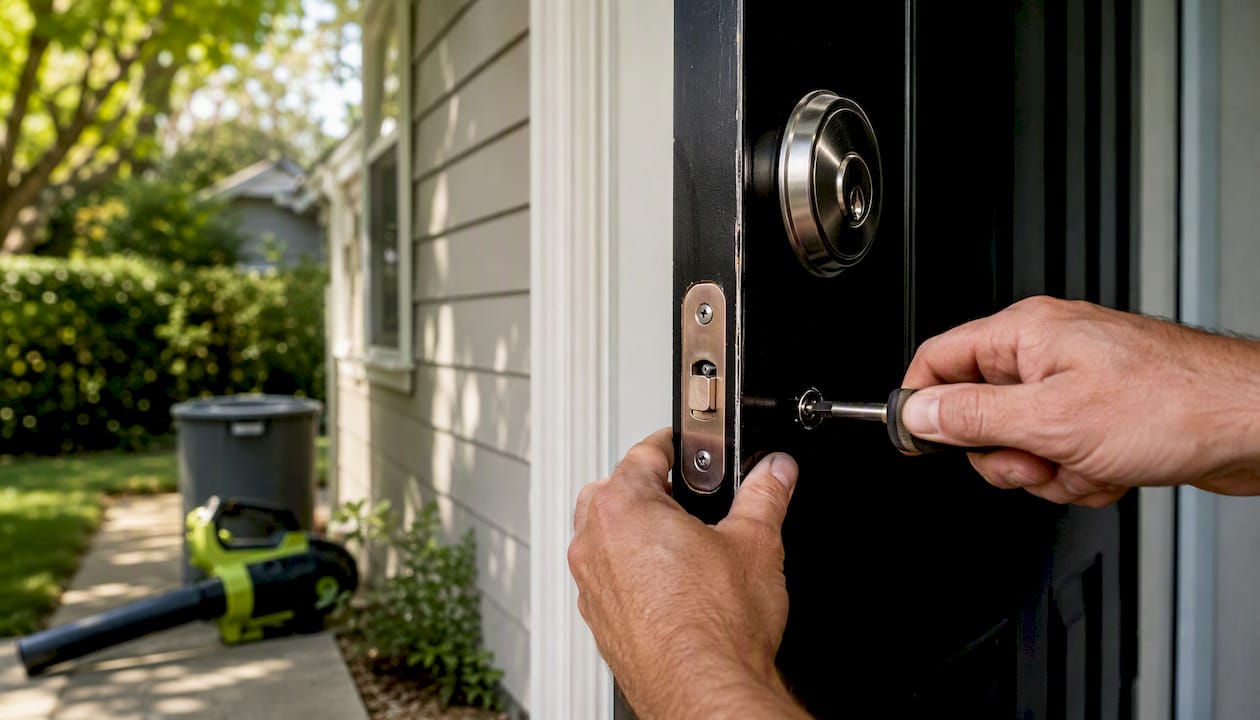
Once authority is confirmed, lock the place down and consider preparing your yard for cleanup to make the property more presentable, using expert guidance on yard cleanup. Rekey or change the locks if multiple people had keys during the person's lifetime. Stop mail delivery or set up forwarding through USPS, and notify the homeowner's insurance carrier that the property is vacant, since standard policies often exclude coverage for unoccupied homes after 30 to 60 days.
Next, assign roles among the people helping. One person should own communication (a group text or shared document works fine), one should track the inventory, and others handle physical sorting. Set up a staging area, usually a garage or empty room, for keep, donate, sell, and trash piles before you start moving anything.
Gather these supplies ahead of time:
- Sturdy boxes and packing paper, plus a permanent marker for labeling
- Contractor bags for trash and a smaller set for donations
- A folder or accordion file for documents you uncover along the way
- Work gloves, dust masks, and a first-aid kit
- A phone or tablet for photo documentation
Pro Tip: Buy or borrow a furniture dolly before day one. Estate homes almost always have at least one heavy dresser or sofa that turns a two-person job into a four-person headache without one.
How Do You Track Down Documents, Keys, and Valuables First?
Before any furniture moves or a single trash bag fills up, hunt down paperwork and small valuables. This step gets skipped more than any other on an estate cleanout checklist, and it's the one that causes the most regret.
Search these spots first:
- Desk drawers, filing cabinets, and home offices for wills, deeds, insurance policies, and bank statements
- Bedroom closets and dresser tops for jewelry boxes, cash envelopes, and spare keys
- Kitchen drawers and pantry shelves, where people often stash cash or important papers in odd containers
- Freezers and mattress undersides, both classic hiding spots for cash or small valuables
- Safes or lockboxes; if you can't find a combination or key, a locksmith can drill it, but get executor sign-off first
Titles for vehicles, boats, or storage units matter here too. If the estate includes a storage unit, the same room-by-room logic applies. Knowing how to clean out a storage unit efficiently, using timed sorting per box and a clear zone system, speeds up that piece considerably.
Document everything as you go. Photograph valuable items before moving them, and keep a simple numbered spreadsheet: item number, description, room found, and disposition (keep, donate, sell, unknown). A photo inventory before removal reduces disputes among heirs later and gives you real documentation if an insurance or probate question comes up.
Statistic Callout: Families frequently underestimate total bulk volume until sorting wraps up, which is one reason scheduling disposal early on cleanout day tends to keep the whole project moving instead of stalling out.
How Should You Sort a House Room by Room?
Once documents and valuables are secured, the bulk of the work is sorting everything else. The four-box method (keep, donate, sell, trash) beats random sorting because it forces a decision on every item exactly once instead of circling back to the same pile three times.
Work room by room, front to back through the house, and don't skip around. Skipping around is how people end up re-sorting the same closet twice. Bring four labeled boxes or bins into each room before you touch anything, and don't let items leave the room until they're assigned to one.
A few practical staging rules make this faster:
- Clear one room completely before starting the next, so progress is visible and motivating
- Label boxes with painter's tape and a marker rather than trying to remember which pile is which
- Mark donation boxes and sell items separately the moment you decide, not at the end of the day
- Set a two-minute limit per small item to prevent decision paralysis on things that don't matter much
Pro Tip: Set a simple rule before you start: cap the sell pile at a manageable size and give yourself a two-week listing deadline. Open-ended sell piles are how garages stay full for months after the rest of the house is done.
Sentimental items and photographs deserve their own separate box, set aside entirely rather than decided on in the moment. Trying to make an emotional call on a box of old letters while you're also deciding whether to trash a broken lamp leads to bad decisions in both directions. Pull anything sentimental into a "decide later" bin and revisit it when the rest of the house is already clear and the pressure is off. That single change, more than any organizing system, is what keeps families from having screaming matches over a shoebox of photographs in the middle of a Tuesday afternoon.
Storage units attached to the estate benefit from the same four-box logic, and a storage unit cleanout checklist built around timed decisions works just as well there as it does in a bedroom closet.
Where Do Donations, Sales, and Trash Actually Go?
Disposal decisions come down to condition, value, and how much time you have. Items in good shape with resale value go to consignment or an estate sale. Usable but unremarkable items go to donation. Broken, worn out, or unsellable items go to trash or recycling.
For donations, Habitat for Humanity ReStores accept furniture, appliances, and building materials, and many locations schedule pickup for large items so you're not hauling a couch to a drop-off yourself. The Goodwill locator is another reliable option, though acceptance rules vary by location, so call ahead before loading a truck with items a specific store won't take. DonationTown is worth a look too. It's a national directory that lists which charities pick up which items in your area, which saves a lot of phone tag.
Special items need special handling:
- Household hazardous waste like old paint, pesticides, and motor oil can't go in regular trash or a rental dumpster. The EPA's household hazardous waste guidance points to local HHW collection programs for safe disposal.
- Electronics often fall under local e-waste rules; check e-waste disposal options before tossing old TVs, computers, or monitors in the trash.
- Mattresses frequently need separate handling since many landfills and haulers charge extra fees or refuse them outright.
- Appliances containing refrigerants (refrigerators, freezers, some air conditioners) require certified disposal under federal rules.
Time and cost scale with volume, distance to disposal sites, and local dump fees, which vary widely by town. A cluttered three-bedroom house with a full attic and basement will run longer and cost more than a modestly furnished two-bedroom, regardless of which disposal method you choose.
When Should You Hire Professional Help Instead of DIY?
DIY works fine for a light, organized home with family members nearby and no rush. Professional help earns its cost fast once any of these apply: heavy furniture and appliances that need two or more people to move safely, an emotionally overwhelming volume of belongings, a hard deadline from a landlord or buyer, or heirs living out of state who can't be there in person.
Before booking a junk removal company or estate liquidator, ask a few direct questions:
- Are your crew and vehicles insured, and can you show proof?
- Is pricing based on volume, weight, or a flat rate, and is it quoted in writing before the job starts?
- What happens to items you remove? Do you donate or recycle what's still usable?
- Can you provide references or reviews from recent estate cleanout jobs?
A junk removal service like Easyscrapofficial handles the physical labor end of this directly, with an insured crew and a stated preference for donating usable furniture and appliances rather than sending everything straight to a landfill. That matters if part of your goal is honoring what the person owned rather than just clearing space.
Estate liquidators are worth a separate call if the home has genuinely valuable items, antiques, collectibles, or a large volume of sellable furniture, since they handle pricing and sales on commission rather than charging a flat labor fee.
What Does a Realistic Cleanout Day Look Like?
A 2 to 3 bedroom house with two helpers typically runs a full day, sometimes stretching into a second if the basement or attic is packed. Here's a workable structure:
- Morning (documents and valuables): Search desks, closets, and hiding spots for paperwork, cash, and jewelry before anything else moves.
- Midmorning (room-by-room sorting): Work through bedrooms first, applying the four-box method to each.
- Midday (living areas and kitchen): Sort common spaces, where sentimental items tend to concentrate.
- Early afternoon (loading and pickups): Load the sell and donate piles for pickup or drop-off, and stage trash for dumpster or haul crew.
- Late afternoon (final walkthrough): Check closets, under furniture, and storage areas for anything missed.
The executor typically owns documents and decisions; helpers handle physical sorting; a hired crew, if you've booked one, handles loading and hauling. Build in contingency time for bad weather delaying a dumpster delivery, a helper who cancels last minute, or hazardous materials that turn up unexpectedly and need separate handling instead of going straight in a box.
Pro Tip: Book any hauling crew or dumpster delivery for the morning of day one, not after sorting wraps up. Waiting until you're done sorting to schedule pickup is how driveways end up full of boxes for an extra week.
What Records Should You Keep After the Cleanout?
A completed estate cleanout isn't done until the paperwork trail is, too. Keep a photo log of the home before, during, and after the cleanout, your itemized inventory list, donation receipts from organizations like Habitat ReStores or Goodwill, disposal receipts from any dumpster rental or hauling service, and final walkthrough photos showing the empty property.
Store these records together, digitally and in a physical folder, and hold onto them for at least a year, longer if probate is still open or if any heir has raised questions about specific items. These records exist to protect the executor from liability and to settle disputes before they start. An heir who questions what happened to a piece of jewelry has a much shorter conversation with you if there's a timestamped photo and inventory entry showing it went to a named donation center.
An Executor's Honest Take on What Actually Trips People Up
Grief and logistics don't run on the same clock, and trying to force them to is where most estate cleanouts go sideways. Pace the emotional decisions separately from the mechanical ones. Sort the kitchen fast; let the box of old letters sit for a week if it needs to.
The tasks people forget aren't the big ones. Nobody forgets to deal with the furniture. What gets missed is rekeying the locks, forwarding the mail, and closing digital accounts and subscriptions that keep billing a card nobody's watching anymore. Those small administrative gaps cause more headaches three months later than any decision about the couch.
If the emotional weight gets heavy, organizations like GriefShare offer real support structures built for exactly this situation. And if the physical labor is what's stalling you out, that's a reasonable place to bring in outside help rather than pushing through it alone.
— Easy
Get Hands-On Help Clearing an Estate Property
Sorting decisions are yours to make, but the heavy lifting doesn't have to be. Easyscrapofficial is a local alternative to renting a dumpster and doing your own loading. Our insured crew handles couches, appliances, mattresses, and full-room cleanouts in a single visit, and we donate or recycle whatever's still usable instead of defaulting everything to landfill.
Once your keep, donate, and sell piles are set aside, everything left behind, furniture, appliances, mattresses, and general debris, is exactly what we're built to handle fast. Before you call, have a rough sense of item count and whether anything needs special handling, like a refrigerator or a mattress, so we can quote accurately. Most jobs get a free quote same day, and if you're also clearing a garage, basement, or attic as part of the same estate, our full service lineup covers those spaces too. Request your quote and get a date on the calendar before the sorting even wraps up.
Where to Go for Hazardous Waste and Donation Help
A few outside resources solve problems this checklist can't cover alone. The EPA's household hazardous waste program explains how to safely dispose of paint, pesticides, and old motor oil, none of which belong in regular trash. For unused medications found in the home, the FDA's drug take-back locator lists authorized drop-off sites, since flushing most drugs is discouraged.
For donations, check Habitat for Humanity ReStores and the Goodwill locator directly, and use DonationTown to compare pickup policies across multiple charities in one search instead of calling each one individually.
Sources
- Household hazardous waste (HHW) | US EPA
- Drug Disposal: Drug take-back options | U.S. Food and Drug Administration
- ReStores: Donate home goods & furniture | Habitat for Humanity
- Find a Goodwill near you | Goodwill