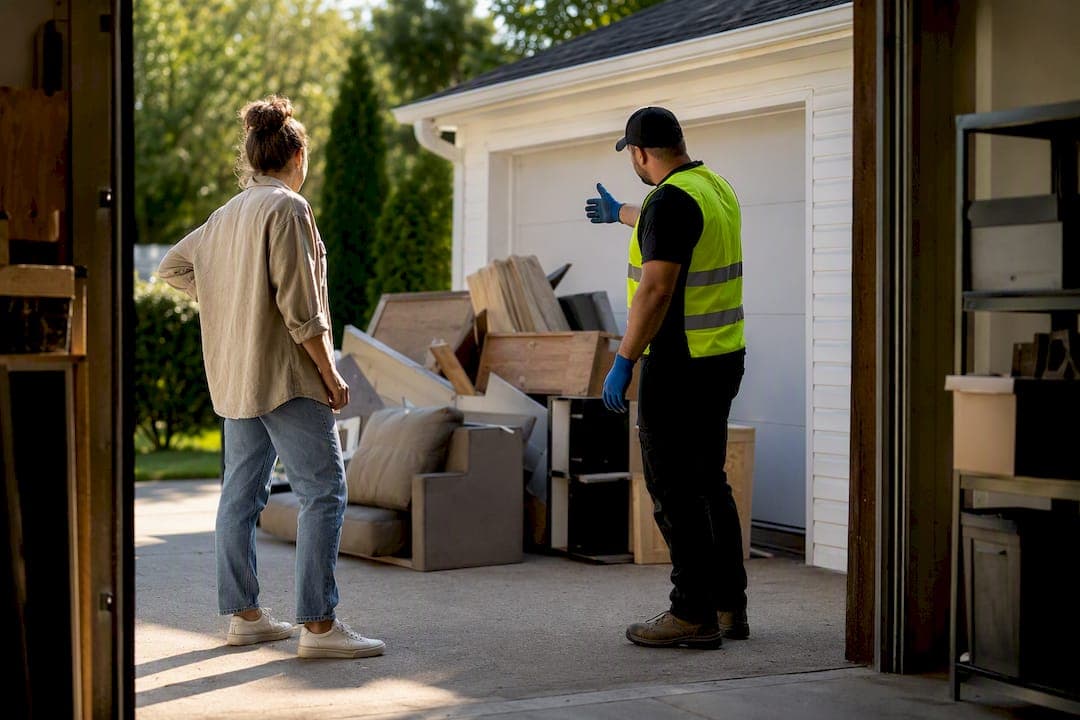
Junk removal is a full-service hauling job: a crew comes to your property, loads up unwanted items, and takes care of transport and disposal so you never touch a dumpster or drive to the dump. It fits furniture and appliance pickups, garage and basement cleanouts, renovation debris, and estate cleanouts where you want the whole mess gone in one visit. Most reputable crews sort loads for donation or recycling before anything reaches a landfill.
TL;DR:
- Most junk removal jobs cost between $100 and $600, with larger cleanouts, like garages or basements, approaching the higher end of the range.
- On-site estimates are more reliable and usually free, especially for complex or large loads, reducing the risk of unexpected surcharges.
- Reputable crews prioritize donation and recycling, with a clear understanding of where usable items and recyclables go, rather than defaulting to landfilling.
- Heavy and dense materials like concrete, soil, and roofing debris often incur extra charges and may affect truck weight limits.
- Hiring a professional service generally saves effort and money for jobs larger than a few small items, thanks to insured crews handling sorting and disposal efficiently.
Table of Contents
- How Does Junk Removal Work, Step by Step?
- What Do Junk Removal Companies Take, and What Do They Skip?
- Where Does Your Junk Actually Go After Pickup?
- How Pricing Works and What You'll Likely Pay
- Getting Ready for Pickup Day
- Questions to Ask Before You Hire Anyone
- EasyScrap's Approach to Local Junk Removal
- When Hiring Actually Makes Sense
- Get a Free Quote From EasyScrap
- Sources
- FAQ
How Does Junk Removal Work, Step by Step?
The process runs on a fairly predictable rhythm, whether you're clearing a single recliner or gutting a basement.
- Get a quote. You can request one by phone with a description of items, by sending photos, or by asking for an on-site walkthrough. On-site estimates are the most reliable because a crew member can see the actual volume and flag anything that might carry an extra fee, according to ConsumerAffairs.
- Schedule the pickup. Many companies offer same-day or next-day windows, and you'll typically get a call or text confirming a two-to-three-hour arrival window rather than an exact time.
- Confirm the price on arrival. The crew walks through your space, checks the items against the quote, and locks in a final number before touching anything. This is where volume-based pricing gets applied.
- Load and haul. The team does the heavy lifting, protects doorways and flooring, and loads everything into the truck.
- Cleanup and payment. Once the truck is loaded, the crew sweeps up debris and you handle payment, usually by card on-site.
- Transport and sorting. After leaving your property, the load gets divided. Reusable items head to donation partners, scrap metal and electronics go to recyclers, and anything left over goes to a transfer station or landfill.
Insured crews matter more than people realize. A worker's compensation and liability policy protects you if someone gets hurt hauling your couch down a narrow stairwell or if a wall gets dinged in the process. Ask about insurance before booking, not after something breaks.
Pro Tip: Take five minutes to photograph anything unusual, like a hot tub, a piano, or a pile of construction debris, and send those photos ahead of time. It shrinks the gap between your phone quote and the final on-site price.
Most single-room jobs wrap up in under an hour once the truck arrives. Full garage or basement cleanouts can run two to four hours depending on access and volume.
What Do Junk Removal Companies Take, and What Do They Skip?
Crews are built to move volume fast, which means they accept a wide range of household and light commercial items but draw a hard line at anything regulated as hazardous.
Commonly accepted:
- Furniture: couches, mattresses, dressers, tables
- Major appliances: refrigerators, washers, dryers, stoves
- Yard waste: branches, old fencing, dirt from small projects
- Electronics: TVs, computers, printers
- Carpet, rugs, and padding
- Boxes, general clutter, and estate cleanout debris
Typical exclusions include hazardous materials such as asbestos, paint thinners, pesticides, and gasoline, along with pressurized tanks and biohazardous waste. The EPA maintains state-by-state contacts for hazardous-waste programs if you're stuck figuring out where an old propane tank or box of chemicals actually belongs.
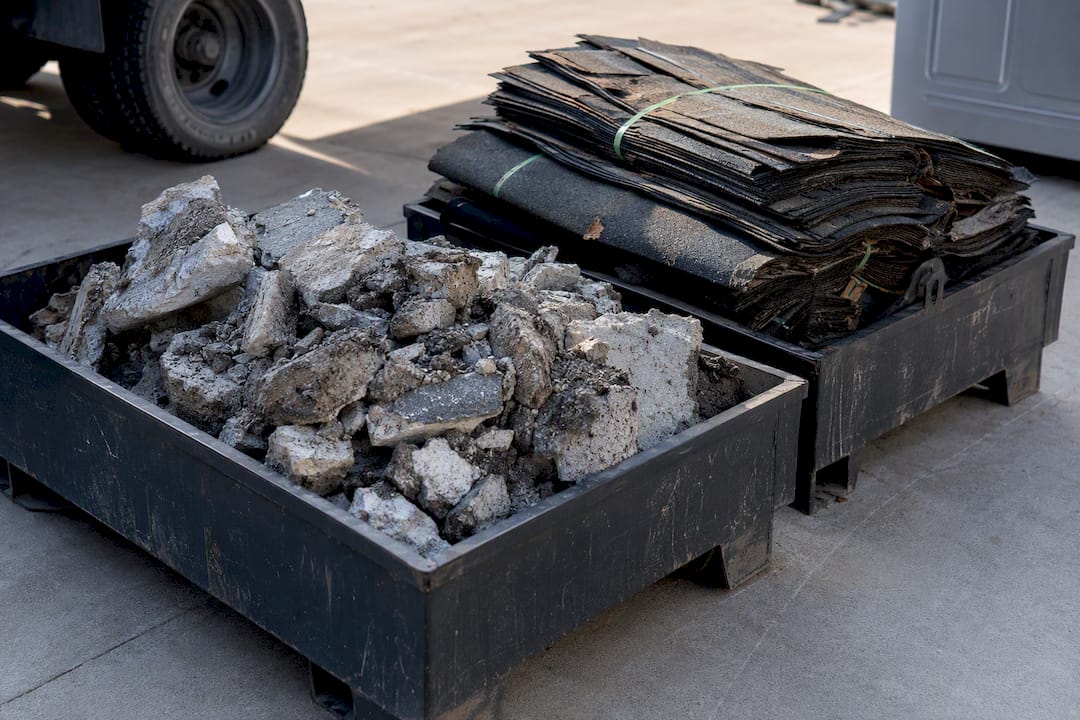
Some items get accepted but cost more: tires, box TVs, refrigerators with refrigerant that needs certified handling, and heavy concrete or soil. Dense materials like concrete and brick often get priced separately because truck axle weight limits force smaller partial loads even when the pile looks modest. Tell your provider about anything unusual before pickup day. A surprise pile of roofing shingles can change your quote on the spot, and nobody likes that conversation happening curbside.
Where Does Your Junk Actually Go After Pickup?
Not everything a crew hauls away ends up in a landfill. Most established companies sort loads into three destinations, and the split matters if you care about waste reduction.
- Donation. Furniture, appliances in working condition, and usable household goods often get routed to local charities or thrift stores, assuming the items are clean and functional.
- Recycling. Scrap metal, cardboard, and electronics typically go to certified processors that specialize in breaking those materials down safely, especially e-waste with circuit boards and batteries.
- Transfer stations and landfills. Anything that can't be reused or recycled, like soiled carpet or broken particleboard furniture, gets landfilled. Tipping fees at these facilities are a real cost driver, which is part of why heavy or non-recyclable loads cost more.
Sorting for donation and recycling instead of dumping everything is standard practice among professional haulers, but the diversion rate varies by company. Asking directly about donation partners and recycling relationships is a better gauge of environmental responsibility than trusting a vague "eco-friendly" claim on a website. If landfill avoidance matters to you, ask what percentage of a typical load gets diverted and where the donated items actually go.
How Pricing Works and What You'll Likely Pay
Volume drives cost more than anything else. Most companies price by truck-fraction tiers, quarter load, half load, three-quarter, and full truck, rather than charging by the hour, according to ConsumerAffairs. Itemized or flat per-piece pricing shows up for smaller jobs, like a single mattress or one appliance.
Surcharges are common and worth asking about upfront. Stairs and long carry distances add labor time. Heavy-fill materials like concrete, dirt, and roofing debris often carry a separate rate because of truck weight limits. Electronics and appliances with refrigerant can trigger processing fees tied to certified disposal requirements.
Most residential jobs land between $100 and $600, with small single-item pickups at the low end and full garage or basement cleanouts pushing toward the top. Your actual price depends heavily on region, volume, and whether your load includes anything that requires special handling.
For an accurate number, skip the guesswork. Send clear photos or an itemized list if you're booking by phone, or ask for an on-site evaluation if the job involves more than a few pieces. A five-minute walkthrough beats a phone estimate almost every time when the load is large or mixed.
Getting Ready for Pickup Day
A little prep work speeds things up and keeps your final bill close to your original quote, much like advice in how to prepare for professional house cleaning.
- Sort ahead of time. Separate what's leaving from what's staying, and use tape or sticky notes if multiple people share the space.
- Clear a path. Make sure hallways, doorways, and stairs are free of obstacles so the crew can move quickly and safely.
- Flag anything heavy or fragile. Mention pianos, safes, glass tabletops, or hot tubs when you book, not when the truck shows up.
- Decide curbside or in-home. Curbside pickup is often faster and slightly cheaper since the crew skips the walkthrough; in-home removal costs a bit more but means you don't lift a finger.
- Keep your paperwork. Ask for a receipt, and if donation is part of the job, request a donation receipt separately for tax purposes.
Pro Tip: If you're between a curbside drop and full in-home service, ask the company what their standard turnaround time looks like for each. The time difference is often smaller than people assume, and in-home service saves your back.
Weather and access issues do happen. If a snowstorm or a blocked driveway threatens your appointment, call ahead. Most companies would rather reschedule than send a truck they can't safely load.
Questions to Ask Before You Hire Anyone
Picking a reliable provider comes down to a short list of direct questions, not a gut feeling.
- Are you insured, and can you show proof of liability and worker's compensation coverage?
- What's included in the quote, and what triggers a surcharge?
- Do you offer on-site estimates, and is the on-site price final?
- Where do donated and recyclable items actually go?
- Can I see recent reviews or speak to a past customer?
Red flags are easy to spot once you know what to look for: no written estimate, vague or evasive answers about where items end up, thin or nonexistent reviews, and a final price that jumps once the truck is already in your driveway. None of those should make it past a phone call.
| Trust signal | Why it matters |
|---|---|
| Insured crew | Protects your property and the workers if something goes wrong |
| Transparent pricing and surcharges | Prevents last-minute price jumps at pickup |
| On-site estimate option | Reduces the risk of hidden fees on larger or mixed loads |
| Donation and recycling partnerships | Signals real landfill diversion, not just marketing language |
| Clear receipts | Gives you proof of service and, where applicable, donation documentation |
For straightforward, small jobs, one accurate on-site quote is usually enough. For larger cleanouts with unknowns, getting two on-site estimates costs you little and gives you a real price comparison instead of a guess.
EasyScrap's Approach to Local Junk Removal
A local junk removal service offers free on-site quotes and an insured crew for junk removal jobs in the Lawrence, Andover, Lowell, and Haverhill areas. Same-day booking is available for jobs that can't wait, and the service catalog covers everything from single-item furniture pickups to full property cleanouts. Donating and recycling usable items is a standing priority, not an afterthought tacked onto the pitch.
When Hiring Actually Makes Sense
Hauling junk yourself saves money only if your time, your back, and a truck rental are all free. Once you factor in tipping fees, labor, and the hassle of sorting for donation, professional removal usually wins for anything bigger than a car trunk's worth of stuff. A local, donation-minded crew like EasyScrap makes that trade-off easier to accept.
— Easy
Get a Free Quote From EasyScrap
This service aims to provide two things that make junk removal painless: an honest on-site quote and a crew that shows up insured and ready to work. Booking is simple. Describe what needs to go, and you'll get a free quote before anyone commits to anything.
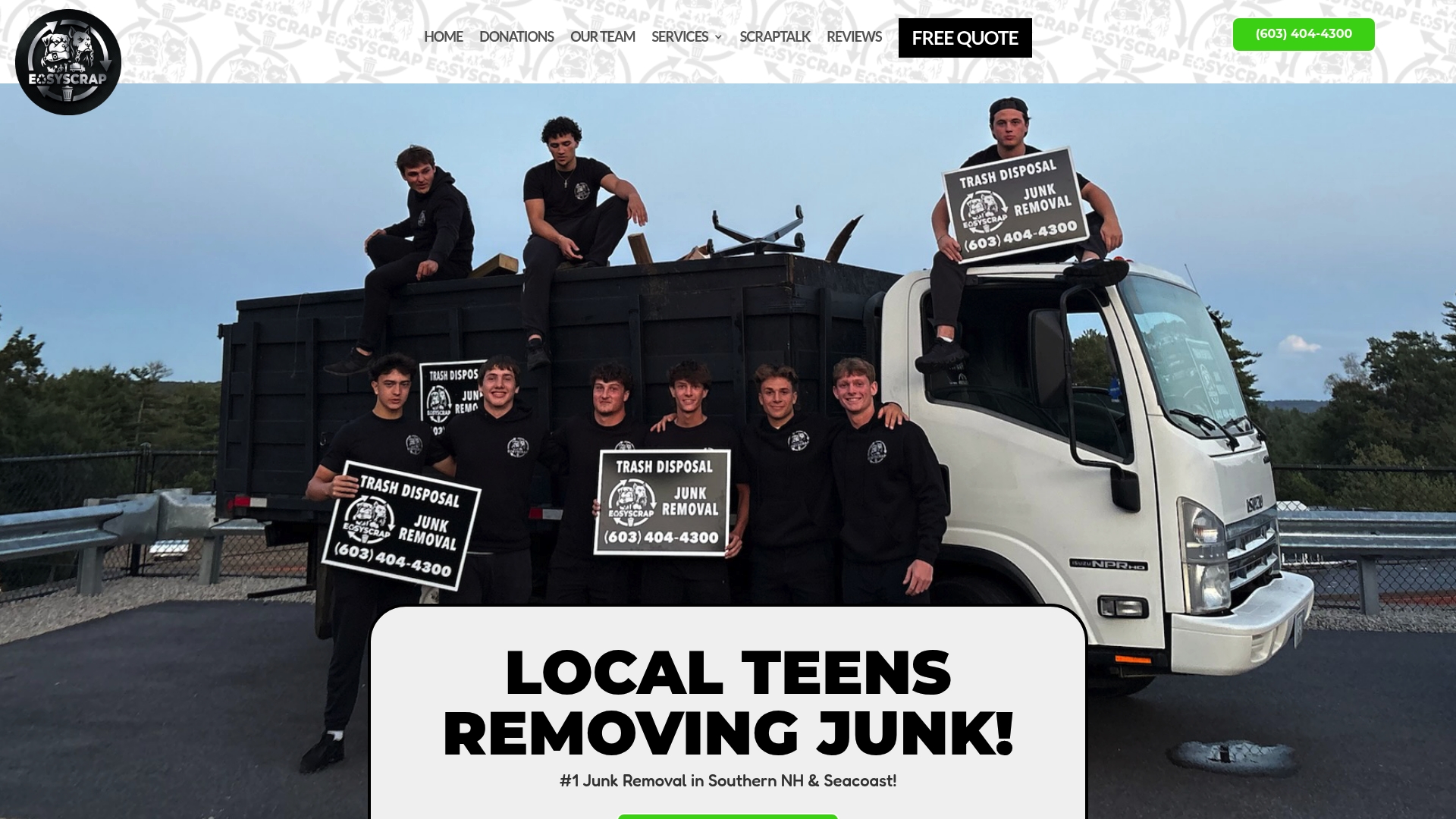
Same-day pickup may be available for time-sensitive jobs, and loads are typically sorted with donation and recycling as priorities. Whether you're clearing out a single refrigerator, tackling a basement cleanout, or handling a full garage purge, the process stays the same: on-site quote, transparent pricing, insured crew, responsible disposal. If you're comparing providers, run through the questions covered earlier, insurance, surcharges, and where items actually end up, before you commit to anyone. When you're ready, request your free quote and get a pickup window that works for your schedule.
Sources
Readers who want to dig deeper into hazardous-waste rules or pricing specifics can check the EPA's hazardous waste basics for state-level disposal programs, or review ConsumerAffairs' cost breakdown for a wider look at how pricing varies by region and project type.
- How does junk removal work? — ConsumerAffairs
- Links to hazardous waste programs and state agencies — EPA
- How Junk Removal Works: Pickup to Disposal Process Guide — Three Brothers Hauling & Logistics
FAQ
What Is the Minimum Cost for Junk Removal?
Small single-item pickups typically start around the low end of the $100 to $600 range that covers most residential jobs, though exact minimums vary by company and region.
What Do Junk Removal Companies Not Take?
Most companies won't take hazardous materials like asbestos, chemicals, gasoline, or pressurized tanks; the EPA lists state-specific programs for disposing of those items safely.
Where Does the Stuff Junk Removal Companies Take Actually Go?
Reusable items often go to donation partners, recyclable materials like metal and electronics go to certified processors, and anything left over goes to a transfer station or landfill.
Is Hiring a Junk Removal Service Worth It?
For anything beyond a small car-trunk load, yes. It saves you the truck rental, the dump run, and the tipping fees, and companies like EasyScrap handle the sorting and disposal for you with an insured crew.