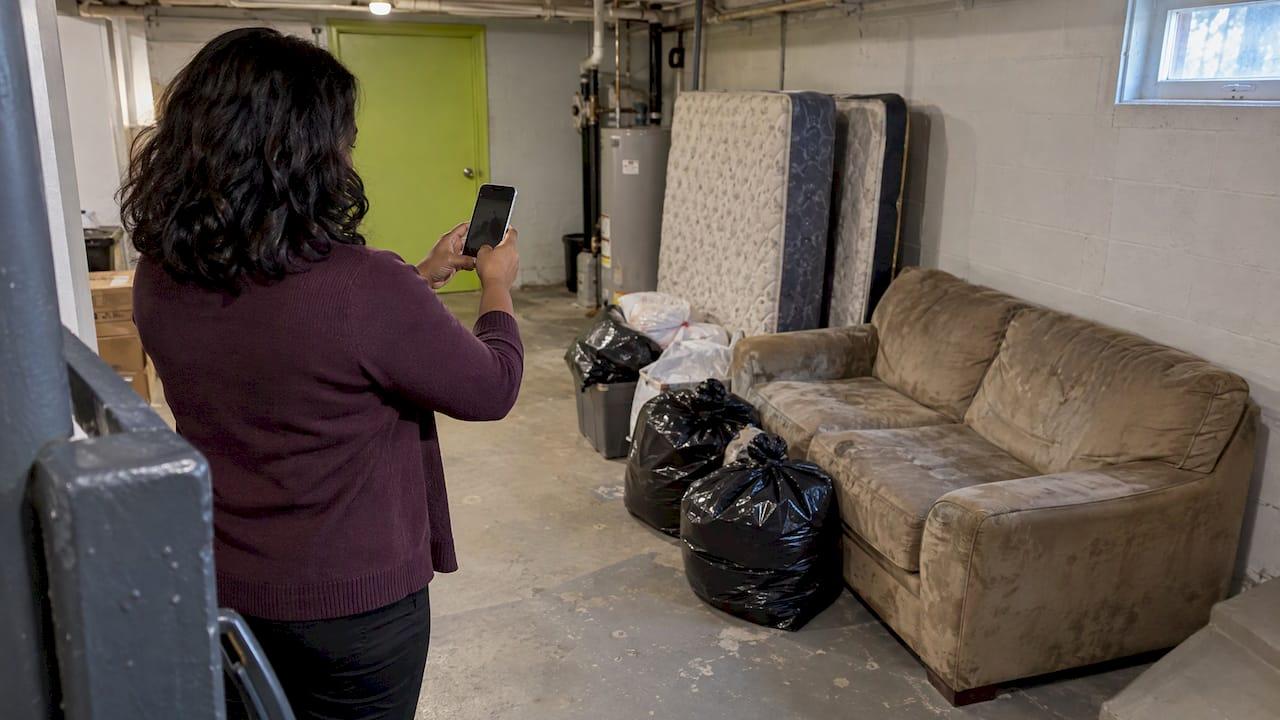
A Massachusetts landlord can usually recover the real cost of hauling away furniture and trash a tenant leaves behind, but probably not by taking it out of the security deposit. The safer route is a documented, itemized bill for the actual cost, backed by photos and a receipt from the hauler. Fast, properly invoiced removal is what makes that bill hold up, and it is the work we do for landlords, investors and Realtors through our junk removal service.
This guide is for owners of one rental or twenty, for the grandparent who inherited a two-family, and for the Realtor who needs a unit cleared before a listing. It explains what the law allows, what to put in the lease, how to document a charge, and what a defensible number looks like.
TL;DR
- Massachusetts does not forbid charging for left-behind junk, but the security deposit can only be used for a short list of items, and a unit full of furniture or garbage is unlikely to fit it.
- Bill the former tenant separately for the actual cost of removal, with photos, an itemized list and the hauler's invoice. A flat "trash fee" is hard to defend.
- Disclose removal charges in the lease. Never throw out a tenant's belongings without checking the rules for abandonment or eviction first.
- A wrongful deposit deduction can cost you triple damages, interest and attorney's fees, so the way you bill matters more than the amount.
- Hiring a licensed, insured crew the same week keeps vacancy short and gives you a clean paper trail.
Table of Contents
- Can a Massachusetts landlord charge for junk left behind?
- Why the security deposit is the wrong place to bill it
- What counts as left-behind property, and when you may remove it
- How to bill the tenant, step by step
- What the charge should look like
- Put it in the lease before you need it
- When the unit is more than a few bags
- Get the unit cleared and the paperwork done
- FAQ
- Sources
Can a Massachusetts landlord charge for junk left behind?
Yes, in principle. Tenants are expected to leave a unit empty and clean, and when they do not, the landlord pays someone to haul the contents away. MassLandlords, a Massachusetts landlord association, notes that state law does not specifically prohibit move-out fees. It also points out that Chapter 93A, the state's consumer protection law against unfair or deceptive practices, applies. So the charge has to be disclosed in advance and be fair.
In practice, three things decide whether a charge survives a challenge:
- It was disclosed. The lease says that items left behind will be removed at the tenant's cost, ideally with an estimate or a method for calculating it.
- It is real. The amount equals what you actually paid, not a round number you chose.
- It is documented. Dated photos, an itemized list and an invoice or receipt exist.
If any of the three is missing, the tenant has an argument that the charge is unfair, and in Massachusetts a weak argument from a tenant can still cost a landlord real money.
Why the security deposit is the wrong place to bill it
Many landlords instinctively subtract the hauling cost from the deposit. In Massachusetts that is the risky move.
Under Chapter 186, Section 15B, the law that governs residential security deposits, you may hold a deposit equal to one month's rent. You must return it, with a sworn itemized list of any deductions, within 30 days after the tenancy ends. A summary of the statute lists only three permitted deductions: unpaid rent or water charges, a lawful increase in property taxes, and reasonable repair of damage beyond ordinary wear.
Left-behind couches, mattresses and garbage bags are not damage to the apartment. MassLandlords' reading is that dumpster or flat-rate removal costs are unlikely to qualify as a lawful deduction, and that landlords should instead bill the renter after move-out. The same source warns that wrongful deductions can expose a landlord to triple damages and attorney's fees. The summary linked above adds 5% interest and court costs for failures to hold, transfer or return the deposit properly.

A simple worked example: a tenant leaves a sofa, two mattresses and eight bags of trash. You pay a hauler for the job. Returning the full deposit on time and sending a separate itemized invoice for the hauling is the cleaner path. Keeping part of the deposit to cover it invites a claim that could be several times larger than the invoice.
This is general information, not legal advice. For a specific dispute, talk to a Massachusetts landlord-tenant attorney.
What counts as left-behind property, and when you may remove it
The biggest mistake is not the charge. It is the timing of the removal.
There are three common situations:
- The tenant moved out and left obvious trash. Garbage bags, broken furniture and food waste are the easy case, and photos of the condition before you touch anything are your first step.
- The tenant left belongings of value and may not have left for good. Do not dispose of them until you are certain the tenancy has ended and you have the right to possession. MassLandlords advises that landlords need written permission and possession before disposing of left-behind property.
- The tenant was evicted. Here the rules shift costs onto you. The state's move and store law, found in Chapter 239, Section 4, requires an evicted tenant's belongings to be moved and stored safely for up to six months. The landlord pays for the removal, and storage is technically the tenant's expense, though a facility may require payment up front. In eviction cases, our write-up on eviction cleanout costs explains the budgeting side.
If you are unsure which situation you are in, pause and confirm before anything leaves the unit. A removal that comes too early is far more expensive than a few days of waiting. Our guide on what to do when a tenant leaves junk behind walks through the decision.
How to bill the tenant, step by step
1. Photograph everything before it moves
Take wide shots of each room and close-ups of large items, with the date visible or captured in the file. Do this before any crew arrives. These photos are your evidence of what was there.
2. Get a written, itemized quote or invoice
The invoice should state the date, the address, what was removed and the total. Our crews haul furniture, appliances, mattresses and general debris, so one invoice can cover a whole unit. A separate line for an appliance, such as a refrigerator, makes the bill easier for a tenant or a judge to follow. See our pages on furniture removal and appliance removal for what we take.
3. Charge the real cost, nothing more
Courts and consumer protection rules look for a charge that tracks actual cost. A figure with no receipt behind it is the weakest position you can be in. MassLandlords' Nomer Caceres suggests tying lease language to the city's bulk-trash fee schedule as posted at move-out, and keeping dumpster receipts when the volume exceeds what the city collects in a week or two.
4. Send the bill separately from the deposit
Return the deposit, with its sworn itemized list if you make any permitted deductions, within the 30-day window. Send the junk removal invoice as its own document with the photos and the receipt attached. A short, factual cover letter is enough.
5. Keep the file
Store the lease clause, photos, invoice and correspondence together for as long as a claim could be made. If the tenant disputes the charge, this file is your whole case.
What the charge should look like
There is no official Massachusetts price list for hauling, and what you pay depends on volume, the kinds of items, access (stairs, third floors) and disposal fees. Appliances, mattresses and some electronics can carry extra handling or recycling requirements. What matters for billing is that the number on your invoice is the number you paid.
A sound invoice looks like this in structure:
| Line | What to record |
|---|---|
| Date of removal | The day the crew worked |
| Items removed | Sofa, two mattresses, 8 bags of trash, one refrigerator |
| Hauling and disposal | The amount on the hauler's invoice |
| Attachments | Before photos, hauler invoice |
For typical ranges on a move-out cleanout, see our breakdown of move-out junk removal costs. Do not add a margin of your own. A markup turns a defensible reimbursement into a penalty the tenant can challenge.
Put it in the lease before you need it
Most disputes are decided by what the tenant was told at signing. A short clause does most of the work:
- The tenant must remove all personal property and trash by the end of the tenancy.
- Items left behind will be removed, and the tenant will be billed the actual cost of removal and disposal.
- Where it is practical, state how the cost will be measured, for example by reference to the hauler's invoice or the municipal bulk-trash fee schedule.
MassLandlords advises disclosing item-removal charges at lease signing with a cost estimate. Have a Massachusetts attorney review the final wording, since a clause that reads as a hidden or inflated fee can create its own Chapter 93A problem.
When the unit is more than a few bags

Some units are not a couch and a few bags. Cluttered, hoarded or estate-type properties take longer and cost more to clear, and they are where documentation matters most. For an idea of how the economics of heavily cluttered homes work in a sale, see this piece on cleanout costs on a hoarder house. For rentals, the same rule applies: photograph first, itemize, keep the invoice.
For investors and Realtors turning a unit quickly, the landlord cleanout checklist and our note on junk removal for property managers show how to line up removal, repairs and re-listing so vacancy stays short.
Our view: speed and paperwork are the same job
We are a young, local crew serving Lawrence, Andover, Boston, Lowell and Haverhill, and landlords tell us the same thing: the junk is not the problem, the delay is. Every extra week a unit sits full is a week of lost rent and a week the tenant dispute can grow.
That is why we offer same-day junk removal and free quotes, and why our crew is insured. A fast, insured removal gives you a clean unit and a dated invoice you can attach to your bill, which is exactly the record a Massachusetts landlord needs.
We also donate and recycle usable items whenever possible, so a cleanout does not have to mean a full dumpster. For landlords, that means one call covers furniture, appliances, mattresses and general debris, and your invoice shows what was taken.
Easy
Get the unit cleared and the paperwork done
If you have a unit to turn over, we handle the removal and give you a free quote first. Our crew is insured, can often come the same day, and covers furniture, appliances, garage, basement and attic cleanouts, and estate and hoarding situations. Start with our junk removal page or see everything on the services page.

When you book, tell us you need an itemized invoice for a tenant bill, and take your before photos first.
FAQ
Can I keep the security deposit to pay for junk removal in Massachusetts?
Probably not. The statute allows deductions only for unpaid rent or water, a lawful tax increase and reasonable repair of damage beyond ordinary wear, and left-behind items are unlikely to qualify. Return the deposit on time and bill the removal separately. Ask a Massachusetts landlord-tenant attorney about your specific case.
How long do I have to return the deposit?
The sworn itemized list of any deductions, or the deposit itself, is due within 30 days after the tenancy ends, according to the statute. Missing it or deducting improperly can lead to triple damages, interest and attorney's fees.
Can I charge a flat trash removal fee?
A flat fee is hard to defend because it may not match what you spent. Billing the actual hauling and disposal cost, with photos and the invoice, is the safer approach and fits the fairness standard in Chapter 93A.
What if the tenant was evicted?
The rules are different. Under the move and store law, the landlord pays to move the tenant's belongings and they must be stored safely for up to six months. Do not dispose of them as junk without following that process.
Sources
- Mass. General Laws c.186 § 15B (mass.gov)
- Can Landlords Charge Move-Out and Item Removal Fees in Massachusetts? (MassLandlords)
- Move and Store (MassLandlords)
- Massachusetts Security Deposit Law: Triple Damages Guide