
The smartest order to work through is resell first, donate second, recycle third, hire a removal service fourth. Treat straight-to-landfill disposal as the last resort. Selling recovers cash, donation gets a fast writeoff and community benefit, recycling handles what nobody wants, and a professional crew like Easyscrapofficial fills the gap when volume or deadlines make DIY unrealistic. Whatever route you pick, keep documentation. Commercial waste has rules that household trash does not.
TL;DR:
- Reselling furniture is viable mainly for high-condition, branded items like Herman Miller chairs, with marketplace sales taking three weeks on average.
- Donation pickups, such as from The Salvation Army, generally require two to four weeks and demand clear documentation, especially for high-value items.
- Metal-based furniture, including steel cabinets and chair bases, is the easiest to recycle, while laminate and composite materials often require specialized facilities.
- Hiring professional removal services is essential for full-floor decommissioning, as they handle collection, sorting, documentation, and proper routing of all items.
- Commercial waste must follow strict licensing and handling rules, with proper paperwork like transfer notes and receipts necessary to avoid fines or refusal at disposal sites.
Table of Contents
- Where Can You Sell Used Office Furniture?
- What Are the Best Donation Options for Office Furniture?
- Which Office Furniture Materials Are Easy to Recycle?
- Should You Hire a Professional Furniture Removal Service?
- What Are Your Legal Responsibilities for Business Waste?
- How Do You Choose the Right Disposal Route for Each Item?
- How Do You Execute an Office Furniture Disposal Project?
- What Does a Furniture Removal Crew Actually Do on Site?
- Balancing Cost, Speed, and Sustainability
- Get Furniture Out Fast Without Skipping the Paperwork
- Where to Learn More About Office Waste Rules and Reuse
- Sources
- FAQ
Where Can You Sell Used Office Furniture?
Condition and brand decide whether furniture is worth selling. A dozen matching Herman Miller task chairs will interest a trade buyer; one scuffed bookcase belongs on a marketplace listing where a single buyer might pay more for it.
Trade buyers (office liquidators, used-furniture dealers) move fast. They'll often quote a price over photos and haul a truckload the same week, but they pay wholesale because they need margin to resell. Marketplaces like Facebook Marketplace or Craigslist pay better per item, though you're managing messages, showings, and pickup scheduling yourself.
Before listing anything:
- Photograph each piece from multiple angles, including any damage.
- Note exact dimensions, brand, and model number if visible on a tag.
- Disassemble bulky items when possible. It photographs better and moves easier.
- Price slightly below comparable furniture resale sites to sell faster.
- Expect one to three weeks for marketplace sales, days for trade buyers.
What Are the Best Donation Options for Office Furniture?
The Salvation Army remains one of the most accessible national options, running its own pickup service in many regions for furniture that's clean, functional, and free of major damage. Most nonprofit donation programs share similar standards: no rips, no stains, no missing hardware, and everything has to actually work.
Pro Tip: Call the charity before you disassemble anything. Some accept file cabinets and desks whole but decline modular cubicle systems because they can't resell the parts.
Steps that matter for documentation:
- Ask for a receipt at pickup, even for a handful of chairs.
- For donations valued over $500, the IRS requires Form 8283 attached to your tax return.
- Photograph items before pickup as backup proof of condition and quantity.
Lead times matter more than people expect. National charities frequently need two to four weeks to schedule a pickup, especially during office move season in spring and late summer. Book your donation slot before you lock in a moveout date, not after.
Which Office Furniture Materials Are Easy to Recycle?
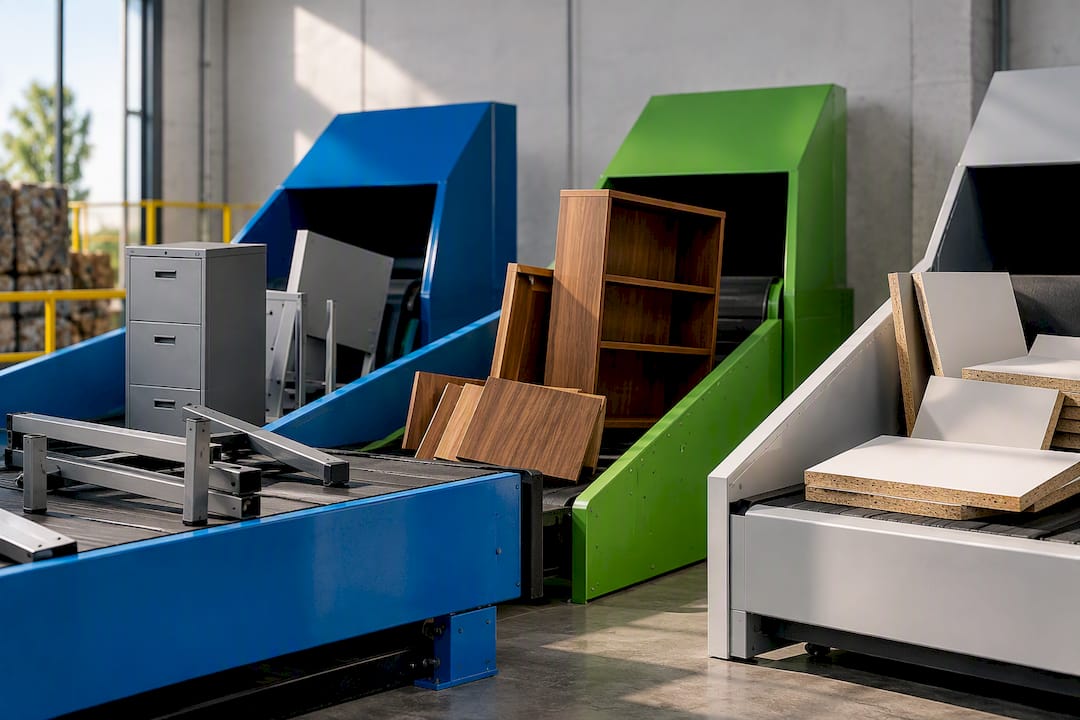
Steel filing cabinets, metal desk frames, and chair bases are the easiest category. Scrap yards take them by weight, and most metal recyclers process them without any special handling. Solid wood desks and shelving can often be reclaimed or repurposed by salvage yards and furniture restorers, particularly older pieces built before manufacturers switched heavily to composite materials.
Laminate and MDF furniture, the kind that makes up most modern desks and cubicle walls, is harder. Mixed materials, glue layers, and plastic laminate coating mean many standard recycling facilities won't take them at all.
Foam and upholstery add another wrinkle. Older cushioned chairs and sofas may contain chemical flame retardants that some jurisdictions classify as special waste, so it's worth confirming with a qualified recycler before assuming a piece can go in a standard load.
A few practical notes on routing:
- Metal-heavy items: local scrap yards, often free or even paid by weight.
- Solid wood: salvage dealers or furniture recyclers that specialize in reclaimed lumber.
- Mixed laminate/composite pieces: specialized furniture recyclers, not curbside programs.
- Foam and upholstery: verify handling requirements before drop-off.
Should You Hire a Professional Furniture Removal Service?
Once you're clearing an entire floor, or working against a lease deadline, professional removal stops being a convenience and becomes the only realistic option. Full-service providers typically handle four things at once:
- Collection and disassembly across every workstation, conference room, and storage closet.
- Routing decisions on which pieces go to resale, which go to donation, and which need recycling.
- Certified disposal for anything left over that can't be diverted.
- Documentation confirming where everything ended up.
Some office decommissioning providers run resale and donation networks that offset part of the job's cost by recovering value from usable furniture instead of paying to landfill it. That diversion model is also why pricing varies so much between quotes. A job with easy loading-dock access and a flexible timeline costs less than a rush job on the fifth floor of a building with one working elevator.
Pro Tip: Ask any vendor what percentage of furniture they divert from landfill versus sending straight to disposal. A vague answer usually means they don't track it, which tells you something.
What Are Your Legal Responsibilities for Business Waste?
Office furniture disposal isn't governed by the same rules as household trash. Businesses generating commercial waste are expected to use licensed carriers and follow proper handling procedures, a standard the EPA lays out clearly for facility operators managing waste of any volume.
Most municipal drop-off centers exist for residents, not businesses, and many explicitly prohibit commercial loads. Showing up with a truckload of office chairs can mean a refused drop-off or a fine, depending on the municipality.
Before hiring anyone, confirm they're a licensed waste carrier and ask for a waste transfer note covering your load. That document, along with donation receipts and any recycling confirmations, forms your paper trail if a landlord, auditor, or regulator ever asks where the furniture went.
- Verify carrier licensing before booking, not after the truck arrives.
- Request a signed waste transfer note for any commercial-volume load.
- Keep every receipt and confirmation for at least a few years.
How Do You Choose the Right Disposal Route for Each Item?
Match the route to six factors: condition, volume, timeline, confidentiality of anything stored inside the furniture, sustainability goals, and budget. A single stained chair and a hundred matching workstations rarely belong on the same disposal path.
Run through this quick sequence for each batch of items:
- Check condition first. Anything clean and functional goes to resale or donation. Anything broken skips straight to recycling or disposal.
- Estimate volume. A few pieces suit DIY selling or donation drop-off. Dozens of pieces usually justify a professional pickup.
- Set your timeline. A flexible schedule allows marketplace sales; a tight lease deadline points toward hiring help immediately.
- Clear confidential materials from any drawers or cabinets before anything leaves the building.
Pro Tip: When vendors quote a job, ask three questions: What's your diversion rate? Do you provide documentation? What's the pickup window? Those three answers separate serious providers from a guy with a truck.
A single extra chair usually goes to a marketplace listing. A 20-person team refresh usually splits between donation and a trade buyer. A full-floor decommission almost always needs a professional crew coordinating resale, donation, and disposal simultaneously, a workflow IFMA recommends planning well ahead of the actual move date.
How Do You Execute an Office Furniture Disposal Project?
- Build the inventory. Walk every space and log each item, its condition, a photo, and rough dimensions. Empty every drawer and cabinet of confidential paperwork or drives before anything gets tagged.
- Prep for pickup. Disassemble large pieces where practical, bag small hardware and label it by item, and stage everything near the loading area or elevator.
- Schedule early. Book charity pickups and professional crews several weeks out, not the week of your move. Donation slots and popular moving weekends fill fast.
- Confirm documentation on completion. Get your donation receipts, waste transfer notes, and any recycling confirmations before the crew leaves the building, not after.
- File everything. Store receipts and transfer notes with your facility records for future audits or lease-end walkthroughs.
Following this sequence in order avoids the most common mistake facility teams make: scheduling pickup before confirming what's confidential, sellable, or donatable, which turns a planned clearout into a scramble.
What Does a Furniture Removal Crew Actually Do on Site?
A professional removal service handles furniture removal, junk removal, and full cleanouts for homes and businesses across a regional area, and the day-to-day work looks a lot like the process described above. Crews assess what's being removed, coordinate donation where items qualify, and route what's left to recycling whenever the material allows it.
What that looks like in practice:
- Quotes before any work begins, so there are no cost surprises mid-job.
- A crew handling the physical hauling, including heavy or awkward pieces.
- Donation coordination for furniture in good enough condition to give a second life.
- Recycling routed wherever local facilities accept the material.
- Some providers offer same-day scheduling for urgent jobs.
That last point matters most for facility managers working against a lease deadline. A vendor able to schedule promptly, rather than weeks later, changes what's realistic for your timeline.
Balancing Cost, Speed, and Sustainability
Cost and speed pull against sustainability more often than guides admit. Selling and donating take time you might not have; recycling and disposal are faster but leave value on the table. The honest default for a typical mid-size office refresh: donate and resell whatever doesn't cost you the deadline, then hire a removal service for the rest and get documentation either way. Skipping the paperwork to save an afternoon is the one shortcut that actually creates risk.
— Easy
Get Furniture Out Fast Without Skipping the Paperwork
Some professional removal services exist for the gap between "I should sell this" and "I have a deadline in three days." Unlike hiring separate vendors or coordinating charity pickups yourself, they provide one crew that handles hauling, sorting donations, and recycling under one booking. That's the practical advantage over piecing together resale, donation, and disposal on your own timeline: one call instead of four.

Whether it's a single office desk or a full floor of workstations, furniture removal covers the physical work while donation coordination handles the paperwork. Larger cleanouts, including cubicle teardown and mixed-material waste, fall under junk removal. To get a quote, send photos of what needs to go, a rough item count, and any access notes like elevators or loading docks. Most quotes turn around quickly, and same-day pickup is often available for businesses on a tight deadline.
Where to Learn More About Office Waste Rules and Reuse
For the regulatory side of commercial waste handling, the EPA's hazardous waste guidance is the primary reference. Facility managers planning a larger decommission can also check IFMA for coordination best practices, and businesses considering resale value should review this furniture cost guide before pricing items. Local donation and licensing rules vary, so confirm specifics with your municipality before scheduling anything.
Sources
- The Salvation Army USA
- International Facility Management Association (IFMA)
- Office Decommissioning Services - Office Furniture Surplus
FAQ
How Do I Get Rid of an Office Chair I Don't Want?
A single chair in good condition is usually your easiest donation or marketplace sale, since it's small enough to transport without special equipment. A damaged chair with foam or upholstery issues may need a specialized recycler, and Easyscrapofficial can pick up small loads like this alongside larger furniture removal jobs.
Where Can I Drop Off Large Furniture Items for Free?
Free drop-off options are typically limited to municipal facilities serving residents, and many explicitly exclude commercial or business waste. Charities like The Salvation Army sometimes offer free pickup instead of drop-off for qualifying furniture, which avoids the transport problem entirely.
What Can I Do With an Old Office Chair That's Damaged?
A damaged chair with torn upholstery or broken parts generally isn't accepted by donation programs, since most charities require functional, presentable condition. Recycling is usually the next step, though foam-filled seating sometimes needs a specialized recycler rather than a standard scrap facility.
Are Household Drop-Off Centers Allowed to Take Business Furniture?
Many municipal drop-off centers are built for residential waste only and prohibit commercial loads, so bringing office furniture there can mean a refused load or a fine. Businesses are expected to use a licensed carrier for commercial waste under EPA guidance, which also means keeping a transfer note as proof of proper handling.
How Much Does Professional Office Furniture Removal Cost?
Pricing depends on volume, disassembly needs, and building access, so costs vary job to job rather than following a flat rate. Easyscrapofficial provides free quotes based on photos and item counts, with current pricing available directly through the furniture removal page.