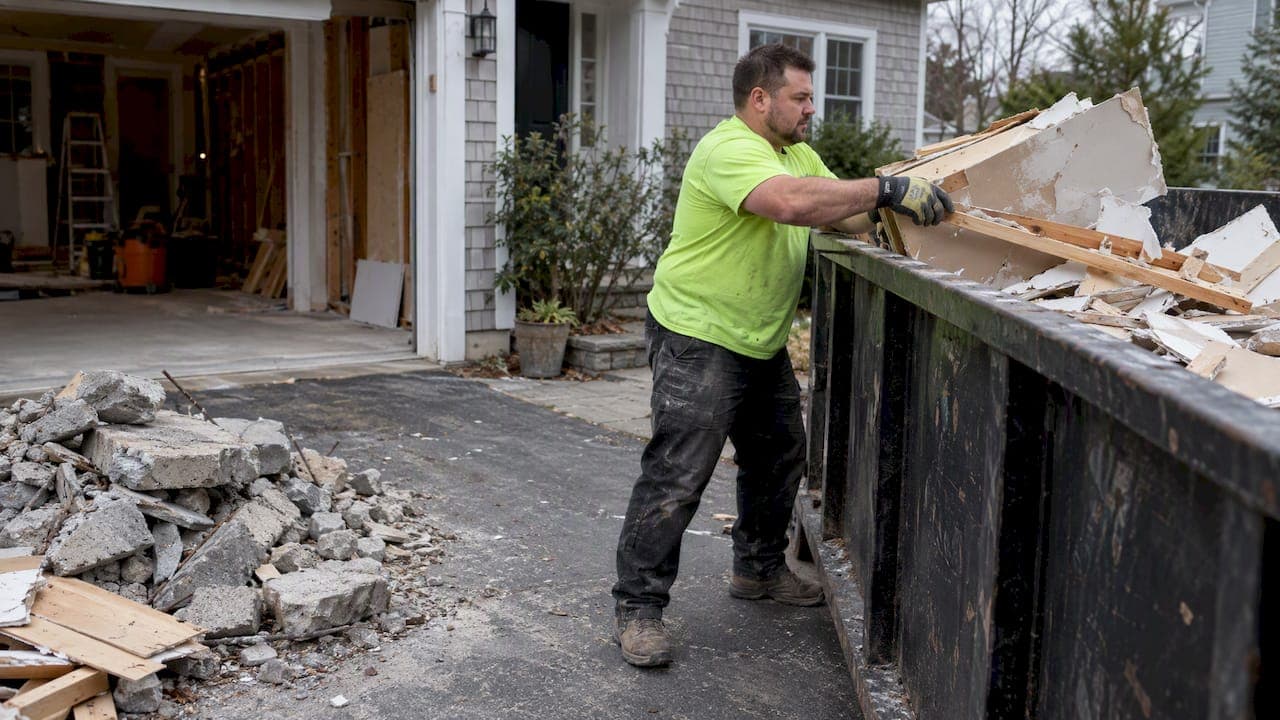
Construction debris, often called construction and demolition (C&D) debris, is the material generated when crews build, renovate, or tear down structures like buildings, roads, and bridges. It includes everything from broken concrete to scrap wood and drywall, and these materials vary enough that some can go straight to recycling while others need special handling under separate rules.
TL;DR:
- Concrete, asphalt, and roofing can consume dumpster capacity quickly; rental charges may reflect both volume and weight, with dense loads triggering overage fees.
- For buildings constructed before 1978, check for lead paint; if asbestos or another hazardous material is suspected, stop work and contact a licensed handler.
- Separate concrete, metal, wood, and gypsum when practical, and call a certified processor first because acceptance rules and sorting requirements vary by facility.
- Use DIY hauling for smaller jobs with light, uniform debris; hire a professional for heavy loads, tight deadlines, suspected hazards, or site constraints.
- Confirm local rules before disposal, especially for land clearing, since some jurisdictions treat brush, stumps, and vegetation separately from building debris.
Table of Contents
- What construction debris typically includes
- Why construction debris isn't treated like household trash
- Hazardous vs. non-hazardous construction debris: what to watch for
- How to manage and dispose of construction debris
- What drives cost and timeline for debris removal
- When to hire a professional versus doing it yourself
- A practical takeaway on clearing debris efficiently
- EasyScrap construction debris cleanup and hauling
- FAQ
- Sources
- Primary sources and guides
What construction debris typically includes
If you've stood in the middle of a job site at tear-out stage, you already know construction debris isn't one uniform pile. It's a mix of heavy, bulky, and sometimes awkward materials that show up in different volumes depending on the project type.
The most common categories include:
- Concrete and masonry: broken slabs, foundations, brick, and block from demolition or site prep.
- Wood: framing lumber, plywood, trim, and pallets, both treated and untreated.
- Drywall and gypsum: cutoffs and demo debris from wall and ceiling work.
- Metals: rebar, pipe, wiring, ductwork, and structural steel.
- Asphalt: removed from driveways, parking lots, and road resurfacing jobs.
- Roofing materials: shingles, underlayment, and flashing pulled during reroofing.
- Glass: windows, doors, and glazing removed during renovations.
- Insulation and plastics: foam board, batt insulation, vapor barriers, and PVC trim or piping.
- Fixtures: cabinets, sinks, toilets, and light fixtures pulled during remodels.
- Site-clearing debris: stumps, brush, and soil disturbed during excavation or grading.
Contractors tend to generate the bulkiest loads from concrete, asphalt, and roofing tear-offs since those materials carry weight fast, even in small quantities. A single pallet of shingles or a short run of broken slab can fill a dumpster faster than a truckload of lumber scraps.
Land-clearing debris deserves its own note. Some jurisdictions separate brush, stumps, and cleared vegetation from building-related C&D entirely, treating it more like yard waste with its own drop-off or composting pathway. If your project involves clearing a lot before construction starts, it's worth confirming how your local rules categorize land-clearing material before you plan disposal, since commercial property clearing in particular often triggers different permitting than a straightforward demolition job.
Why construction debris isn't treated like household trash
Municipal solid waste, or MSW, covers the everyday garbage from homes and businesses: food scraps, packaging, paper, and general household trash. Construction debris is tracked and managed separately, and that separation isn't arbitrary.
Most residential trash pickup programs exclude bulky or heavy construction materials outright. A standard curbside bin isn't built to handle a stack of broken concrete or a bundle of old roofing, and many haulers won't take C&D mixed in with regular trash even if you try. Some C&D materials also face landfill restrictions in certain regions, meaning they can't go into a standard MSW landfill at all and have to route through a facility built for construction waste.
The operational side matters too. C&D debris typically requires different equipment: roll-off dumpsters, grapple trucks, or specialized compactors rather than a standard garbage truck. Tipping fees at C&D-specific facilities are often structured differently than MSW tipping fees, and many require some level of sorting before acceptance, whether that means separating metals from wood or keeping concrete loads clean of other debris. That sorting requirement is one reason contractors who plan ahead for separation tend to pay less overall than those who mix everything into one load and sort it out later, or not at all.

Hazardous vs. non-hazardous construction debris: what to watch for
Most construction debris is non-hazardous. Broken concrete, scrap wood, and drywall cutoffs don't require special regulatory handling beyond standard disposal rules. But some materials common on older renovation and demolition sites cross into hazardous territory, and spotting them early matters.
Watch for:
- Solvents and adhesives: leftover paint thinners, construction adhesives, and sealant residues.
- Lead-based paint debris: common in buildings constructed before 1978.
- Asbestos-containing materials: found in older insulation, tile, and some roofing products.
- Contaminated soil: soil affected by fuel spills, old underground tanks, or industrial use.
- Mercury-containing lamps: fluorescent tubes and certain older light fixtures.
The federal Resource Conservation and Recovery Act, or RCRA, sets the baseline for how hazardous waste must be handled nationally, but non-hazardous C&D materials fall under state and local programs that vary from one jurisdiction to the next. A material treated as reusable in one city might require special disposal in another, which is why checking local rules before a project starts saves headaches later.
If you suspect hazardous material on a site, the immediate move is to stop work in that area, avoid disturbing the material further, and contact a licensed hazardous waste handler or your local environmental agency for testing and removal guidance rather than attempting to bag it with the rest of the debris.
How to manage and dispose of construction debris
Once you know what you're dealing with, the disposal path usually comes down to a handful of practical options, each with its own trade-offs in cost, effort, and environmental impact.
- Source separation and recycling: sorting concrete, metal, wood, and gypsum on-site before hauling, which often qualifies for lower rates at recycling facilities.
- Certified C&D processors: facilities that accept mixed loads and sort them for recycling, often requiring a call ahead to confirm acceptance criteria.
- C&D-specific landfills: designed to handle bulky construction material that standard MSW landfills won't accept.
- Dumpster rental: a roll-off container delivered to the site, billed typically by size and weight or by flat load.
- Hiring a hauling or junk removal service: a crew picks up and hauls debris directly, handling sorting and disposal logistics for you.
- On-site crushing or reuse: concrete and asphalt crushed into base material for new paving or landscaping rather than hauled offsite at all.
Each option comes with its own paperwork trail worth keeping. Certified processors and C&D landfills typically issue weight tickets or receipts, which matter for project records and sometimes for recycling credit documentation. Dumpster rental pricing usually factors in both volume and weight, so overloading a bin with dense material like concrete can trigger overage fees.
Pro Tip: Call your local certified processor before you haul anything over, since acceptance rules and sorting requirements vary by facility and a wasted trip costs you time and fuel.
Deconstruction, carefully disassembling rather than demolishing, can recover doors, fixtures, and lumber for resale or reuse, which reduces both disposal volume and cost when the material has resale value. Drywall in particular has its own recycling pathway worth checking into separately, since not every facility processes it the same way.

What drives cost and timeline for debris removal
Cost and speed both hinge on a few variables: how much debris you have, what it weighs, what kind of material it is, how far it needs to travel, and whether it needs sorting before disposal. Labor and permits add to the total on larger jobs, especially when a dumpster needs a street permit or a crew needs extra time separating hazardous-adjacent material.
Pricing generally takes one of three shapes: a flat dumpster rental rate, a per-load hauling charge, or per-cubic-yard pricing tied to volume. Comparing quotes side by side works best when you ask each provider the same questions: what's included, whether recycling credits apply, and whether you'll get a weight ticket for your records.
When to hire a professional versus doing it yourself
DIY dumpster rental or personal hauling can work fine for smaller renovation jobs with light, uniform debris. But larger, heavier loads, suspected hazardous material, tight project deadlines, or OSHA-related site constraints usually call for a professional crew instead.
An insured removal service typically handles sorting, transport, and disposal documentation, and can route usable materials to donation or recycling rather than straight to landfill. For contractors juggling multiple trades on a schedule, handing off debris removal frees up crew time for the work that actually needs their skills. Comparing cleanup approaches before a project starts makes it easier to pick the right fit for the job size and timeline.
A practical takeaway on clearing debris efficiently
The most common mistake we see is treating construction debris like regular trash until it piles up too high to ignore. The simpler path is asking for an estimate early, asking how a provider sorts and recycles materials, and keeping receipts or weight tickets for project records from the start.
— Easy
EasyScrap construction debris cleanup and hauling
We handle construction debris cleanup promptly, with debris sorted and a crew doing the heavy lifting. Whenever possible, we opt to donate or recycle materials instead of sending them to landfill.
- Hauling services for concrete, wood, drywall, and mixed demo debris.
- Crew that handles sorting and heavy lifting on-site.
- Donation and recycling prioritized over landfill disposal when possible.
Ready to clear a site or wrap up a renovation? Request a free quote on our services page and we'll get a crew scheduled.
FAQ
What does debris mean in construction?
In construction, debris refers to the leftover material generated during building, renovation, or demolition work, including broken concrete, scrap wood, drywall, metal, and similar byproducts. It's distinct from everyday household trash because of its size, weight, and the equipment needed to move it.
How do you clear construction debris?
Clearing construction debris usually involves sorting materials on-site, then choosing a disposal path such as a rented dumpster, a certified recycling processor, or a professional hauling service. Many projects combine recycling for materials like concrete and metal with standard disposal for the rest.
Is drywall construction debris?
Yes, drywall cutoffs and demolition scraps count as construction debris and are commonly generated during remodels and teardowns. Some recycling facilities accept drywall separately from mixed C&D loads, so checking local processor rules is worth doing before disposal.
What is construction waste material?
Construction waste material covers any debris generated during building, renovation, or demolition work, ranging from concrete and asphalt to wood, metal, and roofing scraps. Most of it is non-hazardous, though a small share, like lead paint debris or asbestos-containing material, requires special handling.
Sources
- Sustainable Management of Construction and Demolition Materials | US EPA
- Facts and figures about materials, waste and recycling: construction and demolition debris | US EPA
- Seattle Public Utilities — Construction and demolition collection and disposal
- Construction and Demolition Recycling Guide (City of Los Angeles)
- Managing Your Environmental Responsibilities: A Planning Guide for Construction and Development (EPA archive)