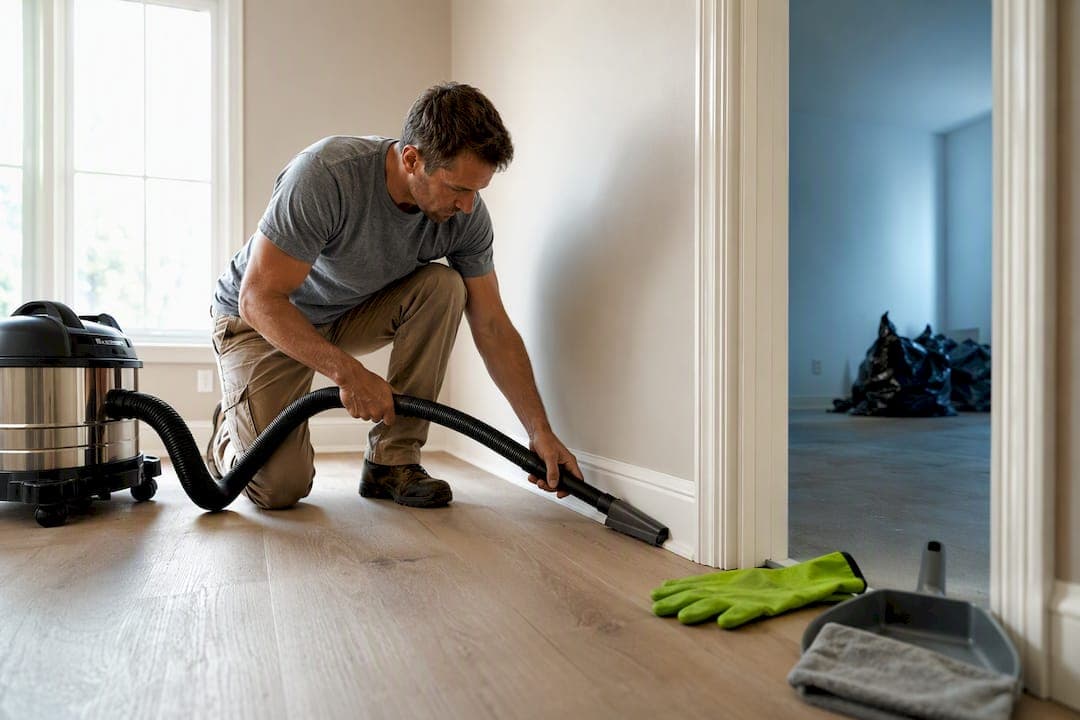
Small, single-room job with light dust? Clean it yourself. Multi-room renovation with heavy drywall dust or lingering odors? Bring in a post-construction cleaning crew. Piles of debris, old cabinets, or a dumpster's worth of scrap? Call a hauling service. Whichever route you pick, run a HEPA vacuum, swap your HVAC filter, and wear an N95 respirator whenever dust is visible in the air.
TL;DR:
- Use HEPA vacuums, high-efficiency filters, and PPE like N95 masks for any cleaning involving heavy dust or hazardous materials, not just basic PPE.
- Professional cleaning is essential for large-scale jobs with fine dust settling into surfaces or potential lead and asbestos risks.
- Debris removal relies on clear distinctions: hauling services for bulky scrap, dumpsters for longer projects, and strict hazardous waste handling for materials like old paint or asbestos.
- The safest and most effective cleanup sequence moves from dry removal to wet wiping from top to bottom, avoiding dust redistribution.
- Contractually, homeowners are responsible for detailed cleaning unless specified otherwise; many contractors only provide a basic "broom clean" at job completion.
Table of Contents
- What Are Your Renovation Cleanup Options?
- The Top-Down Cleanup Sequence That Actually Works
- What Tools and Safety Gear Do You Actually Need?
- Where Does the Debris Actually Go?
- When Should You Call in a Professional?
- What Does Renovation Cleanup Cost, and How Long Does It Take?
- Who's Actually Responsible for Cleanup, You or the Contractor?
- How EasyScrap Approaches Renovation Cleanup
- Get Your Renovation Debris Hauled Same Day
- Sources
What Are Your Renovation Cleanup Options?
Three paths cover almost every post-renovation situation, and picking the right one comes down to dust volume, square footage, and whether hazardous materials are in play.
DIY cleanup works for cosmetic jobs like a repainted bedroom or a single swapped-out vanity. You're looking at a few hours with a shop vacuum, microfiber cloths, and basic PPE.
Professional cleaning services earn their fee on multi-room jobs where fine dust has settled into every surface, or where you simply don't have the equipment to do it safely. Post-construction cleaners bring HEPA-filtered vacuums and a trained sequence for capturing dust before it resettles.
Junk removal and hauling crews solve a different problem entirely: getting debris, old fixtures, and scrap materials off the property. A local hauling service like Easyscrapofficial fits here, especially when a cleanout involves bulky items a homeowner can't move alone.
Run through this checklist to match your project to the right option:
- How many rooms were affected by the work?
- Is there visible dust on vertical surfaces, or just the floor?
- Do you have HEPA equipment, or only a standard vacuum?
- Is there any chance of lead paint or asbestos in the materials disturbed?
- Can you physically lift and haul debris, or does it need equipment?
If you answered "heavy dust" or "possible hazard" to any of those, skip the DIY route.
The Top-Down Cleanup Sequence That Actually Works
Professional crews don't clean randomly. They follow a top-to-bottom sequence, moving from dry removal to wet wiping, because working the room in the wrong order just pushes dust back onto surfaces you already cleaned. That sequencing logic comes straight from NIOSH guidance on controlling airborne particles during construction and remediation work.
The process breaks into three phases:
- Rough cleanup. Remove bulk debris, leftover materials, and trash bags. Nothing gets wiped yet.
- Detailed cleaning. HEPA vacuum every surface starting from the ceiling down. Then damp-wipe from top to bottom using microfiber cloths.
- Final pass. Inspect for missed dust, damp-mop floors last, and replace your HVAC filter before running the system again.
Room by room, that looks like:
- Kitchen: Wipe cabinet tops and upper shelves first, then counters, then appliance exteriors, then floors.
- Bathrooms: Vacuum grout lines and fixtures before wiping tile and glass.
- Bedrooms and living areas: Vacuum baseboards, window sills, and light fixtures before touching floors or furniture.
- HVAC vents: Vacuum vent covers and surrounding ceiling or wall areas, since these collect the finest dust in the house.
Never skip straight to mopping. A damp mop on a dusty floor just creates a paste that's harder to remove.
Pro Tip: Do one room completely before starting the next. Jumping between rooms with a half-vacuumed space lets dust drift back into areas you already finished.
What Tools and Safety Gear Do You Actually Need?
HEPA filtration is the one piece of equipment worth renting or buying if you don't already own it. According to the EPA, HEPA filters capture at least 99.97% of particles as small as 0.3 microns, which includes the fine silica dust that ordinary shop vacuums just recirculate back into the air.
A standard household vacuum pushes fine dust right through its exhaust. A HEPA-rated vacuum traps it.
Your supply list should include:
- A HEPA vacuum (rented or purchased for larger jobs)
- A portable air purifier for the duration of cleanup
- Heavy-duty trash bags and microfiber cloths
- A mop and bucket, plus a surface cleaner suited to your flooring
- Extension dusters for ceiling fans and high shelving
- A fresh HVAC filter rated MERV 11 or higher
On the PPE side, OSHA's eye and face protection standard sets the baseline: an N95 respirator, gloves, and eye protection whenever you're disturbing settled dust. Skip this step and you're breathing in the same particulate you're trying to clean up.
Where Does the Debris Actually Go?
Renovation debris disposal usually comes down to three routes, and each one makes sense for a different scale of job.
- Junk removal or hauling service. A crew shows up, loads everything, and hauls it away same day in many cases. Best for mixed debris, bulky items, and jobs where you can't easily rent a truck.
- Dumpster rental. Makes sense for longer renovations where debris accumulates over days or weeks and you'd rather fill a container gradually.
- Municipal bulky-waste pickup. Often the cheapest option, but scheduling windows are limited and many municipalities cap what they'll take curbside.
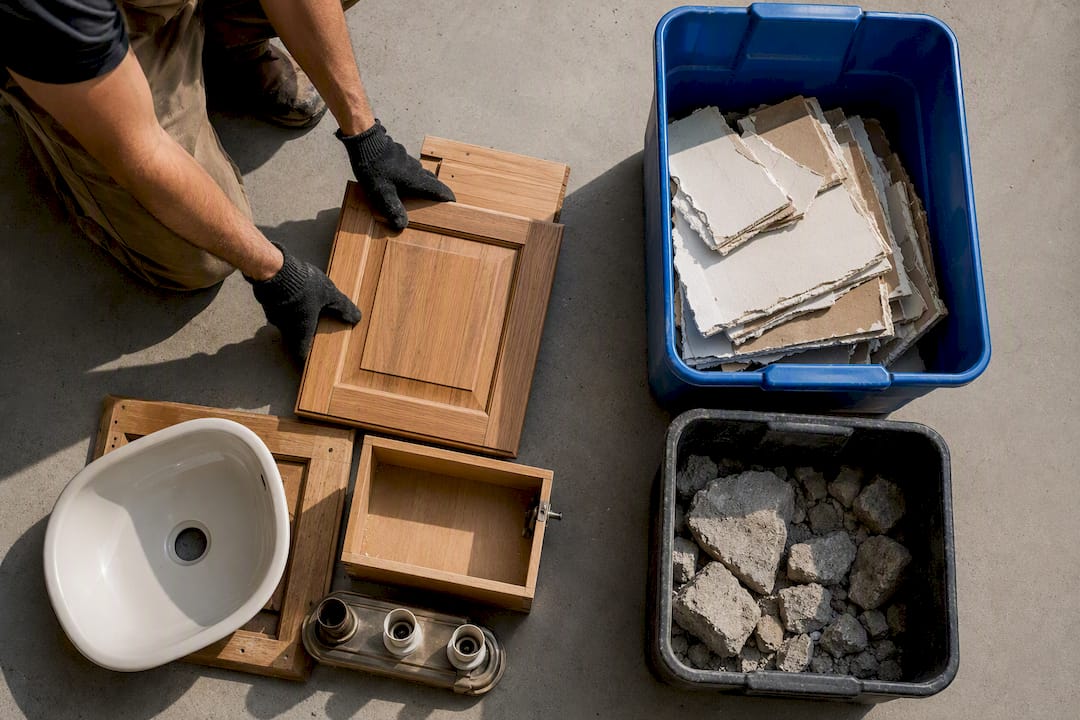
Some materials need special handling no matter which route you choose. Leftover paint, solvents, and certain adhesives count as household hazardous waste in most areas. If your renovation disturbed older building materials, the EPA's guidance on lead and asbestos is clear: test first, and bring in certified remediation if either is suspected. This isn't a DIY judgment call.
Donating usable cabinets, fixtures, and appliances before hauling the rest cuts disposal volume and often reduces your total cost. Materials like drywall and concrete frequently have dedicated recycling paths worth checking before they end up in a landfill.
When Should You Call in a Professional?
A few signs mean it's time to stop cleaning yourself and bring in help.
- Dust resettles after you've already cleaned. If surfaces look dusty again within a day, your ventilation or filtration setup isn't handling the particle load.
- Strong chemical odors persist after ventilating the space for 24 hours or more.
- You suspect lead or asbestos in materials the renovation disturbed, especially in homes built before 1978.
- Dust has spread through inaccessible ductwork or into a finished basement or attic.
Professional post-construction cleaners typically handle HEPA vacuuming, grout haze removal, and a final inspection pass, and they'll often refer out for duct cleaning if that's part of the problem. Before hiring one, ask about insurance, whether they use HEPA-rated equipment specifically, and whether they'll give you a line-item estimate rather than a flat quote. A vague estimate is a red flag on its own.
What Does Renovation Cleanup Cost, and How Long Does It Take?
Cost tracks pretty closely with three factors: square footage, dust volume, and whether hazardous testing is needed. A single repainted room might run a couple hundred dollars for professional cleaning, while a whole-house post-construction clean with multiple phases climbs from there depending on your local market.
Timelines follow a similar pattern:
- Single room, light dust: same day, often a few hours
- Multiple rooms, moderate dust: one to three days
- Whole-house or hazard remediation: several days to a full week
For construction debris removal specifically, get quotes based on an actual walkthrough or detailed photos rather than a phone estimate. Debris volume varies wildly between a bathroom demo and a kitchen gut, and a line-item scope protects you from surprise charges once the crew is already on-site.
Who's Actually Responsible for Cleanup, You or the Contractor?
This trips up more homeowners than it should. The answer depends entirely on what's written into your contract, not on general custom or what a neighbor's contractor did.
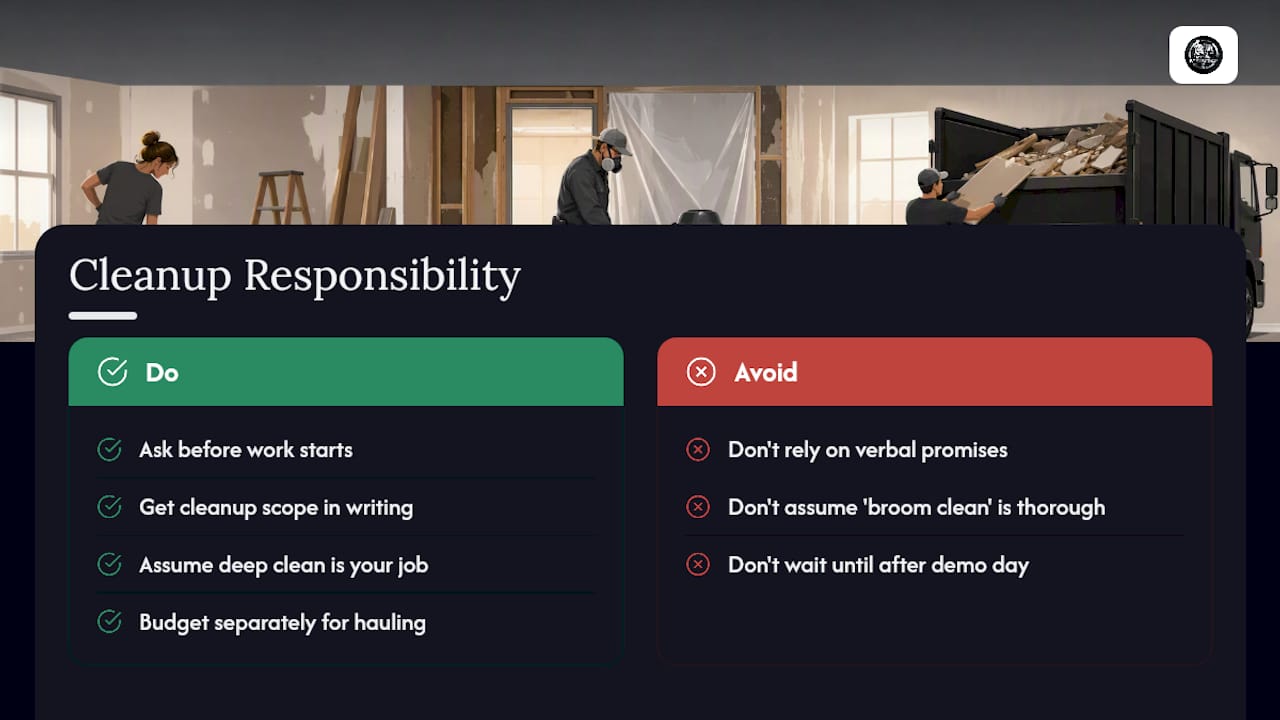
Many general contractors include a "broom clean" clause, meaning they'll clear bulk debris and sweep floors before handing the space back to you. That's a far cry from a deep clean. Broom clean typically does not include HEPA vacuuming, wiping down surfaces, or addressing fine dust that's settled into vents, light fixtures, or cabinet interiors. If your contract doesn't specify a detailed post-construction clean, assume you're covering that part yourself or hiring a separate cleaning crew.
Larger renovation contracts sometimes bundle in a professional cleaning service, particularly for whole-house remodels or jobs involving a general contractor with subcontracted trades. Ask specifically before work starts, not after: "Does the final walkthrough include dust removal, or just debris hauling?" Get the answer in writing.
Debris hauling is a separate question from cleaning, and it's worth splitting the two in your head. Some contractors haul their own waste off-site as part of the job; others leave dumpsters or piles for the homeowner to arrange removal. If your contract is silent on hauling, budget for a separate junk removal service and confirm before demo day, not after a driveway fills up with old cabinets and flooring scraps.
How EasyScrap Approaches Renovation Cleanup
Cleaning up fine dust is one problem. Getting rid of the old cabinets, torn-out flooring, and construction scrap is another, and it's the one Easyscrapofficial solves every day. Crews handle appliance and furniture removal, garage and basement cleanouts, and construction debris hauling for homeowners who'd rather not spend a weekend loading a truck.
Usable items get donated or recycled whenever possible instead of landfilled, which keeps disposal costs down for the homeowner and keeps materials out of the waste stream. That's the same logic behind material-specific paths for tile and other renovation waste that doesn't belong in a general dumpster.
— Easy
Get Your Renovation Debris Hauled Same Day
Easyscrapofficial is the faster alternative to renting a dumpster and waiting days for pickup: a crew shows up, loads the debris, and hauls it away, often the same day you call.
If your renovation is generating scrap drywall, old cabinets, a dead refrigerator, or a garage full of debris, you don't need to figure out municipal pickup schedules or wrestle a dumpster rental into your driveway. Easyscrapofficial handles appliance removal and general furniture removal for homes and businesses across the service area, with insured crews and free quotes before anything gets scheduled. Usable items get donated or recycled instead of dumped, which cuts your disposal footprint without adding a step to your workload.
For low-dust project choices that shrink your cleanup scope from the start, the door replacement approach from One Day Doors & Closets is worth a look before your next phase of work.
Ready to clear the debris? Request a free quote for junk removal and get a pickup scheduled around your renovation timeline.