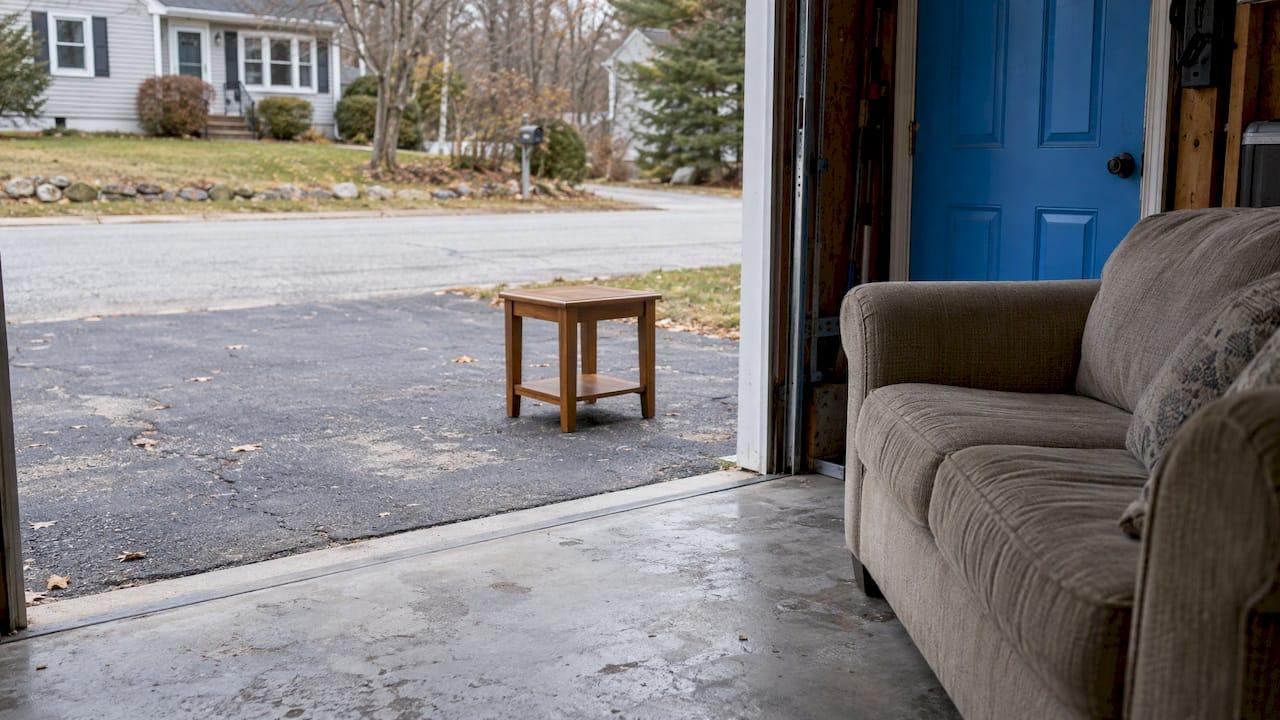
Use a curb alert for sturdy, clean items that someone can carry away within a day or two, and only where your town allows it. Donate anything that needs a screening, a pickup truck or a tax receipt, or that would sit out in the rain. If an item fits neither route, or you are clearing a whole house on a deadline, a hauler that donates and recycles is the third option. We are EasyScrap, a junk removal service for Lawrence, Andover, Boston, Lowell and Haverhill, so we see this decision from every angle.
TL;DR
- A curb alert is a free listing (and usually a "free" sign) for an item you leave outside for anyone to take. A donation goes to an organization that screens, sorts and resells or redistributes it.
- Curb alerts suit clean, working, easy-to-carry items. Donation suits furniture that is in good shape but too bulky or too valuable to leave outside.
- Many cities treat anything left at the curb outside a scheduled pickup as illegal dumping, so check your town's rules first.
- Mattresses, paint, batteries, large appliances and broken items belong in neither pile. They need their own disposal route.
- If you are on a deadline, or the load is heavy, mixed or from a whole property, one call to a hauler solves it.
Table of Contents
- What a curb alert is, and how it differs from a donation
- When a curb alert makes sense
- The rules: why "free at the curb" is not always legal
- When donating is the better choice
- Item-by-item: curb alert, donate or neither
- Items that fit neither route
- A worked example: a basement with eight items
- For investors and Realtors: speed beats a perfect route
- How to decide in 60 seconds
- Why we recommend a hauler for anything beyond a few small items
- Get it gone in one visit
- FAQ
- Sources
What a curb alert is, and how it differs from a donation
A curb alert is a post on a local app or group, such as Craigslist, Freecycle, Nextdoor, OfferUp or a Buy Nothing group, saying an item is free at the curb. Newton, Massachusetts, lists these exact platforms among its reuse options for bulky items, next to selling online, holding a garage sale or donating to a charity that accepts furniture.
The difference comes down to who handles the item.
- Curb alert: you handle everything. You photograph it, post it, carry it outside, answer messages and deal with whatever is left when nobody takes it.
- Donation: a charity or furniture bank decides whether the item fits its needs. If it does, they take it from you, sometimes by pickup, sometimes at a drop-off door.
Both routes keep a usable item out of the trash. They differ in speed, control and risk.
When a curb alert makes sense
A curb alert works best when the item is small enough for one or two people to carry, clearly usable, and likely to disappear fast. Think of a solid wood side table, a set of dining chairs, a bookshelf, a floor lamp, garden tools, a bag of clean kids' toys or a working microwave.
It also works when you cannot get a charity to accept the item. Donation centers often turn away things that a neighbor would gladly take. A typical accepted list, like this one from a regional donation program, takes working small appliances, clothing, dishes and small TVs, but not couches, beds, refrigerators, washers or dryers. A curb alert fills that gap.
Good habits for a curb alert:
- Post a clear photo and the exact pickup window, for example "Saturday 9 a.m. to 1 p.m."
- Put the item on your own property line or sidewalk in front of your own home, never in front of a neighbor's or a vacant lot.
- Keep it dry if you can. Rain turns upholstered furniture into trash within hours.
- Take the post down and bring the item back in the moment it is claimed or the window ends.
The rules: why "free at the curb" is not always legal
This is where most people get caught. Giving something away is fine. Leaving it outside is what many towns regulate.
- Oakland's illegal dumping FAQ says leaving furniture, appliances or bags on the sidewalk or curb counts as illegal dumping unless you have a scheduled pickup from a donation facility or the waste hauler.
- Baldwin Park, California, requires bulky items to be scheduled with the hauler and set out only the day before pickup. Failing to schedule can bring citations of $100, $200 or $500 per violation.
- San Diego's municipal code makes it unlawful to place personal property on a sidewalk or curb between the outer edge and the property line, with narrow exceptions.
- Louisville, Kentucky, tells residents to set out large items only with an appointment.
Those are examples from other states. They show the pattern, not your town's rule. Rules differ by city, so before you post, check your city or town's public works or health department page for "bulky items" or "illegal dumping," or call them. If your town allows a curbside giveaway, there is no problem. If it does not, a donation pickup or a scheduled bulky collection keeps you clear of fines.
City officials also have practical reasons for the caution. Portland's sustainability bureau says "free piles" in bad weather reduce usable materials, block sidewalks and attract pests. StopWaste in Alameda County adds that items left outside a scheduled pickup create safety hazards and invite more dumping.
When donating is the better choice
Choose donation when the item is in good shape, too heavy for a stranger to haul casually, or worth keeping out of the weather. A clean sofa, a solid dresser, a dining table with its chairs and a working washer-sized item are all poor candidates for a sidewalk, because they are heavy and they ruin quickly in rain.
Donation also gives you something a curb alert cannot: a destination that is not left to chance. When nobody answers your post, a donated item is still gone. A curb item can sit for days.
To give an item the best chance of being accepted:
- It should be clean, free of stains, tears, pet hair and odors. A furniture bank's guide says it does not accept items that are broken, stained, torn or beyond gently used.
- Check the charity's accepted list before you load anything. Lists change, and each one has its own limits.
- Ask about pickup. Many charities schedule it, and some require a photo first.
- Keep the receipt if you want to claim a deduction, and ask the charity what paperwork it provides.
For a Boston-area walkthrough, our guide to furniture donation in Boston shows where to give and when to call for help instead. If a couch is the problem, see legal ways to dispose of a couch in Lowell.
Item-by-item: curb alert, donate or neither
Use this table as a first pass. Always confirm with your town and the charity.
| Item | Curb alert | Donate | Notes |
|---|---|---|---|
| Clean wooden chairs and tables | Good fit | Good fit | Donate if rain is forecast |
| Sofa in clean condition | Risky | Good fit | Heavy, and upholstery ruins in rain |
| Dresser or bookshelf | Good fit | Good fit | See our dresser disposal guide |
| Mattress or box spring | No | Limited | Special rules in Massachusetts |
| Working small appliance | Good fit | Often accepted | Check the charity's list |
| Refrigerator, freezer, AC | No | Rarely | Refrigerant rules apply |
| Crib or baby furniture | No | Often refused | Recalls limit reuse |
| Paint, batteries, chemicals | Never | Never | Household hazardous waste only |
| Broken or stained furniture | Never | Never | Needs removal or recycling |
The research behind that table is consistent across official guidance. StopWaste sorts items by condition: working furniture can be donated, posted online or placed curbside with a "free" sign where allowed. Non-working items go to bulky pickup or a transfer station. Paint, chemicals, batteries and motor oil go to household hazardous waste facilities.
Items that fit neither route
Mattresses and box springs
In Massachusetts, disposing of mattresses and box springs in the trash has been banned since November 1, 2022, according to Newton's bulky item guide. If they cannot be reused, they must be recycled. MassDEP says good-condition mattresses can be donated through its recycling directory and that most retailers take the old one when they deliver a new one. A mattress on the curb with a "free" sign is a poor idea: it gets wet, gets rejected and can trigger a violation. Our Boston mattress disposal guide covers the options.
Refrigerators and other refrigerant appliances
Fridges, freezers and air conditioners contain refrigerant that must be recovered by a qualified party before the unit is scrapped. That is why a curb alert for a fridge is a bad idea even if it works. See our guide to heavy item removal and EPA rules for fridges, or our refrigerator removal page.
Cribs, paint and hazardous items
A furniture bank excludes baby furniture because of factory recalls, which is a safety reason, not a quality one. For cribs, see our crib disposal guide. Paint, solvents, batteries and motor oil should go to a household hazardous waste program. In Massachusetts, our guide on legal paint disposal options explains where.
A worked example: a basement with eight items
Say you are a grandparent downsizing, and the basement holds eight things: a clean bookshelf, two kitchen chairs, a working toaster oven, a stained recliner, a twin mattress, a box of old paint cans, a broken desk and a chest freezer.
- Curb alert: the bookshelf, chairs and toaster oven, if your town allows it and you can stay home that Saturday.
- Donate: the same three items if you cannot post them, since a charity may take them with one phone call.
- Neither: the recliner, mattress, paint, desk and freezer. Each needs a different route: recycling, household hazardous waste, bulky pickup or a licensed removal.
That is three or four separate errands, plus lifting a freezer up basement stairs. This is the point where most homeowners stop and call for help.
For investors and Realtors: speed beats a perfect route
If you manage a rental turnover or prepare a listing, a curb alert is a gamble. Posts bring no-shows, a pile can attract a neighbor complaint, and you cannot control timing. Donation requires a charity's availability and acceptance. Neither moves reliably on a closing date.

For an inherited or neglected property, the cleanout often comes before the sale. Our readers in that spot may also want to read about selling a hoarder house, which covers the sale side of a property in that condition. Either way, a crew that sorts, donates what qualifies and hauls the rest in a single visit keeps the schedule intact.
How to decide in 60 seconds
- Is it clean, safe and in working order? If not, skip both routes.
- Is it on the hazardous or restricted list? Mattress, paint, refrigerant appliance, crib: use the specific route.
- Can one or two people carry it? If yes and your town permits, a curb alert is quick.
- Will it rain, or will it sit more than a day? Donate instead.
- Is there a deadline, or are there more than a few items? Book a hauler.
Why we recommend a hauler for anything beyond a few small items
We started EasyScrap as young local owners who were tired of watching good furniture get ruined in the rain while its owners waited for strangers to show up. Our view is simple: the best outcome is that usable items go to someone who can use them, and everything else leaves your property on the day you choose.
That is why we donate and recycle whenever possible. We work with local charities, so a sofa in good condition does not end up in a landfill just because it was too heavy to give away. You do not need to research which charity takes what, or lift anything.
A curb alert is a fine tool for a bookshelf. But for a basement, a garage, an estate or a unit turnover, the reliable answer is one crew, one visit and one clean space. Our crew is insured, scheduling is flexible, and same-day service is available when you cannot wait.
Easy
Get it gone in one visit
If your list includes a couch, a mattress, a fridge or a whole room, we handle the lifting, hauling, donating and recycling. We serve Lawrence, Andover, Boston, Lowell and Haverhill, with free quotes and an insured crew. Start with our junk removal service or, for larger jobs, our garage cleanouts, basement cleanouts and furniture removal pages.
For estates, rentals and listings, the services page shows what else we take, from estate cleanouts to construction debris.
FAQ
Is a curb alert legal?
It depends on your city or town. Posting a free listing is fine, but leaving items on a sidewalk or curb is regulated in many places, and some cities call it illegal dumping unless a pickup is scheduled. Check your local public works or health department page before you put anything outside.
Can I donate a couch or a mattress?
Sometimes. Many charities take clean couches by appointment, but lists vary, and many decline mattresses. In Massachusetts, mattresses that cannot be reused must be recycled, not thrown away, so ask about a donation or recycling program before you book a pickup.
What should I never put out for a curb alert?
Never list paint, chemicals, batteries, broken or stained items, anything unsafe to handle, or refrigerant appliances. Mattresses and cribs are also poor candidates because of reuse and safety rules.
What if nobody takes my curb alert item?
Bring it back in after a day or two. Items left outside get wet, spread litter and draw complaints. Donate it, schedule a bulky pickup, or have a hauler remove it.
Sources
- Newton, MA bulky item guide
- Portland.gov: Large household waste disposal options
- StopWaste: Illegal Dumping
- StopWaste: Moving and Decluttering
- Oakland Illegal Dumping FAQs
- Baldwin Park, CA: General Information
- San Diego Municipal Code: Public Hazards and Public Nuisances
- LouisvilleKY.gov: Illegal Dumping
- New Life Furniture Bank: Realtor's Guide to Furniture Donations
- Hope Services accepted items list
- Mass.gov: Mattress Recycling