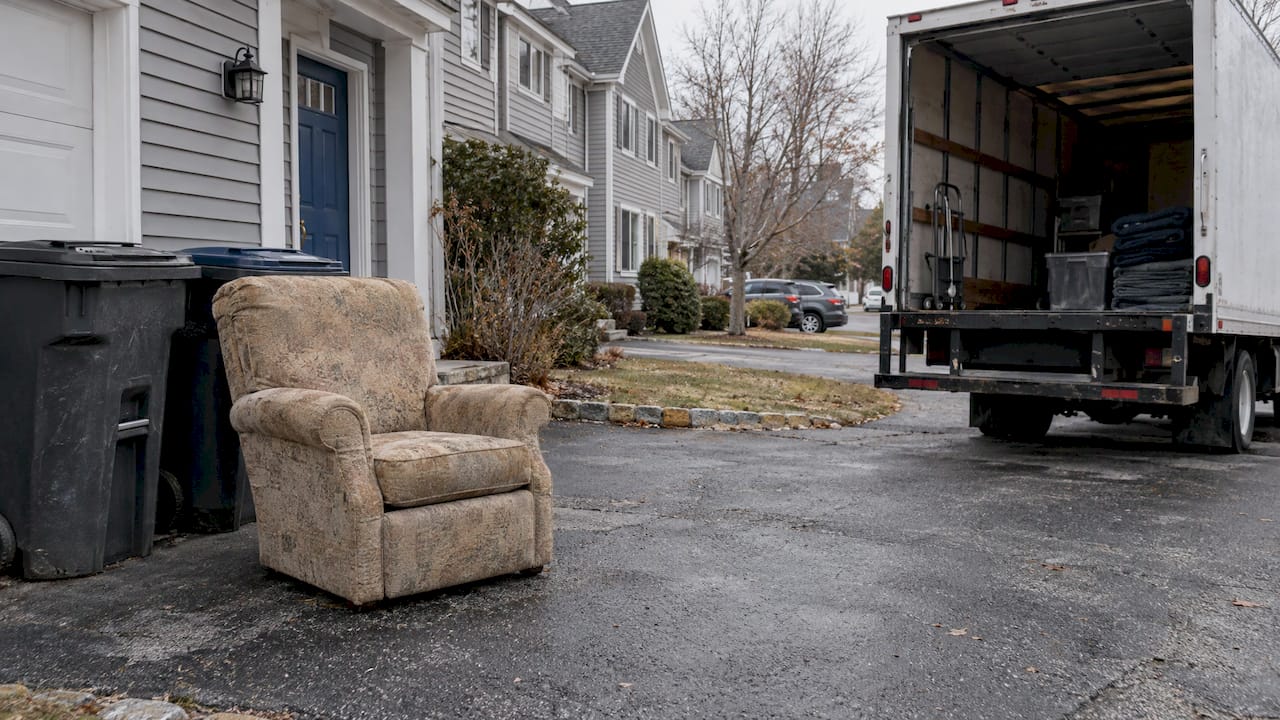
Most HOAs do not ban junk removal. They control where bulk items sit, when they can be put out, which items are allowed, and who may bring a truck or dumpster onto the property. Break one of those four rules and the fine usually lands on you, even when a hired crew made the mistake. The safest path is to read your community's rules first, then book a licensed, insured hauler who takes the item away the same day, so nothing sits at the curb long enough to draw a notice. That is what we do at EasyScrap for homeowners, landlords, investors and Realtors in Lawrence, Andover, Boston, Lowell and Haverhill.
TL;DR
- HOA rules sit on top of town or city rules. Your trash contract, your covenants and your local ordinance can each set a different limit.
- Bulk items are usually capped (one item a week or a day is common), must be scheduled with the hauler, and may only go out within a short window before pickup.
- Dumpsters and curbs are the most common violation spots: furniture, mattresses, appliances, electronics, tires and construction debris are routinely banned from them.
- Fines escalate quickly, from a warning to hundreds of dollars per item, and owners answer for tenants, guests and contractors.
- A same-day private haul avoids the waiting window, the curb exposure and the fine.
Table of Contents
- Why HOA junk rules exist, and who sets them
- What HOA bulk-trash rules typically say
- Dumpsters and curbs: where most violations happen
- Hiring a hauler on HOA property
- What happens when you break a rule
- A practical routine for each type of owner
- Appliances and refrigerants
- Construction debris and yard waste
- Perspective
- Book a removal that fits your HOA's rules
- FAQ
- Sources
Why HOA junk rules exist, and who sets them
An HOA (homeowners association) is a private body that enforces a community's recorded covenants, bylaws and rules. Junk and bulk waste rules exist because piles at the curb, overflowing dumpsters and stray mattresses hurt appearance, attract dumping and create cleanup work for staff. One Connecticut lake community explains that overflowing dumpsters and trash on the ground pull its employees away from other work, which is why its hauler will not empty an overflowing dumpster and a $250 fine applies.
Three layers usually apply at once:
- Your town or city ordinance. It decides what the municipal hauler takes and the legal limits on curb placement.
- The HOA's rules and trash contract. Some associations negotiate one hauler for the whole community. In one Virginia community, part of the monthly fees funds scheduled trash and recycling, while bulk removal such as appliances and furniture must be arranged and paid for by the individual resident.
- Your deed, declaration or condo documents. These carry the enforcement powers: fines, liens and suspension of amenities.
In Massachusetts and New Hampshire, where we work, condominium associations are governed by state condominium statutes. New Hampshire, for example, sets no statutory cap on fines, so fine authority and amounts come from the association's own declaration, bylaws and rules. That makes your own governing documents the first thing to read, not a neighbor's summary.
What HOA bulk-trash rules typically say
Rules vary a lot, but the same building blocks show up again and again. The examples below come from published association rules across the country, so treat them as patterns, not as your community's rules.
Quantity limits and timing
One Virginia association allows one bulk item per household per week, with cans out only after 6 p.m. the evening before pickup. Another Virginia community allows bulk items on regular trash days, one item per day, and only after calling the hauler in advance.
An Arizona community goes further. Its rule requires bulk rubbish to be piled lengthwise, tree limbs cut to 6 feet, bags under 60 pounds, and piles no bigger than 10 by 6 by 4 feet, with items out no earlier than nine days before the scheduled week.
City code can add its own layer. In Phoenix, it is unlawful to place bulk trash out more than 7 days before collection, and the code lists mattresses, furniture and items containing refrigerants as unacceptable for normal residential collection.

Who pays
Association-funded service often covers regular trash only. A Kansas City community says dues cover one free bulk-item pickup per quarter, with $25 per extra item. A Colorado association requires notice at least 24 hours ahead and a $15 prepayment per bulk item. A California community offers free bulk pickups with limits on how many items go out per year, and excludes construction debris and hazardous waste.
The pattern: the HOA covers the ordinary weekly routine, and anything big, heavy or unusual is on you.
Items that are almost always restricted
Bulk items are rarely treated equally. One Virginia community explains the line this way: if an item is not electronic and fits in the regular trash truck, it counts as ordinary bulk trash, while electronics, scrap metal, tires, white goods and construction debris need a scheduled special pickup with a quoted fee.
In Massachusetts there is also a state rule. MassDEP's waste disposal bans, which added mattresses and textiles on November 1, 2022, mean those items cannot go in the regular trash stream. An HOA that says "no mattresses at the curb" and a state that says "no mattresses in the trash" point the same way: a mattress needs a proper disposal route. We handle that with our mattress disposal service.

Dumpsters and curbs: where most violations happen
Shared dumpsters are the easiest place to get fined, because the rules are strict and enforcement is visible. Candlewood Lake bans contractor debris, hazardous chemicals, asbestos, furniture, mattresses, appliances, tires, and bulk items in or around dumpsters, and it may review video surveillance to identify who left what. A condominium association in Utah treats its monthly dumpsters as a goodwill service that can be cancelled, and bans paint, oil, electronics and concrete.
A few examples of what a violation can cost:
| Violation | Example fine | Source community |
|---|---|---|
| Bulk overage or electronics left at curb | $100 initial fine plus $25 a day | Wedgwood Estates |
| Hazardous material in any dumpster | Up to $500 per item | WPL HOA |
| Item left outside the dumpster | $150 per item | WPL HOA |
| Overfilled dumpster or trash on the ground | $250 | Candlewood Lake |
| Repeat bulk-trash violation | $100, then $200, then $500 after a written warning | Desert Mountain |
These are other communities' figures. Yours will differ, but the shape is the same: small first fines, steep repeat fines, and per-item pricing.
Hiring a hauler on HOA property
This is the part many owners miss. A hauler's truck, trailer or dumpster is also covered by HOA rules, and the owner carries the liability.
- Owner responsibility. One association's rules hold owners responsible, and subject to hearings and fines, for their service providers' noncompliance. Vehicles, equipment and debris may not stay on common areas overnight.
- Dumpster placement. The same rules limit a rented dumpster to the driveway or the street directly in front of the lot, with advance notice of delivery and pickup dates.
- Gates and passes. A gated South Carolina community makes owners responsible for contractors and requires contractor passes and a daily fee.
- Tenants and guests. Desert Mountain makes the member responsible for a guest's or renter's fine. Landlords and investors should read that line twice.
Before any crew arrives, call the management office or check the portal and ask three things: Are there allowed hours for contractor vehicles? Does the gate need a pass or a name on a list? Is there an elevator reservation or loading area for condo buildings? Then give the crew the details in advance.
A rented dumpster sitting in a driveway for a week is exactly the kind of exposure a one-visit haul avoids. Our crew loads the truck and drives off with the items, so nothing stays on the property. For a quick overview of what is on offer, see our junk removal service.
What happens when you break a rule
Most HOAs follow a sequence, and knowing it gives you time to fix things.
- Written notice describing the violation and giving a cure period. A Utah association's rules, based on state statute, give 48 hours to cure before the violation becomes "continuing" with fines every 10 days, plus a 30-day window to request an informal hearing.
- Escalating fines. A Florida association sets a minimum $25 per day or occurrence, with a $1,000 cap per offense.
- Liens and suspensions. The same Florida rules allow a lien to be recorded, and residents can be suspended from common areas until fines are paid. In Massachusetts, a condominium unit owner is personally liable for fines and penalties assessed by the organization of unit owners, and unpaid charges can become a lien.
If you receive a notice, remove the item inside the cure period, keep your haul receipt and photos, and reply in writing. A quick same-day removal is often the cleanest cure.
A practical routine for each type of owner
Homeowners and grandparents
If you are clearing a basement, garage or attic, or helping a parent downsize, the main risk is leaving heavy items out where neighbors and the HOA can see them. Plan one removal day. Carry nothing to the curb until the crew is there. Our crews handle basement cleanouts, garage cleanouts and attic cleanouts, so you do not have to carry heavy boxes up stairs.
When the job is smaller, sort first. These quick decluttering ideas help you separate what stays from what leaves before the haul.
Landlords and real estate investors
You answer for what tenants leave behind. At turnover, abandoned couches, mattresses and appliances can trigger HOA notices within days. Book the removal as part of the turnover schedule, not after the notice arrives. Estate cleanouts, construction debris cleanup and more are listed on our services page.
Realtors
A listing with junk in the garage or on the lawn is a listing that shows badly, and a violation letter can arrive during the marketing window. Recommend a single haul before photos. Our same day junk removal options suit tight listing timelines.
Appliances and refrigerants
Refrigerators, freezers and air conditioners contain refrigerants, so many municipal and HOA programs treat them as special items. Phoenix's code, for instance, excludes items containing refrigerants from normal residential bulk collection, and some HOAs list them as extra-charge items. If you are replacing one, a home appliance replacement checklist helps you plan the swap day so the old unit leaves the same day the new one arrives. We remove them through our appliance removal and refrigerator removal services, and our guide to heavy item removal and fridge rules explains the EPA side.
Construction debris and yard waste
Renovation debris is the category HOAs and haulers exclude most often: drywall, concrete, tile and similar materials are barred from bulk pickups and dumpsters in the examples above. Yard waste has its own limits too. Massachusetts lists leaves and yard waste among the materials banned from disposal in trash. Our guide on where construction debris can go walks through the options.
Perspective
Most violation letters we hear about are not about bad intent. They come from a pile that sat at the curb a day too long, or an item the neighbor's schedule allowed but the HOA's did not.
That is why we built our service around the removal itself: a free quote, an insured crew, and same-day scheduling where we can. When your community limits what goes out and when, one visit that takes everything away is simpler than counting items against a weekly cap.
We also donate and recycle whenever possible, so usable furniture and materials have a second life rather than a landfill. For HOA-managed properties, that means less on the curb, fewer notices and a cleaner street.
Easy
Book a removal that fits your HOA's rules
If your community caps bulk items, bans dumpsters for furniture, or fines per item, the cleanest fix is a single visit from an insured crew. We serve homes and businesses in Lawrence, Andover, Boston, Lowell and Haverhill, and we offer free quotes. Tell us about your community's access rules when you book, and we will plan the visit around them. Start with our junk removal page or see everything we haul on the services page.
FAQ
Is garbage included in HOA fees?
Sometimes. Some associations contract one hauler and fund regular trash and recycling from dues, as in a Virginia community whose monthly fees cover scheduled pickup. Others add a separate mandatory trash fee. Bulk items are usually the owner's expense either way.
Can an HOA stop me from hiring a junk removal company?
Generally an HOA cannot ban a lawful service, but it can set rules on contractor access, parking, hours, dumpster placement and debris. Owners are typically responsible for their service providers' compliance. Check your documents and tell the management office the date.
Can I leave a couch or mattress at the curb?
Only if your HOA and town both allow it and the item is scheduled with the hauler. Many communities require advance scheduling, and in Massachusetts mattresses are on the state's disposal ban list. A direct pickup avoids the question.
What should I do if I get an HOA violation notice for junk?
Read the cure deadline, remove the item within it, and respond in writing with photos or a receipt. Many associations offer an informal hearing window. If fines or liens are involved, ask the board for the rule in writing, or talk to a real estate attorney in your state.
Sources
- MassDEP Waste Disposal Bans
- Massachusetts General Laws, Chapter 183A, Section 6
- New Hampshire HOA and condominium law overview
- Phoenix City Code 27-22
- Wedgwood Estates trash rules
- Woodstream HOA trash collection
- Desert Mountain bulk trash rule
- Morningview Homes resident information
- Dutch Creek Village trash policy
- Rancho San Joaquin bulk pickups
- Lorton Valley trash information
- Candlewood Lake trash and dumpster rules
- WPL HOA garbage appendix
- Cornerstone Condominiums rules
- Canyon Creek HOA rules
- SIPOA rules and regulations
- Timberlake rules and regulations