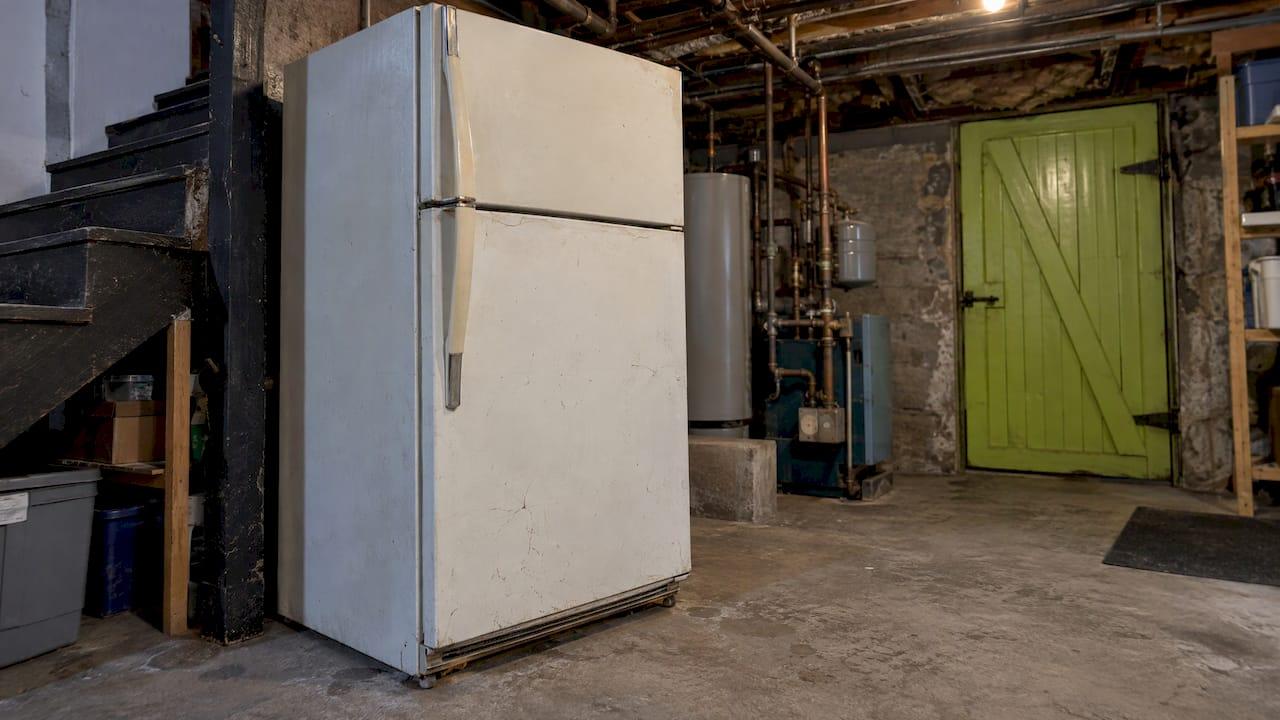
In Massachusetts you cannot put a refrigerator in the trash, and you must not release or tamper with the Freon inside it. The refrigerant has to be recovered by whoever handles the appliance last, so the simplest legal route is to hand the fridge to a hauler that sends it to a proper recycling facility. At EasyScrap we haul refrigerators away for homeowners, landlords, investors and Realtors in Lawrence, Andover, Boston, Lowell and Haverhill, with an insured crew and free quotes, and we donate or recycle whenever possible.
TL;DR
- Large appliances, including refrigerators and freezers, are banned from regular trash disposal in Massachusetts. They go to an approved recycling facility.
- "Freon" is a brand name for refrigerants that damage the ozone layer or warm the climate. Federal law prohibits knowingly releasing them, so never cut lines or pull the compressor.
- You do not need to drain the refrigerant yourself. The final processor must recover it or hold a signed statement that someone else did.
- A utility program may pay $75 for a working, inefficient fridge. A paid hauler is the faster route when you need it gone this week.
- Realtors, landlords and investors should keep the removal receipt with the property file.
Table of Contents
- What "Freon" means in an old refrigerator
- What the federal rules require, and of whom
- What not to do before the fridge leaves
- What Massachusetts adds
- Your options, in order of speed
- Worked example: clearing a parent's house in Andover
- For Realtors, landlords and investors
- Penalties: why the rules matter
- Recent rule changes
- Get the fridge gone
- FAQ
- Sources
What "Freon" means in an old refrigerator
Freon is a trade name. The EPA explains that it covers common refrigerants, including CFCs and HCFCs, used in older household appliances, and that the refrigerant must be properly removed before an appliance is buried, shredded or dismantled. CFCs were phased out in the 1990s under the Clean Air Act and the Montreal Protocol, and HCFCs such as R-22 are still being phased out, according to the EPA's homeowner FAQ.
A fridge from the 1980s or early 1990s probably holds one of those older refrigerants. Newer units use other refrigerants, and the federal disposal rule now covers appliances with any class I or class II refrigerant or any non-exempt substitute. In practice that means every household refrigerator and freezer gets the same treatment at end of life, whatever the label says.
One detail surprises people. Many modern refrigerators use isobutane (R-600a) or propane (R-290). The venting of these from household refrigerators is exempt from the federal venting prohibition, but they are flammable, which is one more reason not to open the sealed system at home.

What the federal rules require, and of whom
The core rule is the EPA's Section 608 safe disposal requirement, 40 CFR 82.155. It puts the duty at the end of the chain. The EPA states that the person who finally disposes of the appliance, such as a scrap metal recycler or landfill owner, is responsible for making sure the refrigerant is recovered.
Here is how that plays out for each person involved.
| Who | What the rule means |
|---|---|
| Homeowner | Do not release refrigerant or tamper with the unit. You are not required to recover it yourself. |
| Hauler or collector | Must not mix refrigerant-containing appliances into loads headed for direct landfill disposal. |
| Final processor (scrap recycler) | Must recover any remaining refrigerant, or verify with a signed statement or contract that it was recovered. |
| Local government | If it collects appliances from residents, it must recover the refrigerant or deliver the units to a final processor or aggregator. |
The hauler row comes from the EPA's Appliances Quick Start Guide (May 2025), which says refrigerant-containing appliances must not go into collection containers or roll-offs mixed with trash bound for direct landfill. The local government row comes from the EPA's 2021 guidance for local governments.
The signed statement
If the refrigerant is recovered before the fridge reaches the final processor, the processor needs a signed statement. It must include the recoverer's name and address and the date of recovery, and the processor must keep copies on site for three years. The EPA says it does not require or accept a sticker as proof, and that people recovering refrigerant from small appliances in the waste stream do not need Section 608 certification.
This paperwork is the processor's job, not yours. What matters to you is that the fridge ends up with a facility that does it.
What not to do before the fridge leaves
The EPA's advice to homeowners is plain: do not tamper with the appliance, for example by cutting refrigerant lines or removing the compressor, because the Clean Air Act prohibits knowingly releasing most refrigerants during disposal. The regulation treats deliberate acts such as cutting lines as a release, not as a leak.
A few practical rules follow:
- Leave the sealed system intact. Do not try to drain, puncture or dismantle it.
- Do not set the fridge at the curb unless your town has told you it collects and recovers refrigerant from curbside appliances.
- Do not break it down for scrap metal yourself.
- Empty it, clean it and prop or remove the door as your hauler or facility instructs. Transfer stations commonly require doors removed, as one Massachusetts town's white goods page states for its facility.
The EPA also notes that other hazardous components, such as PCBs, mercury switches and compressor oil, must be removed before disposal. That is handled at the recycling facility. One Massachusetts town's page warns that appliances made before 1979 may contain PCBs and need careful handling, so tell your hauler if the unit is very old.
What Massachusetts adds
The state layer is the MassDEP waste disposal ban. Refrigerators, freezers, stoves, washers and dryers are among the large appliances that cannot go into the regular trash stream in Massachusetts. Municipal pages state that white goods and Freon appliances must be recycled at an approved facility, and that the refrigerant is removed by licensed personnel on site rather than by the resident.
Beyond the ban, the rules you actually run into are local:
- Curbside or bulk pickup. Some towns collect appliances by appointment, often for a fee, and some require proof that refrigerant has been removed.
- Transfer station drop-off. You may need a resident sticker, a fee and doors removed.
- Landlords and property managers. Many leases and condo rules require a unit to be removed by a licensed or insured hauler.
In Lawrence, for example, the city offers a paid pickup, which we cover in our guide to Lawrence refrigerator disposal. Check your own town's public works page for the current fee and schedule, since these change.
Your options, in order of speed

1. Hire a hauler
For most homeowners, grandparents clearing a house and anyone on a deadline, this is the cleanest route. A fridge weighs 200 to 300 pounds in many cases and is awkward on stairs and in tight basements. We remove refrigerators, washers, dryers and other appliances, and our appliance removal service includes same day booking and free quotes. Our crew is insured, which matters if a 250-pound appliance has to come out through a finished hallway. We donate and recycle whenever possible, so a working unit does not have to end up as scrap.
For New Hampshire customers we also have a refrigerator removal page for Windham.
2. Utility recycling program
The EPA recommends checking with your electric utility first for a rebate or turn-in program. In Massachusetts, Mass Save offers a $75 rebate and a no-cost pickup for an inefficient, working refrigerator or freezer, limited to two units per equipment type per electric account per year. The rebate takes 6 to 8 weeks to process after pickup. Eligibility depends on the unit being in working order, and the program terms are set year by year on the Mass Save page. We explain the details in our guide to claiming the $75 fridge rebate.
If the fridge no longer runs, or you are on a closing timeline, a scheduled pickup removes the waiting.
3. Municipal pickup or transfer station
The EPA suggests asking your municipality, which may require an appointment, a transfer station drop-off or refrigerant pre-recovery by a professional. You will need a truck or trailer and help lifting the unit, and you need to follow the facility's door rules.
4. Donation
A fridge that still cools and is reasonably clean can often be reused. We donate usable items, and our guide to donating appliances in Massachusetts shows what charities usually accept.
Worked example: clearing a parent's house in Andover
Say you are clearing a late parent's house before listing. The basement has a 1990s fridge and a chest freezer, both running. Here is a legal, low-effort path:
- Unplug both units a day ahead. Empty them, wipe them down and leave the doors as your hauler instructs.
- Do not detach lines, remove compressors or try to drain anything.
- Book a pickup of both units together with the rest of the basement. Our basement cleanout service covers the whole space in one visit.
- Keep the receipt or invoice in the estate or property file.
The homeowner never touches the refrigerant, which is the point. The units go to the recycling stream, where recovery happens before shredding.
If the move is part of a bigger transition, such as a parent moving into a smaller place, a step-by-step downsizing guide helps you plan what to keep, donate and haul.
For Realtors, landlords and investors
A fridge left in a vacant property is a common listing and turnover headache. Three habits help:
- Decide before the walkthrough. If the buyer or tenant does not want the old unit, schedule removal before photos and inspection.
- Keep paperwork. A removal invoice shows the unit left the property with a hauler, not at the curb.
- Bundle. Fridge, washer, dryer, old furniture and garage clutter can go in one visit. See our junk removal service and estate cleanout options.
Our guide for homeowners handling heavy items walks through how to avoid EPA violations with fridges.
Penalties: why the rules matter
Penalties are aimed mainly at professionals and processors, but they show the weight of the rule. One analysis of the federal law reports that knowing violations can be felonies, with up to five years in prison and fines up to $250,000 for individuals, and civil penalties that run per day per violation. For a homeowner, the takeaway is simple: do not open the system, and use a hauler or program that sends the unit to a facility that recovers refrigerant.
Recent rule changes
The Section 608 safe disposal rule for household refrigerators has not changed in a way that alters what you do. The EPA's AIM Act rule of October 2024, effective December 10, 2024, added leak repair and reclamation requirements, but they apply to HFC appliances with 15 pounds or more of refrigerant and to reclaimers, not to a home refrigerator going out the door.
Our view from the truck
A fridge is the item most homeowners are least sure about, and the uncertainty is reasonable: it is heavy, it has a regulated refrigerant in it, and the trash rules do not apply. Our approach is simple. You should not have to learn refrigerant law to clear a basement. We haul refrigerators, freezers, washers, dryers and the rest of the clutter, and we donate and recycle whenever possible so usable items get a second life.
Our crew is insured and our quotes are free. For sellers, landlords and families on a deadline, we also offer same day service so the unit is gone before the showing, the inspection or the move-out date.
Easy
Get the fridge gone
If you want a refrigerator, freezer or a full cleanout handled by one crew, book through our appliance removal page and get a free quote. We serve Lawrence, Andover, Boston, Lowell and Haverhill.
For a broader overview, see our fridge disposal guide and our freezer disposal options.
FAQ
Do I have to remove the Freon before getting rid of my refrigerator?
No. You are not required to recover it yourself, and you should not try. The final processor must recover the refrigerant or hold a signed statement that someone else did. What you must avoid is cutting lines or removing the compressor.
Can I put a refrigerator out with the trash in Massachusetts?
No. Refrigerators and other large appliances are banned from regular trash disposal in the state and must go to an approved recycling facility. Some towns offer appliance pickup by appointment, so check with your public works department first.
Do I need a sticker saying the Freon was removed?
No. The EPA does not require or accept a sticker as proof. What counts is the signed statement or contract held by the final processor, naming the recoverer and the recovery date.
Does the same rule apply to freezers and air conditioners?
Yes, the refrigerant rules cover freezers, window air conditioners and similar appliances that contain refrigerant. See our air conditioner disposal guide for specifics.
Sources
- EPA: Safe Disposal Procedures for Household Appliances
- EPA: Homeowners and Consumers FAQ
- eCFR: 40 CFR 82.155
- EPA: Stationary Refrigeration Safe Disposal Requirements
- EPA: Appliances Quick Start Guide
- EPA: What Local Governments Need to Know About Appliance Disposal
- EPA: Appliance Disposal
- Federal Register: AIM Act HFC rule, October 2024
- Mass Save: Refrigerator and Freezer Recycling
- The HVAC Brief: Is It Illegal to Release Freon?