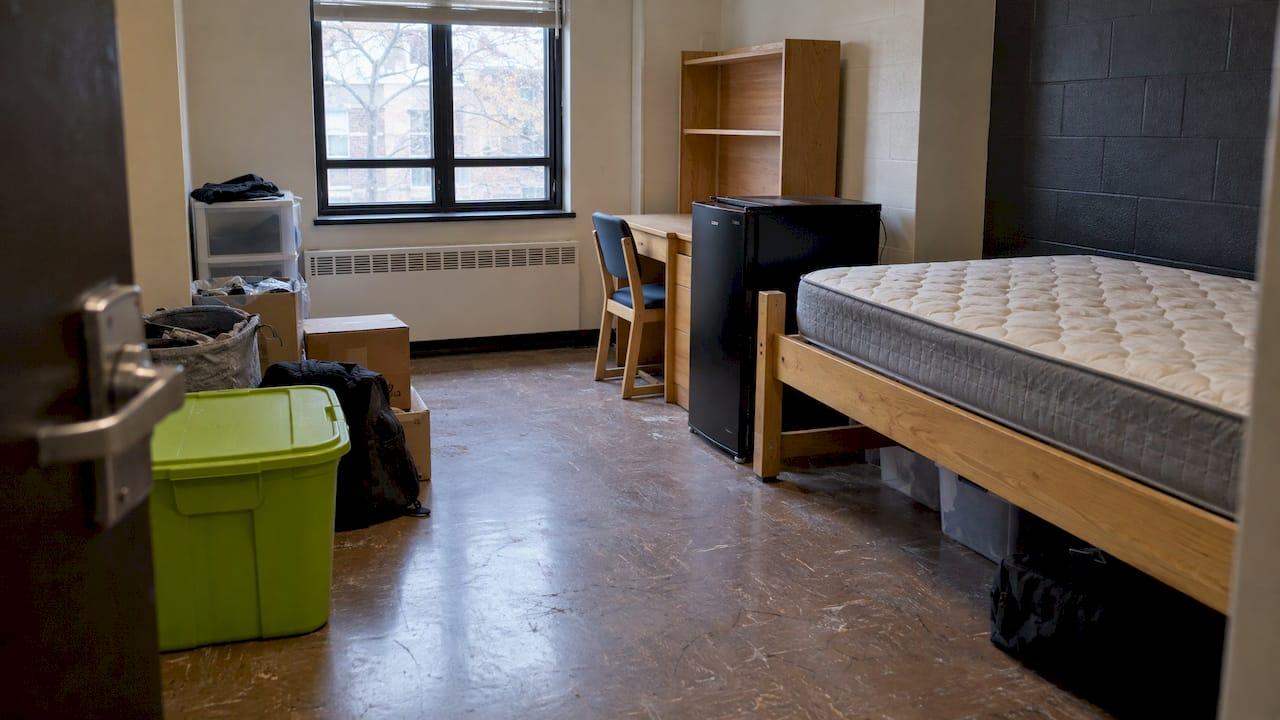
A college move-out cleanup comes down to three jobs done in order: sort what stays, clear out everything bulky or unwanted, then clean and document the space. The sorting and the cleaning are quick. The clearing is what slips, because couches, mini-fridges, mattresses and bags of leftover belongings do not fit in a sedan. We remove them in one visit, so the room or rental is empty before anyone picks up a sponge.
This guide is for the people who end up carrying the load: parents and grandparents helping a student, homeowners with a student renting a room, investors with student rentals, and Realtors turning a property over between leases.
TL;DR
- Schools judge a move-out on one standard: the space must be clean enough for the next person to move in right away, with personal belongings gone and school furniture left in place.
- Items left behind are discarded and can trigger charges, so bulky things need a plan before checkout day, not on it.
- Sort into keep, donate, recycle and haul away at least two weeks ahead, then clean last and photograph every room.
- For off-campus rentals, a landlord in Massachusetts or New Hampshire has 30 days to return a deposit and must itemize any deductions.
- For furniture, appliances, mattresses and mixed piles, one scheduled removal visit replaces several dump runs.
Table of Contents
- What schools actually expect at checkout
- Why leftover stuff costs more than dirt
- A step-by-step move-out cleanup
- Off-campus student rentals: the deposit clock
- If you are the landlord or Realtor
- Mistakes that cost families money
- Our perspective
- Get the unit or room emptied
- FAQ
- Sources
What schools actually expect at checkout
Every campus has its own checklist, but the standards are remarkably similar. UC Santa Cruz tells residents to clean the room well enough for someone to move in immediately: vacuum floors, wipe surfaces, remove personal belongings and leave university furniture in its original arrangement. Apartment-style housing gets a deeper standard, including kitchens and bathrooms.
That covers more than most students expect:
- Floors and walls: vacuumed or swept and mopped, with scuffs and marks wiped off.
- Appliances: ovens and refrigerators emptied and cleaned inside.
- Bathrooms: toilets, showers and sinks scrubbed.
- Shared spaces: common cupboards and living areas cleared of everyone's leftovers, not only one person's.
School-owned furniture has to stay where it belongs. Cal State Fullerton requires its furniture to be present, assembled and in its original location, and personal belongings must go. So when a student has added a futon, a second desk or a rug, the removal is the student's job, not the school's.
A few schools add small details. Princeton, for example, suggests leaving nails in the walls so staff can spot small holes that need repair. Always read the housing office's own checklist first: that document, not a general guide, decides what counts as clean.
Why leftover stuff costs more than dirt
Dirt is cheap to fix. Leftover belongings are not. Fullerton states that items left behind after checkout will be discarded, and charges apply for excessive trash or belongings left behind. Off campus, the same thing happens through the deposit: a landlord can deduct for cleaning, damage and abandoned property.
Three categories cause most of the trouble:
- Furniture bought for the year. Thrift-store couches, bookshelves and desk chairs that nobody wants to move home.
- Appliances. Dorm mini-fridges, microwaves, window air conditioners and, in student rentals, a washer or dryer left by a previous tenant.
- Bags and boxes of mixed items. Clothes, bedding, takeout containers, broken electronics and half-used cleaning supplies, all in the same pile.
If you are the parent or grandparent, this is the part worth taking off your student's plate. A twenty-year-old with a final exam and a checkout slot is unlikely to organize a donation drop and a dump run.
A step-by-step move-out cleanup
The order matters. Cleaning first and clearing second means cleaning twice.
Step 1: Start two weeks ahead
Hallam Students' Union in the UK recommends preparing at least two weeks before moving out, and that lead time works just as well for an American semester. Two weeks is enough to book a removal date, arrange a donation drop and still have a spare day if something goes wrong.
Pull three things together on day one: the housing office's checkout checklist, the checkout time slot, and the lease if it is an off-campus place. These tell you what has to be out, by when, and what is charged if it is not.
Step 2: Sort into five piles
Hallam suggests sorting belongings into five groups. A version that works for a dorm or apartment:
- Keep and take home: clothes, books, laptops, documents, anything sentimental.
- Store: items needed again in the fall.
- Donate: clean, working, usable things.
- Recycle: electronics, cardboard, metal, e-waste.
- Haul away: broken furniture, stained mattresses, junk, and anything nobody will take.
Do the sort room by room rather than by category. It is faster, and it stops piles from spreading into hallways where they block the door.
Step 3: Decide what can be donated
Colleges push donation hard. Harvard provides donation bins for books, office supplies, electronics, clothing, shoes, household goods and furniture, and UBC asks students to donate clean, functional goods to keep them out of the waste stream. If your student lives on a campus with bins, use them for small items.
Furniture is the hard case. Bins are rarely set up for a full sofa, and charities often want items to be clean and in good shape. If you want usable pieces to go to a good home rather than a landfill, our guide on getting donations accepted in one junk removal visit explains how to prepare them.
Step 4: Clear out the bulky items
This is the step where a removal crew earns its place. Yale requires students to remove personal furniture and appliances, clean, empty and unplug Yale-issued microwaves and mini-fridges, and donate or recycle unwanted items. A rented unit may be different: Fullerton says not to unplug a rented Microfridge, only to empty and clean it. Check which kind you have before you touch the plug.

For what is yours, plan the exit route before the day: elevator reservations, loading dock hours, stairs, parking. Heavy items are where backs get hurt and doors get scratched, which turns into another charge.
We handle furniture removal and appliance removal for homes across our Massachusetts and New Hampshire service area. Our crew does the lifting and carrying, and we donate and recycle whenever possible. Refrigerators in particular have disposal rules, which we cover in our piece on heavy item removal and EPA requirements. If the leftover is a washer or dryer, see washer and dryer disposal.
Step 5: Clean last
Once the room is empty, cleaning takes a fraction of the time. Work top to bottom, and end with the floors so you are not walking over finished work.
| Area | What to do | Where it goes wrong |
|---|---|---|
| Bedroom | Wipe surfaces, vacuum, wash off scuffs | Forgetting closets, inside drawers and under the bed |
| Bathroom | Scrub toilet, shower, sink, mirror | Hair and soap scum left in drains and corners |
| Kitchen | Clean oven, wipe cabinets, empty and clean the fridge | Food left in the fridge or freezer, grease inside the oven |
| Shared spaces | Clear common cupboards and living areas | One person cleaning their own room only |
| Floors | Vacuum carpet, mop hard flooring | Sticky patches under furniture that was moved last |
Shared spaces deserve their own warning. In apartments with roommates, the person who stays longest often ends up with the kitchen. Agree on who does which room, in writing, in a group text. It settles arguments later and gives you something to show if a charge is split unfairly.
Step 6: Photograph everything
Hallam recommends taking detailed photos or video of each room after cleaning, including pre-existing damage. Do the same: wide shots of each room, close-ups of the oven, fridge, shower and floors, and any damage that was already there. Keep the files with the date.
Staff typically inspect after checkout. At Fullerton, residents complete checkout online and do not need to be there in person, so your photos are the only record of the condition you left.
Off-campus student rentals: the deposit clock
If your student rents from a private landlord, or you are the landlord, the rules come from state law rather than a housing office.
In Massachusetts, a landlord must return the security deposit and any interest, minus what was rightfully deducted, within 30 days after the tenant moves out. In New Hampshire, the landlord must return the deposit within 30 days of the end of the tenancy, may deduct repair costs for damage beyond reasonable wear and tear, and must provide a written, itemized list of the damages claimed. Rules differ in other states, and leases can add detail, so confirm the specifics for your situation with the state's official tenant page or a local attorney if there is a dispute.
For the tenant side, the practical lesson is simple: leave nothing behind, because abandoned furniture is a common deduction, and keep your photos. For the landlord side, the lesson is the reverse: document the condition before and after, itemize everything and keep to the deadline.

If you are the landlord or Realtor
Student turnover has a hard clock. Leases often end in May and begin again in late summer, and the weeks in between are when you clean, repair, list and show. Furniture and trash left in a unit slow every one of those steps.
A workable turnover sequence:
- Walk the unit with the tenant if possible and photograph the condition.
- Remove everything left behind. Our guide on what to do when a tenant leaves junk behind covers the handling step by step.
- Complete repairs and paint.
- Clean, then do a final photo walkthrough.
- List or show the unit.
Our landlord cleanout checklist lays out how to fit this into a one-week turnover, and our move-out junk removal cost breakdown shows real budget examples so you can plan the line item before the tenants leave.
For Realtors, an empty, broom-clean property photographs better and shows better. If a seller's student child left a basement or garage full, a single removal visit often turns a cluttered listing into one that is ready for photos.
Mistakes that cost families money
- Waiting until checkout day. Everything gets harder: elevators are booked, trucks cannot park, and you are racing a time slot.
- Cleaning before clearing. Furniture dragged out across a clean floor undoes the work.
- Assuming the school will keep it. Items left behind are discarded and may be charged for.
- Skipping the fridge. An unemptied refrigerator is one of the most common cleaning complaints.
- No photos. Without a record, you cannot dispute a charge.
- Splitting shared spaces by guesswork. Roommates who clean only their own rooms leave someone else to finish the rest.
Our perspective
We hear the same story from families and landlords: the cleaning was never the problem. The problem was the couch, the mattress, the mini-fridge and eleven bags of everything else, with a deadline attached.
That is why we treat a college move-out as a removal job first. Our crew is local, insured and able to schedule flexibly, including same-day service, so the pile leaves in one visit instead of three trips to the dump. We donate and recycle whenever possible, and we partner with local charities, so usable furniture and household goods do not have to end up in a landfill.
For a parent or grandparent, that means one phone call instead of a weekend of lifting. For an investor or Realtor, it means the unit is empty on the day you need it empty.
Easy
Get the unit or room emptied
If there is furniture, an appliance or a pile of leftovers standing between you and a finished move-out, our junk removal service takes it away for homes and businesses in Lawrence, Andover, Boston, Lowell and Haverhill. Quotes are free and the crew is insured. For larger jobs, such as a whole rental or a basement full of a student's belongings, see our full list of services.
FAQ
How early should we start a college move-out cleanup?
Two weeks ahead is a good minimum. That gives you time to sort, schedule a removal visit and arrange donations without rushing. Start sooner if the student has a lot of furniture or if the move-out falls on the same weekend as many other residents.
What happens to things left behind in a dorm?
At many schools, items left after checkout are discarded, and charges can apply for excessive trash or belongings. Policies vary, so read the housing office's own move-out page. Anything you want to keep, donate or send to a proper recycling stream has to be handled before the checkout time.
Does the student or the landlord clean an off-campus apartment?
Generally the tenant is expected to return the unit in the condition required by the lease, apart from normal wear and tear. In Massachusetts and New Hampshire, the landlord has 30 days to return the deposit and must itemize deductions. Check your lease, and take photos on the way out.
Can a junk removal crew take a dorm mini-fridge or a couch?
Yes, if it belongs to you. Furniture and appliances are among the most common items we remove. If a fridge or microwave is school-owned or rented, leave it in place and follow the housing office's instructions for emptying and cleaning it.
Who should I call for a rental that needs clearing before listing?
Call us for the removal of furniture, appliances and leftover belongings, so the unit is empty before cleaning and repairs. Our garage and basement cleanout services also cover the spaces students tend to fill.
Sources
- Move-Out, UC Santa Cruz Housing
- Move Out, Princeton Housing and Real Estate
- Move Out Information, CSUF Housing
- Moving Out, Harvard College Housing
- Mindful Move Out, UBC Housing
- Check-Out Checklist, Yale Housing
- Moving out made easy, Hallam Students' Union
- Returning or getting back a security deposit, Mass.gov
- RSA 540-A:7 Return of Security Deposit, New Hampshire General Court