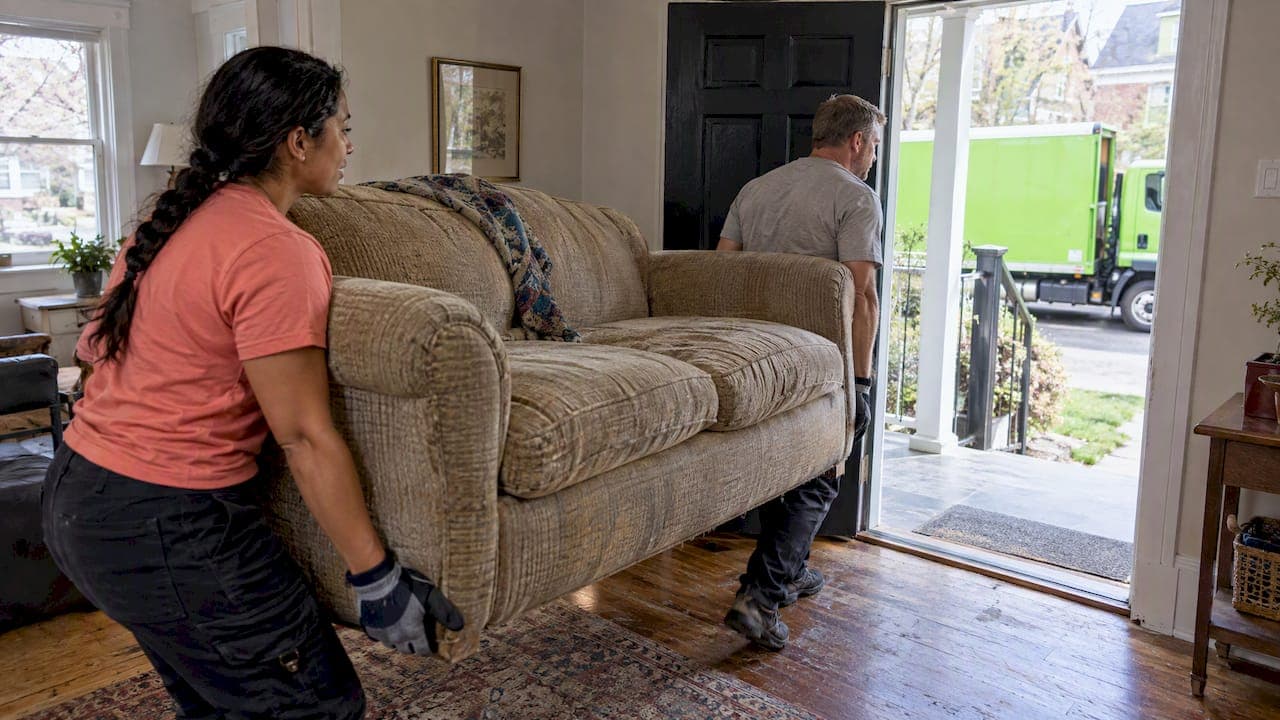
Spring cleaning stalls for one reason more than any other: the stuff has nowhere to go. Wiping down shelves is easy. Getting a broken couch, a dead washer and eleven bags of old clothes out of the house is not. Junk removal is the step that turns a pile in your garage into an empty garage, and it works best when you sort first, haul once and clean last.
This guide covers how to plan the cleanout, what to donate or recycle, what haulers will not take, how junk removal differs from cleaning and from hiring an organizer, and how to book a pickup without surprises. We are EasyScrap, a local junk removal crew serving Lawrence, Andover, Boston, Lowell and Haverhill, so some examples come from Merrimack Valley and Greater Boston homes.
TL;DR
- Declutter before you clean. Haul the big items out first, then scrub what is left.
- Sort every room into keep, donate, recycle and trash, and handle each item only once.
- Batteries, paint, chemicals, fluorescent bulbs and medications need special drop-offs. Most haulers will not take them.
- A cleaner cleans surfaces, an organizer helps you decide, and a junk removal crew carries away what you have decided to lose.
- Measure, clear a path and photograph everything before the crew arrives, so the quote matches the job.
Table of Contents
- Why the order matters: declutter, haul, then clean
- How to sort without getting stuck
- What goes where: donate, recycle, haul, or special drop-off
- What junk haulers usually will not take
- Junk removal vs. cleaning vs. an organizer
- Our perspective: haul once, haul early
- How to prepare for the pickup
- Room-by-room: where the junk usually hides
- A realistic spring cleanout timeline
- Is hiring a junk removal service worth it?
- Book your spring cleanout with EasyScrap
- FAQ
- Sources
Why the order matters: declutter, haul, then clean
The American Cleaning Institute's spring cleaning plan puts decluttering first, then a task list divided by room, then an inventory of supplies, and only then the cleaning itself. The same page notes that the average household spreads its spring-cleaning chores across six days. That is a useful planning number: if your list needs more than a weekend, the bulky stuff is probably what is eating your time.
The logic is simple. Dusting a basement full of boxes means dusting it twice. Mopping a garage floor under a broken treadmill is impossible. Remove what is leaving the house, and every later task gets shorter.
A workable sequence looks like this:
- Walk the house with a notepad. Note the large items that cannot leave in a trash bag: furniture, appliances, mattresses, a hot tub, old lumber.
- Sort one zone at a time. Start with the room that bothers you most.
- Stage the discards in one place, such as the garage or the driveway edge.
- Book the haul once the pile is roughly complete.
- Clean last, when the floor and shelves are finally clear.
How to sort without getting stuck
Most people do not struggle with the carrying. They struggle with deciding. Two research-backed systems help.
University of Illinois Extension's spring cleaning guide recommends four piles: pitch or trash; donate, sell, recycle or gift; put back; and a limited "to be determined" pile. It also recommends the OHIO rule, Only Handle It Once, plus short 5 to 15 minute bursts of work so the job does not feel enormous. The key word is limited. A "maybe" pile that keeps growing is just a new clutter zone.

Habitat for Humanity suggests a simpler three-box method: donate, keep, and trash or recycle. Pick whichever matches how you think. If you tend to hold onto things, the three-box version leaves less room for indecision.
If you want more ideas for making decluttering a habit rather than an annual panic, these cleaning habits for busy homeowners cover how to keep undecided piles from piling back up.
Three questions that settle most items
- Have I used it in the past year? Seasonal gear gets an exception. Anything else you have not touched in twelve months is a candidate to go.
- Is it in good enough shape that a stranger would want it? If not, it is not a donation. It is trash or recycling.
- Would I buy it again today? If the answer is no, let it go.
If you live in the Boston area and want a field-tested way to separate donations from trash, we wrote up three on-site tests for what to donate or trash.
Check for valuables before you toss
U.S. News advises in its house cleanout guidance to inspect items for valuables and important documents before anything goes in the garbage. This matters most in attics, basements and inherited homes, where old envelopes, photographs, jewelry and savings bonds turn up in unlikely boxes. Go through those containers yourself before the crew arrives.

What goes where: donate, recycle, haul, or special drop-off
Not everything belongs in the same truck. Sorting by destination saves money and keeps usable items out of the landfill.
| Item type | Best destination | Notes |
|---|---|---|
| Clean, working furniture and housewares | Donation | See our guide to furniture donation in Boston for where to give and when to call |
| Worn couches, broken chairs, bulky trash | Junk removal | Crews load and carry from inside the home |
| Old refrigerators, washers, dryers | Appliance removal | Refrigerants need proper handling, covered below |
| Mattresses and textiles | Donation, recycling or hauler | Banned from the trash in Massachusetts, see below |
| Cardboard and moving boxes | Recycling | See moving box disposal options |
| Batteries, paint, chemicals, bulbs | Hazardous-waste drop-off | Do not hand these to a hauler |
| Medications | Pharmacy kiosk | Never in the bin |
| Yard waste and branches | Yard waste removal or town program | Seasonal rules vary by town |
Hazardous items need their own path
StopWaste's spring cleaning guidance is clear: donate usable items to local charities, thrift stores or community groups, take batteries, electronics, paint and chemicals to hazardous-waste facilities, and bring medications to pharmacy drop-off kiosks. Keep all of those out of regular bins.
Batteries deserve a second look because the risk is real. The EPA says used household batteries count as a fire risk when they are lithium-ion, and recommends taping the terminals or bagging each battery separately before taking them to a designated recycling or household hazardous waste collection site. Its battery collection tip sheet adds that damaged or defective batteries should not go in curbside trash or recycling.

For local drop-off days and sites, AARP's smart guide to spring cleaning suggests checking with your local environmental, health or waste agency. In Massachusetts and New Hampshire, your town's public works or transfer station page is usually the fastest route to current dates.
Massachusetts has disposal bans you should know
If you are clearing a Massachusetts home, note that MassDEP added mattresses and textiles to its waste disposal bans effective November 1, 2022. In practice, an old mattress should go to a recycler or a hauler who handles it properly, not the curb with the trash. Ask about this when you book.
Refrigerators and other regulated appliances
Old fridges and freezers contain refrigerants that must be handled correctly. Our post on heavy item removal and EPA violations for fridges explains the options. If you simply need one gone, we offer refrigerator removal and broader appliance removal.
What junk haulers usually will not take
Forbes Home reports that junk removal providers commonly refuse dangerous materials: pesticides, oil, fuel, gasoline, household cleaners, fluorescent bulbs, pharmaceuticals, ammunition, fireworks, household hazardous waste, open paint cans and asbestos. Forbes also notes that acceptance rules vary from company to company, so confirm before you book.
That is the right habit. When you call for a quote, read your list aloud, including the odd items: the half-empty paint cans on the garage shelf, the propane tank behind the shed, the box of old batteries. A good crew will tell you straight what they can take and where the rest should go. It is better to hear "not that one" on the phone than at the curb.
Junk removal vs. cleaning vs. an organizer
These three services solve different problems, and spring cleanouts often need more than one.
| Cleaning service | Professional organizer | Junk removal | |
|---|---|---|---|
| What you get | Clean surfaces, floors, bathrooms, kitchens | Help sorting, categorizing and deciding | Items loaded and hauled away |
| Best when | Everything is in its place but dirty | You feel stuck or overwhelmed by the sorting | You already know what is going |
| What it does not do | Haul furniture, appliances or debris | Carry things off the property | Scrub, organize or decide for you |
| Timing in a cleanout | Last | Early | Middle |
The logic follows a natural order. If you feel paralyzed by a packed room, an organizer helps you decide what stays. Once that is settled, a hauler clears the leftovers. When the room is empty and the debris is gone, a cleaning service has something to clean. Hiring them in the wrong order wastes money: a cleaner working around a mountain of boxes is billing you to dust cardboard.
A few common situations:
- A garage you can't park in. You already know most of it is junk. Skip the organizer and book a garage cleanout.
- A basement full of a parent's belongings. An organizer, or a family member with patience, handles the sorting. Then a basement cleanout clears what is left.
- A home about to be listed. Realtors often ask sellers to clear first, clean second and stage third. Junk removal belongs in step one.
- A rental turnover. Landlords and property managers usually need the unit emptied fast, then cleaned. That is a hauler followed by a cleaner.
For larger projects that might call for a dumpster instead, we compared the two in junk removal vs. dumpster rental.
Our perspective: haul once, haul early
We are a crew of young, local owners, and the most common spring call we get sounds the same every year: someone has been cleaning for a weekend, the piles are stacked in the garage and the job is stuck. The fix is almost never more cleaning. It is getting the pile out of the house.
Here is what we have learned from the work:
- Do not wait until every room is sorted. Pick one big zone, finish it, and haul. A cleared garage motivates the next room.
- Be honest about donations. A stained recliner is not a gift to anyone. Usable items go to local charities, and we donate and recycle whenever possible, but we would rather tell you something is trash than let it clog a donation center.
- Same-day matters. When a pile has been blocking your hallway for a week, waiting another ten days for a pickup is exactly how cleanouts die. We offer same-day junk removal for that reason.
- Ask questions before you book. What do you take, what do you not, and how do you price? You should get clear answers.
Spring cleaning should end with an empty space, not a rearranged mess.
— Easy
How to prepare for the pickup
A little prep makes the crew faster and keeps the quote accurate. Our full junk removal preparation checklist goes deeper, but the essentials are:
- Stage items where you can. Move small things to the garage or driveway if you are able. Leave heavy pieces where they sit and tell the crew.
- Clear the path. Remove rugs, pets, toys and anything the crew could trip on between the item and the truck.
- Measure tight spots. Narrow staircases, basement bulkheads and attic hatches can limit what comes out whole. If you have an oversized piece, measuring first is a habit builders swear by, and it applies equally to doorways and hallways.
- Check permissions. Condo buildings and HOAs may require elevator reservations or a notice. Some towns have rules about what can sit on the curb.
- Photograph the pile. Send photos when you request a quote, so the estimate reflects what is actually there.
- Pull out what stays. Put a sticky note on anything the crew must not touch.
- Set aside the hazardous items. Keep them separate and handle them through the right drop-off.
For safety while you sort, U.S. News recommends disposable gloves, heavy work shoes, eye protection and a mask when you might meet hazardous material, along with checking local waste authorities for special disposal. That applies to dusty attics and basements that have not been opened in years.
Room-by-room: where the junk usually hides
Garage
Garages collect broken tools, dried paint, old bikes, rusted grills and boxes nobody has opened since the last move. Separate the paint, fuel and chemicals first. Everything else, from the sagging shelving to the dead lawn mower, is straightforward hauling.
Basement
Basements hold the bulky leftovers: sectional couches, old exercise equipment, wet cardboard and the second fridge. Check for moisture damage and mold before anyone starts hauling, and wear a mask if the air smells musty.
Attic
Attics are about carrying, heat and stairs. Plan on cool weather mornings, because summer attics get punishing. Attic cleanouts also tend to uncover the most sentimental items, so give yourself time. Our attic cleanouts page explains how we handle tight access.
Yard and curb
Spring raises fallen branches, rotted fence panels and old patio furniture. We handle yard waste along with the rest of our full list of removal services, including construction debris, estate cleanouts and hoarding situations.
Furniture and bulky items
Couches, mattresses and dressers are where many homeowners get hurt or damage a doorframe. If something is awkward, do not drag it alone. Our furniture removal crews carry it out from wherever it sits.
A realistic spring cleanout timeline
Here is how a manageable cleanout can look for a typical house.
| When | What happens |
|---|---|
| Week 1, evenings | Walk the house, list big items, call about hazardous drop-off dates |
| Week 1 to 2, weekends | Sort garage and basement into four piles, bag donations |
| Midweek | Drop off donations and hazardous items |
| Pickup day | Crew loads everything that remains |
| After pickup | Cleaning, shelving, putting back what you kept |
This pace follows the short-burst advice from University of Illinois Extension. You do not need to dedicate a whole week to sorting. Twenty focused minutes a night adds up.
Is hiring a junk removal service worth it?
It is worth it when time, your back or the truck rental is the problem. Consider the true cost of doing it yourself: a pickup or van rental, fuel, dump or transfer-station fees, a few trips, and a day or more of your own time. Add the risk of injury from carrying a washer down stairs.
It may not be worth it for a few bags of trash that your town collects each week, or for a single item a charity will pick up for free. Those are better handled through your town or a donation center.
For mixed loads, heavy items, tight access, estates, rentals and anything on a deadline, a crew saves effort. For homeowners, grandparents who cannot lift, real estate investors clearing a property and Realtors prepping a listing, that is the situation most of the time.
We do not publish set prices, because the cost depends on what is in the load and how hard it is to reach. We give free quotes, so you can see the number before anyone lifts anything.
Book your spring cleanout with EasyScrap
If the sorting is done, or the pile is too big to start, we handle the heavy lifting. We cover Lawrence, Andover, Boston, Lowell and Haverhill with a fully insured crew, free quotes and same-day scheduling when we have availability. We haul furniture, appliances, mattresses, yard waste, construction debris and full cleanouts of garages, basements, attics and estates, and we donate and recycle whenever possible.
See our junk removal service or request a free quote and tell us what needs to go.
FAQ
Should I clean first or remove junk first?
Remove junk first. The American Cleaning Institute's plan starts with decluttering before cleaning, and the logic is practical: clearing items out means you clean each surface once. A hauler works in the middle, between sorting and scrubbing.
What is the difference between an organizer and junk removal?
An organizer helps you sort, categorize and decide what to keep. Junk removal physically takes away what you have already decided to get rid of. If you are overwhelmed by choices, start with sorting help. If you already know what is leaving, call the hauler.
What items will junk removal services not take?
Most providers refuse hazardous materials such as paint, pesticides, fuel, household cleaners, fluorescent bulbs, pharmaceuticals, ammunition and asbestos. Rules differ by company, so list everything when you request your quote. Take batteries, chemicals and medications to a hazardous-waste site or pharmacy kiosk.
How do I clean out a house full of junk?
Work one room or zone at a time and sort into keep, donate, recycle and trash. Check for valuables and documents as you go, wear gloves and sturdy shoes, and keep the undecided pile small. Once sorting is done, schedule a single haul for everything that remains.
Can junk removal replace a cleaning service?
No. Junk removal clears items and debris, but it does not scrub, mop or sanitize. For a finished spring cleanout, plan on removal first, then cleaning once the space is empty.
Sources
- Spring Cleaning Plan, American Cleaning Institute
- Spring Cleaning for Mind and Home, University of Illinois Extension
- Spring cleaning checklist, Habitat for Humanity
- How to Clean Out a House, U.S. News
- Spring Cleaning, StopWaste
- Used Household Batteries, US EPA
- Battery Collection Tip Sheet, US EPA
- Smart Guide to Spring Cleaning, AARP
- MassDEP Waste Disposal Bans, Mass.gov
- How Junk Removal Services Work, Forbes Home