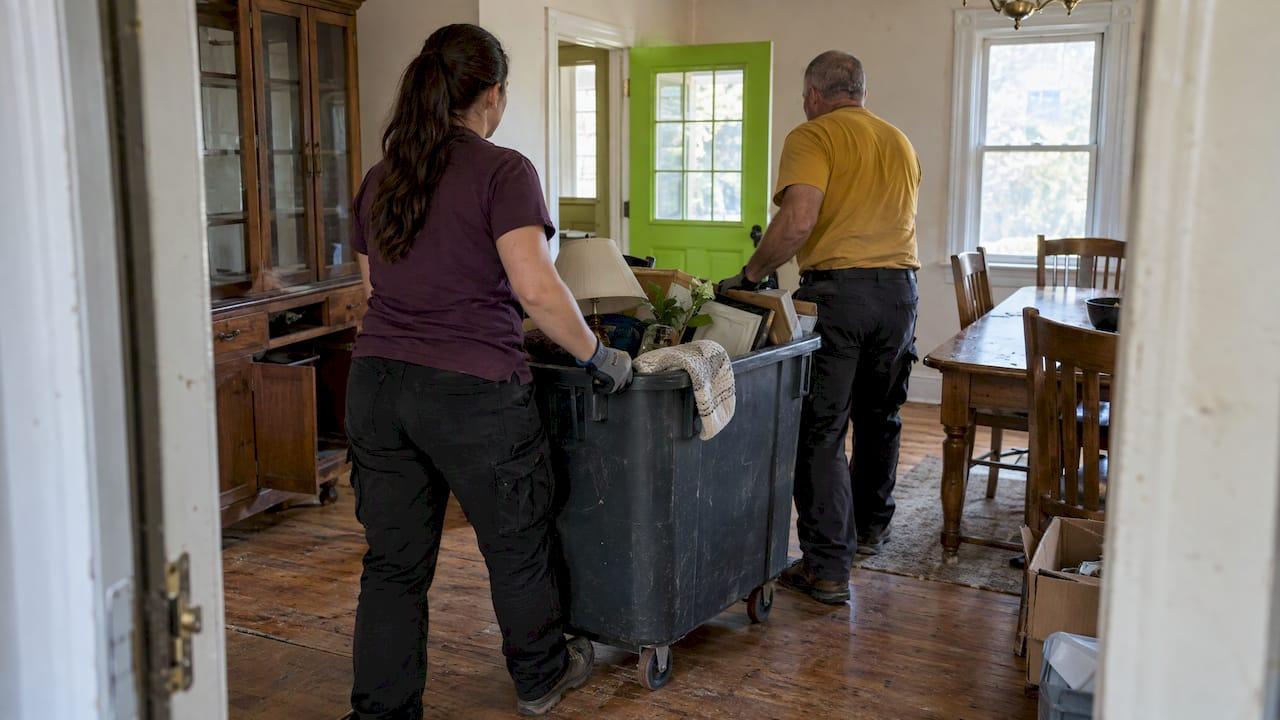
A foreclosure cleanout has no single timeline, because three clocks run one after another: the legal clock, the occupancy clock and the physical cleanout. The crew's work is usually the shortest part. The weeks that hurt are the ones before anyone is allowed to carry a single box out. If you are a homeowner facing this, a family member helping a grandparent, an investor who just bought at auction or a Realtor holding the listing, the goal is the same: know which clock you are on, line up the crew before it runs out, and avoid clearing anything you have no right to touch yet.
TL;DR
- Three clocks run in order: the foreclosure process, getting the property legally vacant, then the physical cleanout. Book the crew while the second clock is still running.
- Do not remove belongings until you have legal right to possession and have followed your state's notice rules for what is left behind. Clearing too early creates liability.
- On the investor and servicer side, Fannie Mae's guidelines expect initial securing and services within 14 calendar days of the property first being vacant.
- The cleanout itself is driven by the size of the home, the condition inside, and the garage, yard and outbuildings. Photos and a walkthrough give the most accurate quote.
- Schedule early, clear access, and ask for before-and-after photos so the next step (listing, repairs, sale) can start the same week.
Table of Contents
- The three clocks behind a foreclosure cleanout
- Who is allowed to clear the property, and when
- What happens to belongings left behind
- The servicer's clock: 14 days to secure
- A realistic week-by-week view
- What the cleanout itself looks like on site
- What makes a foreclosure cleanout take longer
- When to schedule, and how to prepare
- Book the crew before the keys change hands
- FAQ
- Sources
The three clocks behind a foreclosure cleanout
People search for a "foreclosure cleanout timeline" and expect a number of days. The honest answer is a sequence.
Clock 1: the foreclosure itself. This runs from the first missed payments through the sale. It is set by state law, and the length depends on whether your state uses a court process (judicial) or a sale outside court (non-judicial). Judicial states generally take longer. Nothing about the house is yours to clear during this phase unless you are the owner who is still living there.
Clock 2: occupancy. After the sale, the former owner or a tenant may still be in the home. Getting them out can mean a negotiated move-out date or a formal eviction. Eviction time varies enormously by state and by whether the occupant contests it. This is the phase that makes timelines unpredictable, and it is where a cleanout is most often delayed.
Clock 3: the physical cleanout. Once the property is legally vacant and you hold the right to possession, the crew can work. For a typical house this is a matter of days, not months, and it can be shorter when the home is in ordinary condition. Heavy accumulation, hazards or a large garage and yard add time.
The practical lesson: the dates you can control are in Clock 3, and you protect them by planning during Clock 2.

Who is allowed to clear the property, and when
The most expensive mistake is not a slow crew. It is hauling away items before you are legally entitled to.
For homeowners and families, that means the home is still yours until the sale and any redemption or move-out period say otherwise. Some states give a former owner a window after the sale to reclaim the property, and a cleanout done before that window closes can create trouble. If you are not sure where you stand, a real estate attorney in your state is the right person to ask before you book anything.
For investors and Realtors, the rule is the mirror image: you need the deed or written authorization from whoever holds possession rights, and the occupancy phase has to be resolved. Make sure the work order names the property, the person authorizing it and the date, and keep that paperwork with the job file.
What happens to belongings left behind
Even after the occupant is gone, furniture, papers and personal items may remain. States handle this differently, and the details matter because the notice step decides how fast you can proceed.
Two official examples show the range:
- In Connecticut, a state legislative report explains that possessions of a person evicted in a foreclosure follow the same procedure as an evicted tenant's. A state marshal delivers them to a town-designated storage facility. If they are not reclaimed, with storage costs paid, within 15 days, the town may sell them at public auction.
- In Arkansas, the state code says personal property left after a foreclosure sale is treated as abandoned if the owner does not remove it or send the purchaser a written claim within 30 days of the deed being recorded or notice being posted. The purchaser may then store it for no more than 30 days at the owner's expense before disposal carries no liability.
These are two states out of fifty, and neither is the rule where you live. The pattern is what to take away: a notice period, a retrieval window, then permission to dispose. If the home is in Massachusetts or New Hampshire, confirm the exact notice and retrieval requirements with your attorney before the crew starts, and have the dates in writing. Photograph everything of apparent value before it moves, and keep a simple inventory. A detailed record protects you if someone later claims something was taken.
The servicer's clock: 14 days to secure
If the property is bank-owned or serviced for a mortgage investor, there is a hard schedule on top of state law. Fannie Mae's Property Preservation Matrix and Reference Guide requires initial securing and initial services within 14 calendar days from the first time the property is vacant. Where a vacancy posting notice is used, securing must be completed within 7 calendar days of the notice expiring and within 14 days of the original vacancy indicator.
The same guide sets limits on debris removal. The allowable for debris removal and moving personal property is a combined maximum of 10 cubic yards, and bids are required when more than 20 cubic yards must come out. For a crew, that is a useful way to think about scope: a modest house with some leftover furniture sits within the allowable, while a packed home needs a bid and more lead time.
If you manage REO or servicer work, our guide to the foreclosure cleanout process for servicers walks through documentation that helps avoid invoice denials.

A realistic week-by-week view
Since every state differs, use this as a planning frame, not a promise. The cleanout portion starts only when the earlier phases are done.
| Phase | What happens | What you can do |
|---|---|---|
| Foreclosure process | Notices, filings, sale. Length set by state law and court schedule. | Homeowners: get legal and housing advice early. Investors: track the sale date. |
| Post-sale occupancy | Negotiated move-out or eviction, which varies widely by state. | Line up your cleanout quote while this runs. |
| Possession and notice | Deed in hand, authorization signed, belongings notice period if required. | Photograph and inventory the property. |
| Cleanout day(s) | Crew clears interior, garage, shed and yard, then a final walkthrough. | Confirm access, utilities and parking. |
| Handoff | After-photos and invoice, then cleaning, repairs, listing. | Schedule the next trade for the day after. |
One published example from a California legal guide for lenders puts an uncontested eviction of a former homeowner at about 30 days and a contested one at roughly 60 to 90 days, with tenants taking longer. Your state's numbers will differ, but the gap between an uncontested and a contested case shows why you should never promise a listing date until occupancy is settled.
What the cleanout itself looks like on site
Once you are cleared to start, a well-run job follows a predictable order:
- Confirm authorization and access. Whoever signs the work order should be able to show they have the right to direct the cleanout. Get keys, lockbox codes or a meeting time.
- Document the starting condition. Take photos of every room, the garage and the yard before anything is touched. This protects everyone.
- Walk the property and sort. Identify what is trash, what is donatable, what is a heavy item such as an appliance or a hot tub, and anything that needs special handling.
- Clear room by room. Work from the back of the house toward the door so the path out stays open. Furniture, mattresses and appliances go first because they take the most space.
- Clear the garage, shed, basement, attic and yard. These areas are where time quietly disappears. Our pages on garage cleanouts, basement cleanouts and attic cleanouts cover each space.
- Sweep and do a final walkthrough. The property should be broom-clean and every room checked against your starting photos.
- Send after-photos and the invoice. These close out the job file and support payment from a servicer or an owner.
What makes a foreclosure cleanout take longer
If your quote is longer than you expected, one of these is usually why:
- Volume. A fully furnished four-bedroom house with a packed garage is simply more load than a half-empty condo. Volume is also what triggers bid requirements on servicer work.
- Condition. Heavily cluttered or hoarded homes need careful sorting and more hands, and can stretch from a single day to several. Our services page lists hoarding situations among the work we handle.
- Heavy and regulated items. Refrigerators, freezers and air conditioners contain refrigerants and need proper handling. Our guide to heavy item removal and fridge rules explains what to expect. We also handle appliance removal.
- Exterior debris. Overgrown yards, old fencing, construction leftovers and dumpster overflow add loads. These fall under yard waste, construction debris and dumpster overflow cleanup.
- Access problems. Locked outbuildings, missing keys, blocked driveways, stairs without a clear path, or utilities shut off can slow a crew or stop it.
- Legal holds. A missed notice, a disputed occupant or a missing authorization can halt a job after the crew arrives. This is the one that costs weeks rather than hours.
When to schedule, and how to prepare
Book the cleanout while occupancy is still being resolved, not after. Ask for a quote based on photos or a walkthrough, and ask the crew about availability for the days right after you expect possession. Flexible scheduling and same-day availability are part of how we work, but a firm date still lets the next trade (cleaning, repairs, a Realtor's photographer) line up behind you.
A short preparation list saves hours:
- Put the signed authorization and the possession date in writing.
- Photograph every room, closet, garage and shed.
- Set aside anything with legal or sentimental value that the owner has claimed, and any documents.
- Confirm how the crew will get in and where a truck can park.
- Mark anything that must stay, such as fixtures or appliances included in the sale.
Our practical checklist for preparing for junk removal goes further.
If you are an investor, flipper or Realtor
The cleanout is the first domino. Demolition, cleaning, inspections and listing photos all wait on it. If you plan a renovation, see how to clear a flip house before demo. If you hold the property as a rental, the landlord cleanout checklist covers turnover. Property managers handling several units can read about junk removal for property managers.
If you are a homeowner or a family member
If the home belongs to a parent or grandparent, the hard part is emotional as much as logistical. Ask the crew to pause at items the family wants to review, and go through photo albums, papers and keepsakes before cleanout day. Our approach to estate-type jobs is outlined in the estate cleanout process.
Our view: plan the cleanout during the wait
We see the foreclosure timeline as two kinds of days: days you cannot control and days you can. The legal process and occupancy are out of your hands. The cleanout is not, and it is where a good plan pays off.
Our advice is to get a quote and a tentative slot while the legal steps are still running, so the day possession is confirmed, a crew can start. We are a local team serving Lawrence, Andover, Boston, Lowell and Haverhill, and we offer same-day junk removal, an insured crew and free quotes. We donate and recycle usable items whenever possible, so a cleanout does not have to mean everything goes to a landfill.
The better you document the start, the easier the finish. Before photos, a clear authorization and an agreed walkthrough turn a stressful property into a closed file.
Easy
Book the crew before the keys change hands
EasyScrap handles junk removal, furniture and appliance removal, garage, basement and attic cleanouts, estate cleanouts, construction debris cleanup, yard waste removal and hoarding situations for homes and businesses. We offer free quotes and an insured crew, with flexible scheduling and same-day availability. Start with our junk removal service and send us photos of the property so we can line up a date that fits your possession timeline.

For a full list of what we clear, see our services page, or reach us from easyscrapofficial.com.
FAQ
How long does a foreclosure cleanout take?
Once the property is legally vacant and you have the right to possession, the physical work for an average house is generally a matter of days, and shorter for a lightly furnished home. Heavy accumulation, large garages and yards, or heavy appliances extend it. The legal and occupancy phases before it can take weeks or months depending on the state.
How long does a former owner have to move out after foreclosure?
It depends on the state, on whether the sale was court-supervised and on whether the occupant contests an eviction. Some move out by agreement within days. Contested cases can take months, as the California example above shows. For your situation, ask a real estate attorney in your state.
Can I throw away what the former owner left behind?
Not automatically. Many states require written notice and a retrieval period before items count as abandoned, and some require sale of valuable items. Connecticut and Arkansas, for example, set specific windows by statute. Confirm your state's steps before disposing of anything, and keep a photo inventory.
When should I book a cleanout crew?
Book while the occupancy phase is still being resolved, so you have a slot ready the moment you have possession. Servicers working under Fannie Mae guidelines have 14 calendar days from the first vacancy to complete initial securing and services, so early planning matters there too.
What should I have ready before the crew arrives?
A signed authorization, a confirmed possession date, keys or access instructions, and before photos of every room and outbuilding. Set aside any items the owner has claimed. Clear parking for a truck makes the day go faster.
Sources
- Fannie Mae Property Preservation Matrix and Reference Guide
- Connecticut General Assembly report on evicted tenants' property
- Arkansas Code § 18-27-103
- California post-foreclosure evictions guide