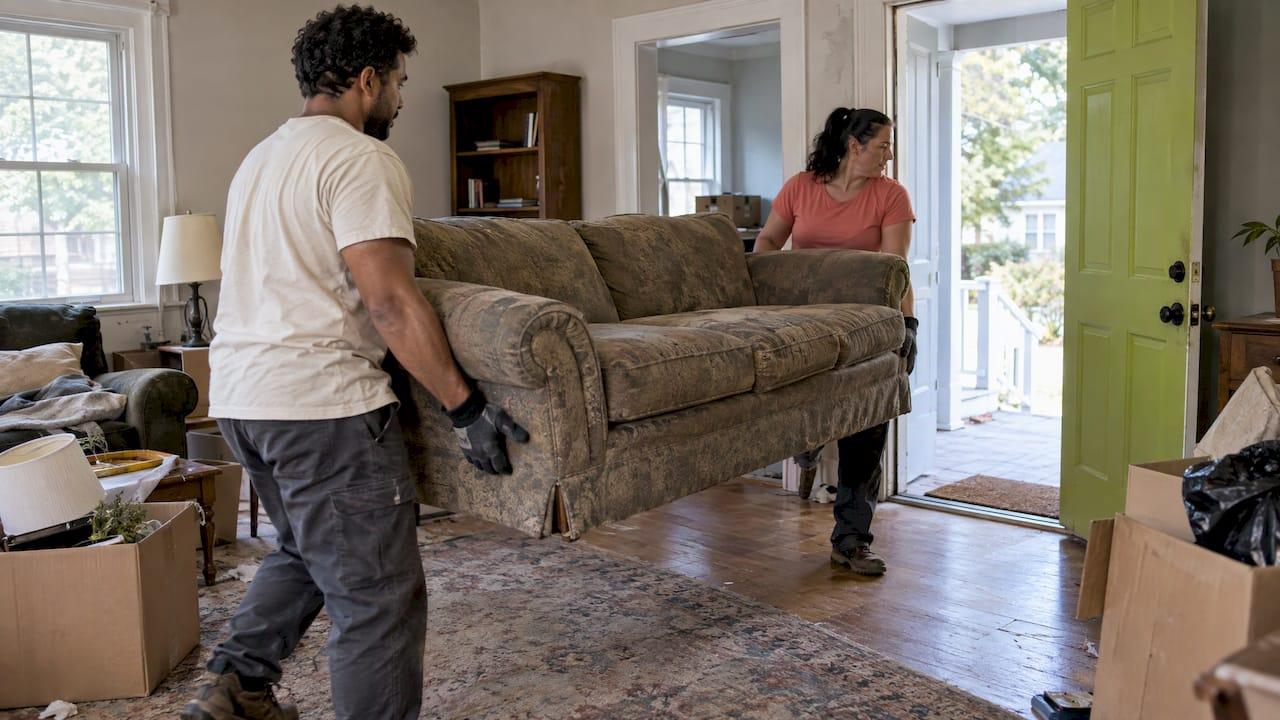
The fastest, cleanest way to handle a flip house cleanout is to schedule one full-service haul at the very start of the project, right after you secure the property and before any contractor opens a wall. Every day the old contents sit in the house is a day your contractors can't see the real condition of the structure, and a day your holding costs keep running. We are EasyScrap, a local junk removal and hauling company serving Lawrence, Andover, Boston, Lowell and Haverhill, and this is the routine we would hand a friend who just closed on a property full of someone else's belongings.
TL;DR
- Clear the house first. Contents hide water damage, pests and bad wiring, and your budget isn't reliable until the rooms are empty.
- Sort into keep, sell, donate, recycle and remove before the truck arrives, so the crew only handles what is actually leaving.
- Don't disturb anything that could be asbestos, lead paint, chemicals, fuel or unknown liquids. Those need a licensed professional.
- Book one hauling crew for contents and demo debris rather than splitting the job between your contractor, a dumpster and your own truck.
- Get a free quote with photos or a walkthrough, and ask for same-day scheduling when the clock matters.
Table of Contents
- Where the cleanout sits in a flip timeline
- What a flip house cleanout actually includes
- Step by step: running the cleanout
- How long a flip cleanout takes
- What affects the price
- Massachusetts rules that affect where debris can go
- Junk removal or a dumpster?
- Realtors, landlords and grandparents: who this serves
- Our perspective
- Ready to clear your flip property
- FAQ
- Sources
Where the cleanout sits in a flip timeline
In most flip schedules, cleanout comes first. One 90-day foreclosure flip schedule puts a security and cleanout phase at roughly days 11 to 18: the property is secured, emptied, tested and reassessed. It also calls for a second contractor walkthrough once the house is empty, so the budget gets revised with real information instead of guesses. Another rehab timeline lists demo and cleanout as step one, ahead of structural repairs, rough plumbing, electrical and HVAC, inspections, drywall and finishes.
The reason is practical. The same schedule notes that abandoned furniture, trash, carpeting and personal property can conceal water damage, pests, unsafe wiring, damaged flooring or missing plumbing. You can't price a repair you can't see. Utilities should only be turned on after a licensed contractor inspects any damaged pipes, wiring, meters or mechanical equipment, which is another reason the house needs to be open and accessible early.
For an investor, that makes the cleanout a scheduling decision more than a cleaning task. Everything after it waits on it.

What a flip house cleanout actually includes
A flip cleanout is wider than a standard junk haul. Depending on how the seller left the property, expect some mix of:
- Contents: furniture, mattresses, clothing, boxes, personal papers and old appliances.
- Garage, basement and attic loads: the places where decades of storage collect. We handle garage cleanouts, basement cleanouts and attic cleanouts as separate services, and a flip often needs all three.
- Yard waste: overgrown brush, old fencing, abandoned sheds' contents and similar outdoor debris.
- Renovation debris: flooring, cabinets, drywall, fixtures, lumber and packaging produced once demo starts.
- Heavy items: refrigerators, washers, dryers and hot tubs that no one wants to carry out by hand.
Our services cover each of these, including furniture removal, appliance removal, construction debris cleanup, yard waste removal, estate cleanouts and hoarding situations. If you are not sure which category your property falls into, the full services page lists them all.
Step by step: running the cleanout
1. Secure the property and walk it
Change the locks, confirm who has keys, and walk every room, the garage, the basement and the attic with your phone. Photograph everything. Those photos serve three purposes: they document the condition at purchase, they let a hauler give you an accurate quote, and they give your contractor a first look before the house is empty.
Where it goes wrong: investors skip the attic and crawlspace, then discover an extra truckload on the day the crew is booked.
2. Set aside anything with value or legal weight
Personal papers, photos, jewelry, firearms, medications and documents need a decision from you before a crew arrives. On a foreclosure or estate purchase, find out whether former occupants or heirs have a right to retrieve belongings and get that in writing. If you are unsure about what you can legally discard, ask your real estate attorney, not your contractor.
3. Sort into five groups
A simple clear-out plan for rentals and renovation projects suggests assigning items to keep, sell, donate, recycle or remove. For a flip, that works well:
| Group | What goes here | Who handles it |
|---|---|---|
| Keep | Original hardware, solid wood doors, anything staging can reuse | You |
| Sell | Working appliances, quality furniture, tools | You, before the haul |
| Donate | Usable furniture, housewares, clothing | Our crew can donate usable items |
| Recycle | Metal, cardboard, some appliances | Our crew recycles whenever possible |
| Remove | Everything else | Our crew |
Don't over-sort. Your time is worth more than the resale value of a pile of mismatched chairs. Pull out what matters, mark it, and let the crew take the rest.
4. Flag the materials that need a specialist
Separate ordinary bulky debris from materials that need special handling. Don't disturb suspected asbestos, lead-based paint, chemicals, fuel, pesticides, propane tanks or unknown liquids. Photograph them, leave them where they are, and call a licensed professional.
Two federal rules are worth knowing for older houses:
- Asbestos. The EPA says federal work-practice rules apply to demolition and renovation, and the building owner or operator must notify the state agency before certain work. The page excludes residential buildings with four or fewer dwelling units from those regulations, but state and local rules can still apply. Ask your abatement contractor what your state requires before demolition begins.
- Lead paint. The EPA's Renovation, Repair and Painting rule covers work that disturbs paint in housing built before 1978. Landlords and property managers must comply, and the rule generally doesn't apply to homeowners working on their own pre-1978 home. If you are an investor hiring contractors, make sure they are lead-safe certified.
If your plan includes tearing out walls, our guide on renovation cleanup options explains how DIY, HEPA professionals and same-day hauling fit together.
5. Pull the appliances properly
Refrigerators and freezers contain refrigerant that must be handled correctly. Don't cut, puncture or dump one at the curb. Our article on heavy item removal and fridge rules walks through the options, and we handle appliance removal including refrigerators, washers and dryers.
6. Book the haul
Send your photos, confirm access and parking, and book one crew to clear the contents. For a flip, the order matters: contents first, then a second visit for demo debris once your contractor is done tearing out. Planning both visits at the start keeps the schedule tight.
7. Walk it empty and reassess
Once the rooms are empty, walk the house with your contractor. This is the moment to revise the budget, as the foreclosure timeline above recommends, because you are finally looking at the actual floors, walls, ceilings and mechanicals.
How long a flip cleanout takes
There is no single number. A guide on foreclosure cleanouts puts the range anywhere from a few hours to a couple of months, depending on how much is in the house and how it is done. The variables that decide it are the number of rooms, how packed they are, stairs and access, and whether there is hazardous material that needs a specialist first.
For a standard house, a trained crew typically needs far less time than a DIY effort over several weekends. The more useful number for your schedule is the gap between the day you get the keys and the day your contractor can start. Every cleanout decision should shrink that gap.
What affects the price
We don't publish flat prices, because every property is different, and we offer free quotes. These are the factors that drive any whole-house cleanout quote:
- Volume. How many truckloads of material leave the house.
- Labor. How many people and how many hours it takes to carry items out, especially from basements and upper floors.
- Access. Stairs, long carries, tight driveways and parking.
- Disposal. Tipping fees at the transfer station or landfill vary by region, and the Northeast tends to be on the higher side.
- Special items. Appliances with refrigerant, electronics, mattresses, tires, hot tubs and pianos can add handling or disposal costs.
- Condition. Heavily packed or hoarding situations take longer and cost more.
Two habits keep quotes accurate. First, send photos of every room, garage, attic and basement. Second, tell us what is staying: cabinets your contractor wants to reuse, a shed you're keeping, items already sold.
Massachusetts rules that affect where debris can go
If your flip is in Massachusetts, disposal rules are tighter than many investors expect. MassDEP maintains a list of waste disposal bans covering materials such as construction and demolition debris, leaves and yard waste, and, since November 1, 2022, mattresses and textiles. Those materials must be diverted to recycling or reuse rather than thrown out as ordinary trash. The state also explains that mattresses are banned from disposal and must be recycled.
In practice, that means a mattress left in a flip house can't simply go in a trash dumpster. We donate and recycle whenever possible, so the sorting is part of the haul. For more on where renovation material can go, see our guides on renovation debris disposal and where construction debris can be taken.
Junk removal or a dumpster?
Many flippers default to a rented dumpster in the driveway. It can work for a long demo, but a dumpster doesn't carry anything out of the house. Someone has to haul every couch, mattress and box to it, sort the loose material, respect weight limits and wait on delivery and pickup. For a house packed with contents, a hauling crew does the lifting and loading in one visit. Our comparison of junk removal versus dumpster rental lays out when each fits, and for a contents cleanout the crew-based option is almost always the quicker one.

Realtors, landlords and grandparents: who this serves
The same cleanout routine helps more than flippers.
- Realtors preparing a listing want the house empty and presentable. Most sale contracts expect the premises to be broom-swept at closing, and the cleaning obligation is rarely a legal requirement unless the contract says so. Our explainer on broom swept condition shows what that means in practice.
- Landlords and property managers turning a unit between tenants can use our landlord cleanout checklist.
- Grandparents and heirs clearing a family house before selling it need the same sorting method, with extra time for the items that carry memories. Take what matters first, then let the crew handle the heavy lifting.
- Servicers and lenders handling vacant properties can read our foreclosure cleanout process.
Our perspective
On a flip, the cleanout is the one task that blocks everything else. Your contractor can't give you a firm bid on a house full of furniture, and you can't schedule inspections on a house you can't walk through.
That's why we treat these jobs as a schedule problem as much as a hauling problem. We're a team of young, hardworking local owners, we offer same-day service, and we carry insurance for our crew. When a house has usable furniture, appliances or housewares, we donate and recycle whenever possible instead of sending everything to a landfill.
Our advice to investors is simple: send photos early, tell us the date your contractor wants to start, and let us build the haul around it. Then walk the empty house, revise your budget with real numbers and get on with the work.
Easy
Ready to clear your flip property
If you have a house in Lawrence, Andover, Boston, Lowell, Haverhill or the surrounding area, we can quote the cleanout from your photos and schedule it around your contractor. We cover contents, garage, basement and attic loads, yard waste, appliances and renovation debris, with an insured crew and free quotes. Start with our junk removal service or tell us about the property through the main site.
If the house needs a pre-demo clear-out, our guide to a pre-renovation cleanout explains how a short, focused visit fits before the work begins. And if cabinets are coming out, see our notes on kitchen cabinet disposal for donation and recycling routes.
FAQ
How soon should I clean out a flip house?
As early as you can after securing the property. Published flip schedules put cleanout in the first weeks, because the contents can hide water damage, pests and electrical or plumbing problems. Clearing first also lets your contractor revise the budget with real information.
Who is responsible for cleaning a house before it is sold?
It depends on the contract. Most sale contracts include language about removing belongings and leaving the home broom-swept, but cleaning is rarely a legal requirement unless the contract or negotiation adds it. When you are the buyer of a flip property, the cleanout is usually yours to handle.
What is the fastest way to clean out a house?
Photograph every room, pull out what you want to keep or sell, and book one hauling crew to take the rest in a single visit. Using a crew avoids the delays of renting, loading and waiting on a dumpster. We offer same-day service when the schedule is tight.
What should I never move myself?
Suspected asbestos, lead-based paint, chemicals, fuel, pesticides, propane tanks and unknown liquids. Leave them in place, photograph them and bring in a licensed professional. Older houses may also trigger federal or state notification and work-practice rules before renovation.
Do you donate or recycle items from the house?
Yes. We donate and recycle whenever possible, which helps in states like Massachusetts where materials such as mattresses and construction debris are banned from regular trash disposal.
Sources
- A 90-Day Foreclosure Flip Timeline, Foreclosure Flips
- House Flipping Timeline by Rehab Phase, Flip Home
- A Clear-Out Plan for Condos, Rentals and Renovation Projects, JSK Property Management
- Information for Owners and Managers of Buildings that Contain Asbestos, EPA
- Lead Renovation, Repair and Painting Program, EPA
- MassDEP Waste Disposal Bans, Mass.gov
- Mattress Recycling, Mass.gov
- Do You Need to Clean Before You Move Out?, Better Homes & Gardens
- How to Handle a Foreclosure Cleanout, Dumpsters.com