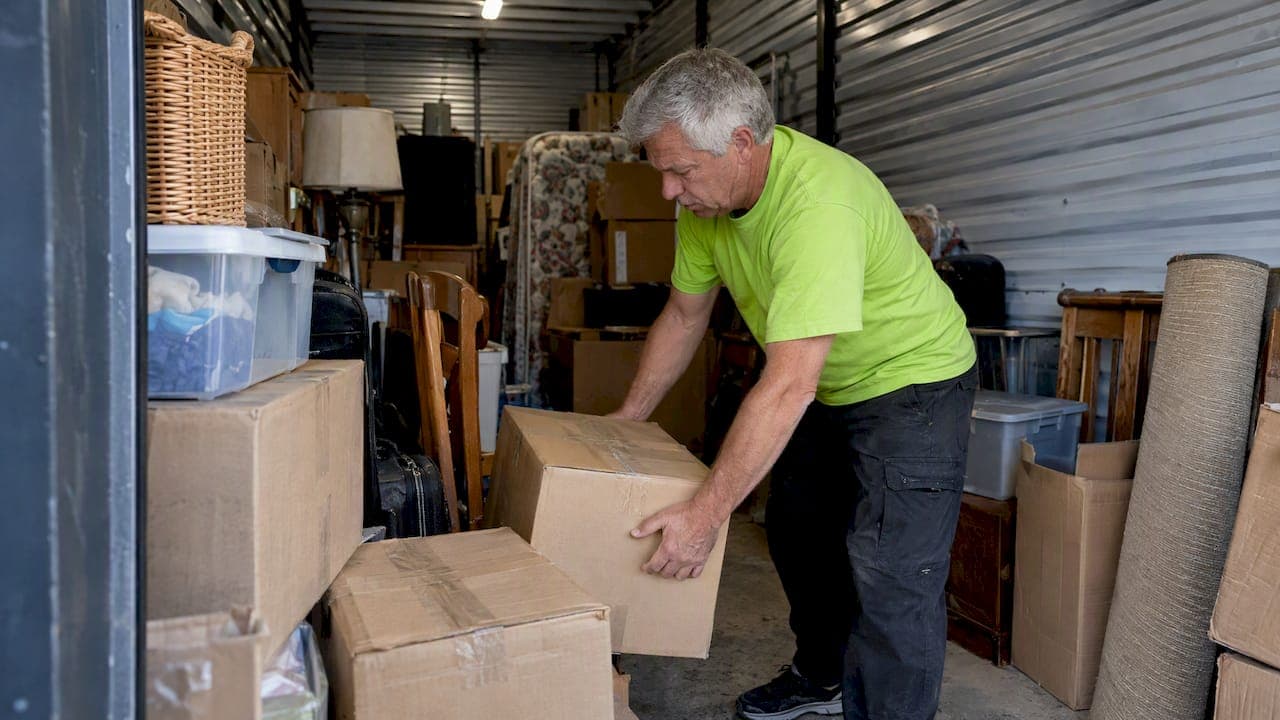
A convenient way to handle a storage unit cleanout is to book a professional crew that does the lifting, hauling, and disposal for you. Snap photos and write a quick inventory first so the quote and crew size are right. Flag appliances and household hazardous waste up front, because those items need special handling and can change the plan.
TL;DR:
- Send photos with an inventory and disclose stairs, long carries, appliances, and access constraints so the crew size, truck space, and quote reflect the job.
- Refrigerators, air conditioners, and hazardous waste need advance separation because local disposal rules vary; keep chemicals sealed and out of ordinary trash.
- A small unit may take one to two hours, while a full unit can take several hours; volume, weight, stairs, and disposal fees drive cost.
- If rent is overdue, contact the facility before selling or discarding items; lien sale rules vary by state, so follow local law.
Table of Contents
- How does a professional storage unit cleanout work?
- What should you prepare before the crew arrives?
- How do you dispose of appliances, hazardous waste, and unwanted items?
- What affects the cost and timeline of a cleanout?
- How do you book and what should you do on the day?
- How we approach storage unit cleanouts
- Why the clearing itself is the easy part
- How can we help with your storage unit cleanout?
- FAQ
- Sources
How does a professional storage unit cleanout work?
A good crew typically follows a basic process, and knowing it can help keep surprises down. Booking can happen by phone description, by sending photos, or with an in-person estimate. Availability varies, and providers may give you an arrival window rather than an exact time.
- You book by sharing photos or a short description of the unit, including its size and what is inside.
- The crew arrives, does a quick walkthrough, and confirms the estimate against what they see.
- They sort items into load, donate, recycle, and special-handling piles.
- They carry everything out and load the truck, working in a logical order so nothing gets damaged.
- They sweep the unit so it is ready to hand back.
- They take the load to a donation site, recycler, or disposal facility.
Crews may work in teams, and truck capacity sets how much fits in one trip. Stairs, long carries from the unit to the truck, and extra equipment can add labor time, which is why mentioning them when you book matters.
What should you prepare before the crew arrives?
The most common DIY failure is mixing deciding with moving. Decide first, then move. Extra Space Storage recommends starting with an inventory or photos, then sorting items into keep, toss, donate or sell, and store categories. That inventory tells you how many people, how much vehicle space, and which disposal path you need.
What to have on hand:
- Boxes or totes and labels for anything you are keeping
- Markers for labeling donation and sale boxes
- Heavy-duty trash bags for true trash
- Work gloves and a dust mask for dusty or musty units
- Basic tools for taking apart shelving or furniture
- Cleaning supplies for the final wipe-down
Stage the unit so the work goes quickly. Clear a path to the door, move the largest items toward the front, and create separate zones for keep, donate or sell, and toss. Keep valuables and paperwork apart from everything else so they never end up on the truck.
Pro Tip: Photograph the unit from the doorway and again from inside before you touch anything. Send both to your provider so the quote matches the real job.
If the unit is a mess and you want to reorganize afterward, a home organization systems project can help you keep the space you just reclaimed.
How do you dispose of appliances, hazardous waste, and unwanted items?
Some items cannot simply go on the truck and into a landfill. The U.S. EPA says refrigerated appliances can contain refrigerants, compressor oil, mercury switches, and PCBs, and that disposal rules vary by municipality, sometimes requiring refrigerant recovery. Check local solid-waste instructions before anyone moves a refrigerator, freezer, air conditioner, or dehumidifier. Our guides on fridge disposal and air conditioner disposal walk through the details.
Household hazardous waste is the other category to separate early:
- Paints, cleaners, oils, batteries, and pesticides count as potential household hazardous waste.
- Follow the product label, and never pour these down a drain or toss them in regular trash.
- Use a permanent collection site or a special collection day, and never mix incompatible chemicals, as the EPA's HHW page advises.
- Keep unknown containers closed and separated in plastic tubs, as the EPA's quick start guide suggests.
Rules differ by location: the EPA notes that household hazardous waste is regulated at the state and local level, so acceptance rules and drop-off arrangements change from place to place.
Usable furniture, tools, and household goods are better donated or recycled than dumped, and professional crews commonly drop reusable items at charities or recyclers. One more caution: if the unit is behind on rent, lien-sale procedures are state-specific, so contact the facility immediately and follow the lease and state law before anything is discarded or sold.
What affects the cost and timeline of a cleanout?
Price comes down to a handful of drivers. Volume and weight matter most, followed by labor hours, stair carries, truck time, and special-disposal fees for appliances or hazardous items. A unit packed to the ceiling costs more than one that is half full, and a long carry from a back corner adds time.
Timing depends on size. A small unit may take an hour or two. A fully packed unit can take several hours, and a pro crew can often finish it in one visit, sometimes the same day you book.

The best way to get an accurate number is to send photos and your inventory, or ask for an in-person estimate. Vague descriptions lead to quotes that change on arrival, and clear photos prevent that.
How do you book and what should you do on the day?
When you book, tell the provider these things:
- The unit size and the facility's access hours or gate code
- Large items such as appliances, a piano, or heavy safes
- Stairs, elevators, or a long carry distance
- Anything hazardous or fragile you already know about
On the day itself, keep the job moving with a short checklist:
- Have your photos and inventory handy for comparison
- Bring the gate code or keys and unlock the unit
- Clear a path from the door to the loading area
- Name one contact person who can make decisions
- Point out hazardous items and valuables before loading starts
Ask the administrative questions ahead of time: proof of donation or recycling, a receipt for disposal, insurance coverage, cancellation fees, and accepted payment methods. Answers in writing save arguments later.
How we approach storage unit cleanouts
Our crews work through a storage unit by sorting what can be reused from what has to be hauled. We donate and recycle whenever possible, and we are insured. When you hire any pro, ask for these proof points: an insured crew, donation receipts, same-day availability, and a clear quote before work starts. We offer free quotes for homes and businesses across Lawrence, Andover, Boston, Lowell, and Haverhill.
Why the clearing itself is the easy part

Most advice about cleaning out a storage unit treats it as an organizing problem. In practice, it is a decision problem. People pay rent on a unit for years because deciding is uncomfortable, not because moving boxes is hard. The advice to sort everything yourself first sounds responsible, but it can stretch the job across multiple work sessions.
My view: decide only what you cannot let go of without looking. Pull the valuables, paperwork, and sentimental items, then let a crew handle the rest. The items worth your attention are the ones that carry real risk: appliances with refrigerants and anything hazardous. Everything else is just weight. Do not spend your energy on the part a truck can handle.
— Easy
How can we help with your storage unit cleanout?
We handle the lifting, hauling, and responsible disposal so you get your space back quickly. Our crews are insured, and booking availability depends on the schedule. Our relevant services include:
- Junk removal for full storage unit cleanouts
- Appliance removal for refrigerators and other large items
- Furniture removal for couches, mattresses, and more
- Garage, basement, and attic cleanouts
For a free quote, send photos, the unit size, access details, and any special items. Ask us about donation and recycling. Reach out through our junk removal page to book your cleanout.
FAQ
How much should I charge to clean out a storage unit?
There is no single rate. Charge based on volume and weight, labor hours, stairs or long carries, truck time, and any special-disposal fees. Photos and an inventory make the estimate accurate.
How do I get a storage unit cleaned out?
Take photos, make an inventory, and sort items into keep, sell, donate, and toss. Then either haul it yourself or book a professional crew to remove the rest. Booking a crew can be a convenient option for a full unit.
What's included in a $99 junk removal service?
Pricing varies by provider, so ask what the quoted price covers before you book. Check volume limits, labor, stairs, disposal fees, and whether appliances or hazardous items are extra. We provide quotes on request.
What happens if you don't clean out a storage unit?
You keep paying rent, and a unit that falls behind can end up in a lien process. Those procedures are state-specific and follow strict notice rules. Contact the facility as soon as you receive a default notice.
Sources
- How To Clean Out A Storage Unit | Extra Space Storage
- Appliance Disposal | US EPA
- Epa
- Securespace
- Household Hazardous Waste Quick Start Guide