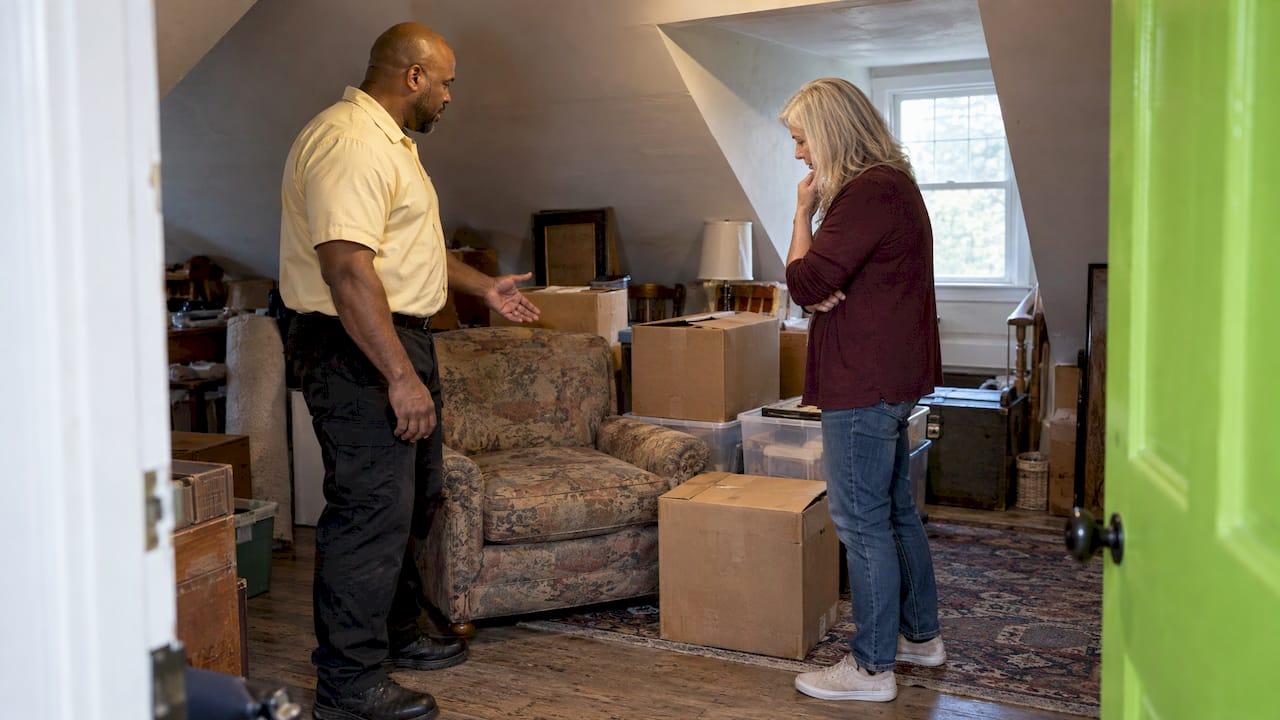
The right junk removal company gives you a written, all-in quote, carries real insurance, takes the items you actually have, and can tell you where they go afterward. Price matters, but the cheapest number on the phone is often the one that changes at the curb. At EasyScrap we serve homes and businesses in Lawrence, Andover, Boston, Lowell, and Haverhill, and the seven checks below are the ones we would run ourselves if we were hiring.
This guide is written for homeowners clearing a basement or a parent's house, real estate investors turning over a property, and Realtors who need a listing cleared on a deadline.
TL;DR
- Get a quote that names what is included: labor, hauling, disposal fees, and any surcharges for items like mattresses or appliances.
- Confirm active general liability and workers' compensation coverage before the crew enters your home.
- Read reviews for patterns (communication, punctuality, how problems were handled), not just the star average.
- Ask where items go: donation, recycling, or landfill, and whether hazardous items are accepted.
- Get the arrival window, cancellation terms, and cleanup expectations in writing.
Table of Contents
- What you are actually hiring
- Check 1: How the company prices the job
- Check 2: Whether they take your items
- Check 3: Insurance, and what it covers if something breaks
- Check 4: Reviews, references, and a real business behind the name
- Check 5: Where your items go
- Check 6: Scheduling, arrival windows, and preparation
- Check 7: Warning signs before you book
- Choosing by situation
- Our perspective
- Getting started with EasyScrap
- FAQ
- Sources
What you are actually hiring
A junk removal company sends a crew and a truck, lifts the items out, and takes them away. That sounds simple, which is why quality varies so much. The difference shows up in four places: how the job is priced, whether the crew is covered if something breaks, what happens to your items, and how reliably they show up.
A general guide to costs from the consumer organization Checkbook puts typical US junk removal jobs at $100 to $700, depending on how much you are removing and how the hauler prices it. That range is wide on purpose. A single old couch and a full estate cleanout are different jobs. Your goal is not to find the lowest figure in the range but to find a company that tells you the real figure before the crew starts lifting.
Check 1: How the company prices the job
Haulers generally price in one of two ways, according to Checkbook's guide: by the volume your items take up in the truck, with labor and disposal fees on top, or by a flat fee for truck space plus an hourly labor charge. Neither is wrong. What goes wrong is a quote that does not say which one it is.
A useful written estimate should show:
- What is being removed. A list or photos, not "a few things."
- How the total is calculated. Volume, flat rate, or hourly, and what the labor portion covers.
- Disposal and special-item charges. Mattresses, refrigerators, and construction debris are the usual places a number grows.
- What happens if the load is bigger than expected. You want to know the rule before it is applied.
Phone quotes are a starting point. A quote based on seeing the items, whether in person or through photos, is the one to trust. We offer free quotes, and our own blog explains how junk removal pricing works and how to avoid surprises if you want the detail before you call.
A quick worked example: you have a sectional sofa, two mattresses, and a pile of boxes in a garage. A good estimate lists each of those, tells you whether the mattresses carry a separate charge, and gives one total. If the person on the phone says "it will be around this much, depending," ask them to put the conditions in writing.
Check 2: Whether they take your items
Not every hauler takes everything. Checkbook notes that most junk haulers are not licensed to dispose of hazardous materials such as wet paint, weed killer, batteries, and household cleaners, and recommends asking which items a company will not take.
Before you book, make a list of anything unusual in your pile:
- Paint, solvents, pesticides, or cleaning products
- Batteries and electronics
- Refrigerators and other appliances
- Hot tubs, sheds, or other bulky outdoor items
- Construction debris from a renovation
- Yard waste
Then confirm each one is on the company's accepted list. Our work covers furniture removal, appliance removal, garage, basement, and attic cleanouts, estate cleanouts, construction debris cleanup, yard waste removal, hoarding cleanup, and hot tub removal. Refrigerators have their own handling rules, which we explain in our guide to heavy item removal and avoiding EPA violations.
For Realtors and investors, this check saves the most time. A listing cleared on a deadline cannot afford a crew that arrives, looks at a few cans of paint, and leaves part of the job undone.
Check 3: Insurance, and what it covers if something breaks
Carrying a couch down a staircase is how doorframes, floors, and railings get damaged. Insurance is what makes that a paperwork problem rather than your problem.
A legal guide to junk removal contracts, LegalClarity, advises asking for a Certificate of Insurance showing active general liability coverage (typically $1 to $2 million in limits) and workers' compensation. It also suggests verifying the policy by calling the insurer on a phone number you found yourself, not one printed on the certificate. MoneyGeek's insurance guide says general liability of $1 million per occurrence and $2 million aggregate is the industry standard, and that workers' compensation is legally required in most states once a junk removal business hires its first employee.
Why workers' compensation matters to you as a homeowner: if a crew member is hurt in your home and the company has no coverage, the question of who pays can become yours.
Two practical habits help:
- Photograph first. Take pictures of hallways, floors, and doorways before work starts. LegalClarity recommends this, and says to report any damage in writing the same day.
- Read the liability clause. Many contracts cap the hauler's liability at the total value of the service. On a $350 job, that means recovering at most $350 regardless of the actual damage, so know the cap before you sign.
EasyScrap works with an insured crew, which is the baseline you should expect from anyone you let into your home.
Check 4: Reviews, references, and a real business behind the name
Reviews are useful, but they are easy to misread. A few habits make them far more reliable.
Read for patterns. A consumer guide from the National Council for Trust and Consumer Business suggests reading several reviews for recurring themes about communication, service quality, pricing, timeliness, and how problems were handled, rather than focusing on the overall rating. For junk removal, the themes that matter are: did the crew show up in the window, did the final price match the quote, and did they leave the space clean.
Look at the distribution. The Trusted Vendor Guild points out that 200 reviews averaging 4.2 stars tell you more than 12 reviews at a perfect 5.0. It also suggests reading the negative reviews and noticing whether the business responded.
Use more than one platform. The Better Business Bureau advises checking the business's profile, reading reviews across multiple sites, and confirming a physical address. It also says to look up the registered entity with your state's Secretary of State, and to ask for references. California's Attorney General adds that few complaints do not prove a company is legitimate, so treat a clean record as one data point, not a verdict.
Be careful with seals and rating sites. Consumer Reports warns that certification seals are sometimes used without authorization and that some rating groups charge for endorsements. A real local company has a physical presence, a phone that gets answered, and a name you can find in your own community.
If you call a reference, the Trusted Vendor Guild suggests one question above the rest: is there anything you wish you had known before hiring them?

Check 5: Where your items go
This is the check most people skip, and it is the one that tells you the most about a company's standards. Checkbook advises asking what the company does with removed items, whether it partners with local recycling centers, nonprofits, or compost centers, and whether it can provide paperwork or donation receipts. The same guide suggests looking for a diversion rate (the share of items kept out of the landfill) of 70 to 90 percent, and asking whether electronics and batteries go to R2- or e-Stewards-certified recyclers.
Checking this matters because, as zero-waste consultant Stacy Savage told Checkbook, where items end up depends on the hauler and local regulations. The best haulers sort items as they load or at a central warehouse, while some skip recycling entirely.
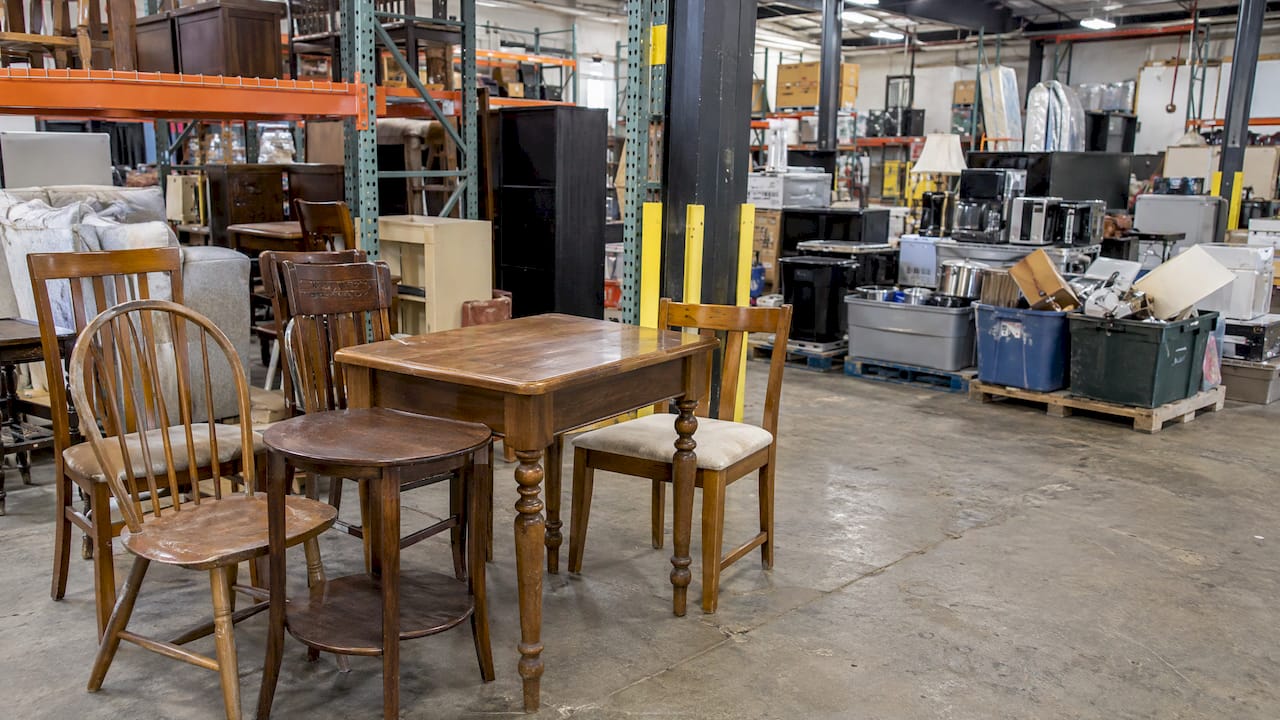
EasyScrap donates and recycles whenever possible, and we partner with local charities. If you have furniture or household goods in good shape, our guides on getting donations accepted in one visit and three on-site tests for what to donate versus trash show how to sort them. For a wider look at diverting waste from landfills, see our piece on eco-friendly junk removal.
Check 6: Scheduling, arrival windows, and preparation
Timing is where reliability becomes visible. Ask:
- What is the arrival window, and will the crew call ahead?
- Is same-day service available, and what does it require?
- What are the rescheduling and cancellation terms?
- Is a minimum notice needed for stairs, elevators, or parking?
The first-ranked guides on this topic recommend itemized fees and rescheduling without penalties, and that is sound advice. Agents and investors in particular should ask about flexibility, because closing dates and tenant turnovers move.
Preparation also affects cost and speed. Checkbook advises clearing the area so workers can reach items, color-tagging what stays and what goes, and labeling items for recycling, donation, or trash. Organizer Milligan Wahl notes that moving everything to one room makes removal faster, smoother, and sometimes cheaper, and that haulers do not help decide what stays. Our junk removal preparation checklist walks through this room by room.
We offer flexible scheduling and same-day junk removal for local jobs, which suits the situation where a house showing or a move-out date is days away.
Check 7: Warning signs before you book
Some signals show up before any work starts. Treat these as reasons to keep looking:
- No written estimate. A company that will not put the price and its conditions on paper is leaving itself room to change it.
- Vague answers on insurance. If a company cannot name its coverage or will not share a certificate, you cannot confirm who pays if something is damaged.
- No clear answer on disposal. If nobody can say where your items go, assume the answer is the nearest dumpster.
- No physical address or registered business. The BBB recommends confirming both before you hire.
- Pressure to pay in cash up front. Reasonable terms include a clear payment point and cancellation policy.
- A price that is far below everyone else's. Low quotes often exclude disposal fees or surcharges that appear at the end.
- Reviews that all sound the same. Consumer Reports cautions that reviews may be posted by the company or by biased parties.
Choosing by situation
Different readers need different things from the same service.
| If you are... | Prioritize | Why |
|---|---|---|
| A homeowner clearing a garage, basement, or attic | A written estimate and a clear accepted-items list | Mixed piles are where surprise charges happen |
| Helping a grandparent downsize or clear an estate | Careful handling, donation of usable items, patience with the schedule | Items have value and the timeline is emotional |
| A real estate investor | Speed, flexible scheduling, insurance | Holding costs rise every day a property sits |
| A Realtor with a listing | Same-day availability and a clean finish | Showings and photos have fixed dates |
For most of these jobs, a garage cleanout, basement cleanout, or attic cleanout is the starting point, and our estate cleanouts are built for the larger house-wide jobs.
Our perspective
We are a young, local team, and we think the best way to choose a junk removal company is to ask the questions that reveal how a company works when the truck is in your driveway. Price, insurance, and what happens to your items are not separate topics. They are the same question: does this company take responsibility for the job from the first call to the last load?
That is how we try to work. We give free quotes. Our crew is insured. We donate and recycle whenever possible, and we work with local charities so usable furniture and household goods find a second home instead of a landfill. We schedule around your life, including same-day pickups when a closing, a showing, or a family deadline does not wait.
Our customers range from homeowners to grandparents downsizing to investors and Realtors, and we treat every job as a promise to be on time, careful with your property, and clear about the price. A good company should make the decision easy for you, and we hope this checklist makes that decision easier whoever you choose to call.
Easy
Getting started with EasyScrap
If you are in Lawrence, Andover, Boston, Lowell, or Haverhill, we handle the heavy lifting: couches, mattresses, refrigerators, washers, dryers, and full cleanouts, for homes and businesses. You can start with our junk removal service page, or see everything we take on our full services list. Quotes are free.
If you have a refrigerator to remove, our refrigerator removal page covers that service in more detail.
FAQ
How much should junk removal cost?
Checkbook reports that typical US jobs run $100 to $700, depending on volume, labor, and disposal fees. The only reliable number for your job is a written estimate based on what you are removing. Free quotes make comparing easy.
What should I ask before hiring a junk removal company?
Ask what the total price includes, which items the company will not take, whether its crew is insured, what the arrival window is, and where your items end up. Get the answers in writing. These five questions cover price, scope, protection, timing, and disposal.
Do I need to be home during junk removal?
It helps, especially for the first walkthrough, so the crew knows exactly what goes and what stays. Haulers do not decide that for you. Tagging or grouping items beforehand makes the job quicker, and our preparation checklist shows how.
Is junk removal the same as trash pickup?
No. Regular trash pickup collects household waste on a set schedule, usually with limits on size and type. Junk removal covers bulky items like furniture, appliances, and cleanout debris that routine collection does not take. We offer both a trash pickup service and full junk removal.
Will my items be donated or recycled?
Our approach is to donate and recycle whenever possible, and we work with local charities. Usable furniture and household goods are the best candidates, and our donation guide explains how to prepare them for a single visit.
Sources
- Junk Removal Services, Checkbook
- Junk Removal Contract: Key Terms, Pricing, and Liability, LegalClarity
- Junk Removal Business Insurance Requirements, MoneyGeek
- Checking a Company's Background, California Attorney General
- How to research any business before you buy, BBB
- How to check out a company, Consumer Reports
- How to Hire a Trusted Service Provider, Trusted Vendor Guild
- How to Verify a Business Before You Hire Them, NCTCB