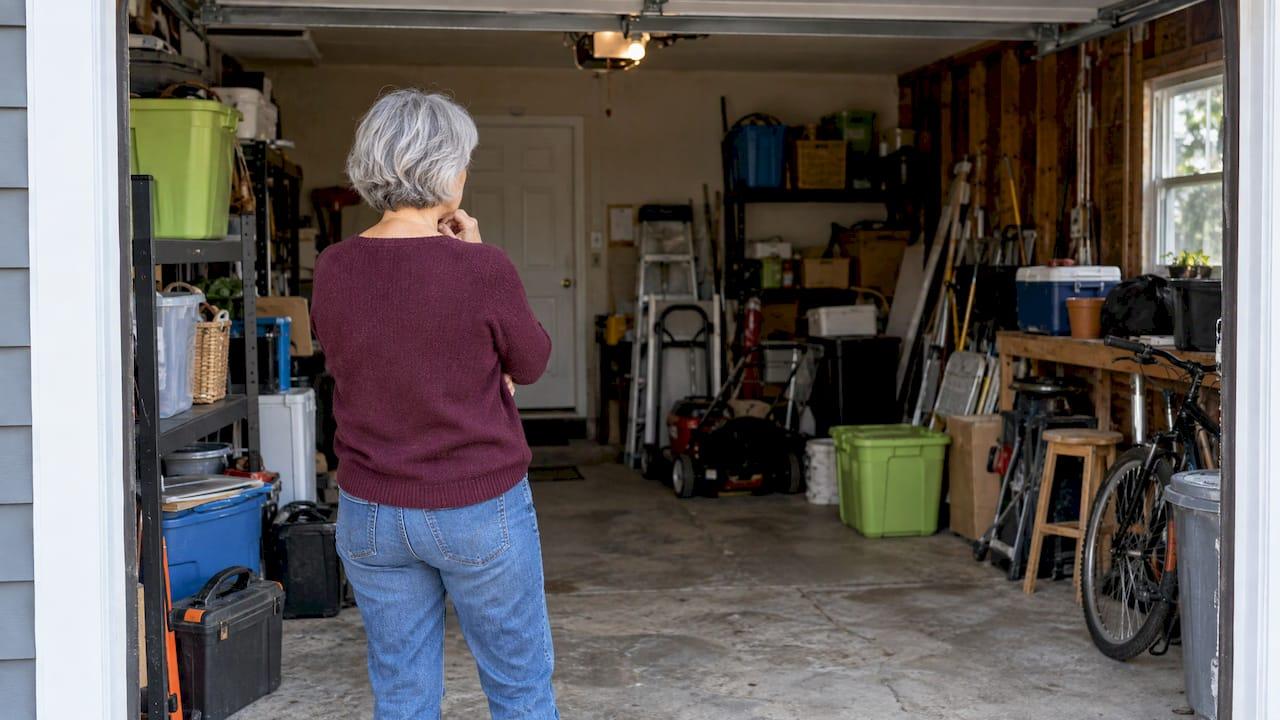
Demolition takes a structure apart. Junk removal hauls away loose items and debris. If you are tearing out a wall, a deck or a whole house, you need a demolition contractor for the teardown. The debris, furniture, appliances and leftovers that come before and after are junk removal work. We handle that second half for homes and businesses in Lawrence, Andover, Boston, Lowell and Haverhill, including construction debris cleanup, estate cleanouts and full-property clear-outs, so the job finishes with an empty, broom-ready space.
Most people searching this question are really asking one thing: who do I call first, and who do I call last? This guide answers both, with the permit and asbestos rules that matter if you own a house, manage a property, flip homes or list them as a Realtor.
TL;DR
- Demolition changes or removes the structure itself (walls, roofs, foundations). Junk removal clears contents and loose debris and never touches the structure.
- Most real projects need both, in order: clear the contents, demolish, then haul the debris away.
- Hazardous materials such as asbestos, lead paint and refrigerants have to be identified and handled before demolition, and they can never go out with ordinary trash.
- Massachusetts requires a notification to the state at least 10 working days before certain demolition and asbestos work, so build that into your schedule.
- For the cleanout and hauling side, a free quote and one visit usually settles scope and cost.
Table of Contents
- The difference in one table
- What counts as demolition
- What counts as junk removal
- How to tell which one you need
- The usual order on a real project
- Permits and notifications: demolition has them, hauling mostly does not
- Hazardous materials: the part that changes the job
- What junk removal can take after demolition or renovation
- What each job costs and what drives it
- Safety and who should do what
- Who this means what for
- Get the cleanout or debris haul done
- FAQ
- Sources
The difference in one table
| Demolition | Junk removal | |
|---|---|---|
| What it does | Wrecks, levels or dismantles part or all of a structure | Removes unwanted items and debris from a space |
| Typical jobs | Teardown of a house, garage or shed; gutting load-bearing walls | Furniture, mattresses, appliances, garage, basement and attic cleanouts, yard waste, estate cleanouts |
| Who does it | A licensed demolition or general contractor | A hauling crew with a truck and labor |
| Permits | Almost always a demolition permit, sometimes state notifications | Generally none for hauling household items |
| Hazard checks | Required before work starts | Items sorted by type so special materials are handled correctly |
| Output | A cleared lot or opened-up space, plus a lot of debris | A cleared room, garage or property |
What counts as demolition
The line is the structure. One regional air agency defines demolition as wrecking, leveling or dismantling a structure so that it becomes permanently unusable in part or in whole, including removing load-supporting members or moving the building. Anything else you alter is renovation. The same agency notes that a building damaged by fire or flood can be treated as demolition, which changes who is allowed to handle the hazardous materials in it.
So a kitchen remodel that keeps the walls is renovation. Removing a load-bearing wall, taking down a detached garage or clearing a lot for new construction is demolition. This matters because the rules, the paperwork and the people who may legally do the work all change once you cross that line.
What counts as junk removal
Junk removal deals with things, not the building. Old couches, mattresses, refrigerators, washers, dryers, hot tubs, boxes from a basement, a lifetime of garage contents, yard waste and the pile left by a contractor all fall here. Nothing is being wrecked or rebuilt. A crew arrives, loads the items, and takes them away.
That is why the work is quick to schedule. We offer same-day service, free quotes and an insured crew, and we donate and recycle usable items whenever possible rather than sending everything to a landfill. You can see the full list on our services page, or start with the basics on our junk removal page.
How to tell which one you need
Use these questions in order.
- Is anything attached to the building coming out? Cabinets, drywall, framing, flooring, roofing or siding being torn out means demolition or renovation work comes first. The person doing the tear-out is not a hauler.
- Is it already out and sitting in a pile? Then it is debris, and debris hauling is junk removal work. This is the common situation after a contractor finishes, and it is what construction debris cleanup covers.
- Is it contents, not construction? Furniture, appliances, boxes and belongings are junk removal, even if the house is about to be torn down or sold.
- Are you unsure what is in the walls or insulation? In an older home, stop and find out before anything is disturbed. Asbestos and lead paint come up below.
If you answered yes to more than one, you have a sequence, not a choice.
The usual order on a real project
A full teardown or gut renovation runs in a predictable order.
- Clear the contents first. Furniture, appliances and stored belongings go before any demolition starts, so nothing is crushed, contaminated with dust or lost. This is where a cleanout crew earns its place: a garage, basement or attic full of decades of items can take a homeowner weeks, and a crew can clear it in a visit. See our pages on garage cleanouts, basement cleanouts and attic cleanouts.
- Survey for hazardous materials. Done by licensed professionals, as covered below.
- Pull permits and file notifications.
- Demolish. The licensed contractor does the teardown.
- Haul the debris. Leftover wood, drywall, fixtures and mixed rubble leave the site.
- Final sweep. Small leftovers, yard waste and stray items are cleared so the site can be handed over.
Grandparents downsizing and families settling an estate usually need only step 1, and often nothing else. Investors and Realtors usually need steps 1 and 5 to bookend a contractor's work.
Permits and notifications: demolition has them, hauling mostly does not
This is the clearest practical split. Ordinary junk removal of household items does not need a permit from you. Demolition almost always does.
Massachusetts is a good example. Under state rules, you must submit a notification to MassDEP ten working days before starting work: an Asbestos Notification for any project involving asbestos abatement, removal or disposal, and a Construction/Demolition Notification for any such project except in a residential building with fewer than 20 units. Local rules stack on top. In Boston, for example, the demolition delay ordinance gives the Landmarks Commission 40 days after the application is filed to decide whether a delay is required for a building under review. Other cities and towns in Massachusetts and New Hampshire have their own versions, so ask your local building department before you set a date.

Fees vary widely by place. One 2025 to 2026 cost guide lists residential demolition permits from $25 to $1,000, with a typical range of $100 to $400 and a wait of 3 to 14 business days. Treat that as a ballpark and confirm the fee with your own town.
If you are an investor weighing a teardown against a sale, this guide to selling a teardown house walks through the regulatory side of residential demolition, which is useful before you commit to a plan.
Hazardous materials: the part that changes the job
Before a building comes down, federal rules require that asbestos and other hazardous materials be identified. A state environmental agency explains that EPA's NESHAP rule requires notification at least 10 days before demolition of commercial structures, institutional structures and residential buildings with more than four units. The same page lists lead-based paint, fluorescent tubes, mercury switches, PCB-containing equipment and refrigerants among the hazardous wastes commonly found.
Connecticut's checklist for renovation and demolition spells out the practical sequence: environmental surveys by licensed professionals, a call to the utility-location service before digging, and removal of asbestos, lead paint, mercury devices, PCBs, chemicals, electronics and refrigeration equipment before demolition begins. Massachusetts and New Hampshire have their own versions, so check with the state environmental agency for your address.
Two takeaways for owners:
- Do not disturb suspect material yourself. Old pipe wrap, floor tile, popcorn ceilings and insulation in homes of a certain age can contain asbestos. The state's own advice is that asbestos in good condition is best left alone. Have it tested by a licensed professional before any tear-out.
- Asbestos never goes out with regular trash. A 2026 homeowner guide notes that regulated asbestos must be kept wet, sealed in labeled leak-tight containers and taken to a landfill permitted to accept it. It also advises that if you hire out the work, you should ask which permitted facility will receive the waste and request the disposal paperwork afterward, because that receipt is your proof the material was handled lawfully.
Refrigerators and freezers carry a related rule, since refrigerant must be handled correctly. Our guide to heavy item removal and EPA rules for fridges explains it, and our refrigerator removal page is where to book one.
What junk removal can take after demolition or renovation
Once the structure work is done and any hazardous material has been dealt with by the right professionals, ordinary debris is straightforward: lumber, drywall scraps, old cabinets, flooring, fixtures, doors, windows, mixed household waste and yard waste. We cover this under construction debris cleanup, and we donate and recycle usable pieces whenever possible.
If you want to understand what the category includes and where it can go, read our explainer on what construction debris is and where it can be taken.
A few things are sorted out before any truck is loaded: paint and chemicals, anything suspected of containing asbestos, and appliances with refrigerant. Tell us about them when you ask for a quote, and the crew plans for them instead of finding out on the day.
What each job costs and what drives it
Demolition is priced by the structure. One 2026 guide puts a full house teardown at $4 to $17 per square foot, and cites an average of $15,800 for a 2,000-square-foot home. Asbestos abatement, if it is found, is a separate and often larger line item. A 2026 Charlotte permit guide lists it at $1,500 to $15,000 or more, on top of the permit. Those are national and out-of-state figures, so use them only to see how the pieces fit together, and get local bids.
Junk removal is priced by what we haul. Volume, weight, the type of item and how hard it is to reach all matter. We do not publish a flat rate, because a single mattress and a packed basement are different jobs. We give free quotes, and we explain how the process works in our guide on avoiding junk removal pricing surprises. For debris after a project, our construction debris removal cost guide shows what to budget.

Safety and who should do what
Demolition brings structural risk, dust, utilities and heavy equipment. The people doing it need the right licenses, insurance and hazard training, and they are responsible for the survey, the permit and the notification. Check that any demolition contractor holds the licenses your state and town require.
Junk removal brings heavy lifting, awkward items and sorting. An insured crew with a truck and trained loaders is built for that. The practical gain for you is that nothing heavy comes down a staircase on your back, and nothing ends up in the wrong waste stream.
If you manage a contractor's debris on a regular basis, our junk removal for contractors guide covers volume, OSHA considerations and salvage. If you are choosing between hauling and a container, junk removal versus dumpster rental lays out the trade-offs.
Who this means what for
Homeowners. Cleaning out a garage, basement, attic or a room before a renovation is junk removal. Tearing out structure is demolition. Do the cleanout first so the contractor works in an empty space.
Grandparents and families. Downsizing, moving or clearing a parent's home is a cleanout. You do not need demolition, permits or hazard surveys for belongings. We donate usable items whenever possible, which many families appreciate.
Real estate investors. On a flip or scrape-and-replace, plan three stages: cleanout, demolition by a licensed contractor, debris haul. Getting the first and last done quickly keeps the schedule tight. We handle estate cleanouts and hoarding situations too, for properties that arrive full.
Realtors. A listing with leftover contents or a pile of debris shows worse and sells slower. A fast cleanout before photos or showings is a junk removal job, and same-day service helps when the calendar is tight.
What we see from the cleanout side
We are a young, local crew, and our view is simple: the best projects separate the two jobs cleanly. Demolition is a specialist trade with permits, surveys and licensed hazard handling. Everything around it, the contents beforehand and the debris afterward, is where a reliable hauling crew saves you days.
That is where we put our effort. Same-day scheduling, flexible times, an insured crew and a habit of donating and recycling usable items are how we try to make the cleanout side of your project the easy part. When you plan the sequence in the right order, the job moves faster and the paperwork stays with the people qualified to handle it.
Easy
Get the cleanout or debris haul done
If your project needs a space cleared before a contractor starts, or debris hauled after they finish, we can take it from there. We serve Lawrence, Andover, Boston, Lowell and Haverhill, offer free quotes and carry insurance. Start with our construction debris cleanup and cleanout services or go straight to junk removal.

FAQ
What is the difference between demolition and debris removal?
Demolition is the deliberate dismantling or destruction of a structure. Debris removal is clearing and disposing of what that work, or a renovation, leaves behind. The first is done by a licensed demolition contractor; the second is a hauling job we do under our construction debris cleanup service.
Do I need a permit for junk removal?
For ordinary household items such as furniture, mattresses and appliances, you do not need a permit to have them hauled. Demolition is different: it typically needs a permit from your city or town, and in Massachusetts some projects also need a state notification at least 10 working days ahead.
Can junk removal take asbestos or other hazardous materials?
Asbestos, paint, chemicals and similar materials must be handled under hazardous waste rules and can never go out with regular trash. Have suspected asbestos tested and removed by licensed professionals, and tell us about any other special items when you request your quote so we can plan the load.
Is junk removal worth it for a renovation or a home cleanout?
Yes, when the volume is more than a few trips or the items are heavy. A crew clears the space in one visit, sorts items for donation or recycling, and removes the lifting and disposal logistics from you. For a pile of debris after a project, it is usually the fastest way to finish the job.
Should I clear the house before demolition?
Yes. Contents should come out first so nothing is damaged or contaminated, and so the demolition crew has clear access. A cleanout before the survey and teardown also makes it easier to see what you are dealing with.
Sources
- Renovation & Demolition Projects, Spokane Regional Clean Air Agency
- MassDEP Asbestos, Construction & Demolition Notifications
- Boston Zoning Code Article 85, Demolition Delay
- Demolition Permit Cost Guide
- Construction and Demolition Waste, Alaska Department of Environmental Conservation
- EH&S Checklist for Renovation and Demolition Projects, Connecticut DEEP
- EPA Asbestos Rules: What Homeowners Need to Know
- How to Demolish a House: Process, Cost & Permits 2026
- How to Get a Demolition Permit in Charlotte, NC (2026 Guide)
- Selling a Teardown House: Your Complete 2026 Guide