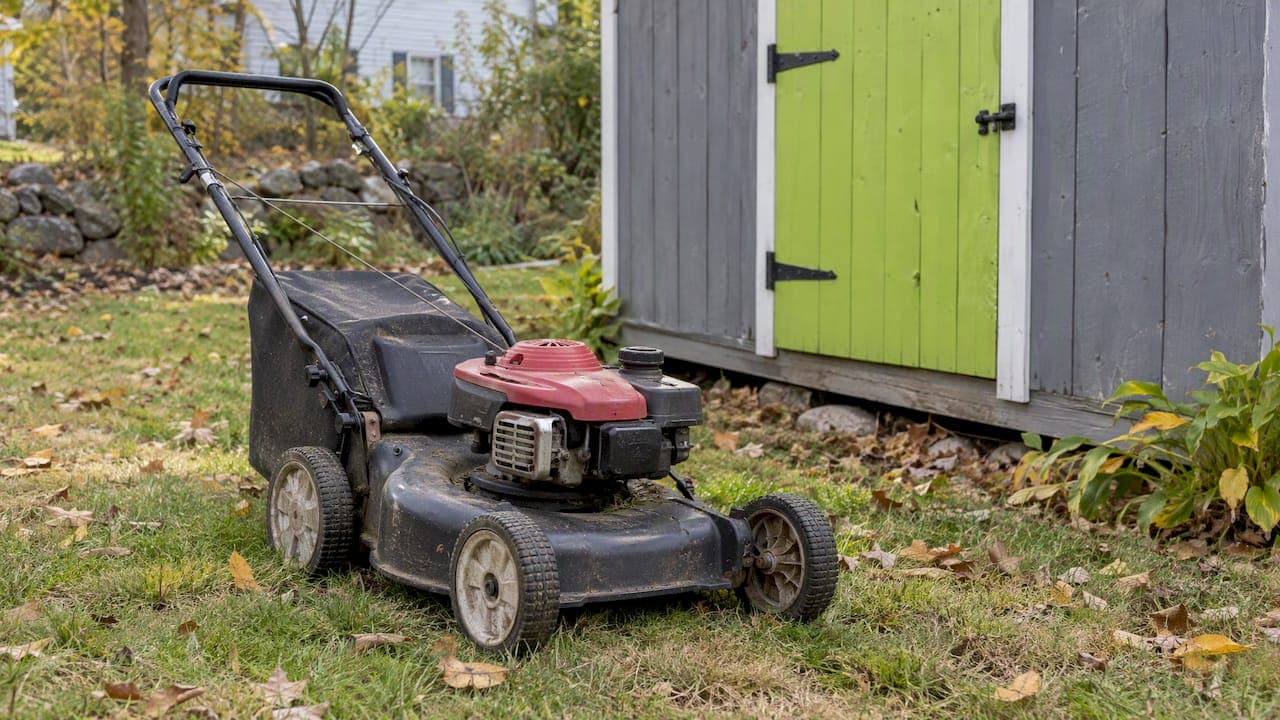
You can't put a lawn mower in your curbside trash. A mower that still runs can be sold or donated. A dead gas mower has to be drained first, then taken to a scrap metal drop-off or a transfer station that accepts it. A dead battery mower has to lose its battery before the rest goes anywhere. If you don't want to drain, strip and haul it yourself, a junk removal crew can take the whole thing.
This guide walks through each route in order, from the cheapest to the least work. It covers push mowers, riding mowers, electric models and the other gas tools that usually sit next to them in the garage. We're a junk removal company serving Lawrence, Andover, Boston, Lowell and Haverhill, so we've written it with Massachusetts and southern New Hampshire in mind. Rules differ by town, so we flag where you need to check with your own.
TL;DR
- Working mowers should be sold, given away or donated before anyone talks about disposal. Hennepin County's guide lists giving away, selling or donating to the Salvation Army as the first option.
- Gas mowers need the fuel and oil drained into separate, labeled containers before any drop-off site or scrap recycler will take them.
- Battery mowers count as e-waste. Remove the battery and take it to a battery recycling drop-off. Never put it in the trash.
- Your town's transfer station or bulk pickup program may take the mower for free or for a permit fee. Call first, because rules vary.
- If the mower is broken, rusted, a heavy rider, or you just don't want fuel in your trunk, a paid pickup is the simplest route.
Table of Contents
- Why a lawn mower can't just go in the trash
- Step 1: Decide whether it's really trash
- Step 2: Prepare the mower safely
- Step 3: Choose where it goes
- When hiring a junk removal crew is the better call
- What we do when you book a mower pickup
- Our perspective: the mower is rarely the problem
- Lawn equipment disposal: the rest of the garage
- Replacing the mower: a note before you buy
- A quick checklist before you call anyone
- FAQ
- Sources
Why a lawn mower can't just go in the trash
A mower is three problems in one object. It is a large steel and aluminum shell, which is valuable to recyclers. It holds gasoline and oil, which are hazardous. And if it is cordless, it holds a lithium-ion battery, which can start a fire when crushed.
Haulers and landfill operators deal with this every day. Los Angeles County Public Works, answering a resident's question about old mowers, asks that gas mowers have the oil and gas drained before they are recycled. Metro Waste Authority in Iowa makes its disposal options depend on the type of mower, with different rules for push mowers and others. The details change from place to place, but the pattern holds across the country: no fluids, and no loose batteries.
In practice, the most common reason a mower gets turned away is that it arrives as a complete, dirty unit with fuel still in the tank. Disposal is a short chain of steps: drain, strip, separate, transport. If one step fails, the load gets rejected.

Step 1: Decide whether it's really trash
Before you spend an afternoon on this, ask whether anyone could use it.
- It starts and cuts. List it on a local marketplace, offer it to a neighbor, or donate it. Consumer Reports suggests selling or giving a broken mower away through neighborhood and swap networks if another homeowner could revive it, and says to be fair to the buyer about its condition.
- It runs badly but the deck and engine are sound. A small engine repair shop may take it for parts. Call before you load the truck.
- It's dead, cracked or rusted through. Move on to disposal.
A realistic note: a 15-year-old mower with a seized engine rarely finds a taker. Don't hold it in the garage for a year hoping otherwise. If you're clearing a property for sale, an old mower is one more thing a buyer's inspector will see.
Step 2: Prepare the mower safely
Preparation is where most of the risk is, and where most DIY disposals go wrong. San Jose's recycling guide says to empty fuel and oil and remove the battery pack before the mower goes out for pickup. It also reminds you to wear gloves and safety glasses while handling it.
Gas mowers
- Run the tank low. If the mower starts, let it run until it stalls, outdoors and away from any flame.
- Drain what's left. Use an approved, leak-proof gasoline container. Metro Waste Authority's guidance is that fluids should be drained ahead of time, and gasoline needs a safety container. Many sites want this done at least a day before drop-off.
- Drain the oil into a separate sealed container. Don't mix oil and gas. Used oil often goes to an auto parts store or your town's hazardous waste collection, so ask which.
- Remove the spark plug wire so the engine can't start by accident while you work.
- Take off non-metal parts if your drop-off requires it. Hennepin County notes that scrap recyclers may accept this kind of equipment only when non-metal pieces, tires and fluids are removed. That can mean bagger bags, plastic housings, tires and cords.
The leftover gasoline is its own question. Old fuel is household hazardous waste. Don't pour it on the ground, down a drain or into the trash. Check your town's hazardous waste day or permanent collection site.
Battery and electric mowers
Cordless mowers are electronics as far as disposal goes. Take the battery out, tape the terminals if the battery's maker recommends it, and bring it to a rechargeable battery drop-off. Call2Recycle's locator pages show how this works: participating retailers, in that example a Lowe's store, list the batteries they accept. Use the Call2Recycle site to find the nearest location to you, because accepted battery sizes and types vary by store.
Corded electric mowers have no battery, but the cord and motor still make them scrap metal and e-waste rather than trash. Our guide to e-waste disposal options for household items covers what else in your garage falls in that category.
Riding mowers and tractors
Riding mowers carry more fuel, a lead-acid or lithium starter battery, and much more weight. A lawn tractor can run past what one person can safely lift into a pickup. Many town transfer stations that accept push mowers have different rules for riders or won't take them at all. Check before you try. This is the category where hiring a crew most often makes sense.

Step 3: Choose where it goes
There are five realistic destinations. Which one fits depends on the mower's condition and how much work you want to do.
| Option | Best for | Cost | Effort | Watch out for |
|---|---|---|---|---|
| Sell or donate | Working mowers | Free, may earn money | Low to medium | Buyers want honest condition notes |
| Town transfer station | Drained push mowers | Often free or covered by a permit | Medium to high | Permit rules, hours, proof of residency |
| Scrap metal recycler | Stripped metal decks and frames | Varies, sometimes pays | High | Many require fluids, plastic and tires removed |
| Retail trade-in or haul-away | Buying a new mower | Varies by store and promotion | Low | Not every store offers it; ask before you buy |
| Junk removal pickup | Broken, heavy or fuel-filled mowers, bulk cleanouts | Quoted per job | Lowest | Get a quote before the crew arrives |
Your town's transfer station
Most Massachusetts and New Hampshire towns run a transfer station or recycling center, and many accept mowers with their scrap metal. For a Massachusetts example, the City of Westfield's transfer station lists lawn mowers among items accepted at no additional charge, with the gas and oil removed, and it requires an annual permit. That is one city's rule, not a state rule. Your own town's policy might ask for a sticker, a resident ID or a drop-off appointment, and it might not take riding mowers at all.
Before you go, check three things on your town's website or by phone:
- Is a lawn mower accepted, and does it go in the scrap metal pile or a separate area?
- Do they want it drained, and how long in advance?
- Do they take riding mowers, and is there a size limit?
Scrap metal recyclers
A steel mower deck has real scrap value, but scrap yards are businesses, not a free disposal service. Hennepin County's guidance says they may accept the equipment only if non-metal pieces, tires and fluids are removed. Take off the plastic, pull the tires and drain the engine, and you will likely be accepted. Show up with a full-assembly mower and you may be sent home. Call ahead and ask what they require.
Retail stores and trade-ins
People often ask whether a big-box store will take an old mower. Some stores run haul-away or trade-in offers when you buy a new unit, and some are battery drop-off points. Those policies change by store and season, so the only honest answer is to call the specific store and ask before you buy. Don't assume you can roll a dead mower into the garden center.
Bulk pickup from your town
Some municipalities offer bulk item pickup or a spring cleanup event. These are local, limited and come with their own rules, such as fluid removal and non-metal part removal. A mower that doesn't meet the rules gets left at the curb with a tag on it. If your town runs a bulk program, read the item list before you set the mower out.
When hiring a junk removal crew is the better call
DIY disposal makes sense for a drained push mower and a spare Saturday. It makes less sense when:
- The mower is a rider or lawn tractor, or just heavy and awkward to lift.
- It is rusted, leaking or full of old gas you don't know how to store.
- You have no truck, or you don't want fuel and oil in your car.
- The mower is one item among many, as in a garage, shed, basement or estate cleanout.
- You're a landlord, property manager or Realtor who needs the unit gone by a deadline.
The last two are common. Mowers rarely turn up alone. They sit beside paint cans, a snowblower, a trimmer and a wheelbarrow, or in a shed full of items left by a prior owner. One pickup handles the whole pile. Our post on junk removal for property managers covers how that works when you manage multiple units.
There is also a risk argument. Consumer safety advice stresses that the real danger in getting rid of a mower is not just the weight but how fuel and batteries get handled. A crew that is insured and does this routinely takes that handling off your hands.
What we do when you book a mower pickup
EasyScrap serves Lawrence, Andover, Boston, Lowell and Haverhill, and our junk removal service covers gas and electric mowers, riders, and the other equipment that usually comes with them. We offer free quotes and same-day service where scheduling allows, and our crew is insured. We donate and recycle whenever possible, so usable items don't automatically go to a landfill and metal goes to recycling.
To get a mower out of your garage:
- Tell us what you have: push, rider, gas or battery, running or not, and how many other items there are.
- Send a photo if you can. It helps us give you a quote.
- Pick a time window. We'll move it from wherever it sits, including a basement, shed or backyard.
- Leave the fluid question to us. If you've already drained it, tell us. If not, tell us that too, and we'll plan the job around it.
We don't publish flat prices, because a single push mower and a full shed are very different jobs. Ask for a free quote and you'll get the figure before anyone lifts anything.
If the mower is part of a bigger project, these pages might fit better:
- Garage cleanouts for the garage that has become storage for everything.
- Appliance removal if there is a fridge or washer to go with it.
- All our services, including estate cleanouts and yard waste removal.
Our perspective: the mower is rarely the problem
In our work, a lawn mower is almost never the reason someone calls. It's the last item on the list. The call is about a garage that can't hold a car, a parent's house that needs to be cleared, or a rental that has to turn over before the next tenant moves in. The mower is just the thing people keep putting off, because it feels like it needs a special trip, a special container and a special set of rules.
Those rules are real. Fuel has to be handled properly. Batteries really do need to go to the right place. But the answer isn't to leave the mower in the corner for another summer. If it works, give it a second life. If it doesn't, either do the drain-and-strip routine carefully, or hand it to a crew that does this regularly.
We'd also push back on one idea we hear: that cheaper always means free. A free town drop-off is a good choice when you have a truck, an hour and a drained mower. It's not free when you count the trip, the lifting and the second visit after you were turned away. Weigh your time too.
What we care about is that the item goes somewhere sensible: donated if it's usable, recycled if it's metal, handled correctly if it's hazardous. Doing that for neighbors across the Merrimack Valley is the job we signed up for.
— Easy
Lawn equipment disposal: the rest of the garage
The same logic covers other fuel-powered yard tools. Riverside County's waste department lists lawn mowers, weed-eaters, chain saws, rototillers, leaf blowers, edgers and trimmers as equipment that may hold gasoline and oil and needs fluids removed before disposal. That means leaf blowers, string trimmers and chainsaws follow the same drain-first rule as the mower.
A few practical notes:
- Two-stroke tools hold a fuel-oil mix. Drain it into a separate labeled container and treat it as hazardous.
- Battery tools follow the battery rule: remove the pack and recycle it separately.
- Pressure washers and generators also hold fuel and are heavy, which makes them good candidates for a pickup.
- Outdoor furniture that lives in the same shed has its own options, which we've covered in our guide to outdoor furniture disposal.
Replacing the mower: a note before you buy
If you're disposing of a mower because it died, it's worth thinking about what comes next before you spend. Cordless models mean no gas to drain at the end of their life, though the battery needs recycling. If you want a primer on the trade-offs, how petrol and electric mowers compare is written from an Australian lawn-care perspective, but the basic efficiency question applies anywhere. Whichever type you choose, ask the seller what the haul-away and battery take-back options are before you pay.
Some regions are pushing the shift faster. San Francisco's environment department, for instance, has a landscaping page tied to the move away from gas-powered equipment. Massachusetts and New Hampshire rules differ, so check local requirements instead of assuming California's apply.
A quick checklist before you call anyone
- Does it work? Try selling or donating it first.
- Is it gas or battery? Drain fluids or pull the battery.
- Do you have approved, labeled containers for fuel and oil?
- Have you called your town's transfer station or scrap recycler to confirm what they accept?
- Is it a rider or too heavy to lift safely? Skip the DIY and book a pickup.
- Is it part of a larger cleanout? Bundle it into one visit.
For other bulky items, our heavy item removal guide covers the rules that apply to refrigerators and similar appliances.
FAQ
Who picks up old lawn mowers for free?
It depends on your town. Some municipalities run bulk item pickup or collection events that take mowers at no charge, though these come with rules such as drained fluids and removed non-metal parts. Some transfer stations accept mowers with a resident permit. If the mower still works, a neighbor or a donation group may collect it for free. Call your town's public works office to confirm.
Can I dispose of a lawn mower at the dump?
Often yes, but not as regular trash. Many transfer stations take mowers in the scrap metal area, and they typically want the gas and oil removed first. Westfield, MA, for example, accepts mowers with gas and oil removed. Always check your own town's rules, and ask whether riding mowers are allowed.
What do you do with an old lawn mower?
Sell or donate it if it works. If it doesn't, drain the fluids or remove the battery, then take it to a transfer station or scrap recycler, or hire a junk removal crew to take it. Don't put it in curbside trash or leave it on the curb without checking your town's bulk pickup rules.
How do I get rid of a battery-powered mower?
Remove the battery and take it to a battery recycling drop-off, such as a participating retailer listed on the Call2Recycle locator. The rest of the mower can usually go with scrap metal or e-waste, depending on your town. Lithium-ion batteries are a fire risk if crushed, so keep them out of the trash.
Do you take mowers that are rusted or won't start?
Yes, broken and non-running mowers are the ones most people hire us for. Call us for a free quote and tell us the type and condition so we can plan the pickup.
Sources
- Lawn Mowers, Metro Waste Authority
- Lawn Mowers, San Jose Recycles
- Lawn, yard and garden equipment: gas powered, Hennepin County
- Should You Repair or Replace Your Broken Lawn Mower?, Consumer Reports
- How can one dispose of an old lawn mower, LA County Public Works
- Landscape Equipment, Riverside County Waste Resources
- Battery recycling locations, Call2Recycle
- Recycling Program and Twiss Street Transfer Station, City of Westfield
- Landscaping, SF Environment