
In real estate and property management, a trash-out is the removal of all trash, debris, furniture and personal belongings left inside and outside a property so it can be cleaned, repaired, sold or rented again. The term comes up most with foreclosures, evictions, abandoned homes and estate properties. If you heard "trash out" from a lender, a Realtor or a property manager, this is almost certainly what they meant.
Outside the property world, the phrase is slang. People sometimes use "trash someone out" to mean criticizing or insulting them, and "trash out" is often confused with "thrash out," which means to debate something until you reach a solution. This guide covers the property meaning, because that is the one with money, deadlines and legal rules attached.
TL;DR
- A trash-out clears out everything left behind in a vacant property: junk, furniture, appliances, clothing, papers and exterior debris.
- It is most common after foreclosure, eviction, abandonment, an estate transfer, or before a renovation, listing or re-rental.
- The goal is a clean slate, usually "broom-swept," so cleaners, contractors and inspectors can start work.
- For tenant belongings, state law decides what you can throw away and when. Confirm the rules before anything goes in a truck.
- The owner, landlord, lender or servicer normally orders and pays for the work, often through a junk removal or property preservation contractor.
Table of Contents
- What a trash-out means in real estate
- What a trash-out includes
- When a trash-out is needed
- How an eviction trash-out works, step by step
- The legal line: belongings are not automatically trash
- Who arranges and pays for a trash-out
- How to prepare for a trash-out
- Choosing a trash-out contractor
- Perspective: what we see in the field
- Need a trash-out in Massachusetts or New Hampshire?
- FAQ
- Sources
What a trash-out means in real estate
A trash-out is the first physical step in turning a cluttered or abandoned property back into a usable one. Crews walk through every room, the garage, the basement, the attic, the yard and any outbuildings, and remove whatever should not stay. That includes obvious garbage, but also furniture, mattresses, appliances, clothing, boxes, old paint, and abandoned vehicles or equipment where applicable.
The word is closely tied to foreclosure and bank-owned (REO) work. When the New York Times covered the foreclosure crisis, it described trash-out crews removing furniture, clothing, photographs, paper and other remnants of household life from homes that lenders had taken back. Property managers and landlords later adopted the same word for apartments and rentals that need clearing between tenants.
A trash-out is not a deep clean and not a repair. It is the stage before both. Think of the order this way:
- Trash-out: remove everything that does not belong.
- Clean-out finish: sweep the floors so the property is broom-swept.
- Cleaning and repairs: deep clean, patch, paint, replace flooring or fixtures.
- Inspection and listing or re-rental.
Trash-out vs. cleanout vs. junk removal
These terms overlap, and in daily use people mix them. Roughly:
| Term | What it usually means | Typical situation |
|---|---|---|
| Trash-out | Full clearing of a vacant property, often for a lender, landlord or investor | Foreclosure, eviction, abandonment |
| Cleanout | Clearing a specific space or a whole home, often for the owner or family | Garage, basement, attic, estate |
| Junk removal | Hauling away unwanted items from a property that is still in use | Old couch, fridge, renovation leftovers |
The labor is similar. What changes is who is paying, how much is left behind, and how fast the property needs to be ready.
What a trash-out includes
Scope varies by property, but a standard trash-out covers:
- Interior debris: trash, discarded food, boxes, clothing, toys, papers.
- Furniture and mattresses: couches, beds, dressers, tables.
- Appliances: refrigerators, washers, dryers, stoves, window units. Refrigerators and freezers need special handling because of refrigerants.
- Closets, cabinets, storage areas and attics.
- Garage, basement and shed contents.
- Exterior debris: yard waste, piles by the curb, broken fencing, dumped items, old grills, hot tubs.
- Vehicles and personal property that must be removed under state and local requirements.
For federally insured mortgages, there is an official benchmark. HUD's conveyance standards for FHA-insured properties require interior and exterior debris removal, a broom-swept interior, and removal of vehicles and personal property in line with state and local requirements, plus proper handling of regulated hazardous materials. Even if your property is not FHA-insured, that is a useful picture of what "done" looks like to a lender or buyer's inspector.
If you want to understand what "broom-swept" means for a sale, we break it down in what broom swept condition means when you sell.
When a trash-out is needed
A trash-out makes sense any time a property has to be emptied fast and completely before the next step. The common triggers:
- Foreclosure or REO. The lender or servicer takes back a home that former occupants left full of belongings. Our guide for servicers on the foreclosure cleanout process covers what that work looks like.
- Eviction or tenant move-out. Tenants leave furniture, bags of trash and sometimes everything they own.
- Abandonment. The occupant disappears and the property is left as is.
- Estate settlement. Heirs or executors need a house emptied before it is listed. See our tips on estate cleanouts in 10 to 14 days.
- Before renovation. Contractors cannot work around years of accumulated belongings.
- Before listing or re-renting. Clutter hides condition problems and hurts showings. Realtors often rely on fast removal here, and we cover that in junk removal for Realtors.
- Hoarding situations. These require extra care, patience and a plan for what is kept, donated and discarded.
For rentals, timing matters as much as the need. Practically, the trash-out begins only after the owner or manager has lawful possession of the unit and has confirmed what can legally be discarded. Starting early is the most expensive mistake in this business, and we come back to it below.
How an eviction trash-out works, step by step
An eviction trash-out is the version landlords and property managers search for most. The details depend on your state, but the sequence is consistent. Nolo's overview of handling a tenant's abandoned property lays out the general path: confirm the tenant has left, check your state's law, give written notice, store the property safely, then lawfully dispose of or sell what is unclaimed and handle any proceeds as state law requires.
1. Confirm the tenant has actually left
Do not assume. A unit that looks empty may still be occupied, or the tenant may plan to return for belongings. Document the condition and the date with dated photos or video. A completed eviction order or a clear surrender of the unit is what gives you the right to act.
2. Check your state's abandoned property law
This is the step that protects you. Nolo is direct that state law governs every step of handling abandoned tenant property, and the procedure can depend on why the tenant left. Look up the rules for your state before you schedule anyone. If you manage property in Massachusetts or New Hampshire, read the statute or ask your attorney. Do not rely on what worked in another state.
3. Send written notice
Most states require a written notice describing the property left behind and telling the former tenant how and by when they can reclaim it. Keep a copy and proof of delivery.
4. Separate trash from belongings
Nolo notes that landlords may dispose of trash left behind, while valuable items such as bicycles, jewelry, clothing or furniture fall under state-specific rules, including notice and storage requirements. A practical approach: photograph everything, bag obvious garbage, and set aside anything with value or personal significance, including documents, medications, electronics and photographs.
5. Store what the law requires you to store
Store reclaimable items safely for the legally required period. The required period differs by state, so confirm yours.
6. Dispose, donate or sell what is left
Once the notice and storage requirements are satisfied, the trash-out crew can remove the remaining items. Usable items can often be donated instead of landfilled. Handle any sale proceeds as your state requires.
7. Final sweep and turnover
After removal, the unit is broom-swept, inspected, then repaired or deep cleaned and prepared for the next tenant or buyer. Our landlord cleanout checklist walks through a one-week turnover.
The legal line: belongings are not automatically trash
The biggest risk in an eviction trash-out is treating everything as garbage. Courts take this seriously. A 2024 Fourth Circuit Court of Appeals opinion reflects the strict due process standards applied to an evictee's personal property, and cautions against treating belongings as automatically abandoned once a writ is executed.
In practice, that means:
- Do not throw out anything of apparent value until the notice and storage periods in your state have passed.
- Do not lock out a tenant or remove belongings to force them out. That is not a trash-out, it is an unlawful eviction in most places.
- Keep records: notices, photos, inventories, dates, and who removed what.
- When in doubt, ask a landlord-tenant attorney. This is not a place to guess.
Our article on what to do when a tenant leaves junk behind goes deeper on the practical side.
Who arranges and pays for a trash-out
The party that controls the property generally orders the work: the owner, landlord, property manager, lender or servicer. They often hire a property-preservation firm or a junk removal contractor. Payment normally falls on whoever orders the service.
Whether a landlord can recover the cost from a former tenant depends on the lease, state law, any court orders and the facts of the case. Do not assume you can bill a tenant, and do not deduct costs from a security deposit without checking your state's rules. For a view of how delays add up, see our piece on eviction cleanout costs for property managers.
The trade-off in timing is simple: every day a unit sits full is a day of lost rent, so you want to move the moment the law allows. That is why landlords line up their removal crew before the notice period ends, so work can begin on day one.

How to prepare for a trash-out
A little preparation keeps the job fast and the bill predictable.
- Get lawful possession and written approval to remove items.
- Walk the property and photograph every room before anything moves.
- Set aside held items, such as documents, valuables and anything the notice period still protects.
- Flag hazards: paint, chemicals, propane, batteries, sharps, mold, pests. Tell your crew in advance.
- Check access: keys, gate codes, parking for a truck, stairs, tight hallways.
- Decide what can be donated. Usable furniture and household goods often can be.
- Ask for a free quote from an insured crew, and share photos if you can.
Volume is what mostly drives cost in this work, along with access, heavy items, and special handling for appliances. A photo-based quote is often the fastest way to get a number. For storage-heavy properties, see how to sort a storage unit cleanout first.
Choosing a trash-out contractor
The right crew makes the project dull, which is what you want. Look for:
- Insurance. A crew moving heavy items through a house needs it.
- Speed and scheduling. Same-day or next-day availability matters when rent or a closing date is at stake.
- Clear scope. The quote should say what is included: interior, exterior, appliances, yard debris.
- Responsible disposal. Donation and recycling where possible, and proper handling of appliances and hazardous items. Our guide to heavy item removal and avoiding EPA violations with refrigerators explains why this matters.
- Documentation. Before and after photos help with lenders, buyers and your own records.
- Experience with difficult properties, including hoarding situations, estate homes and dumpster overflow.
If you manage multiple units, ask about recurring service. Our article on junk removal for property managers covers how 3 to 5 day turnarounds work.
Perspective: what we see in the field
We get called to trash-outs when the clock is already running. A landlord is losing rent, an investor has a closing date, or a family needs a house emptied after a loss. In every case, people want the same thing: the property cleared, done right, and done fast.
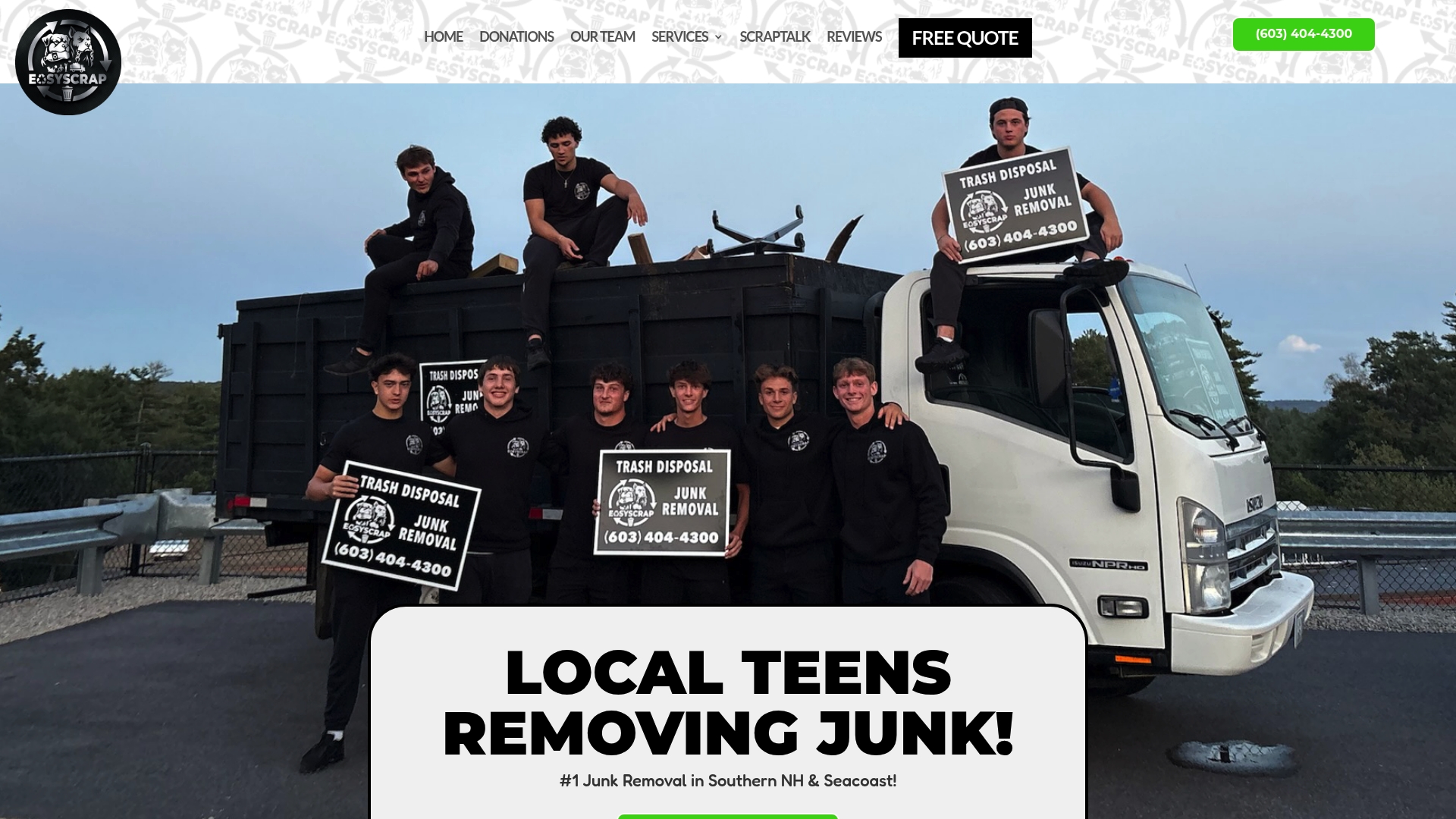
Our view is that the best trash-out is a planned one. Call before the last step of the legal process is finished, share photos, and we can line up a crew so removal starts the moment you have the right to proceed. We are a young, local team, and we work same-day when the schedule allows because delays cost our customers money.
We also think a trash-out should not mean everything ends up in a landfill. We donate usable items and recycle whenever possible, and we work with local charities so furniture and household goods get a second life. An insured crew and a free quote mean you know what you are getting before we touch anything.
And we will say what we always say: confirm your state's rules on tenant property first. We handle the heavy lifting, you handle the legal clearance, and together the unit is ready for its next chapter.
Easy
Need a trash-out in Massachusetts or New Hampshire?
We clear homes, rentals and investment properties for owners, landlords, property managers, Realtors and families in Lawrence, Andover, Boston, Lowell and Haverhill, with free quotes and an insured crew. Whether it is a full-unit clearing, an estate home or a single overloaded garage, start with our junk removal service and tell us what is in the property.
For specific spaces, see our pages on garage cleanouts, basement cleanouts and attic cleanouts, or browse the full list of cleanout and hauling services, including estate cleanouts and construction debris cleanup.
FAQ
What does "trash out" mean?
In real estate, a trash-out means removing all debris, furniture and personal belongings from a property so it can be cleaned, repaired, sold or rented. It is most associated with foreclosure, eviction and abandoned properties. In everyday slang, "trash someone out" can also mean to criticize them harshly.
What is the difference between a trash-out and a cleanout?
The work is similar, but a trash-out usually refers to clearing a vacant property for a lender, landlord or investor, often after foreclosure or eviction. A cleanout more often describes clearing a specific area or a family home, such as a garage or an estate. Many companies use both words for the same service.
Can a landlord throw away a tenant's belongings after eviction?
Not automatically. Landlords may dispose of true trash, but valuable belongings are subject to state-specific rules on notice and storage, according to Nolo. Check your state's law, or ask a landlord-tenant attorney, before disposing of anything of value.
Who pays for an eviction trash-out?
The party who orders the work, usually the owner, landlord, property manager or lender, normally pays the contractor. Whether any of that can be charged to the former tenant depends on the lease, state law and any court orders. Confirm this with an attorney before deducting from a deposit.
What condition should a property be in after a trash-out?
Debris and personal property should be gone, inside and out, and the interior should be broom-swept. That matches the baseline HUD sets for FHA-insured properties, according to its conveyance standards. Deep cleaning and repairs come after.
Sources
- HUD Mortgagee Letter 2016-02
- Foreclosure Trash-Out: Ill Fortune and Its Leavings, The New York Times
- Handling a Tenant's Abandoned Property: An Overview, Nolo
- Published opinion, U.S. Court of Appeals for the Fourth Circuit